
Cleanrooms are precision-engineered spaces built to drastically reduce airborne particles, contaminants, and impurities. They serve an indispensable role across industries that demand the highest standards of quality, sterility, and accuracy. Two key design strategies — positive and negative pressure cascades — govern how air moves in and out of these environments, controlling contaminant flow and protecting both products and personnel. This guide breaks down the core differences between positive and negative pressure cleanrooms so you can identify the right approach for your facility.
Positive Pressure Cleanrooms
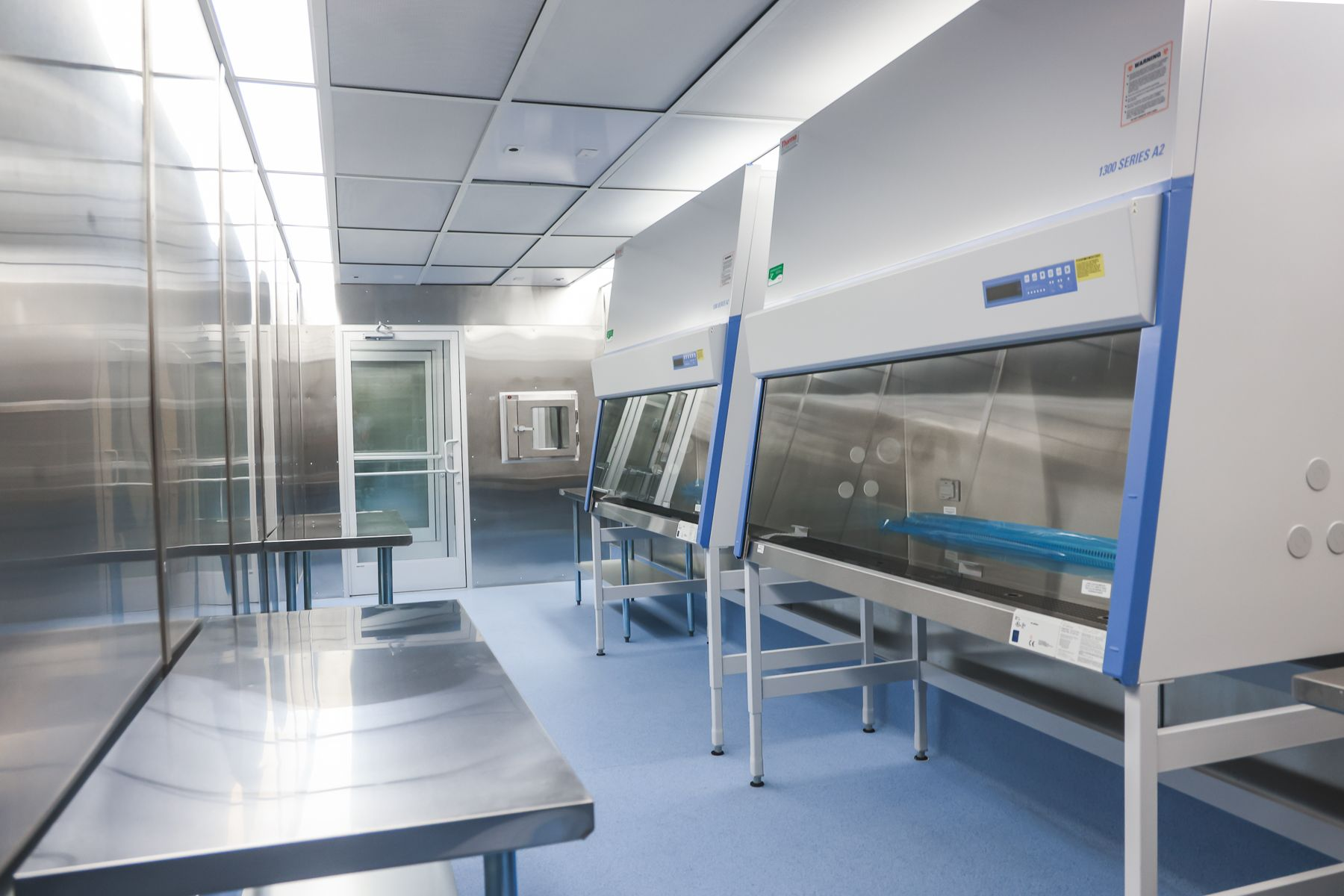
Positive pressure cleanrooms operate by sustaining a higher internal pressure relative to the areas around them. Because the pressure inside is elevated, air consistently flows outward whenever a door or gap is opened. This outward airflow acts as a natural shield, repelling dust, particulates, and other environmental pollutants from entering the controlled space. The result is a highly protected interior ideal for processes where contamination from external sources is the primary concern.
Components and Features
Air Handling Units (AHUs): These systems condition and purify incoming air before it reaches the cleanroom. Standard cleanroom AHUs are outfitted with high-efficiency particulate air (HEPA) or ultra-low particulate air (ULPA) filters to trap microscopic contaminants at the source.
Engineered Airflow Patterns: Airflow direction is meticulously configured to support the positive pressure cascade. Air is delivered from the AHUs at a higher pressure than the adjacent spaces, flowing outward toward exit points. This creates a continuous purging effect that prevents contaminants from making their way inside.
Control Mechanisms: Pressure sensors, variable-speed fans, and automated dampers work in tandem to maintain precise pressure differentials. These instruments detect fluctuations in real time and adjust airflow accordingly to keep conditions stable.
Industries That Rely on Positive Pressure
Positive pressure cleanrooms are widely adopted across sectors where keeping external contaminants out is mission-critical.
Pharmaceutical Manufacturing — Positive pressure environments are essential for preserving the sterility and integrity of drug products. The outward air flow blocks contaminant ingress, safeguarding both the quality and efficacy of pharmaceutical formulations.
Microelectronics & Semiconductor Fabrication — These facilities depend on particle-free conditions during the manufacture of delicate electronic components. Even a single airborne particle at the micro-scale can catastrophically compromise the function of microchips and semiconductors.
Biotechnology & Medical Device Manufacturing — These industries demand tightly controlled environments to maintain the purity and sterility of their outputs. Positive pressure protects sensitive biological materials and medical instruments from external pollutants, ensuring safety and reliability.
Negative Pressure Cleanrooms
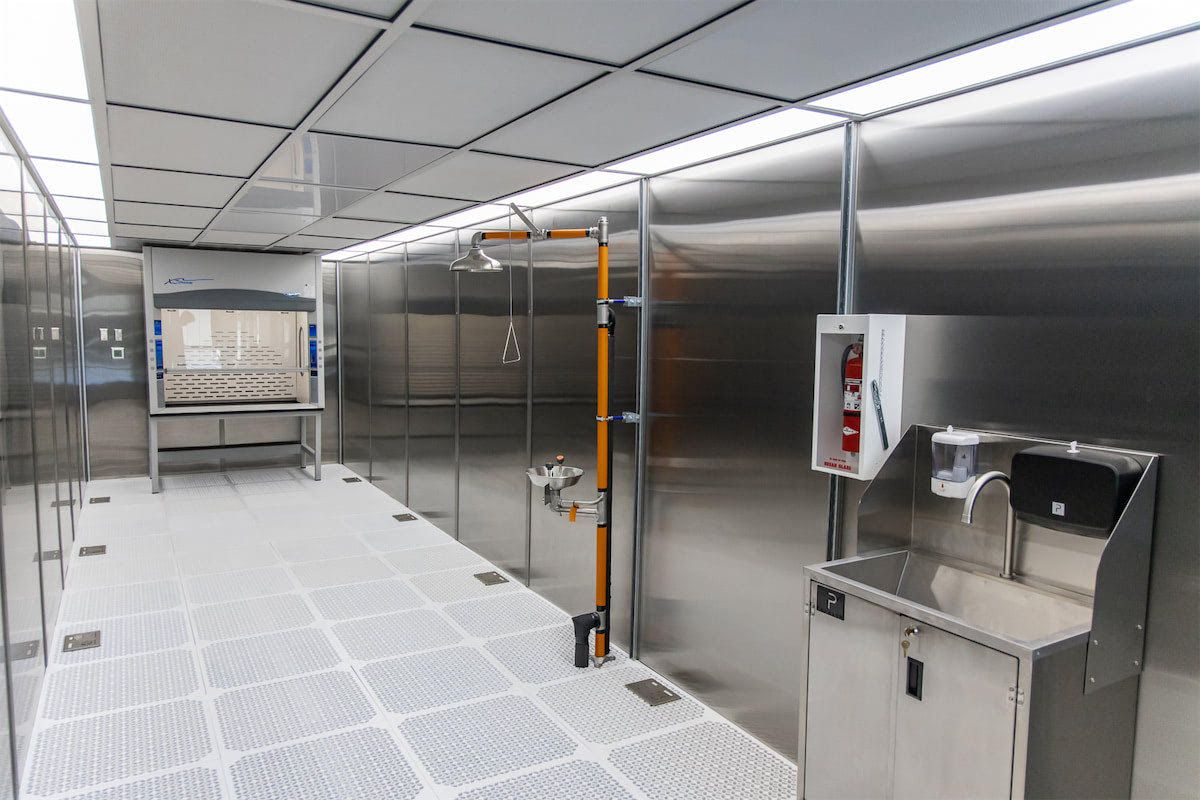
Negative pressure cleanrooms take the opposite approach — they maintain lower internal pressure compared to surrounding areas to keep hazardous substances and infectious agents safely contained within the room. Because pressure is lower inside, any leaks or breaches draw air inward rather than allowing contaminated air to escape. This air is then thoroughly filtered and recycled, forming a sealed system with no interaction with the external environment. This design is critically important in biological research laboratories, chemical and pharmaceutical containment facilities, as well as quarantine and isolation units.
Components and Features
Exhaust & Filtration Systems: Air is actively pulled from the cleanroom and passed through HEPA or ULPA filters before being discharged or recirculated. This ensures that any hazardous material is captured and neutralized before it can reach the outside environment.
Isolation Chambers & Airlocks: These serve as transition zones between different pressure areas, preventing direct airflow between them. Airlock systems allow personnel and materials to enter or exit without compromising the pressure differentials that keep the cleanroom functional.
Monitoring & Control Systems: Pressure sensors and automated dampers continuously track the cleanroom's internal pressure, making real-time adjustments to maintain the required lower-pressure state and ensure complete containment.
Industries That Rely on Negative Pressure
Negative pressure cleanrooms are essential wherever containment and isolation of dangerous substances, pathogens, or contaminants is the top priority.
Biological Research Laboratories — These facilities use negative pressure to prevent the accidental release of harmful biological agents. Containment is especially critical during experiments involving genetically modified microorganisms or high-risk pathogens.
Chemical & Pharmaceutical Containment Facilities — Negative pressure prevents toxic chemicals and potent pharmaceutical compounds from escaping into the surrounding space. Closed-system filtration adds another layer of defense for personnel safety.
Quarantine & Isolation Units — Designed to contain and isolate patients with infectious diseases, these units use negative pressure to prevent airborne pathogens from traveling beyond the designated area, significantly lowering the risk of cross-contamination.
Choosing the Right Pressure Gradient
Selecting between a positive and negative pressure cleanroom begins with a careful evaluation of your specific operational requirements and environmental considerations. Keep in mind that this guide is intended for informational purposes — always consult with a qualified professional before making design decisions for your facility.
Start by determining how critical contamination control is for your processes and the level of protection your products or materials require. If keeping external particles out is the primary goal, a positive pressure setup is typically the right choice. Conversely, if your work involves hazardous agents or pathogens that must remain contained, a negative pressure design is almost always necessary.
A thorough risk assessment will help you identify potential contaminants, their sources, and the nature of the materials you are handling. This evaluation will clarify whether containment or isolation should take priority and ensure your cleanroom complies with all applicable regulations and industry standards. Be sure to weigh the initial investment costs, ongoing maintenance demands, and operational expenses — including energy consumption, airflow system upkeep, and any specialized equipment — associated with each approach.
Conclusion
Grasping the fundamentals of pressure cascades is essential for designing cleanrooms that fulfill the unique demands of different industries. Positive pressure cleanrooms sustain elevated internal pressure to block external contaminants, making them the go-to choice for pharmaceutical manufacturing, microelectronics, and biotechnology. Negative pressure cleanrooms maintain reduced internal pressure to safely contain hazardous substances and pathogens, making them indispensable in biological research labs, chemical containment facilities, and quarantine units. By selecting and implementing the correct pressure differential, cleanrooms deliver effective contamination control and protect sensitive processes — ultimately driving the success and dependability of operations across a wide range of industries.