
When exhaust systems, ventilation fans, and combustion appliances share the same space, indoor air pressure can shift in ways that create real hazards. A room pressure monitor acts as a vigilant safeguard — constantly measuring the difference between indoor and outdoor air pressure and stepping in when conditions become unsafe. This guide covers what these monitors do, how they function, where they're required, and why every home with a fireplace or stove paired with an exhaust system should have one.
What Is a Room Pressure Monitor?
A room pressure monitor is a safety device engineered to detect the pressure differential between indoor air and the outdoor atmosphere. Its core mission is to prevent dangerous negative pressure buildup in enclosed spaces.
Consider this scenario: a range hood or bathroom exhaust fan pulls air from a room while a wood stove or fireplace is burning nearby. That extraction can generate a slight vacuum effect. If the negative pressure becomes too strong, flue gases and carbon monoxide can be drawn backward through the chimney and into the living area. A room pressure monitor identifies this condition and responds automatically.
Key functions of the device include:
Why Is a Room Pressure Monitor Important?
Today's homes are designed to be energy-efficient and airtight. While that's excellent for lowering heating bills, it introduces a serious risk whenever multiple air-dependent systems run simultaneously. Without a mechanism to balance fresh air intake, dangerous negative pressure can develop rapidly — especially in homes with open-burning fireplaces or stoves.
A pressure monitor delivers a dual layer of protection:
Safety
Blocks flue gases and carbon monoxide from being pulled back into occupied rooms.
Efficiency
Keeps HVAC and ventilation systems performing at their best by regulating airflow properly.
Comfort
Eliminates unwanted drafts, unpleasant odors, and exhaust fumes in living spaces.
Design and Function of a Room Pressure Monitor
At its heart, the system relies on a pressure sensor that continuously reads air pressure. The moment a predetermined threshold is exceeded, the device either shuts down the exhaust source — such as the range hood — or triggers an alert.
Essential components include:
Many contemporary models feature wireless radio technology, allowing them to communicate with fans and range hoods without hard-wired connections. This dramatically simplifies installation, particularly in retrofit situations and older buildings.
Advanced Room Pressure Monitoring
High-end room pressure monitors go well beyond basic threshold detection. Premium sensors can reliably measure positive pressure up to 1.2 bar while also capturing strong negative pressure readings down to 0.3 bar and below — though accuracy may vary slightly at the extreme low end. One particularly useful feature is the ability to set custom alarm thresholds tailored to your specific environment.
Users can configure the exact pressure level at which a notification fires. Modern systems support multiple alert types — from audible beeps and push notifications to automated email alerts and integration with home automation platforms. This makes them suitable for both residential and professional environments, contributing to a healthier indoor climate while connecting seamlessly with smart home ecosystems.
Pressure Monitors for Fireplaces and Chimneys
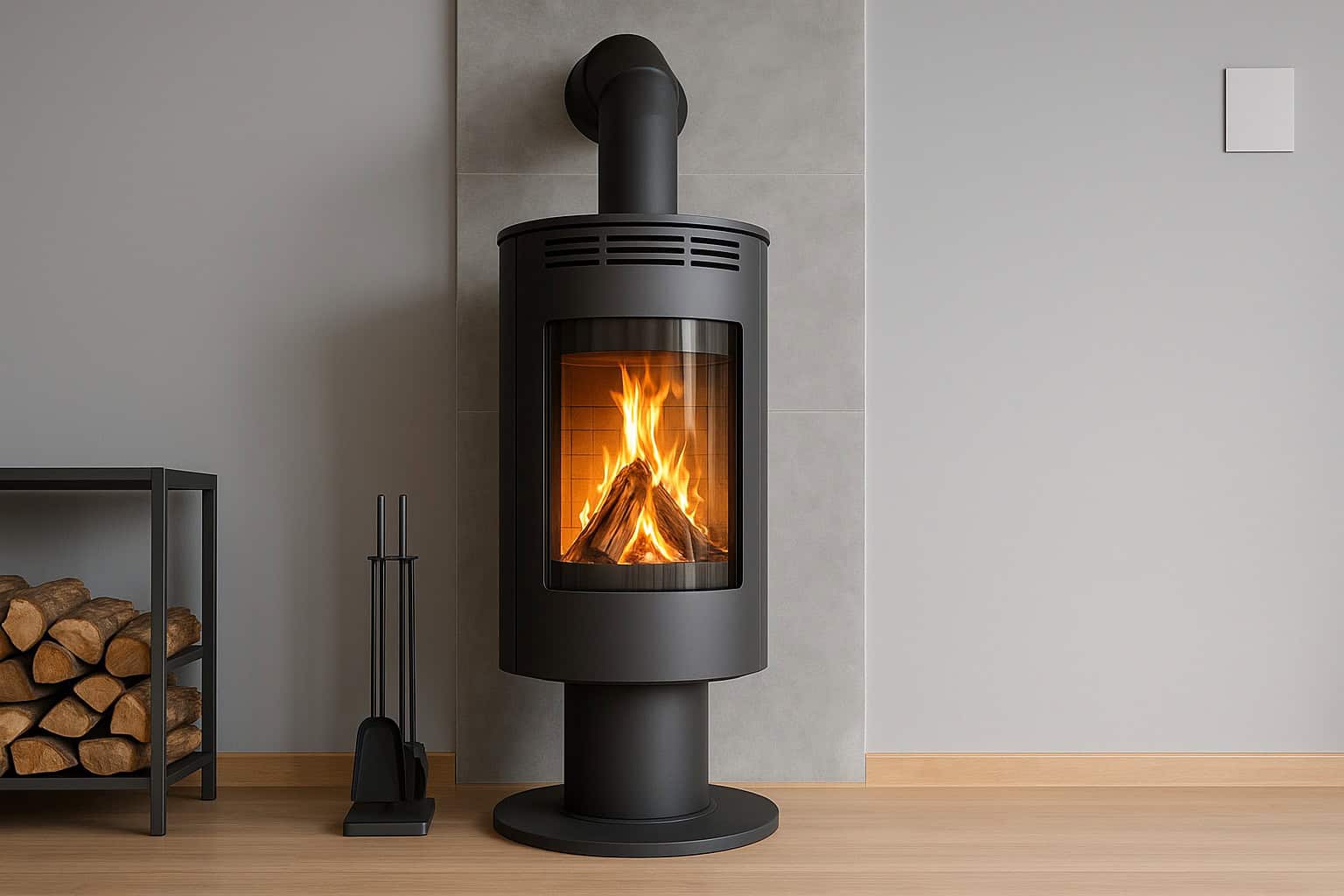
A room pressure monitor for fireplaces is required whenever a wood stove or fireplace with room-air-dependent combustion operates alongside an exhaust ventilation system. The monitor ensures that flue gases are never pushed backward into living areas.
Here's how the sequence works in practice:
The range hood or ventilation system activates and begins extracting air.
The pressure monitor continuously measures room air pressure.
If pressure drops to a critical level, the exhaust system is automatically shut off.
Operation resumes only once sufficient fresh air supply is restored.
These devices are mandatory in many jurisdictions, especially in coordination with a chimney sweep who verifies functionality during routine fireplace inspections and can recommend specific approved models.
Pressure Monitors for Ventilation Systems
A ventilation system delivers controlled air exchange throughout a building. However, when its exhaust fans operate at high capacity, they can create a pressure drop — which becomes dangerous if the space also houses a fireplace, gas boiler, or wood stove. A room pressure monitor for ventilation systems ensures the pressure difference never reaches a hazardous level in these combined setups.
Practical benefits in everyday use:
Select models can also integrate directly into building automation systems, enabling faults to be flagged instantly and exhaust air devices to be managed without any human input.
Pressure Monitors for Range Hoods
The range hood pressure monitor is one of the most common applications. This device protects against back pressure from dangerous gases — for instance, when the chimney is active while someone is cooking with the extractor running.
Integration options include:
Many newer range hoods ship with a built-in interface module, meaning only the external pressure sensor needs to be purchased and connected. This keeps installation simple and cost-effective.
%20(300%20x%20250%20px)%20(1500%20x%201300%20px).jpg)
Wireless Solutions: Radio-Based Pressure Monitors
The industry is moving steadily toward wireless monitoring. A wireless pressure monitor brings several compelling advantages:
Radio-based systems are a clean, efficient choice — especially for older buildings where running new cable is impractical. Always choose certified products with reliable connections and proper safety markings.
Regulations and Safety Standards
Whether a room pressure monitor is legally required depends on the combination of appliances in your building. The general rule is straightforward: if a room-air-dependent combustion appliance (fireplace, wood stove, gas boiler) can run at the same time as an exhaust air system (range hood, bathroom fan, mechanical ventilation), a tested safety device — typically a certified pressure monitor — must be installed.
Key regulations and standards to be aware of:
A conversation with your local chimney professional will clarify the specific requirements for your property. They can recommend compliant models and handle final approval.
Installation and Setup
Professional installation is strongly recommended to ensure accurate measurements and correct switching behavior. Regardless of the model, these principles always apply:
The good news: many modern devices are essentially plug-and-play and don't require extensive installation work. Precise factory calibration ensures dependable long-term performance right out of the box.
Maintenance, Care, and Lifespan
Room pressure monitors are largely maintenance-free, but periodic checks will keep them performing at peak accuracy. Dust buildup or debris in the pressure lines can gradually impair sensor readings.
Recommended maintenance schedule:
High-quality units feature robust, durable sensors and commonly operate for over a decade before any recalibration is needed.
Key Benefits at a Glance
Enhanced safety when using fireplaces alongside exhaust air systems
Reliable protection against carbon monoxide and flue gas backflow
Automatic shut-off response the moment danger is detected
Improved energy efficiency through controlled air exchange
Simple integration into existing setups, including wireless radio options
Common Misconceptions About Pressure Monitors
A surprising number of homeowners assume that a minor pressure drop is nothing to worry about. In reality, it takes only a few pascals of negative pressure to reverse the flow of flue gases from a chimney — a potentially life-threatening situation. Others believe that simply cracking open a window provides enough fresh air to keep things safe. While technically helpful, relying on a window being open is impractical because people routinely forget — especially in cold weather.
This is precisely the gap a room pressure monitor fills. It removes the element of human error and delivers reliable, automated protection around the clock.
Protect Your Home with Professional-Grade Monitoring
The Abatement Technologies RPM-RT Series delivers precise, reliable room pressure monitoring for residential and commercial environments.
RPM-RT Series Pressure Monitor© Backyard Provider — Your Trusted Source for Outdoor Living, HVAC, and Home Safety Solutions