
Introduction
Germicidal ultraviolet radiation has served as a reliable method for sanitizing surfaces and purifying drinking water for over a century. Recent global health events have sparked renewed attention toward this technology, particularly for eliminating harmful pathogens from indoor environments. The application of UVC light for germicidal purposes is commonly referred to as UVGI (Ultraviolet Germicidal Irradiation).
Simultaneously, the marketplace has experienced a surge of portable UV devices marketed as quick-fix solutions for household disinfection. This comprehensive guide examines the scientific principles behind germicidal UV radiation, explains how it neutralizes dangerous microorganisms, and provides practical guidance on measuring UV output to ensure effective disinfection of air and surfaces. We will also evaluate the safety considerations of using consumer-grade UV devices in home settings.

Understanding Ultraviolet Radiation
The ultraviolet portion of the electromagnetic spectrum encompasses wavelengths ranging from 10 to 400 nanometers, positioned between X-rays on the shorter end and visible light on the longer end. Scientists categorize UV radiation into distinct bands based on their biological effects on living organisms.
Vacuum UVC (100-200nm): These extremely short wavelengths cannot travel through atmospheric oxygen and exist only in vacuum conditions.
UVC Band (200-280nm): The germicidal range with peak effectiveness for pathogen elimination.
UVB Band (280-315nm): Responsible for sunburn effects and vitamin D synthesis in human skin.
UVA Band (315-400nm): The longest UV wavelengths, closest to visible light.
UV radiation presents both advantages and risks to human health. While moderate UVB exposure stimulates vitamin D production essential for cellular function, excessive exposure leads to sunburn and potentially skin cancer over time. Human eyes and skin face the greatest vulnerability to UVC radiation, particularly in the 265-275nm wavelength range.
Standard window glass effectively blocks both UVC and UVB radiation while allowing UVA wavelengths to pass through. Specialty quartz glass, however, transmits most UV wavelengths effectively. Among plastics, polycarbonate strongly absorbs wavelengths below 390nm, whereas acrylic materials permit good transmission of UVA and UVB light.

How Germicidal UV Radiation Works
Germicidal ultraviolet radiation refers to short-wavelength UV energy capable of rendering bacteria and viruses inactive. UVC wavelengths between 200-280nm demonstrate germicidal properties, with maximum effectiveness occurring in the 265-270nm range.
Earth's upper atmosphere completely absorbs all solar UVC radiation, meaning no natural sources of this wavelength exist at ground level. Instead, UVC must be generated artificially using specialized equipment such as low-pressure mercury discharge lamps (emitting primarily at 254nm), arc welding processes, or dedicated UV LEDs—though LED technology currently produces questionable intensity levels for germicidal applications.
The Science of Pathogen Deactivation
Research indicates that UVC radiation likely deactivates viral pathogens by damaging their RNA and DNA nucleic acids. This genetic mutation prevents the virus from replicating, effectively neutralizing its infectious capability. Studies on related coronavirus strains have confirmed that germicidal UV treatment successfully deactivates these pathogens.
The critical factor determining UVC effectiveness is the delivered dose. Dose equals the product of lamp irradiance multiplied by cumulative exposure time. Irradiance measures the total radiant energy reaching a surface per unit area, expressed in Watts per square meter (W/m²). Dose is calculated by multiplying irradiance by time in seconds, resulting in Joules per square meter (J/m²).
Respiratory pathogens spread through direct contact with droplets or by touching contaminated surfaces and then touching the face. Airborne transmission also presents significant concern, making germicidal UV lamps valuable for both surface sterilization and air purification in enclosed spaces.
⚠️ Critical Safety Warning
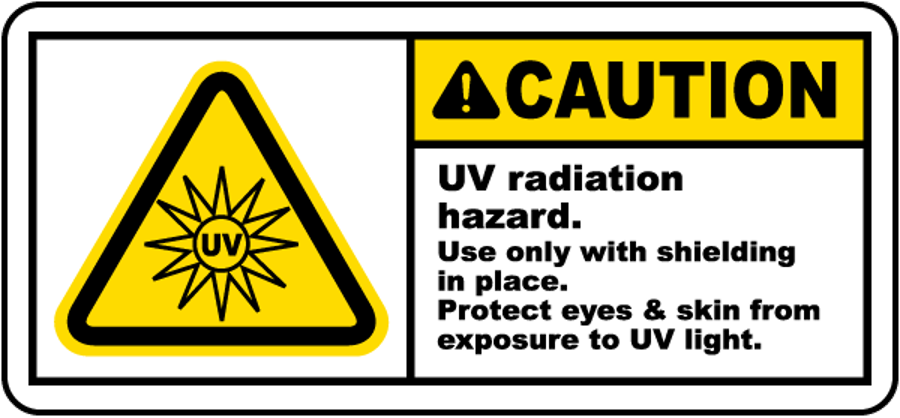
While UVC radiation effectively destroys pathogens, human skin and eye exposure must be strictly avoided. UVC carries significant photobiological hazards and should never be used for hand sanitization or direct body exposure. All germicidal UV equipment must operate within controlled environments, often inside light-tight enclosures, and comply with established safety standards for optical radiation sources.
Determining Effective Sterilization Dosage
The precise action spectrum—the wavelength-dependent response—for specific pathogens may not always be documented. However, standardized germicidal action spectra based on E. coli bacteria deactivation provide useful reference points. This standard spectrum spans from 235 to 313nm, with peak germicidal effectiveness at 265nm.
Practical estimates suggest that achieving effective disinfection with an irradiance of approximately 2mW/cm² (equivalent to 20W/m²) at 254nm requires keeping the UVC source stationary over the target surface for tens of seconds. Research on various coronavirus strains indicates D90 values (the dose required for 90% deactivation) ranging from 7 to 241 J/m², averaging around 67 J/m². This translates to approximately one minute of exposure at an irradiance of 67 W/m² (or 6.7mW/cm²).
Understanding the Inverse Square Law
Like all light sources, UVC irradiance follows the inverse square relationship with distance. When the distance between lamp and surface doubles, irradiance drops to just 25% of its original level. Manufacturers must specify the working distance at which their stated irradiance applies, or users need appropriate measurement equipment to verify actual output levels.
Consumer UV Devices: Exercise Caution
Health crises have unfortunately attracted opportunistic vendors marketing inexpensive UV "wands" as miracle solutions for home disinfection. Many of these products raise serious effectiveness and safety concerns that consumers should carefully consider.
Missing Specifications
Most budget devices fail to specify working distance requirements or actual irradiance output levels, leaving consumers unable to determine proper usage parameters.
Wrong Wavelengths
Some products use violet LEDs that emit outside the germicidal UVC band entirely, providing no actual disinfection capability despite marketing claims.
Blocking Materials
Certain devices incorporate plastic diffusers that actually block UVC transmission, negating any potential germicidal effect from the light source.
Inadequate Intensity
Current UVC LED technology produces significantly lower intensity than discharge lamps, requiring impractically long exposure times to achieve meaningful disinfection.
Furthermore, few consumer device manufacturers adequately warn users about the photobiological hazards of skin and eye exposure to UVC radiation. Without proper specifications and safety guidance, these products pose both effectiveness and safety risks to uninformed consumers.
Measuring UVC Radiation Accurately
Two primary optical measurement approaches exist for quantifying germicidal UV lamp output: radiometry and spectroradiometry. Each method offers distinct advantages depending on application requirements.
Radiometry
The simpler approach employs a filtered photodetector calibrated for the 254nm mercury lamp emission peak. These radiometers measure dose or irradiance in Joules or Watts per square meter. Benefits include affordability, portability, and straightforward operation. However, radiometers only reveal light intensity at the specific calibration wavelength, providing no spectral distribution information across the broader UV range.
Spectroradiometry
The more comprehensive method utilizes a spectroradiometer to measure the complete UVC waveband (or full 200-400nm UV range), reporting spectral irradiance as a function of wavelength. Typically featuring fiber optic collection systems with cosine correctors, these instruments require computer connectivity for operation. While less portable than simple radiometers, spectroradiometers enable calculation of germicidal effectiveness by accounting for the actual or assumed action spectrum of target pathogens.
)
Key Takeaways
UVC germicidal lamps represent a proven technology for disinfecting surfaces contaminated with various bacteria and viruses, including coronavirus strains.
Effectiveness depends critically on the irradiance delivered at the surface, which varies based on lamp-to-surface distance following the inverse square law.
Professional-grade UVC radiometers or spectroradiometers are strongly recommended for verifying adequate dose delivery.
Consumer UV "wands" currently flooding the market often exhibit questionable efficacy and inadequate safety warnings.
UVC germicidal lamps are absolutely unsafe for exposure to unprotected human eyes and skin—never use them for hand sanitization.
Safe Air Purification Solutions
Explore professional-grade air purification systems that utilize UV technology safely enclosed within protective housings, ensuring effective germicidal action without exposure risks.
Airpura UV700 Air PurifierAlways prioritize safety when working with UV disinfection equipment. Consult manufacturer guidelines and safety standards before use.