
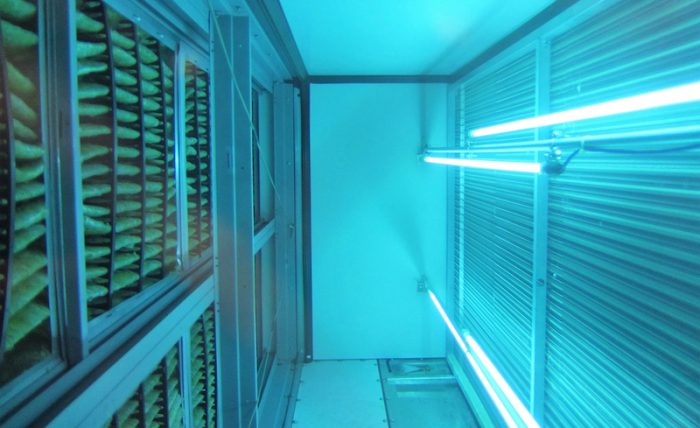
ou have probably come across the claim that adding UV lights to your HVAC setup can rid your home of viruses, bacteria, mold, and other invisible airborne menaces. It sounds incredibly promising — a technology that quietly sanitizes the air flowing through your ducts without you having to lift a finger. But is it really that straightforward? Let us take a closer look at how UV light works, what it can genuinely accomplish, and where the limitations lie.
Understanding Ultraviolet Radiation
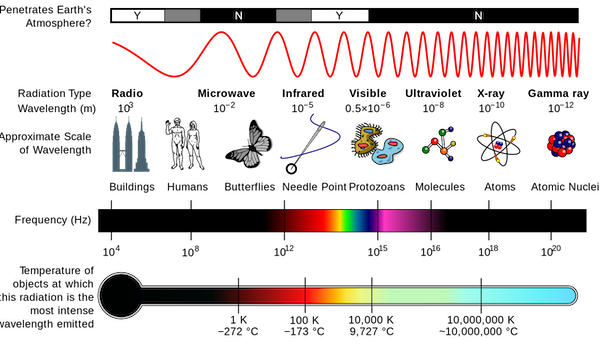
All electromagnetic radiation, whether it is radio waves, visible light, or X-rays, is characterized by its wavelength and frequency. These two properties are inversely related: as wavelength gets shorter, frequency goes up, and along with it, the energy the radiation carries. Visible light occupies just a narrow slice of the electromagnetic spectrum. Ultraviolet (UV) radiation sits just beyond the violet end of visible light, carrying more energy than what our eyes can detect.
UV radiation is divided into three categories. UVA has the longest wavelengths (roughly 315 to 400 nanometers) and is the least energetic of the three. UVB falls in the middle range (280 to 315 nm) and is responsible for sunburns. UVC, with the shortest wavelengths (100 to 280 nm), is the most energetic — and the most relevant for germicidal purposes.
The Three Types of UV Radiation
UVA (315–400 nm): Lowest energy, commonly associated with tanning.
UVB (280–315 nm): Mid-range energy, causes sunburn and skin damage.
UVC (100–280 nm): Highest energy, used for germicidal disinfection — this is the wavelength that matters for air purification.
How UV Light Destroys Microorganisms
UVC radiation is particularly lethal to microorganisms because of how it interacts with their DNA. When microbes are exposed to UVC light at the right intensity and duration, their genetic material absorbs the energy and becomes damaged beyond repair. This prevents the organisms from reproducing or functioning, effectively neutralizing them.
The natural source of UVC is the sun, but almost all solar UVC is absorbed by the ozone layer before it reaches the Earth's surface. Artificial UVC lamps replicate this germicidal wavelength, typically targeting around 254 nanometers, which is considered the peak efficiency for destroying pathogens. This is the same principle used in hospitals and laboratories to sterilize equipment and surfaces.
There are important caveats, though. UVC effectiveness depends heavily on two factors: the intensity of the light and how long the microorganism is exposed to it. A brief pass through a UV beam inside a duct may not be enough to kill hardier pathogens. Additionally, UVC can generate ozone as a byproduct, which itself is an air pollutant. Quality UVC systems are designed to minimize ozone production, but it remains a consideration.
![Different bands of ultraviolet wavelengths are absorbed differently by the atmosphere [Image by NASA, public domain]](https://images.greenbuildingadvisor.com/app/uploads/2020/04/23104838/ultraviolet-uva-uvb-uvc-absorption-by-atmosphere.png)
What Can UV Lamps Actually Do?
It is worth noting that the germicidal power of UVC radiation is well established in controlled settings. Hospitals have used upper-room UVC fixtures for decades to reduce airborne transmission of tuberculosis and other diseases. In these applications, the UV lamps are mounted high on the walls or ceiling, creating a disinfection zone above head height where air circulates naturally.
In residential HVAC systems, the application is different. UV lamps installed inside ductwork or near the evaporator coil aim to neutralize pathogens as air flows past. One genuinely useful function is keeping the evaporator coil free of mold and biofilm. Coils are damp environments that are perfect for microbial growth, and a UV lamp shining directly on the coil can prevent that buildup. This keeps the system running more efficiently and prevents musty odors.
Key Takeaway
Where UV lamps truly excel in residential settings is in keeping your HVAC evaporator coil clean. By preventing mold and biofilm accumulation, they help your system run more efficiently and reduce musty smells — a practical, proven benefit.
However, when it comes to sterilizing the air itself as it passes through ductwork, the results are far less impressive. The fundamental problem is contact time. Air moves through residential ducts at relatively high speeds, and the fraction of a second that air spends in front of a UV lamp is often not long enough to deliver a lethal dose to microorganisms. Some pathogens, particularly certain mold spores and viruses, require significantly more exposure time than a typical residential UV setup can provide.
![UV germicidal effectiveness peaks at a wavelength of 265 nm [ASHRAE HVAC Applications Handbook, 2019]](https://images.greenbuildingadvisor.com/app/uploads/2020/04/22163936/uv-germicidal-effectiveness-ashrae-handbook.png)
UV Lamps in Home HVAC Systems
Many HVAC companies now offer UV lamp add-ons as part of their residential packages. These products vary widely in design and effectiveness. Some are robust systems that include multiple lamps positioned strategically within the air handler, while others are inexpensive single-bulb units that mount in the return duct.
The honest assessment is that most residential UV lamp installations do not generate enough UVC intensity to meaningfully sterilize the volume of air passing through a typical HVAC system. The air speed is too high and the lamp output is too low. Some manufacturers overstate their products' effectiveness, claiming broad-spectrum pathogen elimination without providing independent test data to support those claims.
Additionally, UV lamps do absolutely nothing about particulate matter. Dust, pet dander, pollen, and smoke particles pass right through UV light without being affected. These are the pollutants that most commonly degrade indoor air quality for the average homeowner, and a quality air filtration system remains the best defense against them.
UV Lamps vs. Air Purifiers: At a Glance
UV Lamps
Target biological contaminants only. Great for coil maintenance. Limited airstream sterilization in residential settings. No help with particles or chemical pollutants.
Air Purifiers
Capture particulates, allergens, smoke, and chemical compounds. HEPA filtration combined with UV or activated carbon offers the most comprehensive indoor air quality improvement.
The Significant Downsides of UV Lamps Alone
Beyond the limitations in killing airborne pathogens, UV lamps come with several practical drawbacks. First, the bulbs degrade over time and need replacement — typically every one to two years — which adds ongoing cost. Second, UV lamps consume electricity continuously, adding to your energy bill, though the amount is generally modest.
A more serious concern is ozone generation. While UVC at 254 nm does not inherently produce ozone, some lower-quality lamps emit wavelengths closer to 185 nm, which can create ozone from oxygen molecules in the air. Ozone at ground level is a respiratory irritant and can worsen asthma and other lung conditions. It is important to select UV lamps specifically designed to minimize ozone output if you do choose to install them.
There is also the issue of false security. Homeowners who install UV lamps may believe their air quality problems are solved, leading them to neglect more effective measures like upgrading their air filter, sealing duct leaks, managing humidity, or investing in a dedicated air purification system. UV lamps should never be considered a standalone solution for indoor air quality.
⚠ Important Consideration
UV lamps do not filter particles, remove chemical pollutants, or address volatile organic compounds. For comprehensive air quality improvement, they should be paired with HEPA filtration and activated carbon technologies.
So What Should a Homeowner Actually Do?
If your primary concern is biological contaminants — mold on the coil, bacterial growth in the air handler — then a UV lamp aimed directly at the evaporator coil is a worthwhile investment. It serves a targeted and proven function in that specific application.
However, if you are looking for meaningful, whole-home air quality improvement, a standalone air purifier that combines HEPA filtration with UV technology offers far better results than a duct-mounted UV lamp alone. These units are specifically engineered to slow air down enough to allow effective UV exposure while simultaneously capturing particulate matter through high-efficiency filters.
The most effective approach combines several strategies: use quality air filters rated MERV 13 or higher in your HVAC system, maintain proper humidity levels between 30 and 50 percent, ensure your ductwork is well sealed, provide adequate ventilation, and consider adding a dedicated air purifier for rooms where you spend the most time.
Our Recommendation
Get Comprehensive Air Purification That Works
Instead of relying solely on UV lamps in your ductwork, consider a purpose-built air purifier that combines UV germicidal technology with advanced HEPA filtration for truly clean indoor air.
The Bottom Line
UV lights are not snake oil — they have genuine, science-backed applications, particularly in keeping HVAC coils clean and in clinical-grade air disinfection systems. But in the context of a typical residential HVAC setup, their ability to sterilize air as it flows through your ducts is limited at best. They cannot filter particles, they do nothing about chemical pollutants, and they may give you a false sense of security.
The smart approach is to focus on proven fundamentals — quality filtration, proper ventilation, humidity control, and sealed ductwork — and to consider a dedicated air purifier if biological contaminants are a primary concern. That combination will deliver far better results than any single technology on its own.