
When most homeowners think about air purification, HEPA filters come to mind first. These filters have earned their reputation for trapping dust, pollen, pet dander, and other microscopic particles. However, there's an entire category of indoor pollutants that HEPA technology simply cannot address — volatile organic compounds, commonly known as VOCs.
These invisible gaseous chemicals float through your living spaces, originating from everyday household items, and can significantly impact your health and comfort. Understanding this limitation is the first step toward achieving truly clean indoor air.
The Problem With Gaseous Pollutants
HEPA filters function by physically capturing particles as air passes through a dense mesh of fibers. They excel at removing solid matter down to 0.3 microns in size. VOCs, however, exist as gases — individual molecules far too small for any physical filter to catch. They slip right through HEPA media as if it weren't there.
It's important to understand that prolonged exposure to elevated VOC levels has been associated with various health concerns, from respiratory irritation and headaches to more serious long-term effects. Certain VOCs are classified as carcinogens, making proper filtration essential for health-conscious households.
Common Household Sources of VOCs
Building Materials
Paints, varnishes, adhesives, and composite wood products release formaldehyde and other chemicals, especially when new.
Cleaning Products
Disinfectants, air fresheners, and household cleaners often contain VOCs that linger in indoor air long after use.
Furniture & Fabrics
New furniture, carpets, and upholstery can off-gas chemicals for months or even years after purchase.
Personal Care Items
Perfumes, hairsprays, nail polish, and cosmetics contribute to indoor VOC levels daily.
The Technology That Actually Captures VOCs
Activated Carbon: The Gold Standard
Unlike mechanical filtration, activated carbon uses a process called adsorption to trap gaseous molecules. The carbon is treated to create millions of microscopic pores, dramatically increasing its surface area. A single gram of quality activated carbon can have a surface area exceeding 3,000 square meters. VOC molecules are attracted to and held within these pores, effectively removing them from the air stream.
Outperforming Other VOC Technologies
VOC-specific purifiers stand apart from alternatives that claim similar benefits. Ionizers and ozone generators, for instance, attempt to neutralize pollutants through chemical reactions. However, these methods often produce ozone as a byproduct — itself a respiratory irritant. Photocatalytic oxidation systems can break down some VOCs but may generate harmful intermediary compounds in the process.
Activated carbon remains the safest, most proven approach for comprehensive VOC removal without introducing secondary pollutants into your environment.
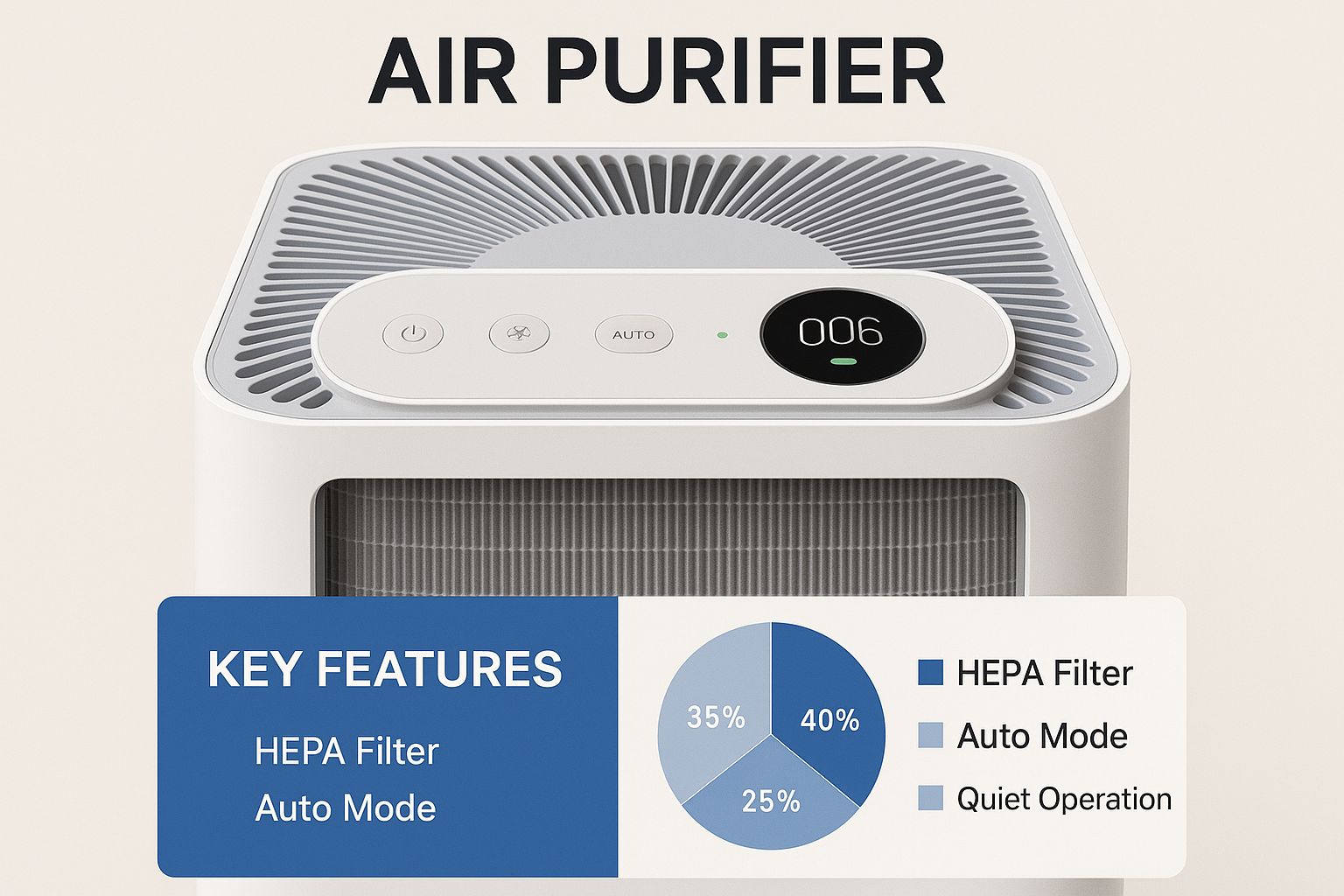
What to Look For in a VOC Air Purifier
Selecting the right purifier for VOC removal requires attention to specific features that determine effectiveness. Not all activated carbon filters are created equal, and the quality of construction directly impacts performance.
Choosing the Right Purifier for Your Needs
For a Single Bedroom or Office
A compact unit with moderate carbon capacity will serve smaller spaces effectively. Position it near potential VOC sources for optimal results.
For Living Areas and Kitchens
Mid-size units with enhanced carbon beds handle the higher pollutant loads found in cooking areas and high-traffic rooms where cleaning products are frequently used.
For Chemical Sensitivities or Heavy Contamination
Those with multiple chemical sensitivity or homes with significant VOC sources should consider professional-grade purifiers with maximum carbon capacity and enhanced filtration stages.
Professional-Grade VOC Elimination
Experience the difference a purpose-built air purifier makes. With an 18-pound activated carbon bed and true HEPA filtration, achieve comprehensive protection against both gaseous and particulate pollutants.
Airpura F600DLX Air PurifierLooking Beyond the Purifier: A Whole-Home Approach
While quality air purification forms the foundation of VOC control, a comprehensive strategy incorporates additional measures for lasting results.
Source Control
Choose low-VOC paints, finishes, and furnishings. Allow new items to off-gas in well-ventilated areas before bringing them into living spaces.
Ventilation Strategy
Regular fresh air exchange dilutes accumulated pollutants. Consider energy recovery ventilators for efficient air exchange without sacrificing climate control.
Maintenance Commitment
Replace carbon filters according to manufacturer recommendations. Saturated filters no longer adsorb pollutants and may even release captured compounds back into the air.
Common Questions About Air Purifiers for VOCs
Can a Purifier Remove Mold Odors from My Home?
Air purifiers with activated carbon can effectively capture the musty odors associated with mold. However, the source of mold growth must be addressed directly — purification alone won't solve an active mold problem.
How Long Do Carbon Filters Last?
Filter lifespan varies based on VOC concentrations in your environment. In typical residential settings, quality carbon filters last two to three years. Heavy contamination may require more frequent replacement.
Should I Run the Purifier Continuously?
For optimal air quality, continuous operation is recommended. Quality units are designed for 24/7 use and consume minimal electricity. Turning the purifier off allows pollutants to accumulate between cycles.
Can One Purifier Cover My Entire Home?
Room-sized purifiers work best when positioned in specific areas. For whole-home coverage, consider multiple units or a whole-house system integrated with your HVAC equipment.
Clean air isn't just about what you can see — it's about eliminating the invisible compounds that affect your health every day. With the right purification technology, you can transform your indoor environment into a sanctuary of truly fresh air.