
✦ Quick Overview
Germicidal ultraviolet (GUV), also called ultraviolet germicidal irradiation (UVGI), harnesses UV energy to neutralize bacteria, viruses, and fungal organisms in your environment.
GUV works best as one component of a comprehensive approach to minimizing airborne pathogen exposure, complementing strategies like proper ventilation systems.
This technology performs exceptionally well in communal environments such as open-plan workspaces and educational facilities.
What is GUV Technology?
GUV technology utilizes ultraviolet light energy to eliminate bacteria, viruses, and fungal microorganisms. This technology finds widespread application in residential, commercial, educational, and healthcare environments.
When properly engineered and installed, this technology employs UV energy to deactivate harmful microorganisms, including various viruses. GUV serves as an additional form of ventilation enhancement and does not require outdoor air code modifications for indoor air purification.
Ventilation solutions can significantly reduce the concentration of infectious airborne particles such as certain coronavirus strains in indoor spaces. Various ventilation approaches include opening windows, utilizing fans, installing high-efficiency air filtration systems, and implementing upper-room GUV technology.
📌 Important Note
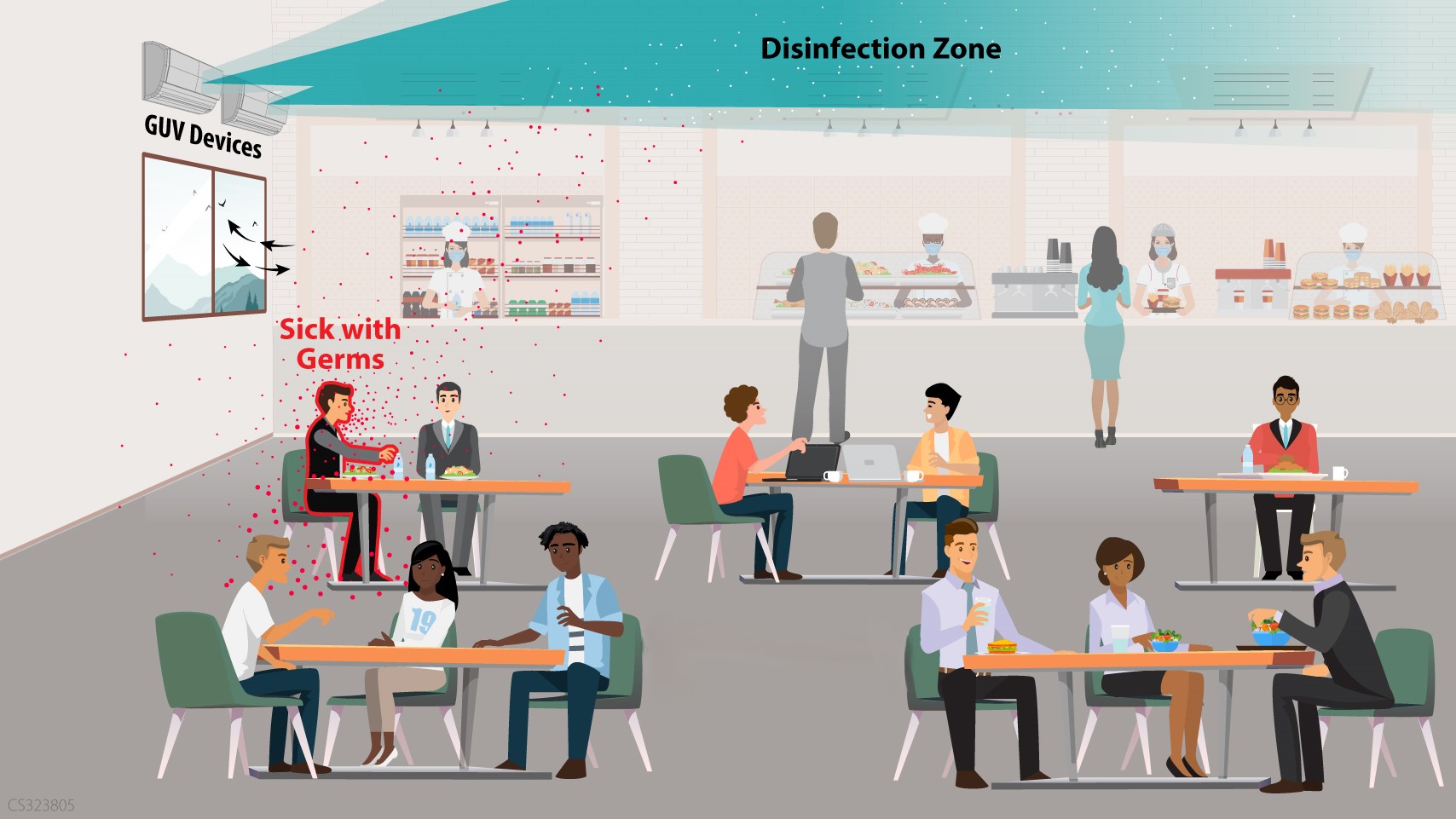
This guide focuses on upper-room GUV systems. Upper-room GUV technology can effectively reduce pathogen exposure in various group settings and environments.
Upper-Room GUV Explained
How the Process Works:
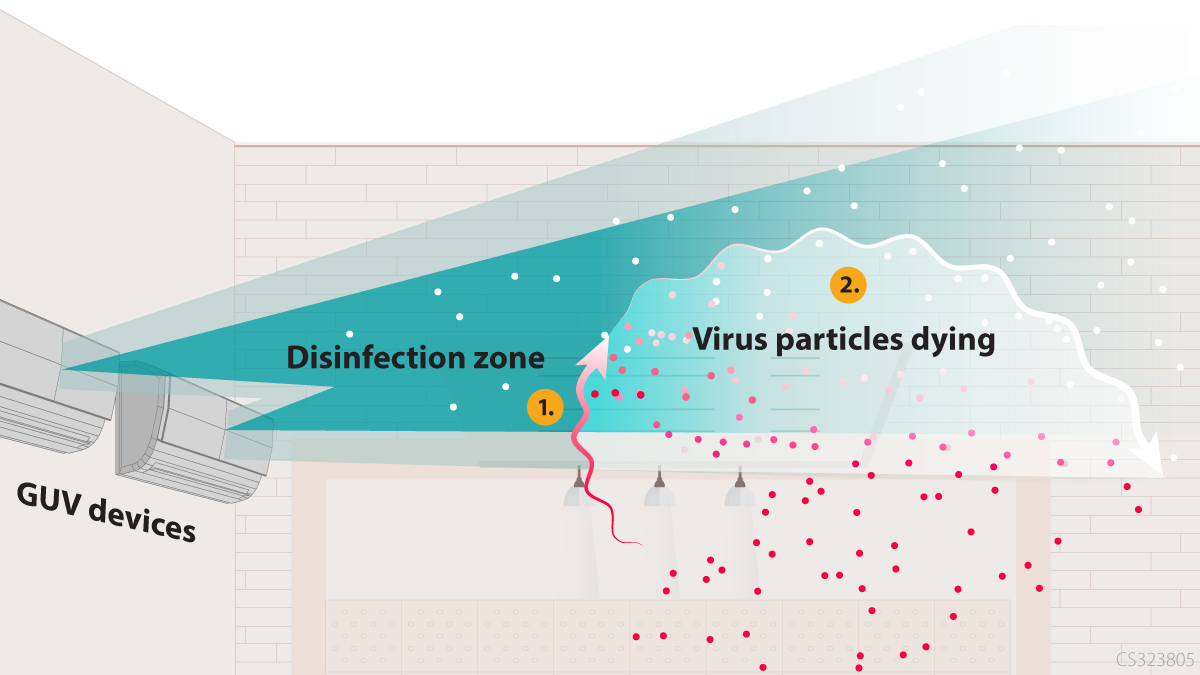
Contaminated air circulates through the disinfection zone via HVAC systems, ventilation fans, and natural window airflow.
Airborne viral particles become neutralized upon receiving sufficient UV energy exposure. These particles remain suspended in the air but lose their ability to cause infection.
Key Insight: For airborne viral particles, upper-room GUV systems deliver air changes per hour comparable to introducing fresh outdoor air into the space.
Where GUV Works Best
The most effective locations for GUV installation are high-risk indoor environments. Consider these ideal settings:
Environments with elevated concentrations of potentially ill individuals (medical waiting areas, school health offices, hospital visitor lounges)
Densely populated spaces where occupant health status remains uncertain (waiting areas, lobbies, shelters, dormitory sleeping quarters)
Locations with inadequate or non-existent mechanical HVAC systems, or where proper natural ventilation cannot be sustained year-round
GUV technology proves particularly valuable in spaces lacking sufficient airflow or where maintaining adequate ventilation presents challenges. Indoor spaces should measure at least 8 feet tall, with a preferred minimum ceiling height of 8.5 feet. These systems work optimally with adequate airflow to circulate air through the disinfection zone, achieved through fans operating at low speeds.
Upper-room GUV becomes less critical in open-air environments or outdoor seating areas. Similarly, if your HVAC system supports efficient air filtration or delivers outdoor air volumes exceeding minimum code requirements, supplemental air purification methods may provide limited additional benefit.
Installation & Maintenance Guidelines
💰 Cost Considerations
A standard room of approximately 500 square feet typically requires two to three UV fixtures. Installation costs for a 500 square foot space generally range from $1,500 to $2,500.
🔧 Maintenance Requirements
Once operational, these systems demand minimal upkeep. UV lamps typically require annual replacement, though some manufacturers provide two-year replacement intervals. Lamp surfaces can be cleaned with rubbing alcohol when the unit is powered off.
⏱️ Scheduled Maintenance
Maintenance personnel should coordinate lamp replacements or repairs with times when workers can access areas near the ceiling. UV fixtures must be completely powered down before any service, and maintenance staff should receive thorough training on GUV system protocols.
Implementation Best Practices
Key implementation factors include:
Safety & Effectiveness
Upper-room GUV systems have demonstrated both safety and effectiveness across decades of use. However, UV energy directed or reflected into occupied spaces carries potential risks including temporary eye or skin irritation.
Controlled Access
Systems should connect to designated electrical switches with restricted access to prevent unauthorized operation. Consider using lockable switches in public areas where only trained staff should have control.
Pathogen Effectiveness
Influenza viruses show greater susceptibility to UV energy compared to tuberculosis bacteria. Upper-room GUV systems engineered for TB control will also effectively neutralize seasonal flu, various coronavirus strains, and numerous other respiratory pathogens.
Environmental Considerations
UV energy may cause gradual fading of certain materials, including wood surfaces and wall coverings, particularly those in close proximity to fixtures. Exercise caution when installing upper-room GUV in spaces containing delicate architectural features and finishes.
Expert Recommendations
Choosing an Upper-Room GUV System
● Exercise caution when installing GUV in spaces where individuals might gain access to the unit's disinfection zone near ceiling level (such as overhead walkways or balconies). Appropriate warning signage, safety barriers, and staff training protocols should be established.
● Consult qualified GUV professionals or reputable UV system manufacturers who can ensure proper installation according to established guidelines.
● Verify environmental protection certifications and confirm the manufacturing facility meets quality standards for your region.
● Inquire about performance guarantees and whether the manufacturer provides maintenance training programs.
Current Applications & Research
Upper-room GUV technology has been deployed for over seven decades to combat airborne pathogens. Since the 1990s, extensive research has focused on utilizing upper-room GUV systems specifically for tuberculosis control.
Current research and ongoing implementation of upper-room GUV systems continues to build upon scientific evidence and proven best practices developed through decades of real-world application.
Improve Your Indoor Air Quality
Explore professional-grade air purification solutions featuring advanced UV technology for your home or business.
Airpura UV700 Air PurifierThis article is for informational purposes only. Always consult qualified professionals for installation and safety guidance.