
Automatic gates have transformed the way homeowners and businesses manage entry to their properties. These systems combine powerful motors, smart sensors, and advanced control technology to deliver seamless security and convenience. Whether you're considering a swing gate for your driveway or a sliding gate for a commercial lot, understanding how these systems work can help you make the best investment for your property.
In this in-depth guide, we'll walk you through every essential component, explain how each type of gate operates, and cover the safety features and access control options that make modern automatic gates so reliable.
What Makes Automatic Gates Work
At the heart of every automatic gate is a carefully engineered system of interconnected components. Each element plays a specific role in ensuring your gate opens and closes smoothly, safely, and on command.
Electric Gate Motor and Opener
The gate motor is the powerhouse of the entire system. It converts electrical energy into the mechanical force required to move a heavy gate panel. Motors are typically powered by standard AC mains electricity or low-voltage DC power. The type and size of the motor depends on several factors, including the weight of the gate, how frequently it will be used, and the style of movement — whether swinging or sliding.
When a command is received — through a remote control, keypad, or smartphone app — the motor activates and drives the gate along its intended path. Modern motors feature variable speed settings, which allow the gate to start and stop gently, reducing mechanical wear and extending the life of the system.
Power Supply and Wiring
Reliable power delivery is critical for consistent gate operation. Most residential automatic gates connect directly to the property's main electrical supply, which is then converted to the appropriate voltage for the motor. Low-voltage wiring runs from the control unit to the motor, sensors, and any auxiliary devices such as intercoms or lighting.
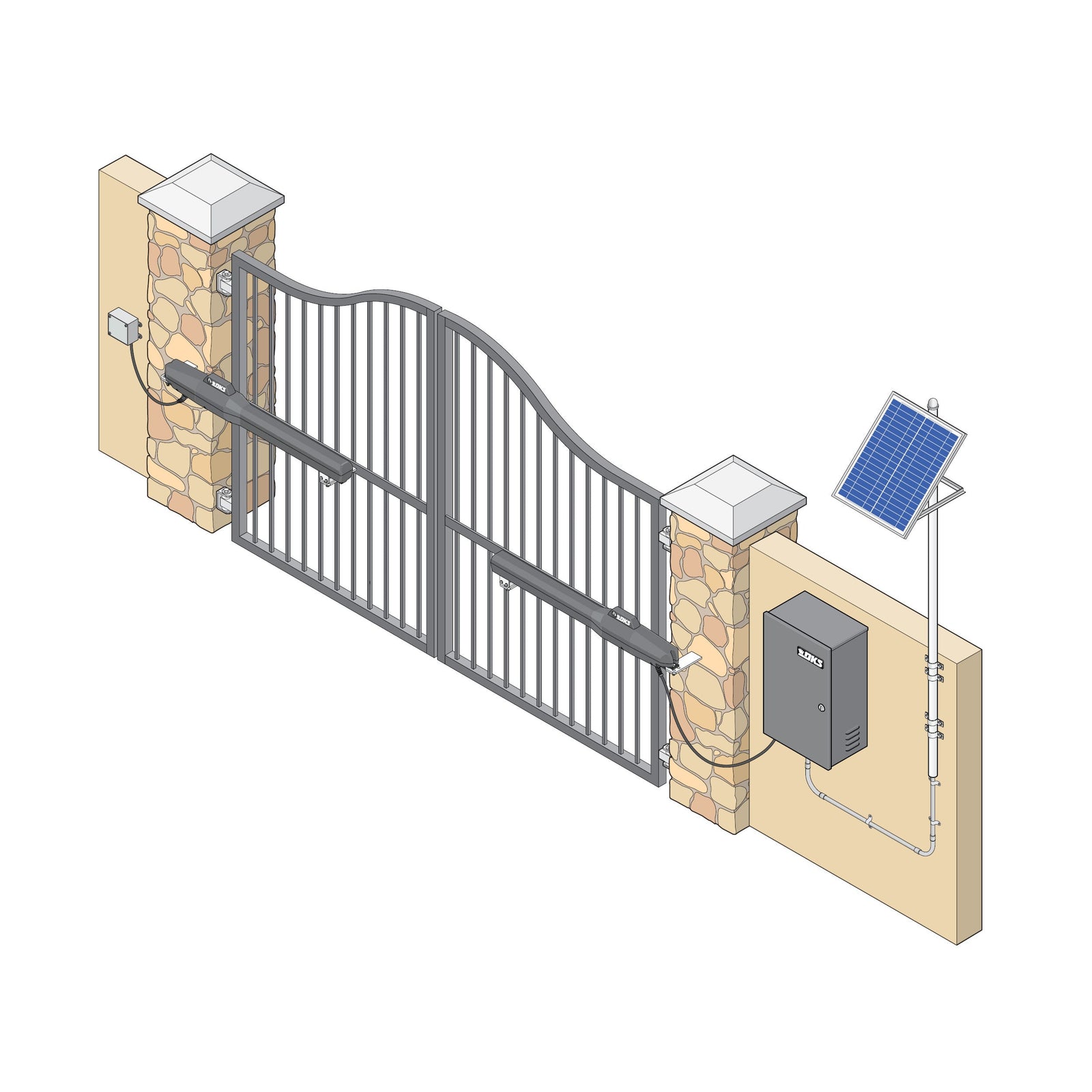
Many modern systems also incorporate solar panel options, making them ideal for remote or off-grid properties. These solar-powered setups use rechargeable batteries to store energy, ensuring the gate functions even during extended cloudy periods.
Control Unit and Signal Processing
The control unit serves as the brain of the automatic gate. It receives input signals from remotes, keypads, smartphone apps, and sensors, then translates those signals into precise motor actions. Advanced control units can be programmed with custom settings, including adjustable speed, auto-close timers, and partial-opening modes for pedestrian access.
This unit also monitors sensor feedback continuously. If an obstruction is detected during gate movement, the control unit immediately halts or reverses the motor to prevent damage or injury.
Pro Tip: When choosing a gate system, look for a control unit with built-in diagnostics. This feature alerts you to potential issues — like low battery or sensor faults — before they become problems.
How Sensors Detect Movement and Obstacles
Sensors are the safety backbone of every automatic gate installation. They work tirelessly to detect vehicles, people, and obstructions, ensuring the gate operates without causing harm.
Common Sensor Types
- Infrared Photoelectric Sensors: These project an invisible beam across the gate's path. When the beam is interrupted by a person, vehicle, or object, the gate halts or reverses immediately.
- Induction Loop Detectors: Buried beneath the driveway surface, these loops detect the metal mass of an approaching vehicle and trigger the gate to open automatically.
- Pressure Sensors: Installed along the gate's leading edge, pressure-sensitive strips activate the safety stop function the moment the gate contacts an object.
- Motion Detectors: Radar or microwave-based sensors monitor a defined zone near the gate, detecting approaching vehicles or pedestrians and initiating the opening sequence.
Most professional installations combine multiple sensor types to create layered safety coverage. For example, a residential driveway gate might use both infrared beams and an induction loop, ensuring reliable detection under all conditions.

Types of Automatic Gates and How They Operate
Automatic gates come in several configurations, each suited to different property types, space constraints, and aesthetic preferences. Understanding the differences helps you choose the right system for your needs.
Swing Gates and Their Mechanism
Swing gates are the most traditional and widely installed style. They operate much like a standard door, pivoting open and closed on heavy-duty hinges mounted to gate posts or pillars. Swing gates can be configured as single-leaf (one panel) or dual-leaf (two panels that meet in the center).
The motor for a swing gate is typically an articulated arm operator or an underground hydraulic ram. Articulated arm systems are visible and mount directly to the gate and post, while underground operators are concealed beneath the driveway surface for a cleaner appearance. The choice between these depends on the gate's weight, the desired aesthetic, and the available installation space.
Swing gates require adequate clearance in their arc of movement. This means you need to consider the slope of your driveway, the distance from the road, and any landscaping features that could interfere with the gate's path.
Upgrade Your Driveway with Style
Discover a beautifully crafted swing gate designed for durability and curb appeal.
Amazing Gates Concord Swing GateHow Sliding Gates Work
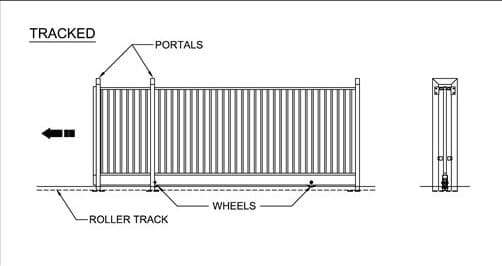
Sliding gates move horizontally along a track or rail system, making them an excellent choice for properties with limited space in front of the driveway. Instead of swinging outward or inward, the gate panel glides to one side, parallel to the fence line.
A rack-and-pinion drive system is the most common mechanism for sliding gates. A toothed rack is mounted along the bottom edge of the gate, and a motorized pinion gear engages with the rack to push the gate open or pull it closed. Some systems use V-track designs, where the gate rides along a V-shaped rail embedded in the ground, while cantilever systems suspend the gate above the ground entirely, eliminating track maintenance issues.
Sliding gates are generally better suited for heavier and wider openings, making them popular for commercial and industrial properties. They also perform well on sloped driveways where a swing gate might struggle.
Telescopic and Bi-Folding Gates
For properties with very limited lateral space, telescopic and bi-folding gates offer compact alternatives. Telescopic gates consist of two or more panels that stack behind one another when opening, requiring roughly half the clearance of a standard sliding gate. Bi-folding gates feature hinged panels that fold inward like an accordion, allowing rapid opening while using minimal space.
These designs are increasingly popular in urban settings and for driveways where space is at a premium. While they involve slightly more complex mechanics, modern systems are engineered for smooth, reliable daily operation.
Boom and Vertical Lift Gates
Boom barriers and vertical lift gates are specialized solutions commonly found in commercial parking facilities, gated communities, and high-security environments. Boom gates use a motorized arm that raises and lowers to control vehicle access, while vertical lift gates raise the entire gate panel straight up, making them ideal for locations where neither swinging nor sliding is practical.
Access Control Systems for Automatic Gates
One of the greatest advantages of an automatic gate is the ability to control exactly who can enter your property. Modern access control systems offer a wide range of options, from simple remotes to sophisticated biometric scanners.

Remote Controls and Keypads
Handheld remote transmitters remain the most popular way to operate an automatic gate. They use encrypted radio frequency signals to communicate with the control unit, and most modern remotes offer rolling-code encryption to prevent signal interception. Keypads mounted at the gate entrance allow visitors to enter a PIN code for access, providing a convenient option for deliveries, guests, and service personnel.
Smartphone Apps and Wi-Fi Integration
Wi-Fi-enabled gate controllers let you open, close, and monitor your gate from anywhere using a smartphone app. Many systems also integrate with popular smart home platforms, allowing you to incorporate gate control into automated routines — for example, having the gate open automatically when your phone's GPS detects you approaching home.
Biometric and Card-Based Access
For enhanced security, biometric readers such as fingerprint scanners and facial recognition systems offer keyless, highly secure entry. RFID card and tag systems are another popular option, especially for multi-user environments like apartment complexes and office buildings where each resident or employee carries a pre-programmed access credential.
Intercom and Video Entry Systems
Video intercom systems allow you to see, hear, and speak with visitors at your gate before granting access. These systems are particularly valuable for residential properties, as they let you verify the identity of anyone requesting entry without having to walk to the gate yourself. Many integrate seamlessly with smartphone notifications for remote visitor management.
Power Supply and Backup Options
Ensuring your automatic gate has a consistent and reliable power source is essential. A gate that fails to operate during a power outage can be a significant inconvenience — or a security concern.
Mains Electricity vs. Solar Power
Most automatic gate systems draw power from the property's main electrical supply. This provides consistent, uninterrupted energy for daily operation. However, solar-powered gate systems have become increasingly popular, especially for rural, agricultural, and off-grid properties. Solar panels charge an onboard battery during daylight hours, storing enough energy to power the gate through multiple cycles per day — even in overcast conditions.
Battery Backup During Power Outages
High-quality automatic gate systems include an uninterruptible power supply (UPS) or battery backup unit. These backup batteries kick in automatically when mains power is lost, allowing the gate to continue operating normally for a period ranging from several hours to multiple days, depending on the battery capacity and usage frequency.
Important: Always ensure your gate system includes a manual release mechanism. In the event of a complete power failure — including battery backup depletion — you need a way to open the gate manually for emergency access.
Safety Features and User Protection
Automatic gates involve heavy, moving components, so robust safety features are not optional — they are absolutely essential. Reputable manufacturers and installers build multiple layers of protection into every system.
Obstacle Detection and Auto-Reverse
The most critical safety mechanism is the auto-reverse function. When the gate's sensors detect an obstacle during closing — whether it's a person, pet, vehicle, or object — the system immediately stops the gate and reverses its direction. This feature is a regulatory requirement in many regions and is standard on all quality gate systems.
Anti-Crushing and Braking Systems
Advanced gate operators incorporate force-limiting technology that continuously monitors the resistance encountered by the gate during movement. If the motor detects an unusual level of resistance — indicating that something may be caught — it halts immediately. Some systems also feature electromagnetic brakes that hold the gate firmly in place when it's not actively being driven, preventing wind or gravity from causing unintended movement.
Failsafe Mechanisms for Secure Operation
In the event of a system malfunction, failsafe mechanisms ensure the gate defaults to a safe state. Depending on the configuration, this might mean the gate locks in its current position, opens fully to allow unrestricted access, or releases to allow manual operation. The appropriate failsafe behavior depends on whether security or access is the higher priority for your property.
Conclusion
Automatic gates are a sophisticated blend of mechanical engineering, electronic control, and modern connectivity. From the motor and power supply to sensors, access control, and safety systems, every component works together to deliver the security, convenience, and curb appeal that property owners value.
Whether you're drawn to the classic elegance of a swing gate or the space-saving efficiency of a sliding system, understanding how these gates work empowers you to choose the right solution for your property. With proper installation, regular maintenance, and the right accessories, an automatic gate can serve your home or business reliably for many years to come.
Ready to Transform Your Driveway?
Explore our premium swing gate options and find the perfect fit for your property.
Amazing Gates Concord Swing GateKey Takeaways
- Automatic gates rely on electric motors, control units, and sensors working together as an integrated system.
- Swing gates pivot on hinges while sliding gates travel along a horizontal track — each type suits different property layouts.
- Modern access control ranges from simple remotes and keypads to smartphone apps and biometric scanners.
- Multiple sensor types create layered safety coverage to protect people, pets, and vehicles.
- Battery backup and manual release mechanisms ensure your gate remains functional during power outages.
- Safety features like auto-reverse and force limiting are essential and often legally required.
Frequently Asked Questions
Automatic gates use a combination of input signals and sensors to determine when to open. These include remote control commands, keypad entries, smartphone app triggers, vehicle induction loops embedded in the driveway, and motion detection sensors positioned near the gate entrance.
Yes, most quality systems include a battery backup that activates automatically when mains power is lost. Additionally, all properly installed automatic gates feature a manual release mechanism that allows you to operate the gate by hand if both the primary power and backup battery are unavailable.
The primary considerations include the initial cost of purchase and installation, ongoing maintenance requirements for motors and moving parts, and the possibility of mechanical or electrical failure. However, modern systems are highly reliable, and routine maintenance significantly reduces the likelihood of unexpected issues.
Most residential gate motors are relatively energy-efficient, consuming power only during the brief periods when the gate is actively opening or closing. In standby mode, power consumption is minimal. Solar-powered systems can reduce electricity costs even further, making them an excellent option for energy-conscious property owners.
With proper installation and regular maintenance, a quality automatic gate system can last 15 to 25 years or more. The motor may require servicing or replacement sooner than the gate structure itself, but most modern operators are designed for tens of thousands of opening cycles.