
In This Article
- › Practical Tips: Where, When & How to Use a Towel Warmer
- › Key Benefits of Owning a Heated Towel Rack
- › Plug-In vs. Hardwired vs. Dual Connect Models
- › What to Know Before Installing
- › Smart Controls & Timer Options
- › Electric vs. Hydronic: Which Is Right for You?
- › Are Towel Warmers Worth the Money?
- › How to Pick the Perfect Towel Warmer
- › Frequently Asked Questions
Most people think of towel warmers as single-purpose bathroom accessories, but the truth is these appliances are far more versatile than they get credit for. A quality heated towel rack does much more than wrap you in warmth after a shower. It can dry delicate garments, heat up blankets and robes, and even provide gentle supplemental warmth to the room itself — all while keeping energy bills remarkably low.
Whether you are building a new home, renovating an existing bathroom, or simply looking for an affordable upgrade that delivers everyday comfort, this guide covers everything you need to make a confident decision.
Practical Tips: Where, When & How to Use a Towel Warmer
Heated towel racks are a natural fit in any home with a shower or bathtub. If you have a bare stretch of wall near your bath or an old unheated towel bar, you can swap it out for an electric model without sacrificing any floor space. The upgrade is simple and the payoff is immediate.
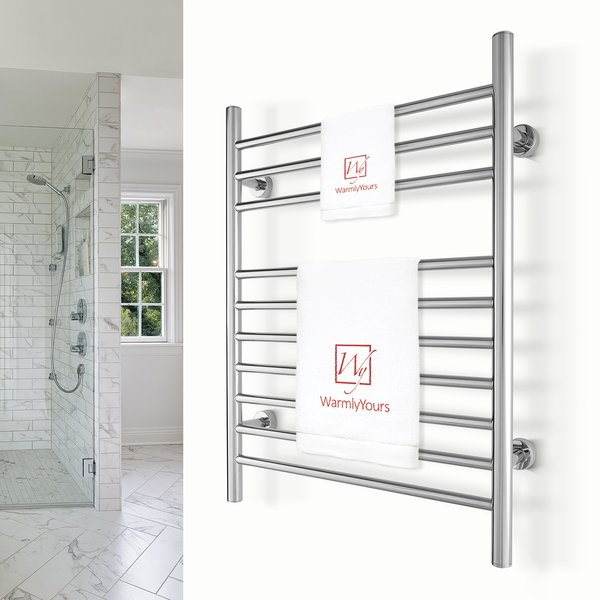
Beyond the bathroom, a heated rack delivers warm towels every single day — that spa-like sensation of wrapping yourself in toasty fabric right after stepping out of the water. Constructed from stainless steel, most units are low-maintenance and built to last for decades. They also radiate gentle heat into the surrounding space, which is especially welcome in bathrooms with cold tile floors.
Here are some of the best rooms to place a towel warmer beyond the bathroom:
Mudroom or Laundry Area
Ideal for drying wet coats, hats, gloves, and delicate laundry. A towel warmer here cuts drying time and keeps outerwear toasty during the colder months.
Sunroom
During chilly seasons, a heated rack adds gentle supplemental warmth and is perfect for pre-heating throw blankets on a cool afternoon.
Indoor Pool Area
Dry swimsuits and pool towels without trekking to the laundry room. A warm towel is always ready and waiting after every swim.
Quick Tip: Towel warmers perform best with towels and fabrics made from natural materials. Avoid microfiber or synthetic quick-dry towels, as these are not recommended for heated racks.
Key Benefits of Owning a Heated Towel Rack
A towel warmer is part luxury, part utility. Here is why homeowners consistently rate them as one of their favorite bathroom upgrades:
✓ Everyday Comfort
Step out of the shower and into a warm, cozy towel every single day. It transforms your routine into a spa-like experience.
✓ Versatile Drying
Warm towels, dry delicate clothing, heat swimsuits, and even take the chill off blankets — all from a single wall-mounted appliance.
✓ Energy Efficiency
Most heated racks draw only 60–150 watts. At typical electricity rates, that translates to just a few cents per day — far less than running a tumble dryer.
✓ Supplemental Heat
Towel warmers radiate gentle warmth into the room, helping to maintain a comfortable temperature — especially welcome during colder months.
✓ Mold & Mildew Prevention
By keeping towels dry between uses, heated racks dramatically reduce musty odors and bacteria growth, promoting a healthier bathroom environment.
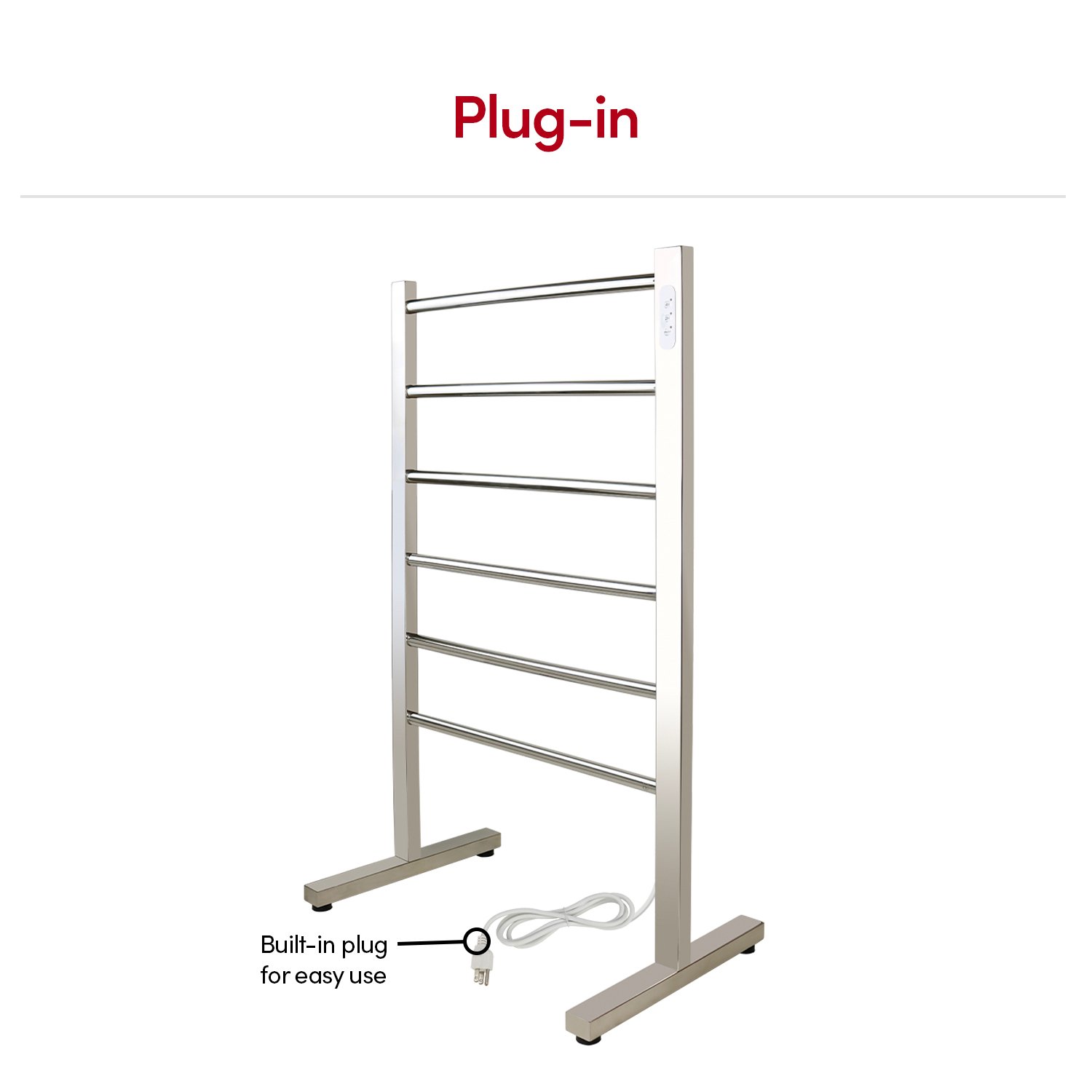
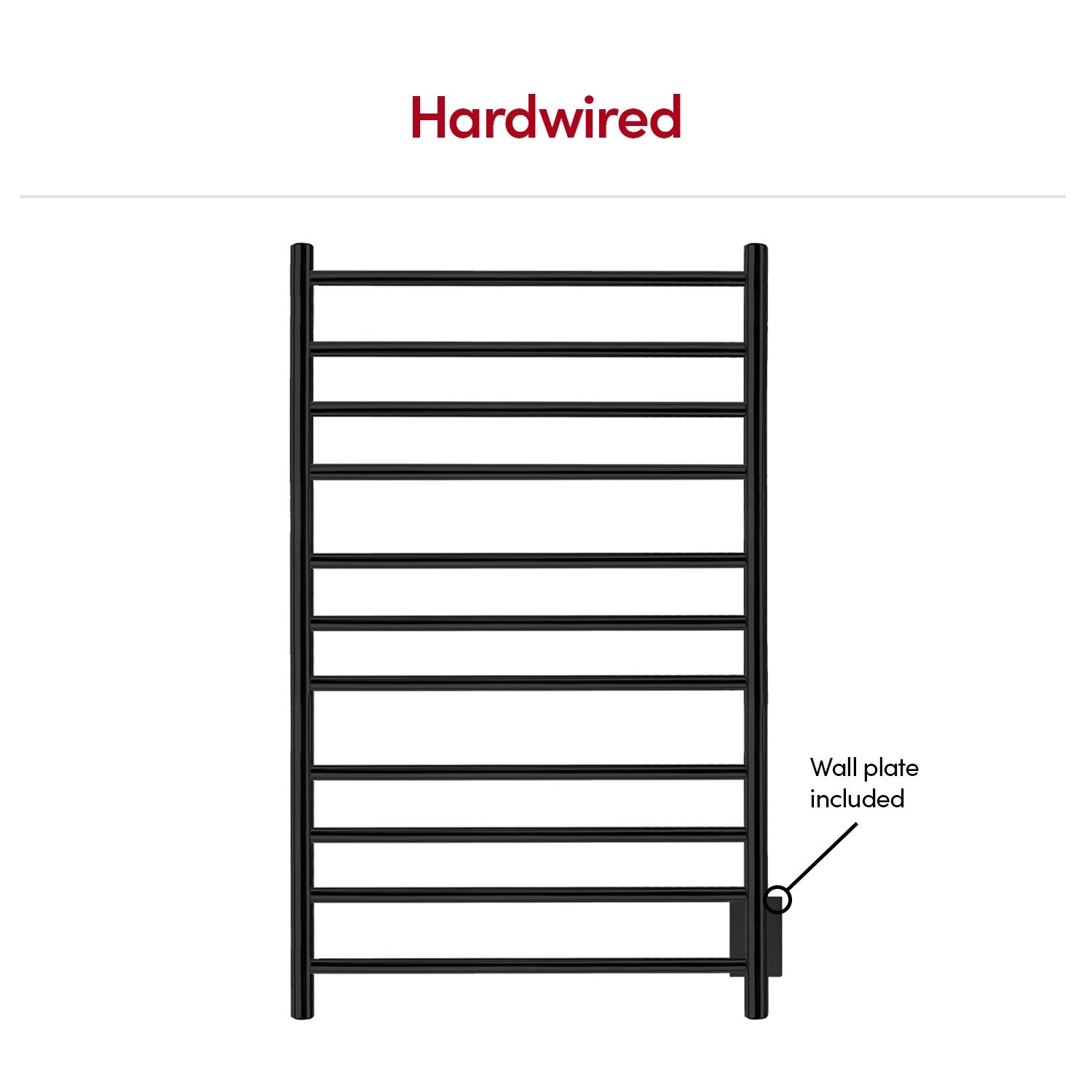
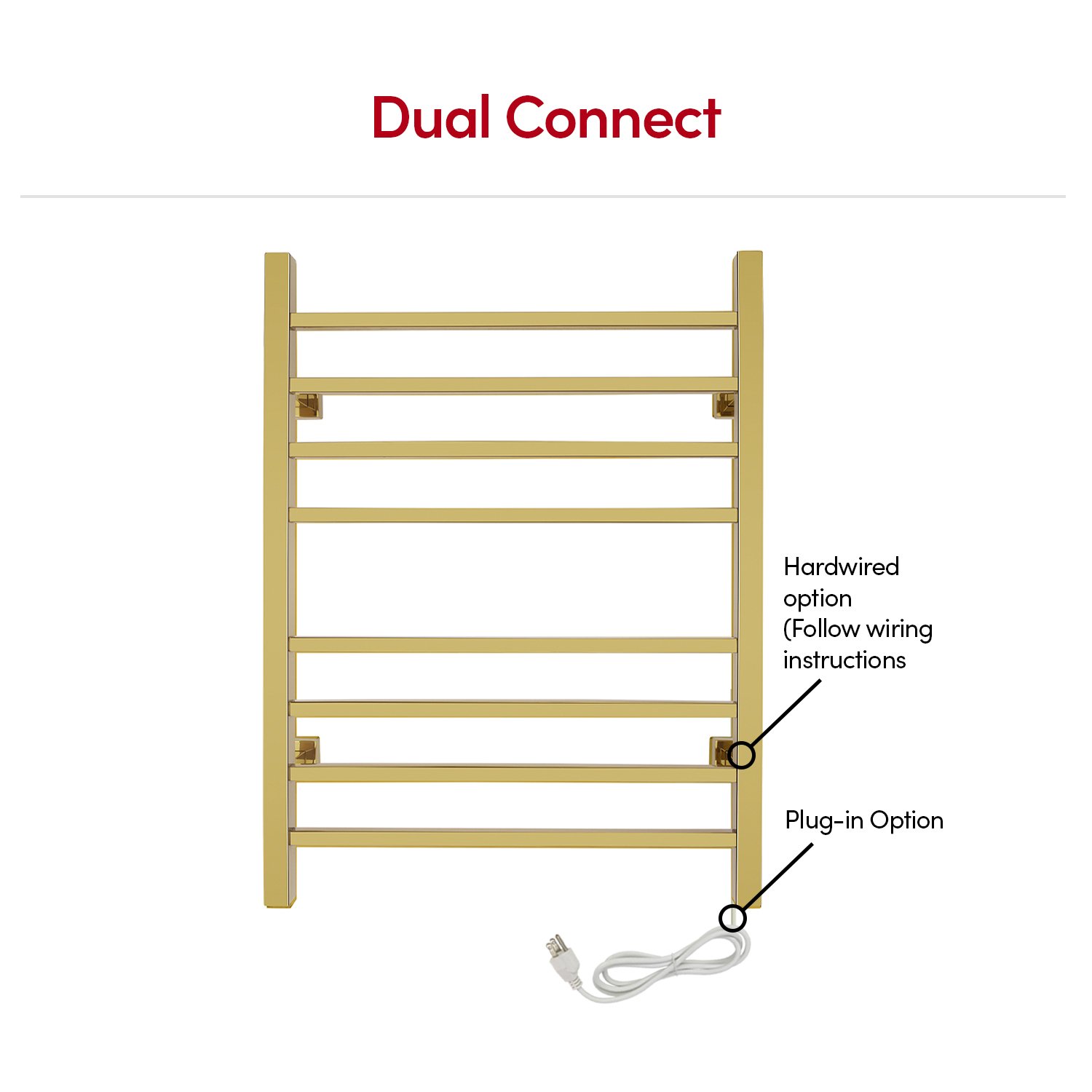
Plug-In vs. Hardwired vs. Dual Connect Models
Towel warmers come in three primary installation styles. Understanding the differences will help you choose the option that best matches your bathroom layout, budget, and long-term plans.
What to Know Before Installing a Towel Warmer
Proper installation is essential for both performance and safety. Below are the key factors to consider before you mount your new towel warmer.
Location
Safety Zones: Make sure the towel warmer is positioned in compliance with local electrical codes, especially regarding safe distances from water sources like showers and tubs.
Height Placement: Most manufacturers recommend mounting the unit at least 24 inches above the finished floor to prevent accidental contact.
Accessibility: Position the rack within arm's reach of the shower or tub for maximum convenience, while keeping clear walkways throughout the room.
Electrical Requirements
Power Supply: Verify that your home's electrical system supports the unit's voltage and wattage. Most towel warmers operate on a standard 120V AC supply at 60Hz.
Circuit Protection: The towel warmer should be connected to a circuit with a Ground Fault Circuit Interrupter (GFCI) for added safety in wet environments.
Professional Help: Always hire a qualified electrician for hardwired installations to ensure code compliance and proper grounding.
Safety Features to Look For
Overheat Protection: Choose models with built-in overheat safeguards that prevent the unit from exceeding safe surface temperatures, reducing the risk of burns or fire.
IP Rating: An IP44 rating or higher indicates the unit is protected against water splashes — a must for any appliance installed in a bathroom.
Smart Controls & Timer Options
Every towel warmer comes with a basic on/off switch, but the real convenience comes from adding a dedicated timer or smart control. These accessories let you schedule operation around your routine so warm towels are always ready when you need them — without wasting energy when you don't.
Countdown Timer
Offers preset heating durations — typically 30 minutes, 1 hour, 2 hours, and 4 hours. The warmer shuts off automatically after the selected period, conserving energy effortlessly.
Programmable Timer
Lets you program up to 50 on/off events per week via a backlit LCD screen. Set it once and your towel warmer operates on autopilot, perfectly synced with your daily schedule.
Wi-Fi Smart Switch
Control your towel warmer remotely from your smartphone using platforms like Alexa, Google Assistant, or Apple Home. Start warming your towels before you even get out of bed.
Electric vs. Hydronic: Which Type Is Right for You?
Once you have decided a towel warmer is worth it, the next question is what type of heating system to choose. There are two main categories: electric and hydronic.
Are Towel Warmers Worth the Money?
Let's talk numbers. Towel warmers typically range from around $165 to $650, depending on the style, size, and finish you select. Running one costs surprisingly little — a unit rated at 150 watts consumes just 0.15 kWh per hour. At an average U.S. electricity rate of roughly 16 cents per kWh, that works out to about 2.4 cents per hour. Use it for two hours a day and you are looking at under $1.50 per month in operating costs.
When you combine the low cost of ownership with the daily comfort, hygiene benefits, energy efficiency, and supplemental warmth a towel warmer provides, the answer is clear: yes, they are absolutely worth the investment for homeowners looking to add a practical touch of luxury to their routine.
~$1.50/month
Average operating cost for a 150-watt towel warmer used 2 hours per day
How to Pick the Perfect Towel Warmer for Your Home
Selecting the ideal towel warmer comes down to matching the unit to your space, your style preferences, and your practical needs. Here are the main considerations:
Bathroom Dimensions
Measure your available wall space carefully. Make sure the towel warmer fits comfortably without overcrowding the room or blocking walkways.
Mounting Style
Wall-mounted models save floor space and create a clean focal point. Freestanding options offer portability and flexibility, ideal for renters or multi-room use.
Finish & Style
Towel warmers are available in brushed stainless, polished chrome, matte black, brushed gold, polished gold, and more. Choose a finish that complements your existing fixtures and hardware.
Bar Count & Capacity
Models range from compact 4-bar units suited for a single towel to generous 12+ bar designs that can warm multiple large towels or bathrobes simultaneously.
Safety Certifications
Always look for UL or cETLus listings, built-in overheat protection, and an appropriate IP rating for bathroom environments.
Frequently Asked Questions
How much does it cost to run a towel warmer each day?
Most electric towel warmers draw between 60 and 150 watts. At average U.S. electricity rates, that works out to roughly 2–5 cents per hour, or well under $2 per month with typical daily use.
Can I leave my towel warmer on all day?
Many modern units feature built-in overheat protection that automatically regulates the surface temperature. However, if you are using the warmer for the first time, check your towels periodically during the first day to confirm they do not become discolored. A programmable timer is a great way to automate operation and save energy.
Do towel warmers help prevent mold and mildew?
Yes. By keeping towels dry between uses, heated towel racks significantly reduce the damp conditions that promote mold, mildew, and bacteria growth. This leads to fresher-smelling towels and a healthier bathroom overall.
Do I need an electrician to install a towel warmer?
Plug-in models do not require professional installation — simply mount them and connect to an outlet. Hardwired and dual-connect models (when converting to hardwired) should be installed by a licensed electrician to ensure safety and code compliance.
What types of towels work best with heated racks?
Natural-fiber towels such as cotton and bamboo are ideal. Avoid microfiber or synthetic quick-dry fabrics, as they are generally not recommended for use on heated towel racks.
How long do towel warmers last?
Quality stainless-steel towel warmers are built to last 25 years or more with minimal maintenance. Most reputable manufacturers back their products with multi-year warranties for added peace of mind.
Ready to Upgrade Your Bathroom?
Browse our selection of heated towel racks and discover the perfect model for your home. Warm towels, lower energy bills, and a healthier bathroom are just one click away.
Amba Swivel Heated Towel Rack