

There is something undeniably luxurious about wrapping yourself in a warm towel after a hot bath or shower. Towel warmers have moved from high-end spas into everyday homes, and for good reason — they eliminate that cold, damp feeling and keep your bathroom feeling fresh. But with so many styles, sizes, and mounting options on the market, how do you decide which towel warmer is the perfect fit for your space? This guide walks you through every factor worth considering, from installation type to smart controls, so you can make a confident choice.
In This Article
Freestanding vs. Wall-Mounted · Electrical Connections · Choosing the Right Width · Finding the Ideal Height · Controls & Timers · Safety Considerations · Final Verdict
Freestanding vs. Wall-Mounted: Which Setup Suits Your Bathroom?
The very first decision you will face is whether you want a freestanding unit or a wall-mounted model. Both styles get the job done beautifully, but they serve different needs and different bathroom layouts.
Freestanding towel warmers are exactly what the name implies — portable units that rest on the floor and can be moved from room to room. If you are renting and cannot drill into walls, or if you simply want flexibility, a freestanding warmer is a practical choice. They plug into any standard outlet, require zero installation beyond unboxing, and can even travel with you if you relocate. The trade-off is that they take up floor space, which may not be ideal in smaller bathrooms.
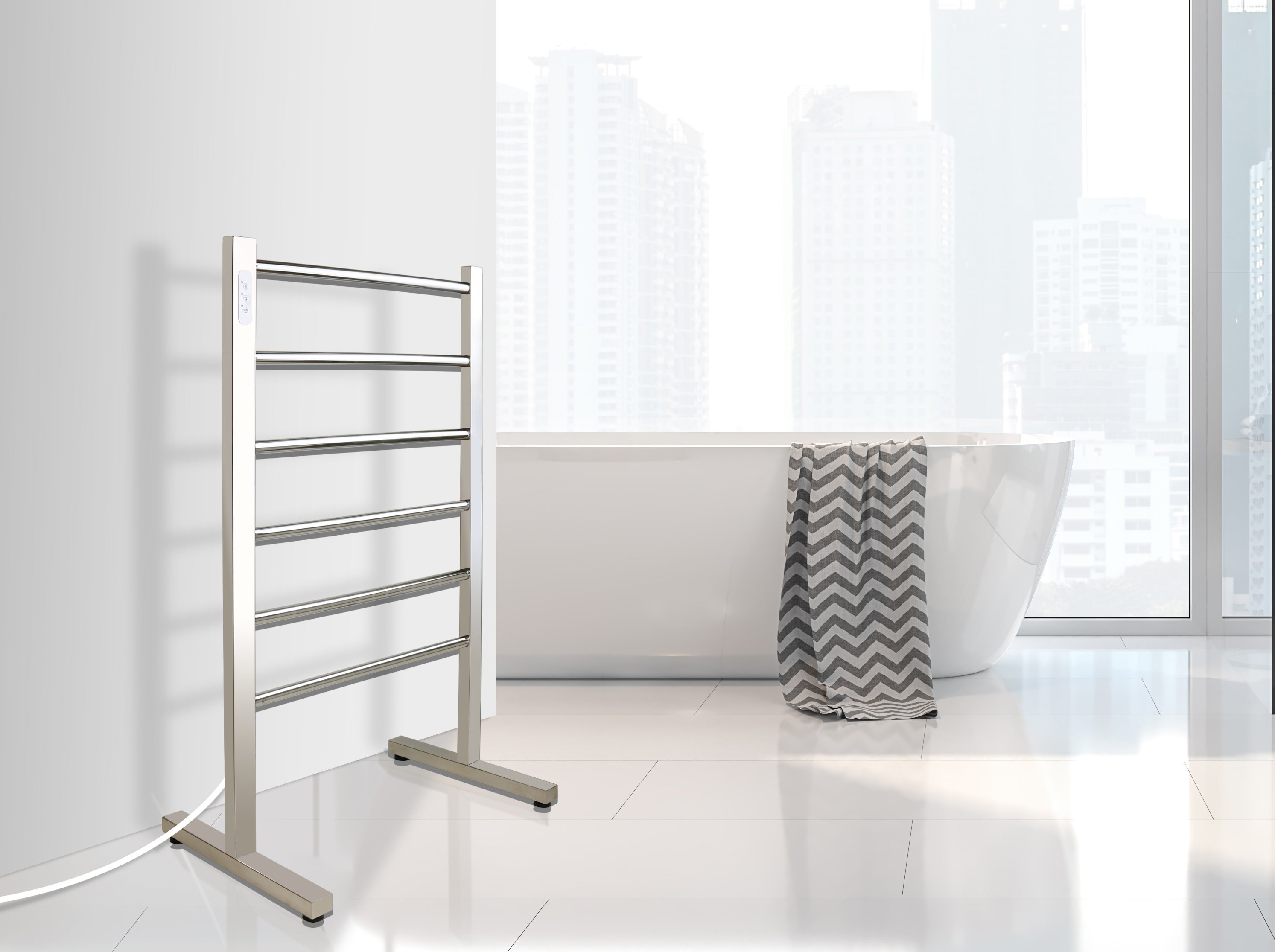
Wall-mounted towel warmers, on the other hand, are fixed to the wall and free up valuable floor real estate. They tend to look sleeker and more integrated into the bathroom design, almost like a piece of modern art. Many homeowners prefer them for permanent installations because they create a clean, built-in look. The downside is that they require mounting hardware and, in some cases, a hardwired electrical connection — but more on that next.
Ultimately, if portability and simplicity matter most, go freestanding. If aesthetics and space-saving are your top priorities, a wall-mounted unit is the way to go.
Understanding Electrical Connections
Once you have settled on a mounting style, the next question is how the unit receives power. There are two main options: plug-in and hardwired.
Plug-in models come with a standard power cord that connects to any grounded outlet. This is the simplest route — no electrician needed, and you can have your towel warmer up and running within minutes. Plug-in units work equally well with freestanding and wall-mounted configurations. The cord is typically tucked neatly along the wall, though it will always be visible to some degree.
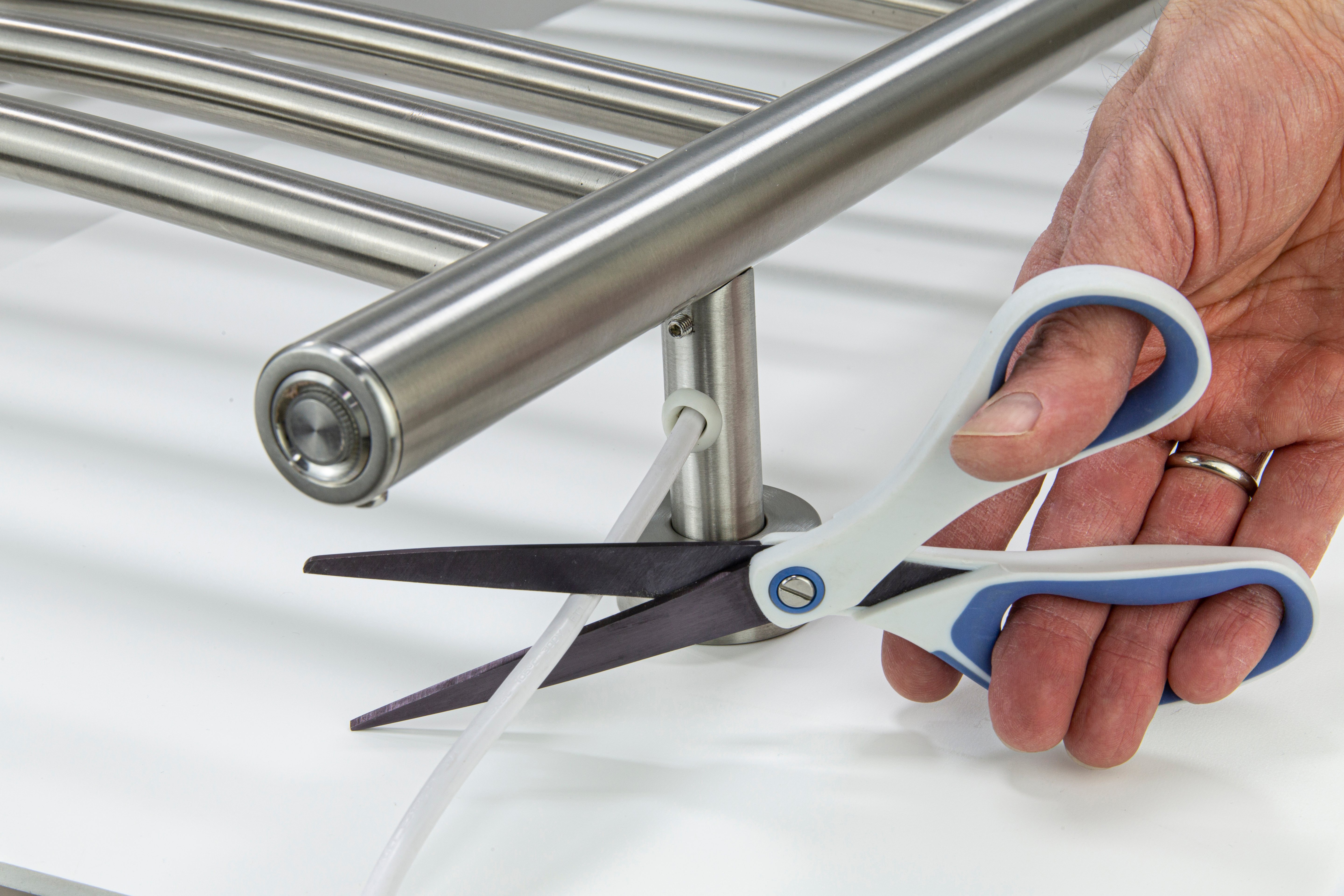
Hardwired models connect directly to your home's electrical system and must be installed by a licensed electrician. The major advantage is a completely clean look — no visible cords or plugs. This is the preferred option for new construction or major bathroom renovations where the wiring can be planned from the start. Keep in mind that once hardwired, relocating the unit is not a quick task.
Many wall-mounted towel warmers actually give you both options — they ship as plug-in but include a hardwire kit so you can choose the connection method that best fits your situation. That dual-option flexibility is a major plus if you are still deciding on your bathroom layout.
Choosing the Right Width
Width is one of the most overlooked factors when purchasing a towel warmer, yet it plays a big role in both function and appearance. Most towel warmers range from roughly 17 inches to 34 inches wide, giving you a decent spectrum to work with.
A narrow unit in the 17-to-21-inch range is ideal for tight spaces — think a half bath, a small ensuite, or a spot between a vanity and a shower door. These compact models warm towels effectively and look proportionate in a smaller room without overwhelming the wall.
Wider models in the 24-to-34-inch range are perfect for master bathrooms or larger spaces where you want to warm multiple towels — or even a bathrobe — at the same time. The extra width means more bar surface area and greater heat output. Always measure your intended wall space before purchasing to make sure there is adequate clearance on both sides.
Finding the Ideal Height
Height matters just as much as width, and here it is about both aesthetics and reach. Towel warmers generally range from around 20 inches to well over 50 inches tall.
Shorter models — under 30 inches — fit nicely beneath windows, alongside bathtubs, or in areas with limited vertical space. They are easy to reach for every member of the household, including children, and they pair well with wider frames to maintain a balanced look.
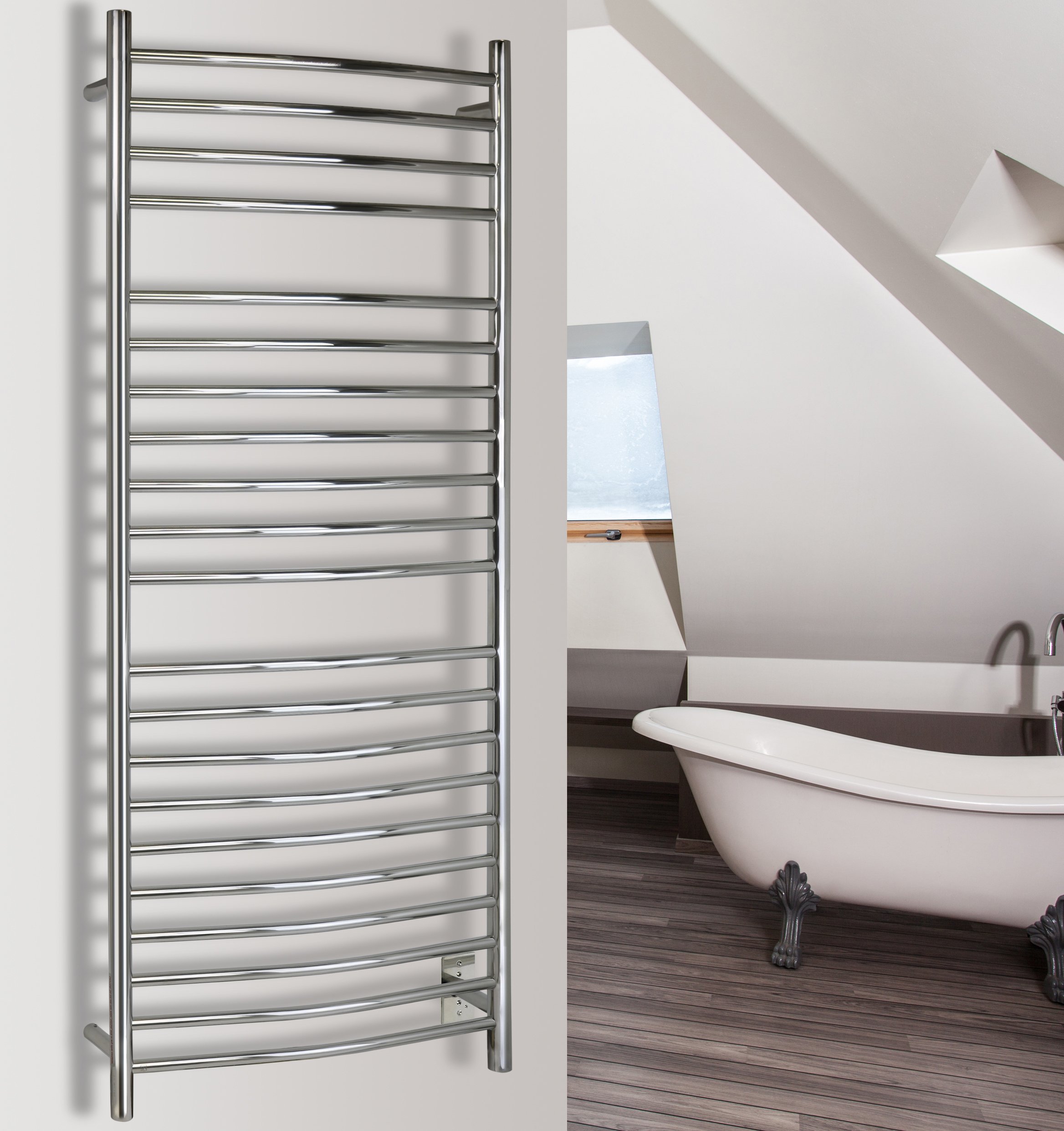
Taller models make a striking visual statement and offer significantly more hanging space for towels and robes. If your bathroom features high ceilings or a generous open wall, a taller towel warmer can serve as both a functional appliance and a design focal point. Just be sure the topmost bars remain within comfortable reach.
A shorter, wider warmer may suit compact bathrooms beautifully by filling horizontal space without stretching too high, while a tall, narrower warmer can turn an empty sliver of wall into a useful feature.
Controls & Timers: Convenience at Your Fingertips
How you operate your towel warmer matters more than most people realize. Basic models function with a simple on-off switch — plug them in and they begin heating. Higher-end models, however, offer built-in timers, digital controllers, and even smart-home integration.
Integrated timer switches are a popular add-on that let you schedule when your warmer activates, so your towels are toasty right when you need them — say, every morning at 6 AM before your shower. Many timer switches are compact enough to fit inside a standard wall plate for a seamless look.
Hardwired countdown timers allow you to set durations — one hour, two hours, up to several hours — so the warmer shuts off automatically. This is great for energy savings and peace of mind if you tend to forget to turn things off.
Programmable timers take things a step further by letting you schedule the warmer across an entire week. Some advanced controllers even support voice assistants and Wi-Fi connectivity, allowing you to manage your towel warmer through your phone or a smart speaker. If convenience and automation are important to you, investing in a warmer with robust controls is well worth it.
Safety Considerations You Shouldn't Overlook
Any electrical appliance used near water demands careful attention to safety, and towel warmers are no exception. Before purchasing, make sure the model you are considering carries recognized certification marks — look for UL, CSA, or equivalent safety listings that confirm the product has been tested and approved for residential use.
For plug-in models, always connect to a GFCI-protected outlet, which is standard code for bathroom electrical circuits. If you are going the hardwired route, hire a licensed electrician who can ensure proper circuit protection and code compliance. Towel warmers are designed to operate safely with fabric draped over the bars, but it is still wise to avoid overloading the unit with heavy blankets or materials that block airflow entirely.
Also make sure the unit you choose meets your local electrical code requirements. If you are installing in a wet area or close to a shower or tub, there may be minimum distance requirements you need to follow. A quick check with your local building department can save you headaches down the road.
The Bottom Line
Choosing the right towel warmer comes down to balancing form, function, and your specific bathroom layout. Start by deciding between freestanding and wall-mounted, settle on plug-in versus hardwired, and then zero in on the dimensions that complement your space. Factor in the controls you want — from basic switches to programmable smart timers — and always confirm that your chosen model meets safety standards.
A quality towel warmer is one of those small upgrades that makes a surprisingly big difference in your daily routine. Once you experience stepping out of the shower to a perfectly warm towel, you will wonder how you ever went without one. Take the time to measure, compare, and choose wisely — your future self will thank you every single morning.
Backyard Provider — Your Outdoor & Home Living Destination