
Exploring the open water with a partner is one of life's great pleasures, and a 2-person inflatable kayak makes it accessible, affordable, and remarkably convenient. These versatile watercraft are purpose-built for tandem paddling, offering the stability and comfort you need whether you're gliding across a calm lake or navigating gentle river currents.
The remarkable appeal of tandem inflatable kayaking lies in its welcoming nature — it's an activity that embraces paddlers of every skill level and age group. From lightweight sit-on-top models to rugged expedition-grade vessels, the options span a wide range of designs including touring kayaks, fishing setups, whitewater-ready inflatables, and versatile all-around craft. Inflatable kayaks have earned a devoted following because they pack down small enough to fit in a car trunk, yet perform impressively once on the water. In this article, we'll walk you through everything you need to know about tandem inflatable kayaks.
On This Page
→ Types of 2-Person Inflatable Kayaks
→ How to Choose the Right 2-Person Inflatable Kayak
→ Inflating and Deflating Your 2-Person Inflatable Kayak
→ Transporting Your 2-Person Inflatable Kayak
→ Setting Up Your 2-Person Inflatable Kayak
→ Paddling Techniques and Tips
→ Maintenance and Storage
→ Accessories and Gear
→ Advantages and Disadvantages
→ FAQs
Types of 2-Person Inflatable Kayaks
Two-person inflatable kayaks are available in several distinct styles, each engineered for a unique purpose and set of benefits. Knowing the differences helps you select the model that matches your intended adventures.
Sit-On-Top Inflatable Kayaks
Sit-on-top models are the most widely chosen variety of 2-person inflatable kayak. They feature an open deck design with a particular emphasis on ease of use, stability, and comfort. These kayaks make boarding and exiting effortless, which is part of the reason they have earned the trust of beginners and recreational paddlers alike. Many sit-on-top designs also offer the benefit of being self-draining through built-in scupper holes, making them well-suited for warm-weather outings.
Sit-Inside Inflatable Kayaks
Sit-inside kayaks set themselves apart with an enclosed cockpit configuration. They are intentionally designed to keep the paddler drier and more protected from splashes and the elements, an advantage that makes them ideal for cooler conditions or longer journeys. The enclosed seating area also creates a lower center of gravity, which contributes to improved tracking and performance in varying water conditions — making them a favorite among more experienced kayakers.
Self-Bailing Kayaks
Self-bailing kayaks come equipped with ventilation or drainage ports that allow water to drain out of the kayak on its own. They are an outstanding option for whitewater rapids or ocean surf, particularly when dealing with waves that continuously wash over the deck. These kayaks minimize the hassle of manual bailing, keeping your attention on paddling rather than pumping water out.
Fishing Kayaks
Fishing kayaks are deliberately engineered for angling adventures. They come loaded with extras like built-in rod holders, anchor systems, tackle storage compartments, and accessory rails. Many models also feature enhanced stability platforms and mounting options for fish finders, making them a practical choice for anglers who want to fish in tandem.
Touring Kayaks
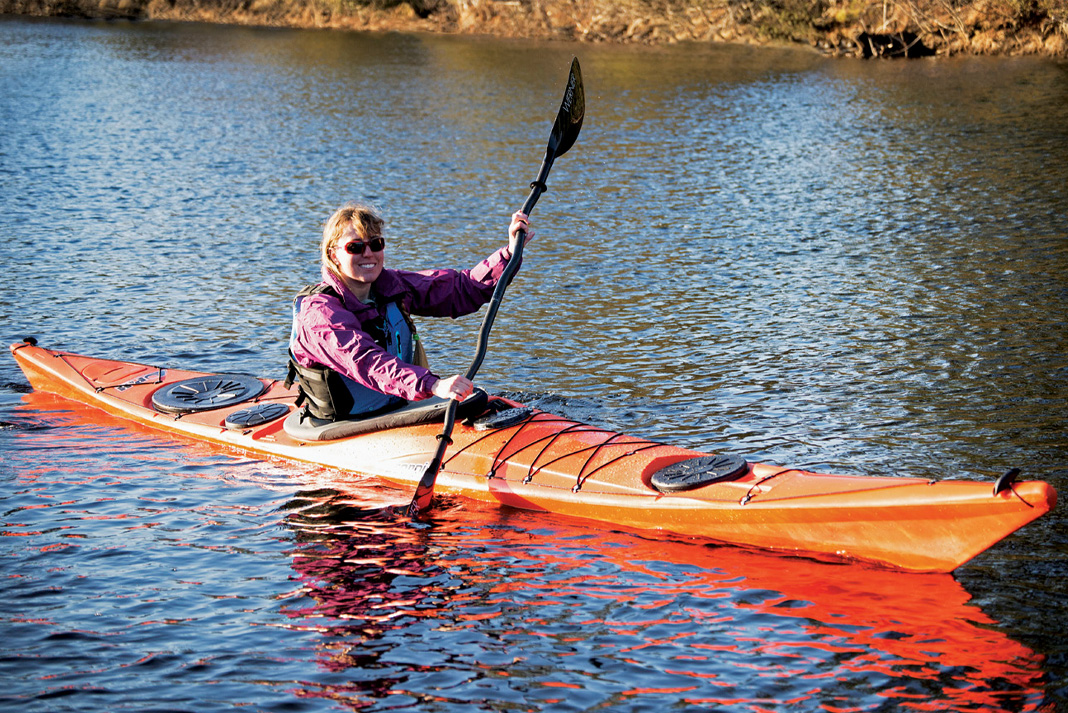
Touring kayaks are specifically designed for long-distance paddling excursions. They come with performance-focused features including tracking fins, skegs, and integrated storage bays. Their longer, sleeker profiles help them glide more efficiently through the water, with additional storage capacity for multi-day trips, gear, and supplies.
How to Choose the Right 2-Person Inflatable Kayak
When deciding on the ideal 2-person inflatable kayak, there are several key factors to consider. Here is a comprehensive guide to help narrow down your options:
Capacity
Make sure the kayak can comfortably hold the combined weight of both paddlers plus any additional gear or supplies. Going over the rated weight capacity compromises stability, tracking, and overall safety on the water.
Dimensions
The length and width of the kayak affect its stability, maneuverability, and speed. Longer kayaks generally track better and move faster, while wider kayaks provide enhanced steadiness — which is especially useful for beginners.
Material
Look for kayaks constructed from robust materials like PVC or nylon. These materials make inflatable kayaks highly resilient, while lighter options may provide a welcome trade-off in portability and convenience.
Shape
The shape of the kayak impacts its stability and maneuverability. Wider boats offer greater steadiness, while narrower, streamlined shapes enable quicker movement across the water.
Weight
Consider the deflated and packed weight of the kayak. A lighter model is far easier to carry to the launch point and transport, especially if you plan to hike to more remote waterways.
Seating Comfort
Adjustable, well-padded seats with proper lumbar support can make or break your experience on the water. Prioritize your comfort and that of your paddling partner, especially for longer outings.
Inflating and Deflating Your 2-Person Inflatable Kayak
Inflation Methods
Manual Pumps: Most inflatable kayaks ship with a hand or foot pump. These are dependable and straightforward — no batteries or power source required. Manual pumps are lightweight enough to toss in your bag and take along anywhere.
Electric Pumps: Electric pumps connect to a car's 12-volt outlet or battery and handle inflation at the touch of a button. They reduce setup time considerably and are an excellent choice for anyone who prefers a quicker, more effortless process.
Tips for Faster and More Efficient Inflation
1. Spread out the kayak on a level surface before beginning inflation.
2. Locate the inflation valves (usually at the bow and stern) and ensure they are sealed properly.
3. If using a hand pump, use slow and steady full strokes for the most efficient fill.
4. Check the pressure gauge and inflate to the recommended PSI — do not exceed it.
5. Once inflated, close the valve tightly to prevent air leakage.
Tips for Faster and Easier Deflation
1. Open the valves and allow the air to escape.
2. Roll up the kayak from the stern to the bow, pressing out any remaining air.
3. Fold the kayak neatly and store it in the carrying bag.
Transporting Your 2-Person Inflatable Kayak
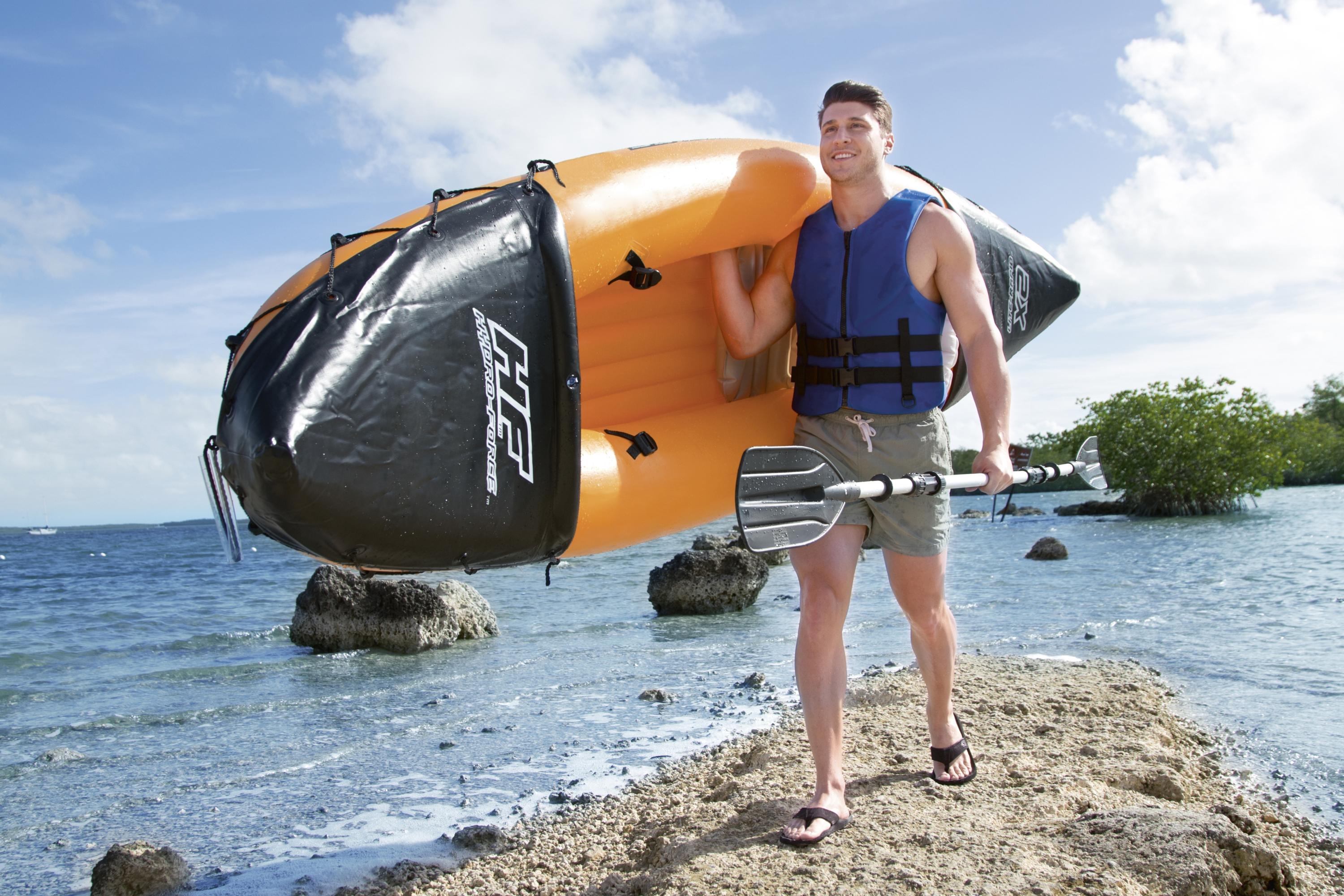
Carrying Bags and Backpacks: Most tandem kayaks come with carrying bags or backpacks designed for easy transportation. Choose bags that are durable, comfortable across the shoulders, and made from weather-resistant materials. Dry bags, duffel-style carriers, and even wheeled cases are available depending on the brand.
Vehicle Travel: Deflated kayaks fold up compactly enough to fit in your car's trunk, back seat, or even larger backpacks. Always refer to the manufacturer's instructions for proper breakdown, and use soft foam padding or designated bags for extra protection during the drive.
Tips for Safe and Smooth Transportation: Make sure your kayak is secured during transit — nothing should be shifting or sliding. Try to avoid exceeding the recommended weight for your vehicle's cargo area, and use bungee cords or straps to keep the packed kayak snugly in place.
Setting Up Your 2-Person Inflatable Kayak
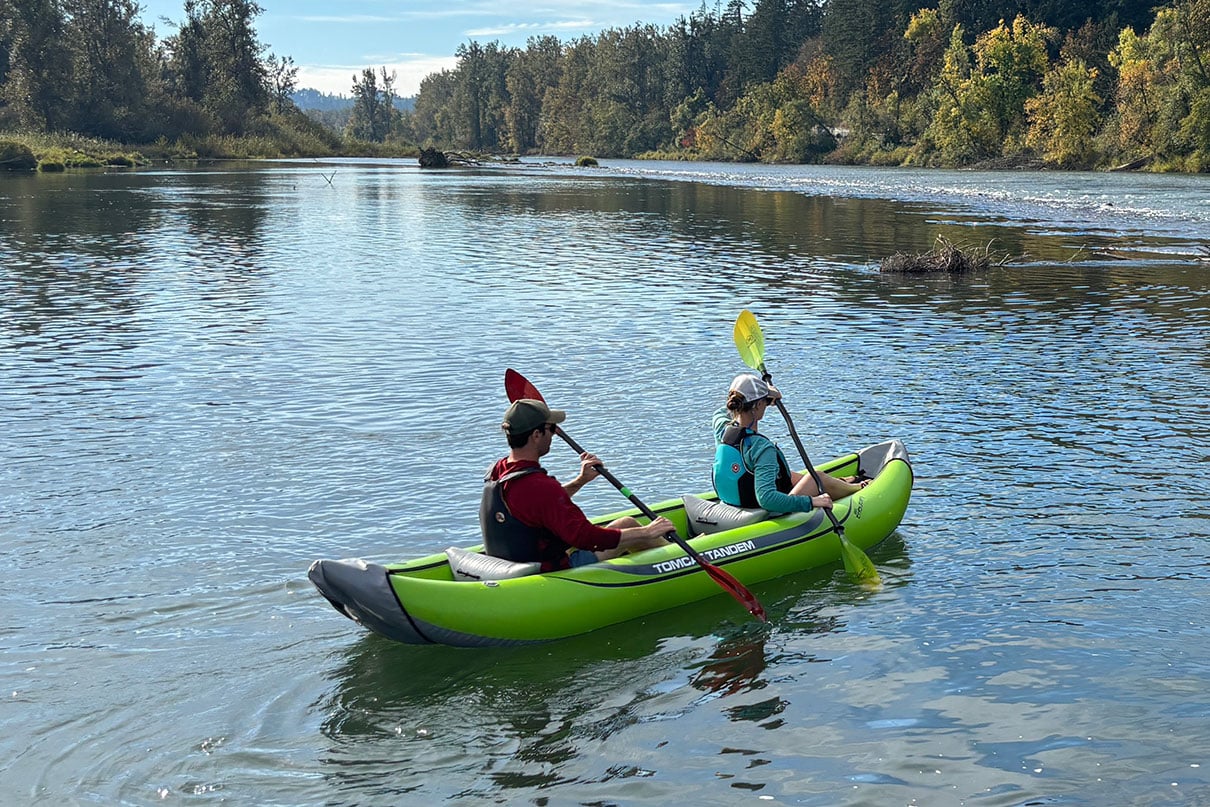
Getting a 2-person inflatable kayak set up is a relatively straightforward process. By following these steps, you can have your kayak water-ready in just a few minutes:
Assembling and Attaching the Paddles: Most inflatable kayaks come with paddles that require assembly. Typically, you connect two or three pieces — a handle, blade, and shaft — by clicking or twisting them into place following the manufacturer's instructions.
Adjusting the Seats and Footrests: The seats and footrests in a 2-person inflatable kayak are adjustable to accommodate different body types. Position the seats so that both paddlers sit comfortably with their knees slightly bent, and verify that the footrests provide adequate support for proper leg engagement and efficient strokes.
Installing and Inflating the Skegs: Some inflatable kayaks come outfitted with removable skegs or tracking fins to enhance directional stability. Follow the manufacturer's instructions to install and inflate the skegs as necessary. Once attached, ensure they are securely fastened and aligned to produce the best tracking performance.
Attaching Gear and Accessories: To enhance your kayaking experience, you can attach critical gear and accessories to your vessel. This could include dry bags for storing valuables, a fishing rod holder for angling outings, a paddle leash to prevent loss, or a small anchor. Wherever possible, secure accessories using the built-in D-rings or bungee cord attachment points, and make sure they are securely fastened to prevent any accidental loss or detachment during paddling.
When You're on the Water — Paddling Techniques and Tips
Getting In and Out of the Kayak: Boarding and exiting your kayak safely is a crucial first step. Position the kayak in shallow, calm water, stabilize it by gripping the sides, and use a wide stance as you lower yourself into the seat. When getting out, reverse the process — slide forward, place your feet on stable ground, and push up using the sides for support.
Paddling Techniques and Tips: Mastering the right paddling technique is key to maintaining your efficiency on the water. Sit upright and use long, fluid strokes, alternating sides to keep a balanced, straight course. Leaning excessively to one side or using short, choppy strokes are common mistakes to avoid. To steer, simply increase a few strokes on the opposite side of your desired turn. Remember to maintain a relaxed but firm grip on the paddle at all times.
Safety Guidelines and Precautions: Wearing a properly fitted, Coast Guard-approved personal flotation device is essential each and every time you take to the water. Always wear it, regardless of your swimming abilities. Check the weather forecast before setting out, avoid paddling in strong winds or near commercial shipping lanes, and always let someone on shore know your planned route and expected return time.
Maintenance and Storage of Your 2-Person Inflatable Kayak
When it comes to maintaining and storing your 2-person inflatable kayak, there are a few important steps to follow to ensure it stays in top condition for years to come:
Cleaning and Drying After Use
After every kayaking session, make sure to rinse your kayak with clean, fresh water to remove any salt, dirt, sand, or debris. Allow it to air-dry fully before packing it away — this step is essential for preventing mold and mildew.
Repairing Minor Damage and Leaks
For minor cuts or slow leaks, you can use the patch repair kit that typically comes with your kayak. Clean the damaged area, apply adhesive, and press the patch firmly into place. For more extensive damage, consult the manufacturer or a professional repair service.
Proper Storage and Care
When it comes to storage, keep dry and store your kayak away from direct sunlight. Storing your kayak in a garage, shed, or closet is ideal for shielding it from the elements. Avoid placing heavy items on top, and consider using a breathable storage bag.
Longevity and Durability
By taking proper care of your 2-person inflatable kayak, you can expect it to last for many seasons of adventures. Routine inspections for wear, prompt repairs, and mindful storage practices will provide you with excellent performance and reliability over time.
Accessories and Gear for Your 2-Person Inflatable Kayak
When it comes to enhancing your kayaking experience, choosing the right accessories and gear can make a significant difference. Consider the following items when outfitting your 2-person inflatable kayak:
Paddles: Select paddles matched to your height, paddling style, and experience level. Adjustable-length paddles offer versatility, and lightweight materials like aluminum or fiberglass reduce fatigue on longer outings. Many experienced paddlers recommend carrying a spare set as well.
Life Jackets: Safety should always be top priority when kayaking. Invest in a well-fitted, properly rated personal flotation device that won't restrict your arm movement while paddling. Look for models with adjustable straps and comfortable padding.
Spray Skirts: To keep yourself dry while kayaking, a well-fitted spray skirt is essential. Choose one that fits your kayak and the cockpit design well, and look for models made from water-resistant, breathable materials for comfortable all-day wear.
Dry Bags: Protect your personal belongings and food from water by using waterproof dry bags. They come in various sizes and styles, from small pouches for phones to large roll-top bags for camping gear.
Fishing Gear: If you enjoy fishing from your kayak, consider adding rod holders, tackle boxes, and a small anchor. Look for lightweight and easily attachable options that won't interfere with your kayaking experience.
Other Essentials: Navigation tools like a waterproof GPS or compass are valuable on unfamiliar waterways. Sun protection gear such as hats, sunglasses with retainer straps, and reef-safe sunscreen are also strongly recommended for a comfortable day on the water.
Advantages of 2-Person Inflatable Kayaks
✓ Portability: Easy to transport and stow — they fit in a closet, a car trunk, or even a large backpack, making them far more convenient than rigid kayaks.
✓ Versatility: Suitable for various water conditions including calm lakes, slow rivers, and even moderate coastal areas, making them ideal for different types of outings.
✓ Affordability: Generally more budget-friendly than hardshell kayaks, offering outstanding value for both casual and committed paddlers.
✓ Ease of Use: Quick to inflate, set up, and pack away — many models can be water-ready in under ten minutes.
Disadvantages of 2-Person Inflatable Kayaks
✗ Puncture Risk: Although modern inflatable kayaks are made with highly durable materials, they can still be vulnerable to punctures from sharp rocks, branches, or other obstacles in the water.
✗ Performance Limits: Inflatable kayaks may not deliver the same level of speed and efficiency as their hardshell counterparts, especially in rougher water conditions or when covering long distances.
✗ Wind Sensitivity: Due to their lighter weight and higher profile, inflatable kayaks can be more susceptible to being pushed around by strong winds, requiring extra effort to maintain course.
Conclusion
A 2-person inflatable kayak is an excellent option if you value portability and convenience without sacrificing performance. Whether you're planning relaxed weekend outings or more ambitious multi-day adventures, an inflatable tandem kayak delivers the flexibility, durability, and comfort you need. With careful consideration of your needs — from capacity and materials to accessories and storage — you'll be well on your way to finding the perfect kayak for your next waterborne adventure.
Frequently Asked Questions
What is the weight capacity of a 2-person inflatable kayak?
Most 2-person inflatable kayaks have weight capacities ranging from approximately 400 to 600 pounds (180–270 kg). Always check the manufacturer's specifications before purchasing, and account for both paddlers plus any gear you plan to bring along.
How long does it take to inflate a 2-person inflatable kayak?
Inflation typically takes between 5 and 15 minutes depending on the pump type you use. An electric pump will be faster, while a hand pump may take a bit longer but requires no power source. Either way, you'll be on the water quickly.
Can 2-person inflatable kayaks be used for fishing?
Absolutely. Many 2-person inflatable kayaks are designed with fishing in mind, featuring built-in rod holders, extra storage compartments, and stable platforms for casting. Just be sure to select a model specifically built for angling if fishing is your primary activity.
Are inflatable kayaks safe for beginners?
Yes, inflatable kayaks are widely considered one of the safest and most beginner-friendly options on the market. Their inherent buoyancy, stability, and ease of use make them a great entry point for new paddlers. As always, wearing a life jacket and learning basic paddling techniques will further enhance your safety on the water.