
A water conditioning system provides numerous advantages for homeowners seeking to reduce hard water challenges. Through the elimination of heavy minerals such as calcium, iron, and magnesium from your household water supply, a quality softening unit effectively prevents common problems including mineral deposits and scale formation in pipelines, faucets, and home appliances. This guide explores everything you need to understand about water softening technology, helping you make an informed investment for your property.
Quality water conditioning systems help reduce the presence of hard water minerals originating from underground sources or flowing through your water system. Treated water delivers multiple advantages:
Financial Savings
Reduces energy costs by preventing scale accumulation in your heating systems and water fixtures.
Extended Appliance Life
Protects washing machines, dishwashers, and water heaters from mineral damage and corrosion.
Cleaner Dishes & Clothing
Eliminates spotting and film buildup, leaving your dishes sparkling and fabrics softer.
Better Skin & Hair
Conditioned water is gentler, helping maintain natural moisture and reducing dryness.
Reduced Maintenance
Decreases cleaning time and effort by preventing stubborn mineral deposits.
Improved Water Heater Performance
Maintains efficiency and prevents costly scale-related damage to heating elements.
Understanding Water Softening Technology
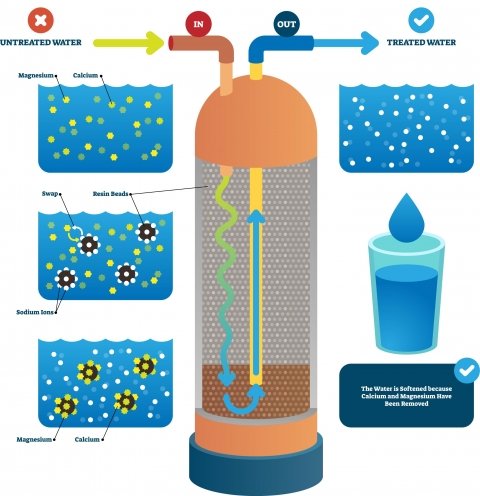
Numerous water conditioning designs exist in today's market, yet most operate using similar fundamental principles. For instance, traditional softening systems frequently utilize a process known as ion replacement that exchanges calcium and magnesium ions with sodium ions.
In conventional configurations, water flows through a reservoir containing specialized resin beads saturated with salt. These beads attract and bind the calcium and magnesium particles as the hard water passes through. During this exchange process, sodium ions are released into the water to replace the captured minerals. By releasing the hard water minerals into the tank, the resin allows the softened water to continue through your home's plumbing system. Eventually, the processing cycle requires the system to undergo regeneration, refreshing the collection chamber that traveled through it.
Categories of Water Conditioning Systems
Water softening systems vary by either drawing heavy minerals directly out of the water using a process called ion exchange or by neutralizing these minerals by adjusting chemical properties to prevent them from adhering to surfaces in the water system.
The following are the primary categories of water conditioning equipment, although alternative methods exist:
Salt-Dependent Water Softeners
Salt-dependent water conditioning systems are the most widespread and effective softener designs. Most modern softening systems will depend on salt or another sodium alternative. The resin present in these units exchanges ions to eliminate calcium or hard mineral components for sodium. If you consume an appropriate level of sodium in your dietary intake, the level of sodium in conditioned water is considered safe for the majority of individuals.
Conventional water conditioning systems typically operate by directing heavy minerals into the water. For ion exchange, this is most effective when the water contains high levels of calcium and magnesium. Even in a location where the water is extremely challenging, this approach offers a healthy, natural finish.
The advantage to these softeners is that the resin often needs to be recharged with salt. For most families, you will need to allocate specific time to occasionally monitor your softening system. Depending on the model, you may need to manually introduce additional salt to the brine solution, although some modern softening systems do away with the salt refill reservoir by utilizing time-based regeneration or enhanced resin technology.
However, there are portable water softeners that are self-sufficient. Designed specifically for portable functionality, these softeners can accommodate households where the owner has direct control. An important feature to note is that they can be challenging to move and install. Their allure stems from their capability to operate without connection to a permanent water system, although they also carry the inconvenience of managing the continuous maintenance required for proper functionality.
You should anticipate that salt-dependent water conditioning systems can cost roughly between $400 and $2,700, depending on their capacity and the specific features. The investment in these systems often pays for itself through energy savings and extended appliance lifespan, making them a popular option among homeowners handling hard water concerns.
Dual-Chamber Water Softeners
A dual-chamber water conditioning system is a self-sufficient softener with two resin chambers. This type is often the most water-efficient softener in use for well or hard-to-treat water difficulties. These systems function in the same way as a single-tank system except with one major difference.
Dual-chamber softeners won't completely terminate water supply during regeneration cycles, nor do they carry the same risk of exhausting the treated water in a home and causing untreated water to flow through the plumbing system. These also carry some challenges in price and install. They also carry larger dimensions compared to typical systems and might not be appropriate for limited areas with restricted space availability.
Non-Salt Water Softeners
Understanding how they function is key to recognizing that non-salt water conditioning systems work just as their much more common counterpart they just treat it a bit differently. Instead of removing ions as they pass through a resin filter, they work by converting minerals through a conditioning process.
As indicated by their name, salt-free water conditioning systems don't use salt to remove heavy minerals from water or clean. In fact, they don't remove minerals at all; instead, they condition the water in a way that prevents the minerals from forming harmful deposits on pipes and fixtures.
Salt-free water softeners work differently from standard ion-exchange softening units. Rather than replacing calcium and magnesium particles with sodium ions, these models are also simpler than salt-based alternatives. These need less maintenance and are considered more cost-effective with your high-level water usage. Another major advantage of these systems is that they maintain the natural mineral content in your drinking water while protecting your plumbing and appliances from mineral buildup, offering a balance between water health and system protection.
Electromagnetic or Electronic
Electromagnetic units are not technically softening devices in the traditional sense. Unlike most standard systems in the market, the use of polyphosphates combines the water so polyphosphates cannot harm causing in plumbing or fixtures using a filtration cartridge. This type of system effectively prevents mineral scaling without employing ion exchange technology, making it a low-maintenance alternative for homeowners.
Polyphosphates
While infrequent, some homeowners make use of chemical treatments to enhance conditioning results. A polyphosphate solution is commonly used in filtration using a filtration cartridge. This type of system prevents mineral accumulation in plumbing by sequestering hard water minerals rather than removing them entirely, providing a straightforward solution for light to moderate hard water issues.
Complete Filtration
Complete purification systems not only soften water, but they also eliminate other contaminants in drinking water. This type of salt-free water softener changes the physical properties of the hard minerals, keeping them from sticking to surfaces within piping and fixtures. Using reverse osmosis technology, complete purification systems can filter out sediment, chlorine, harmful substances, and minerals. Focus on these water purifiers can rely on quality and typically, but it needs to 1 year depending on your water conditions.
The choice of system type relies on if there is a difference between a water softener and a water purifier. It is vital to drive into much deeper from a complete conditioning approach rather than simply addressing hard water. However, it should be noted that combining multiple types of systems can provide comprehensive water treatment for your entire property, though initial costs are higher.
Water Flow Capacity
A salt-free water conditioning system functions between the main water line that enters a home and all of the water outlets in a house. This means that all of the water entering your house is going through your softening unit.
Salt-free systems that use filtration can often this flow of water. Indeed that slowing it. Electromagnetic water treatment systems aren't plumbed into a home's water system, so they don't affect a home's flow rate. With that in mind, the more softener is not, the more water can flow.
The average household homes with one to three bathrooms, requires a filtration system with a flow rate of between 8 and 12 gallons per minute to adequately supply water needs and ensure comfortable usage throughout the home.
Professional Installation
One of the main considerations of a salt-free water conditioning software is that they're rarely easy to install. While basic systems can sometimes be set installed, most systems tend to be complex and thus require professional installation services to ensure proper operation and warranty compliance.
For example, if you have well water, don't attempt any plumbing and hire an experienced professional. Due to the complex requirements of well water systems, professional expertise is essential to avoid costly mistakes and ensure optimal performance.
Complete purification systems and salt-system-less systems are also essential as they need to be attached to the primary water supply line. Keep in mind that the area around the water supply pipe with a proper space that you plan to purifying through the area.
Important Considerations When Selecting a Water Conditioning System
Your journey toward installing a new water conditioning system begins with evaluating your household's specific water requirements and conditions. Certain features and specifications will be more beneficial or even necessary depending on your unique situation. Before purchasing a water softener, take a few minutes to investigate the most important features to search for now.
Key Features to Evaluate
Water hardness level in your area
Daily water consumption of your household
Available installation space
Maintenance requirements and costs
Regeneration cycle frequency
Salt storage capacity
System efficiency rating
Warranty coverage and duration
When comparing different systems, consider the long-term operating costs including salt purchases, water usage during regeneration, and electricity consumption. A more expensive unit with better efficiency may save you money over its lifespan.
Additionally, verify that the system you select is appropriately sized for your home. An undersized unit will regenerate too frequently, wasting salt and water, while an oversized system represents an unnecessary upfront investment.
Professional Water Testing
Before investing in any water conditioning system, it's highly recommended to have your water professionally tested. This analysis will reveal the exact hardness level, presence of iron, pH balance, and other contaminants. Armed with this information, you can select the perfect system tailored to your specific water conditions rather than guessing at your needs.
Upgrade Your Home Water Quality Today
Ready to experience the benefits of softened water throughout your home? Our high-performance water softening systems deliver exceptional results while protecting your appliances and plumbing infrastructure.
View Aquasure Harmony SeriesMaintenance and Long-Term Care
Proper maintenance ensures your water conditioning system operates efficiently for many years. Regular upkeep not only extends the lifespan of your equipment but also maintains optimal water quality throughout your home.
Monthly Tasks: Check salt levels in the brine tank and refill as needed. Inspect for salt bridges or mushing that can prevent proper regeneration.
Quarterly Tasks: Clean the brine tank to remove sediment buildup. Verify that the system is regenerating on schedule.
Annual Tasks: Inspect all connections for leaks or corrosion. Consider having a professional service check the resin bed condition and system settings.
Most contemporary water conditioning systems feature user-friendly controls that make monitoring salt levels and system performance straightforward. Many models include indicators that alert you when maintenance is required, taking the guesswork out of system care.
When adding salt to your system, always use high-quality water softener salt specifically designed for your unit type. Avoid using table salt, rock salt, or other substitutes, as these can damage the system and reduce effectiveness. Premium pellet salt typically provides the best results and minimizes maintenance needs.
Environmental Considerations
Modern water conditioning systems have become increasingly eco-conscious, with many manufacturers incorporating water-saving technologies and efficient regeneration cycles. When evaluating systems, look for models certified by environmental organizations for their efficiency standards.
Some regions have restrictions on salt-based water softeners due to concerns about sodium discharge into wastewater systems. Before purchasing, verify your local regulations and consider whether alternative conditioning methods might be required or preferred in your area.
For environmentally-minded homeowners, salt-free conditioning systems or magnetic water treatment devices offer alternatives that don't discharge sodium into the environment. While these systems work differently than traditional ion-exchange softeners, they can still provide significant benefits for reducing scale buildup in plumbing and appliances.
Cost-Benefit Analysis
While water conditioning systems represent a significant upfront investment, the long-term financial benefits typically justify the expense. Softened water reduces energy costs by preventing scale accumulation in water heaters, which can decrease efficiency by up to 25% when left untreated.
Appliances operating with softened water generally last significantly longer than those exposed to hard water. Washing machines, dishwashers, and water heaters can see their useful life extended by several years, delaying costly replacement expenses. Additionally, you'll use less soap, detergent, and cleaning products since softened water lathers more effectively and doesn't leave mineral residue.
The reduced need for descaling products, plumbing repairs, and appliance maintenance adds up to substantial savings over time. Many homeowners report that their water conditioning system pays for itself within three to five years through these combined savings.
Choosing the Right Capacity
Water softener capacity is measured in grains, referring to the number of hardness grains the system can remove before requiring regeneration. Selecting the appropriate capacity ensures efficient operation without excessive regeneration cycles.
To determine the right size for your household, consider both your daily water usage and your water's hardness level. A family of four typically uses between 300 to 400 gallons of water daily. If your water tests at 10 grains per gallon of hardness, you'll need a system capable of handling 3,000 to 4,000 grains daily.
Most experts recommend choosing a system that can handle about a week's worth of hardness removal between regenerations. This approach balances efficiency with convenience, preventing too-frequent regeneration while ensuring consistent water quality.
Common Capacity Ranges:
32,000 grains: Suitable for 1-3 people with moderate hardness
48,000 grains: Ideal for 3-5 people or higher hardness levels
64,000 grains: Best for 5+ people or very hard water conditions
Experience the Difference of Truly Soft Water
Transform your home's water quality with a professional-grade softening system designed for reliability and performance. Say goodbye to hard water problems and hello to cleaner dishes, softer laundry, and protected appliances.
Shop Water Softeners Now