
Which Insert Range Hood Is Right for You?
Insert range hoods — sometimes called built-in or liner hoods — are engineered to tuck neatly inside cabinetry above your cooktop. Unlike wall-mounted or island hoods that dominate the visual space, inserts disappear behind custom panels, giving your kitchen a sleek, streamlined look while still pulling smoke, grease, and odors out of the air efficiently.
Because they sit concealed inside a cabinet housing or custom enclosure, insert hoods are a favorite among homeowners who want powerful ventilation without sacrificing design continuity. They come in a wide variety of widths, airflow ratings, and feature sets — so finding the right one depends on your cooking habits, kitchen layout, and budget.
In this guide, we cover the essential factors you need to evaluate before buying, highlight the features that separate a good insert hood from a great one, and answer common installation questions so you can shop with confidence.
What to Know Before You Buy an Insert Range Hood
Ducted vs. Ductless
One of the first decisions you will face is whether to go ducted or ductless. A ducted range hood channels air through ductwork that exits your home via the roof or an exterior wall. This approach removes pollutants entirely from your kitchen and is considered the gold standard for ventilation performance.
Ductless models, on the other hand, pull air through charcoal or carbon filters and then recirculate it back into the room. They are simpler to install because no exterior ductwork is needed, but they are less effective at removing heat, moisture, and strong cooking odors.
If your kitchen layout allows for ductwork, a ducted setup is almost always the superior choice. However, a ductless insert can still make a noticeable difference in apartments, condos, or older homes where running ducts is impractical.
Size & Fit
An insert range hood should match — or slightly exceed — the width of your cooktop. Most standard models come in 28-inch, 30-inch, 34-inch, and 36-inch widths to accommodate different range sizes. If you are building a new cabinet surround, measure carefully; the insert needs to slide into the housing with minimal gaps on the sides.
For those renovating an existing kitchen, surface-mounted inserts that attach to the underside of a cabinet can be a practical alternative because they do not require a fully custom enclosure. Just verify the depth and height clearances recommended by the manufacturer.
Material & Build Quality
Most quality insert hoods are constructed from stainless steel or brushed aluminum. Stainless steel is the preferred choice for durability and ease of cleaning, and it resists corrosion from kitchen humidity over many years of use. Some budget-friendly units use painted steel, which can look good initially but may chip or discolor over time.
Pay attention to the filter material as well. Stainless-steel baffle filters and aluminum mesh filters are both dishwasher-safe and reusable, while carbon or charcoal filters used in ductless setups need periodic replacement.
What to Look for in a Quality Insert Range Hood
Airflow Power (CFM)
The higher the CFM (cubic feet per minute) rating, the more air the hood can move. For standard home cooking, 300–400 CFM is usually adequate. If you regularly use a high-output gas range or do heavy wok cooking, aim for 600 CFM or higher. Keep in mind that some local building codes cap residential exhaust at specific CFM levels and may require makeup air systems above certain thresholds, so check your local requirements.
Features & Controls
Modern insert hoods offer multi-speed fan settings — typically three or four — so you can dial in the right level of suction for light sautéing versus high-heat searing. Premium models include digital touch panels, remote controls, delayed-off timers, and heat sensors that adjust fan speed automatically. Built-in LED lighting is now standard on most mid-range and above units, providing bright, energy-efficient task lighting over your cooking surface.
Noise Level
Noise is measured in sones. A rating around 1–2 sones at low speed is considered whisper-quiet, while anything above 6 sones can become intrusive during conversation. If kitchen noise matters to you, look for models that separate the blower motor from the hood body (remote blower designs) — these are significantly quieter because the motor sits farther from the living space. Variable speed settings also help, letting you run the fan on a gentle setting most of the time and only ramp up when cooking demands it.
Cleaning & Maintenance
Over time, range hood filters collect a sticky film of grease that reduces their efficiency and can become a fire hazard if neglected. Removable mesh or baffle filters that can be popped out and placed in the dishwasher make maintenance far easier. Aim to clean filters every one to three months depending on how frequently you cook.
For the exterior housing, wipe down stainless-steel surfaces with a mild detergent solution and a soft cloth. Avoid abrasive pads that can scratch the finish. If your model uses charcoal filters in a ductless configuration, replace them on the schedule the manufacturer specifies — usually every three to six months.
How Much Should You Spend on an Insert Range Hood?
Entry-level inserts start at roughly $100–$200 and handle basic ventilation for light-to-moderate cooking. In the mid-range — around $300 to $600 — you gain stronger motors, quieter operation, better lighting, and more refined build quality. High-end models can run from $700 to well over $1,000 and typically feature commercial-grade blowers, whisper-quiet remote motors, premium stainless construction, and smart home integration.
For most home kitchens, a unit in the $300–$600 range hits the sweet spot between performance, features, and value. Spending more makes sense if you have a professional-style range or an open-concept kitchen where noise control is critical.

Insert Range Hood — FAQ
Can insert range hoods be installed at any height?
There is some flexibility, but manufacturer guidelines should always be followed. Installing too low can damage the unit from excess heat, while mounting too high — typically beyond 28 to 36 inches above the cooktop — reduces capture efficiency significantly. Always consult the product manual for the recommended range.
Does an insert range hood need professional installation?
Surface-mounted inserts with filtered recirculation can often be a straightforward DIY project — just secure the unit to the cabinet and plug it into a standard outlet. However, fully recessed models that require custom cabinetry work, duct connections, or electrical wiring are best handled by a qualified installer to ensure safety and optimal performance.
What is the best insert range hood to buy?
The "best" model depends on your specific needs — kitchen size, cooking style, noise tolerance, and budget all play a role. Below, we highlight a top pick that balances powerful airflow, quiet operation, and quality construction at a compelling price point.
Our Top Pick
Handpicked by the Backyard Provide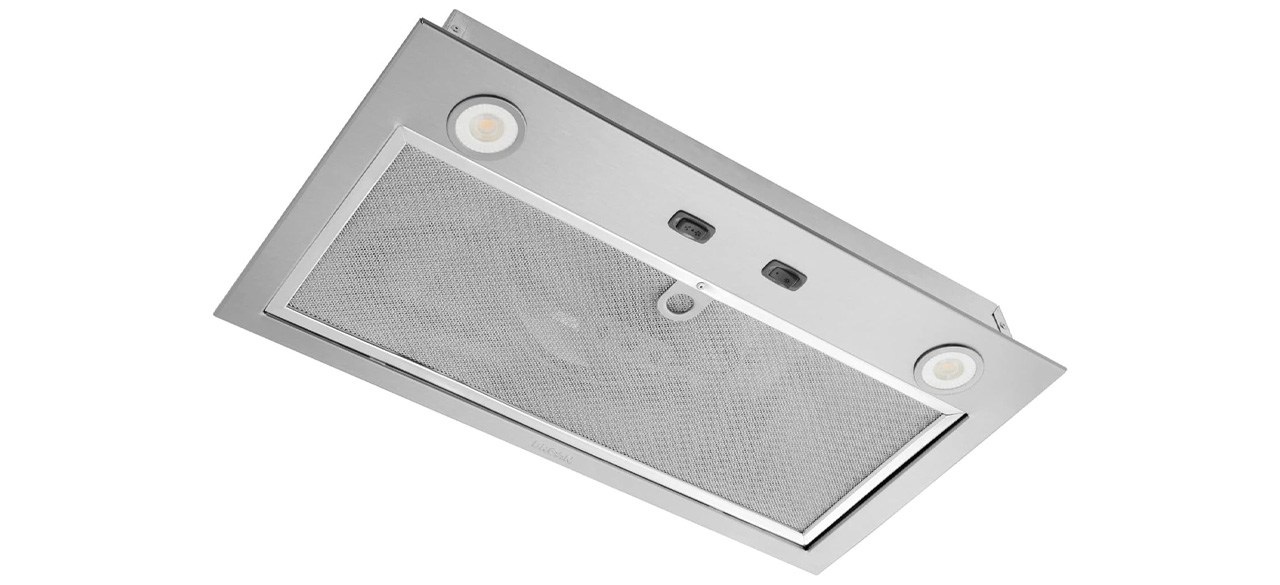 r team for performance, value, and reliability.
Prices listed reflect time-of-publication figures and are subject to change. Visit our store for the most current pricing and availability. Backyard Provider spends hours researching, analyzing, and testing products to recommend the best picks for our customers.