
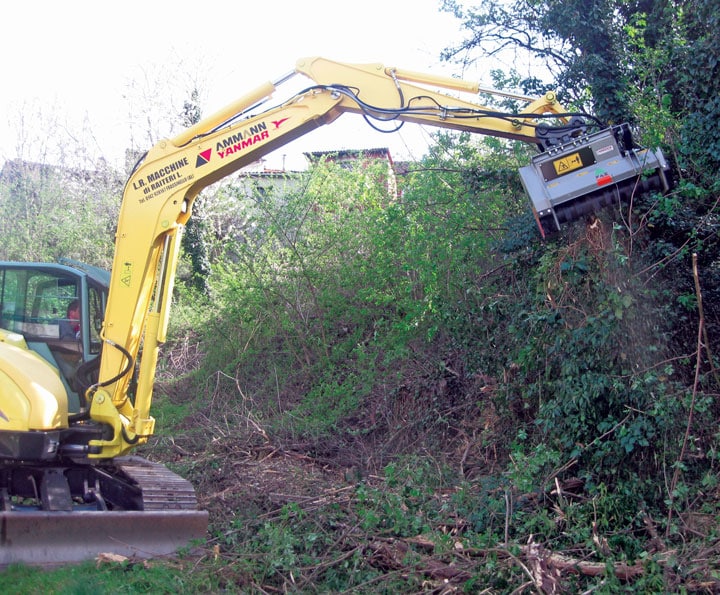
Mini excavators continue to gain popularity across various industries. Contractors and property owners alike are discovering the remarkable versatility these machines offer. Equipped with hydraulic attachments, compact excavators can handle tasks that were once reserved for larger, more expensive equipment. Among the most valuable attachments available are brush cutters and flail mowers—two powerful solutions for vegetation management that serve different purposes depending on your specific needs.
For landscaping professionals, land clearing contractors, and property owners managing overgrown areas, understanding the differences between these attachments is essential. While both tools excel at vegetation control, they approach the task differently, making each one better suited for particular applications and terrain conditions.
What Sets Brush Cutters and Flail Mowers Apart?
Manufacturers sometimes use terms like "brush cutter" and "flail mower" interchangeably, which can create confusion in the marketplace. Some producers even label their brush cutters as "rotary cutters" or use other similar terminology. The reality is that these represent distinctly different attachment categories, each engineered to handle specific vegetation challenges.
The fundamental distinction lies in the cutting mechanism itself. Brush cutters typically employ large rotating blades similar to oversized lawn mower decks, spinning at high speeds to slice through vegetation. Flail mowers, on the other hand, utilize multiple small cutting implements—called flails—attached to a rotating drum. These design differences significantly impact performance characteristics, making each tool optimal for different scenarios.

Application Differences Explained
Understanding when to deploy each attachment type can save considerable time and prevent equipment damage. The choice between a brush cutter and flail mower often comes down to the specific vegetation you're tackling, the terrain conditions, and the desired finish quality after the work is complete.
Whether you're maintaining established landscapes, clearing overgrown properties, or managing right-of-way corridors, selecting the appropriate attachment ensures optimal results while protecting your investment in compact excavator equipment.
Excavator Attachment Specifications to Consider
Before selecting any vegetation management attachment, evaluate your compact excavator's hydraulic flow capacity and auxiliary system specifications. Most brush cutters and flail mowers require adequate hydraulic pressure and flow to operate efficiently.
Consider factors such as the excavator's operating weight, maximum reach requirements, and the attachment mounting system compatibility. Ensuring proper matching between your machine and the attachment prevents performance issues and potential damage.
Review the manufacturer's recommended hydraulic specifications, including GPM flow rates and PSI requirements, to ensure your excavator can deliver adequate power for demanding cutting applications.
Brush Cutters: Heavy-Duty Vegetation Management
Brush cutters represent the workhorse category for tackling dense vegetation, heavy brush, and small diameter trees. These robust attachments excel in demanding land clearing scenarios where raw cutting power takes priority over finish quality. When facing thick brush, invasive species removal, or property reclamation projects, brush cutters deliver the performance professionals need.
The typical brush cutter design features one or more heavy-duty rotating blades housed within a protective deck. This configuration allows the attachment to power through substantial vegetation while protecting the excavator and operator from debris. Many models can handle saplings and small trees up to several inches in diameter, making them invaluable for overgrown property clearing.
Popular applications include fence line clearing, ditch maintenance, utility right-of-way management, fire break creation, and general land reclamation. Construction site preparation often benefits from brush cutter capabilities when dealing with wooded areas or heavily vegetated lots.
Key Advantages of Brush Cutters
Superior Cutting Capacity: Brush cutters handle larger diameter material than flail mowers, making them ideal for overgrown properties with established woody vegetation.
Aggressive Performance: The high-speed rotating blade design delivers powerful cutting action that slices through dense vegetation quickly and efficiently.
Durability: Heavy-duty construction withstands demanding conditions, including rocky terrain and debris-laden environments.
Versatility: Many brush cutters can be configured with different blade options to optimize performance for specific vegetation types.
Flail Mowers: Precision Vegetation Control
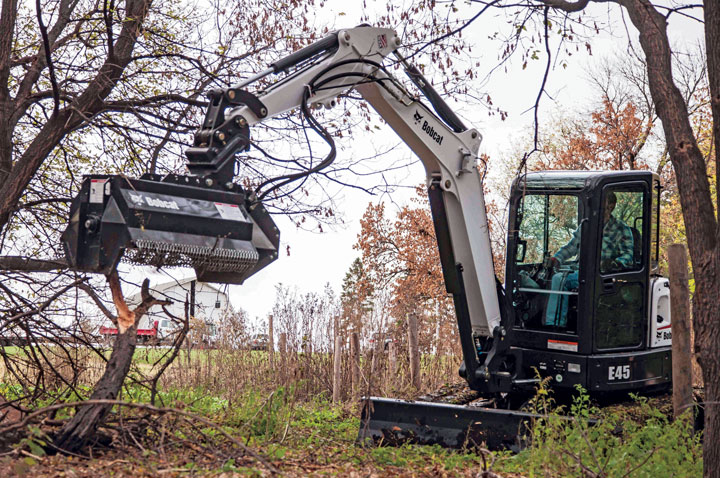
Flail mowers serve a distinctly different purpose in the vegetation management toolkit. These attachments utilize a horizontal rotating drum fitted with numerous small cutting implements—the flails—that deliver a more refined cutting action. The design produces superior mulching capability and leaves behind a cleaner, more manicured finish compared to standard brush cutters.
The multiple flail design offers inherent advantages in certain applications. When a flail strikes a solid object like a rock or stump, it simply deflects rather than potentially damaging the entire cutting mechanism. This characteristic makes flail mowers particularly well-suited for areas with unknown debris or rocky terrain where hidden obstacles pose a constant threat.
Right-of-way vegetation management represents a primary application for excavator-mounted flail mowers. Highway departments, utility companies, and municipal maintenance crews rely on these attachments to maintain roadside vegetation while minimizing debris projection and achieving consistent cutting heights.
Ideal Flail Mower Applications
Flail mowers excel in scenarios requiring a professional finish and superior mulching capability. Common applications include roadside and highway maintenance where debris control is critical, park and recreational area upkeep requiring manicured appearance, slope mowing applications where the excavator's reach provides access advantages, and vegetation management near sensitive areas where thrown debris must be minimized.
The mulching action of flail mowers leaves behind finely processed material that decomposes quickly, returning nutrients to the soil and eliminating the need for debris collection in many applications.
Flail Mower Design Variations
Manufacturers offer various flail configurations to address different vegetation types and cutting requirements. Standard Y-flails work well for general grass and light brush, while hammer-style flails tackle heavier vegetation more effectively. Some models feature interchangeable flail options, allowing operators to optimize the attachment for specific conditions.
Cutting width options range from compact units designed for mini excavators to larger models compatible with mid-size machines. Selecting the appropriate width ensures efficient coverage while matching the excavator's hydraulic capacity and lifting capability.
Making the Right Choice for Your Application
Selecting between a brush cutter and flail mower ultimately depends on your primary applications, terrain conditions, and desired results. Each attachment category offers distinct advantages that make it the superior choice in specific scenarios.
Consider the typical vegetation you'll encounter, the finish quality requirements, operating environment hazards, and maintenance preferences when making your decision. Many professional contractors maintain both attachment types to ensure they have the optimal tool for any vegetation management challenge.
Choose Brush Cutters When:
• Clearing dense brush and small trees
• Reclaiming overgrown properties
• Creating fire breaks
• Finish quality is secondary to power
• Tackling woody vegetation up to 4"+ diameter
Choose Flail Mowers When:
• Professional finish is required
• Working in rocky or debris-prone areas
• Mulching capability is important
• Minimizing debris projection matters
• Maintaining roadways and right-of-ways
Operational Best Practices
Regardless of which attachment you select, following proper operating procedures maximizes performance and extends equipment lifespan. Always conduct pre-operation inspections to verify blade or flail condition, check hydraulic connections, and ensure all safety shields remain properly installed.
Match your ground speed to vegetation density—slowing down for heavier material prevents overloading the attachment and ensures thorough cutting. Maintain appropriate cutting height to avoid scalping while achieving desired vegetation control.
Regular maintenance including blade sharpening, flail replacement, bearing lubrication, and belt inspection keeps your vegetation management attachment performing at peak efficiency throughout its service life.
Conclusion
Both brush cutters and flail mowers represent valuable additions to any compact excavator's attachment arsenal. Understanding the strengths and optimal applications of each type empowers operators to select the right tool for specific vegetation management challenges.
By matching the attachment characteristics to your project requirements, you'll achieve better results, reduce operating costs, and extend equipment longevity. Whether you need the raw cutting power of a brush cutter or the refined mulching capability of a flail mower, these versatile attachments transform compact excavators into highly capable vegetation management machines.
Ready to Upgrade Your Excavator?
Explore our selection of premium flail mowers designed for mini skid steers and compact equipment.
Baumalight FMM148 Flail Mower