
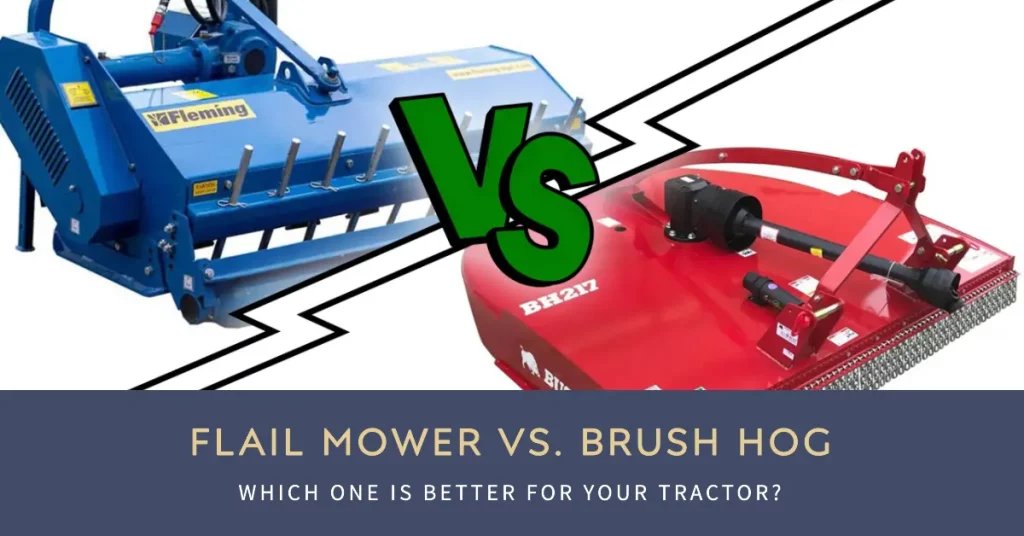
When you own a tractor and have acreage that needs regular upkeep, having the right PTO-driven attachment can make all the difference. Two of the most popular options on the market are flail mowers and brush hogs — but they serve quite different purposes. Understanding the key differences between them is essential to making a well-informed purchase decision.
Both implements are designed to tackle tough vegetation, but the way they handle cutting, the results they deliver, and the maintenance they require are all distinct. In this guide, we will walk you through everything you need to know about flail mowers and brush hogs so you can confidently determine which one matches your property and workflow.
Quick Comparison at a Glance
What Is a Flail Mower?
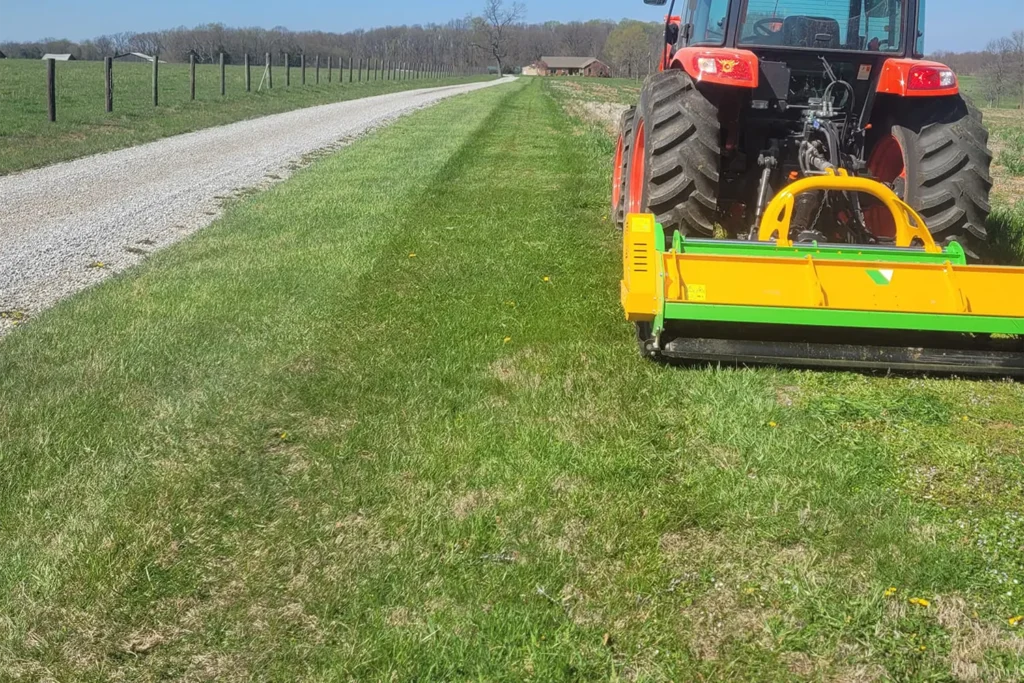
A flail mower is a PTO-powered cutting implement built to handle grass, weeds, light brush, and similar vegetation with precision. It operates using a horizontal rotating drum fitted with numerous small, individually mounted blades — known as flails — that spin at high speed to shred material into fine pieces.
These machines are built for demanding, repetitive work and can manage tall, thick vegetation without difficulty. Flail mowers also do an excellent job of mulching, which means clippings are scattered evenly across the ground and decompose rapidly, nourishing the soil in the process.
Because of their enclosed design, flail mowers are significantly safer than many alternatives — they throw very little debris outward, making them a preferred choice for areas near buildings, roads, or pathways.
What Is a Brush Hog?
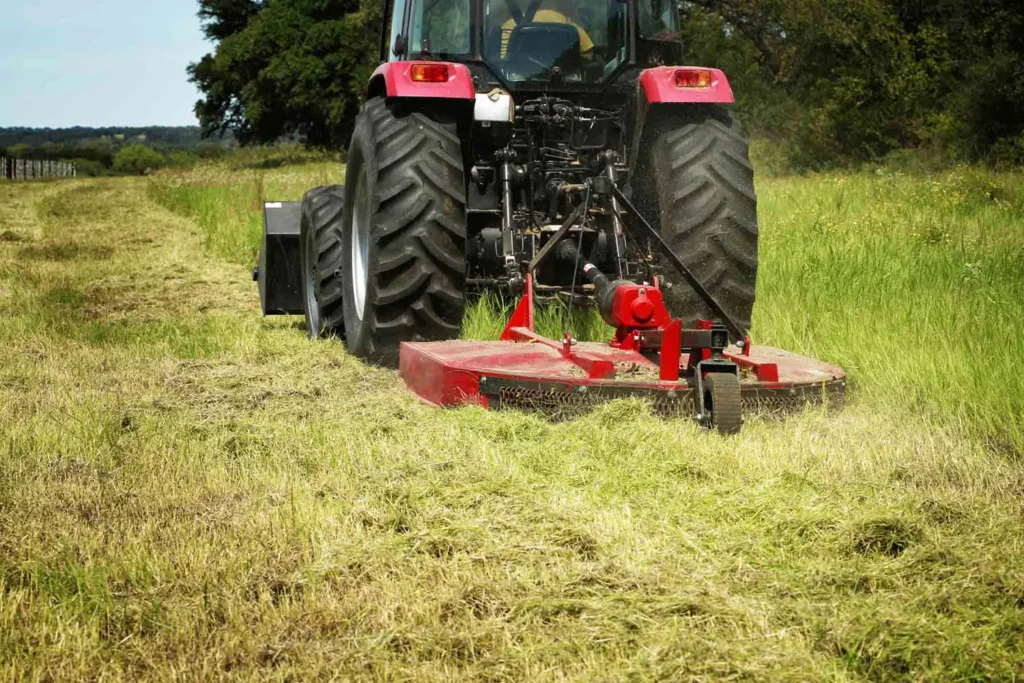
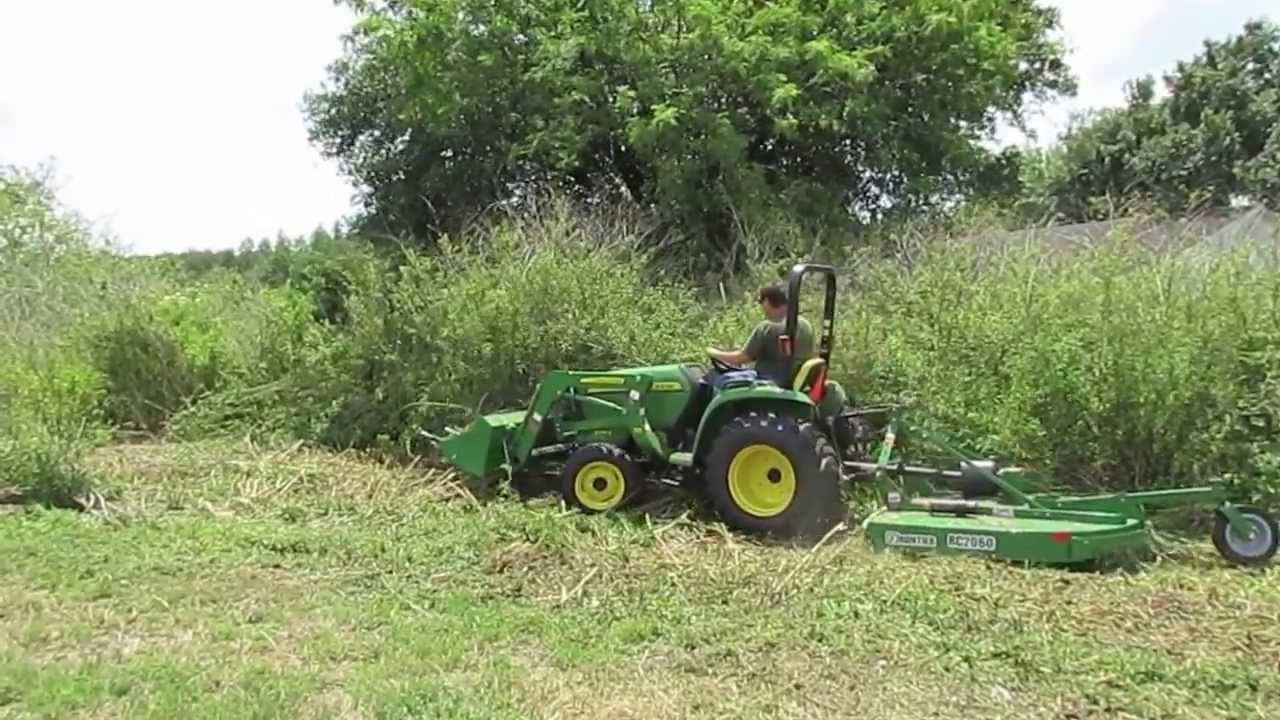
A brush hog — also commonly called a rotary cutter — is a heavy-duty PTO-powered mower that is specifically engineered to chew through thick, stubborn vegetation. Unlike the multi-blade flail system, a brush hog relies on one or two large, heavy blades that spin at high velocity to power through saplings, dense brush, tall weeds, and small trees.
These implements are the go-to tool for landowners who need to clear overgrown fields, reclaim neglected pastures, or maintain fence lines and woodland borders. Brush hogs are designed for sheer cutting force rather than a polished appearance — they get the tough jobs done that would overwhelm a conventional mower.
Their rugged, straightforward construction means they can absorb impacts from rocks, stumps, and uneven terrain without major damage, making them a reliable workhorse for rough property management.
Head-to-Head Comparison: Flail Mower vs. Brush Hog
🔪 Cutting Quality
Flail mowers are the clear winner when it comes to producing a clean, uniform finish. Because their multiple blades contact vegetation several times, the result looks neat and well-maintained. Brush hogs, on the other hand, deliver a rough, uneven cut — they are built for power, not aesthetics. If your property needs to look manicured, a flail mower is the way to go. If you simply need overgrowth removed, a brush hog gets the job done efficiently.
🌿 Handling Heavy Vegetation
Both implements can handle difficult vegetation, but they approach it differently. Flail mowers manage tall grass and light brush effectively, while brush hogs are engineered for much heavier-duty applications — cutting through saplings, thick bushes, and small trees that would stop a flail mower in its tracks. For seriously overgrown or neglected land, a brush hog is the superior performer.
🛡️ Safety
In terms of operator safety, flail mowers have a significant advantage. Their enclosed drum design contains debris exceptionally well, reducing the risk of rocks or other objects being launched outward. Brush hogs, while equipped with rear chain guards, are more prone to ejecting debris — particularly stones and sticks — which can be hazardous if people, vehicles, or structures are nearby. If safety near populated areas is a priority, the flail mower is the safer option.
🔧 Maintenance Requirements
Both types of equipment need routine maintenance to stay in peak condition. However, flail mowers tend to demand more attention due to the larger number of individual blades, bearings, and belts. Brush hogs, with their simpler blade configuration, are generally easier and less time-consuming to service. That said, both benefit from regular greasing, blade inspection, and seasonal tune-ups to extend their working life.
💰 Cost Considerations
Flail mowers typically carry a higher price tag than brush hogs, but they also offer greater versatility and a more refined cut. Brush hogs are the more economical choice and are perfectly suited for landowners who need heavy-duty clearing without concern for finish quality. Your budget and the specific demands of your land will ultimately determine which offers the best value for your investment.
Flail Mower in Action
Advantages of Flail Mowers
✔ Delivers a superior, clean-cut finish that leaves your property looking professionally maintained.
✔ Mulches vegetation finely, promoting eco-friendly decomposition and natural soil nourishment.
✔ Versatile enough to handle a broad variety of vegetation types and conditions.
✔ Safer for use near roads, structures, and populated areas due to minimal debris discharge.
Disadvantages of Flail Mowers
✘ Generally comes with a higher upfront cost than brush hog alternatives.
✘ Can struggle when faced with very dense, heavy brush or thick saplings.
✘ Requires more frequent maintenance attention to keep blades and components in good working order.
Brush Hog in Action
Advantages of Brush Hogs
✔ Budget-friendly pricing makes it accessible for most tractor owners.
✔ Ideal for cutting through heavy vegetation including saplings and small trees.
✔ Built tough to handle the most demanding clearing conditions without breaking down.
Disadvantages of Brush Hogs
✘ Produces a rough, unfinished cut that lacks visual appeal.
✘ Greater risk of throwing dangerous debris during operation.
✘ Demands regular sharpening and monitoring to maintain reliable performance.
Selecting the Right Implement for Your Property
Choosing between a flail mower and a brush hog ultimately comes down to assessing your specific property, your priorities, and the type of vegetation you are dealing with.
If you need a polished, lawn-like cut and your vegetation consists mostly of grass, weeds, and light brush, a flail mower is the ideal selection. Its fine mulching capability and safer operation make it a versatile tool for well-maintained properties.
If your land is heavily overgrown with thick brush, saplings, and tough undergrowth, a brush hog is the tool built for the job. Its raw cutting power makes quick work of vegetation that would overwhelm a standard mower.
For many property owners, the answer may even involve owning both — using the flail mower for regular maintenance mowing and the brush hog for seasonal heavy clearing. Regardless of your choice, investing in the right PTO implement will save you time, effort, and money in the long run.
Frequently Asked Questions
Can a flail mower cut through small trees?
Flail mowers are primarily designed for grass, weeds, and light brush. While they can manage very thin saplings, they are not intended for cutting through small trees. For that kind of heavy-duty clearing, a brush hog or dedicated brush mulcher is the better option.
How frequently should I sharpen my brush hog blades?
It depends on how often you use the machine and what type of material you are cutting. As a general rule, inspect the blades after every 10 to 12 hours of operation and sharpen them as needed. Keeping blades sharp ensures efficient performance and reduces strain on the tractor.
Can I use a brush hog on any tractor?
Brush hogs are designed to work with tractors of varying sizes, but you must ensure your tractor has a compatible PTO system and sufficient horsepower for the specific brush hog model. Always check the manufacturer's specifications before purchasing to guarantee a proper match.
Which implement requires less ongoing maintenance?
Brush hogs generally require less frequent maintenance due to their simpler blade design and fewer moving parts. Flail mowers, with their numerous individual flails, bearings, and belts, tend to need more regular attention. However, both machines need consistent care — including greasing, blade inspection, and belt checks — to deliver long-lasting performance.
The Bottom Line
Both flail mowers and brush hogs are invaluable PTO-powered implements that serve distinct purposes on the farm or homestead. By understanding their differences in cutting quality, vegetation capacity, safety, maintenance, and cost, you can make a confident, informed decision and select the implement that will serve your land the best. Explore our full range of tractor implements to find the perfect match for your needs.