
Choosing between an electric and a gas pressure washer can feel overwhelming when you are staring at a wall of specs and features. Both types of machines serve the same core purpose — blasting away dirt, grime, mildew, and stains from surfaces — but they go about it in very different ways. The right pick depends on the kind of work you plan to tackle, how often you will use it, and where your priorities fall when it comes to power, portability, noise, and budget.
In this comprehensive guide, we break down every meaningful difference between electric and gas pressure washers so you can make a confident, well-informed decision that suits your property and your lifestyle.
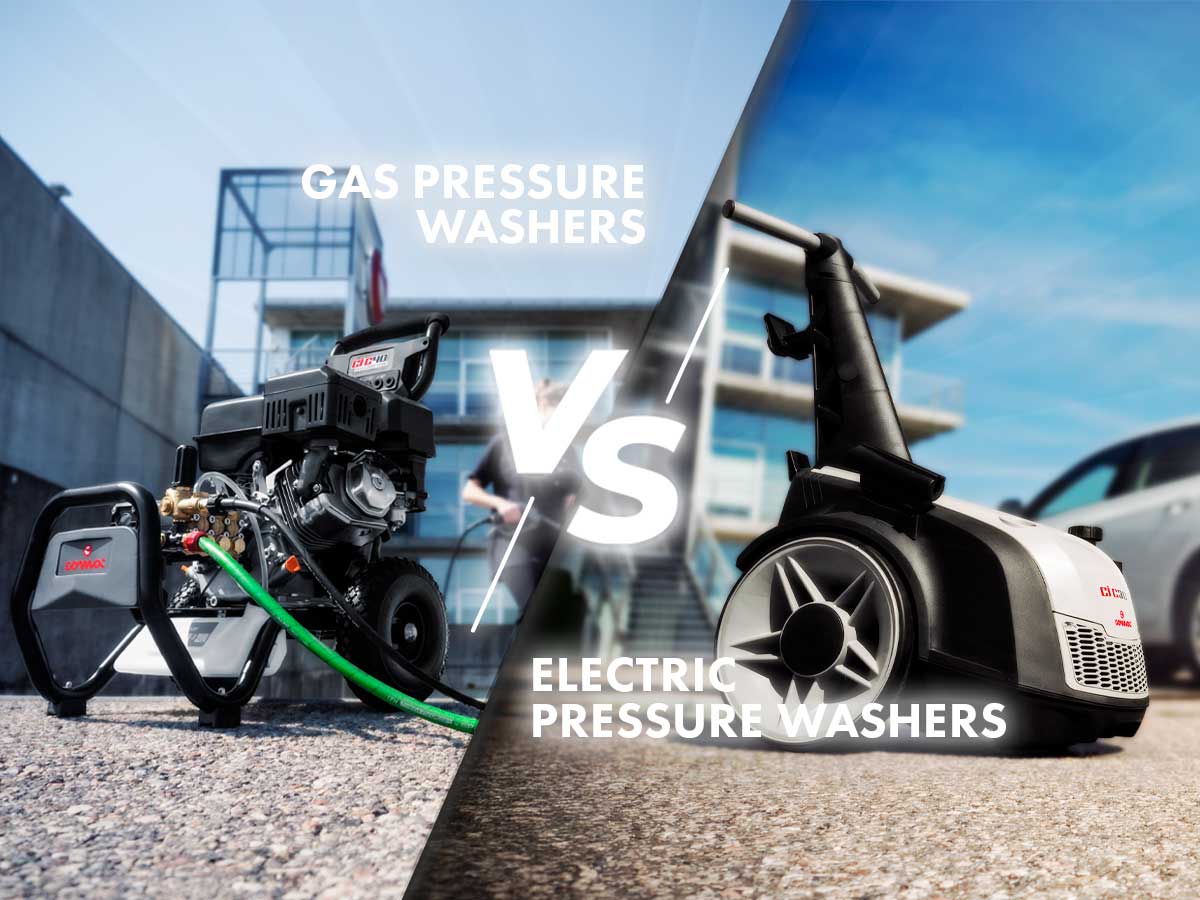
Electric Pressure Washers
Electric pressure washers draw their power from a standard household outlet, making them one of the most accessible outdoor cleaning tools available today. They are designed with simplicity in mind — plug in, squeeze the trigger, and start cleaning. Most residential models generate between 1,300 and 2,200 PSI with flow rates of 1.2 to 1.6 GPM, which is more than enough to handle everyday cleaning jobs around the home.
If you primarily need a pressure washer for washing cars, cleaning patio furniture, refreshing your deck, or blasting mildew off siding, an electric unit checks all the boxes without the complexity that comes with a combustion engine.
Advantages
Lightweight and easy to maneuver — Most electric models weigh between 15 and 35 pounds, making them simple to carry up stairs, wheel across a driveway, or tuck into a garage corner when the job is done.
Very low maintenance — There is no engine oil to change, no spark plugs to inspect, and no fuel stabilizer to add before storage. You simply rinse the unit, coil the hose, and put it away.
Quiet operation — Electric motors run at a fraction of the decibel level produced by gas engines, so you can wash your driveway early in the morning or late in the evening without disturbing neighbors.
Zero direct emissions — Because they run on electricity, there are no exhaust fumes, which means you can technically use them in enclosed spaces with adequate ventilation — something you should never do with a gas model.
Lower upfront cost — Entry-level electric pressure washers can be found for as little as $80 to $150, with mid-range models topping out around $300.
Disadvantages
Limited cleaning power — Even the strongest consumer-grade electric models struggle to match the sheer force of a mid-range gas unit, which limits their effectiveness on deeply stained concrete, heavy grease, or industrial surfaces.
Tethered to an outlet — You need a nearby electrical outlet and often a long, heavy-duty extension cord, which restricts how far from the house you can work.
Shorter lifespan under heavy use — Electric motors and pumps in budget models can wear down faster if they are run continuously for extended sessions, whereas gas engines are typically built for longer duty cycles.
Gas Pressure Washers
Gas pressure washers run on small combustion engines fueled by regular gasoline. They are the heavy hitters of the pressure washing world, producing significantly more PSI and GPM than their electric counterparts. Residential gas units commonly deliver between 2,500 and 4,000 PSI with flow rates ranging from 2.0 to 4.0 GPM, giving them the raw power needed to strip paint, blast away years of caked-on grime, and clean large areas in a fraction of the time.
If your cleaning checklist includes oil-stained garage floors, heavily weathered fences, expansive driveways, or commercial-grade jobs, a gas pressure washer is built for that workload.
Advantages
Superior cleaning power — Higher PSI and GPM ratings mean gas units can tackle stubborn stains, thick mud, chipped paint, and commercial surfaces that electric washers simply cannot handle efficiently.
Complete portability — No cords and no outlets needed. Fill the tank, prime the engine, and take it anywhere — a remote cabin, a job site, or the far end of a sprawling property.
Built for extended use — Gas engines are designed to run for longer periods without overheating, making them ideal for all-day cleaning projects and professional workloads.
Covers large areas quickly — The combination of high pressure and high flow rate means you can clean driveways, parking areas, and building exteriors in significantly less time.
Disadvantages
Heavier and bulkier — Most gas pressure washers weigh between 50 and 80 pounds or more, and their larger frames make storage and transport more demanding.
Ongoing maintenance required — Oil changes, air filter replacements, spark plug checks, and fuel system care are all part of owning a gas machine.
Loud operation — Gas engines typically produce 85 to 90+ decibels, which means hearing protection is recommended and early-morning use may not be practical in residential neighborhoods.
Exhaust emissions — The combustion engine produces carbon monoxide and other fumes, so gas washers should only be operated outdoors in well-ventilated areas.
The Main Differences Between Electric and Gas Pressure Washers
Performance and Cleaning Power
When it comes to raw performance, gas pressure washers dominate. A typical gas model puts out 2,500 to 4,000 PSI compared to the 1,300 to 2,200 PSI range that most electric units offer. More importantly, gas washers also deliver higher gallons-per-minute flow rates, and it is the combination of pressure and volume that determines how effectively and quickly a surface gets cleaned.
For light-duty tasks like rinsing patio furniture, spraying down a car, or clearing cobwebs from siding, an electric model performs beautifully. But the moment you step up to jobs that involve oil stains on concrete, weathered wood restoration, or stripping old paint, you need the extra muscle that only a gas engine can provide.
| Specification | Electric | Gas |
|---|---|---|
| PSI Range | 1,300 – 2,200 | 2,500 – 4,000+ |
| GPM Range | 1.2 – 1.6 | 2.0 – 4.0 |
| Best For | Light to medium tasks | Heavy-duty cleaning |
| Cleaning Speed | Moderate | Fast |
Portability and Ease of Use
Electric pressure washers win this category almost unanimously. They are lighter, more compact, and require nothing more than a garden hose connection and a power outlet to get started. There is no pull-cord engine startup, no fuel mixing, and no warm-up period — just plug in and go.
Gas models, on the other hand, trade convenience for freedom. They are undeniably heavier and more cumbersome to move around, but the absence of a power cord means you can take them literally anywhere — no extension cords, no proximity to the house required. For large properties, rural land, or job sites without reliable electrical access, this freedom is non-negotiable.
Maintenance and Longevity
Electric pressure washers are remarkably low-maintenance. The motor is sealed and requires no servicing. You do not need to winterize them with fuel stabilizer, and there are no consumable engine components to monitor. Just keep the nozzles clear, flush the system after using detergent, and store it in a dry place.
Gas pressure washers demand more attention. Regular oil changes, air filter cleaning or replacement, spark plug inspections, and proper fuel management are all essential to keep the engine performing well. Before putting the unit into seasonal storage, you need to either run the carburetor dry or add a quality fuel stabilizer to prevent gumming.
That said, when properly maintained, a quality gas pressure washer can last significantly longer than most consumer electric models, especially under frequent, demanding use. The engines in commercial-grade gas washers are built to endure thousands of hours of runtime.
Cost Considerations
Electric models are generally more affordable up front. You can pick up a solid residential electric pressure washer for $100 to $300, while capable gas units typically start at $300 and can exceed $1,000 for professional-grade machines. The cost gap widens when you factor in ongoing expenses — gas washers require fuel, oil, filters, and periodic engine maintenance, all of which add up over the life of the machine.
However, if you look at cost through the lens of cleaning efficiency and longevity, a well-built gas washer can actually deliver more value per dollar over time, especially for homeowners with large properties or for anyone who washes frequently. It cleans faster, which means less time on every job, and with proper care its lifespan far exceeds that of most electric alternatives.
Noise and Emissions
If noise is a concern — and for many suburban homeowners it absolutely is — electric washers have a clear edge. Most electric units operate at around 70 to 78 decibels, which is comparable to a normal conversation or a running dishwasher. Gas models run considerably louder, often exceeding 85 decibels, putting them in the same ballpark as a lawnmower or leaf blower. Ear protection is strongly recommended during prolonged gas washer sessions.
On the emissions front, electric washers produce zero direct exhaust, making them the environmentally friendlier option at point of use. Gas washers emit carbon monoxide and other combustion byproducts, which means they must only be used outdoors. If eco-consciousness is part of your decision-making process, this difference matters.
Setup and Storage
Electric pressure washers are compact enough to store on a shelf, in a closet, or in a small corner of the garage. Setup takes less than two minutes — attach the hose, connect the wand, plug in, and you are ready. Teardown is equally fast.
Gas units demand more dedicated storage space due to their larger footprint and the need to store them with proper fuel considerations. Starting a gas washer involves checking oil, ensuring there is fresh fuel, engaging the choke, and pulling the recoil cord — a more involved process that takes a few extra minutes each time. For quick, spontaneous jobs, the electric washer's instant-on convenience is hard to beat.
Featured Product
BE Power Equipment 196cc 2500 PSI Pressure Washer
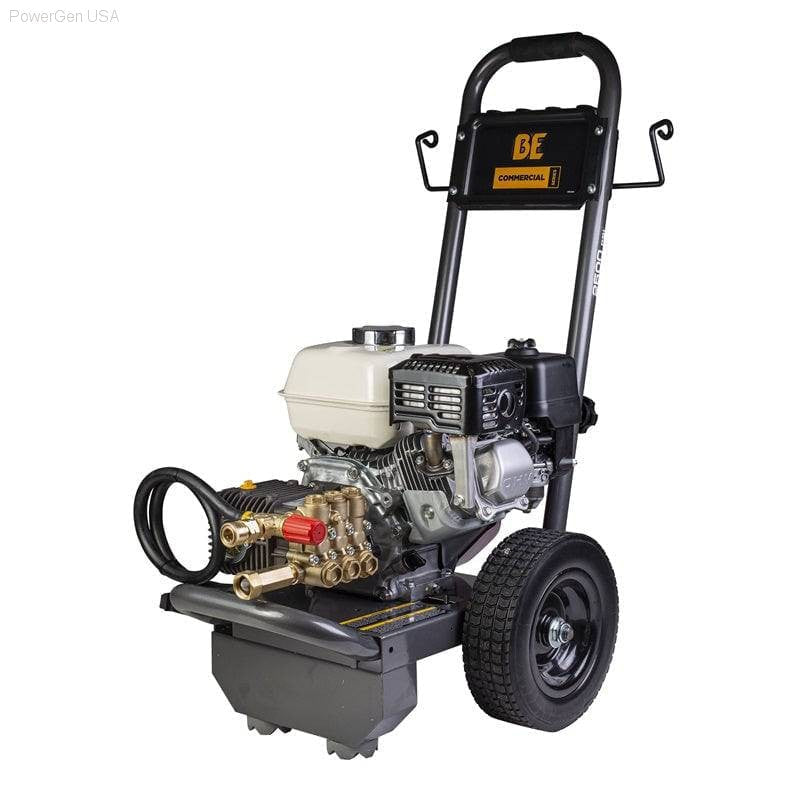
For those who demand dependable gas-powered cleaning performance, the BE Power Equipment 196cc 2500 PSI Pressure Washer delivers professional-level results in a package built for residential and light commercial use. Powered by a robust 196cc engine and featuring PowerGen USA engineering, this machine strikes an excellent balance between power and maneuverability.
How to Choose the Right Pressure Washer
Assess Your Cleaning Needs
Consider the surfaces you will clean most often. Cars, patios, and garden furniture? Electric is perfect. Concrete driveways, decks, fences, and heavy grime? Lean toward gas. Match the tool to the toughest job on your list, not the easiest.
Frequency of Use
If you only pressure wash a few times a year for light maintenance, an electric washer offers unbeatable convenience. If you are running the machine weekly or tackling big projects regularly, a gas model justifies its higher price with faster results and greater durability.
Budget Considerations
Factor in both the purchase price and the total cost of ownership. An electric washer costs less up front and has virtually zero ongoing costs. A gas washer costs more initially and requires fuel and maintenance, but it may save money over time by completing jobs faster and lasting longer.
Storage Space
Think about where the machine will live when not in use. Electric models fit in tight spaces. Gas models need a more generous footprint and should be stored where fuel fumes will not accumulate.
Noise Level and Environment
If you live in a densely packed neighborhood or an area with noise restrictions, an electric model keeps the peace. If noise is not a concern — or you will primarily use the washer in an open rural setting — gas is perfectly fine.
Maintenance Willingness
Be honest about how much upkeep you are willing to do. If you want something that is truly plug-and-play with no scheduled maintenance, electric is your answer. If you are comfortable with basic small-engine care and appreciate the performance payoff, gas is a worthwhile investment.
Quick Decision Reference
Choose Electric If You...
✓ Primarily wash cars, patio furniture, and light surfaces
✓ Want minimal setup and zero maintenance
✓ Need to keep noise levels down
✓ Have limited storage space
✓ Prefer a lower upfront investment
Choose Gas If You...
✓ Need heavy-duty cleaning power for concrete, fences, or commercial work
✓ Want total portability without cord limitations
✓ Plan to use the machine frequently or for long sessions
✓ Have a large property or remote areas to clean
✓ Are comfortable with routine engine maintenance
Conclusion
There is no universally superior choice between electric and gas pressure washers — the best machine is the one that aligns with your specific needs, your property, and how you intend to use it. Electric models offer unmatched convenience, quiet operation, and affordability for routine light-duty cleaning. Gas models bring raw power, total portability, and the endurance to tackle the toughest jobs over extended periods.
Evaluate the work ahead of you, consider your comfort level with maintenance, and weigh the long-term value against the upfront cost. Whichever direction you choose, investing in a quality pressure washer will keep your outdoor spaces looking sharp for years to come.
BE 2500 PSI Pressure Washer© Backyard Provider — Your Trusted Source for Outdoor Living Equipment