
The truth about wall-mounted fitness equipment and how it can transform your home workout routine.
What is a Swedish Ladder?
Swedish ladder. Wall bars. Stall bars. Gymnastics ladder. Regardless of what you call this piece of equipment, you likely recognize it from countless gym classes, physical therapy sessions, and professional training facilities around the world.
But what exactly is it?
The challenge lies primarily in the misconception that a "Swedish Ladder" is just a simple climbing apparatus. In reality, this versatile piece of equipment represents a complete bodyweight training system. It provides athletes and fitness enthusiasts with the ability to perform stretching, strengthening, rehabilitation exercises, and dynamic movements all in one compact, wall-mounted unit.
Now, consider the average wall bar setup—the rungs are evenly spaced, the frame is sturdy, and the mounting is secure. We often see fitness enthusiasts approaching Swedish ladder routines like a dancer approaches a barre—with intention, precision, and a focus on form. However, using it only for basic stretches barely scratches the surface of its potential. It can deliver impressive results for strength and mobility, but this only happens when you understand its true capabilities.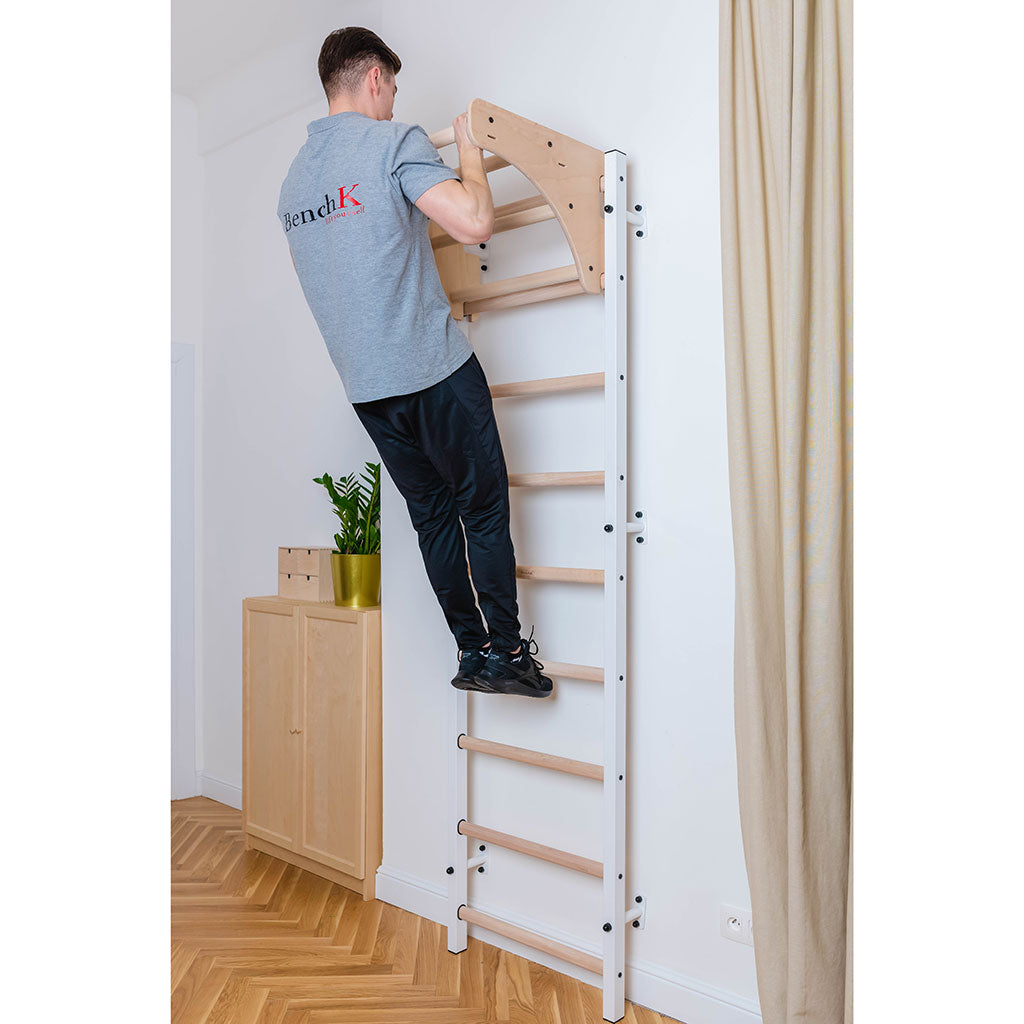
How to Use Swedish Ladders Effectively
That being said, if used correctly, a Swedish ladder can still be a valuable tool in athletic and fitness development. The focus, instead of just climbing, is really on proprioception—or body control and coordination. Your awareness of your body in space and the ability to control your limbs with precision is not purely a god-given talent. It is a result of neurological connections made between your brain and the muscles in your body over time through deliberate practice.
For example, a gymnast doesn't just wake up one day with the ability to perform a perfect handstand on the bars. It takes thousands of reps and missed positions recorded by the brain to establish a firm, confident connection that allows for complete control.
By working through progressively difficult movement patterns and grip positions on the ladder, increasing range of motion as you go, you cement those neurological connections between the brain and your muscles. Every great rep, as well as every adjustment, brings you closer to supreme control.
What Do Swedish Ladder Drills Improve?
So working on Swedish ladder training with a focus on proprioception does what exactly?
When you can control EXACTLY where your body is positioned, with how much force, for how long and in what direction it will move next, you have drastically improved your potential for economy of movement.
Economy of movement means a reduction of wasted energy and motion. The less time you take to complete a movement, the "faster" you become. You can actually develop strength, flexibility, and functional movement by becoming smoother and more economical in all of your exercises. So, how can you actually develop these qualities? By working them in a controlled environment.
Strength & Flexibility – Built in the Home Gym
When thinking about total athletic performance, strength training is the type of training we should be talking about! Let's break down strength, flexibility, power, proprioception, and conditioning.
Strength & Flexibility
These days, they are the ultimate buzzwords in athletics and performance training. Every coach wants stronger athletes, every athlete wants better flexibility, and every trainer claims he/she has the drills that will drastically improve your range of motion and functional strength. Look, don't get us wrong, end-range strength, reaction time, and the ability to change direction quickly is important in athletics. Here's the problem, training these abilities has become drastically oversimplified. Everywhere you turn, you see elaborate floor routines, ladder exercises, and "stretch" drills. Here's what actually works—progressive overload through controlled movements on stable equipment.
Power
First, we must develop the athlete's maximal power output. Moving faster is a result of generating force into the ground quickly. Power is, by definition, a combination of strength and speed applied at rates. So, we first work to build basic strength through compound movements like pull-ups, leg raises, and core exercises—all achievable on a quality Swedish ladder system.
Proprioception
Next we must spend a good deal of time on working on athlete's proprioception, or body control. To start, we work this by introducing complex compound "hanging" movements in the gym that involve overhead squatting, pressing, back exercises, and Swedish ladder work to cement the neural connections between brain and limbs for fast, repeated movements. In total we have a stronger, more precise sense of body control. Such enhanced coordination allows athletes the chance at better economy of movement. Any athletic coach knows mechanics are everything. Wasted, rushed, and sloppy movement are a bigger determinant of "speed and agility" than anything else with young athletes.
(Though we do not go into it here, proper running mechanics obviously also play a large role for the same reason. In this instance, speed coaches can be very beneficial for athletes with poor mechanics.)
Conditioning
Lastly, we mustn't neglect conditioning. Many people wrongly separate speed from conditioning. Top-end speed is great, but if you cannot replicate your maximal force production or maintain body control period after period, especially when fatigued, you're only as fast as your "tired" speed is effectively useless. To make sure our performance lasts, we develop all 3 metabolic energy pathways through numerous different approaches.
We do it all: from finishers promoting muscular endurance and strength at high heart rate, to shuttle runs of varying distance to develop anaerobic conditioning and change of direction, to classical aerobic conditioning as increased training power. The true goal is to develop an athlete that can see results on the field, not just in a gym—but in a home gym as well with the right equipment.
Featured Equipment
Explore our Swedish Ladder with built-in pull up bar and rack!
BenchK Swedish LadderThe Relevant Aspects of Strength and Flexibility
The relevant aspects of strength and flexibility to competitive athletics, in regards to training, are much more compartmentalized. Athletes benefit from the ability to accelerate or decelerate quickly and efficiently, change direction with ease and precision, and maintain peak power and force production over the course of whatever time domain their play lasts. So, how should you go about improving these elements?
We simultaneously train high velocity movements such as various plyometrics and lighter weight Olympic lifts to cultivate explosiveness. The resulting combination is a greater ability to generate force at high velocities. This enables an athlete to accelerate and decelerate faster, as well as improve top-end speed.
We only have so much time with our athletes; make the most of it by training strength, flexibility, and functional movement in the gym—or better yet, in your own backyard with wall-mounted equipment that delivers professional-grade results.
Ready to Transform Your Home Gym?
Invest in equipment that delivers real results. Our Swedish Ladder system combines strength training, flexibility work, and rehabilitation exercises in one elegant, wall-mounted solution.
BenchK Swedish Ladder