
For homeowners and professional landscapers alike, managing fallen branches, hedge trimmings, and yard debris can be challenging. Choosing the right wood chipper or shredder can transform your outdoor maintenance routine and save you countless hours of manual labor.
Selecting the perfect chipper or shredder requires understanding your specific landscaping needs. Whether you're dealing with small garden trimmings or large fallen branches, the right equipment will make all the difference in efficiency and results.
This comprehensive guide walks you through everything you need to know about finding the best wood chipper for your yard maintenance tasks, from understanding how they work to selecting the right engine power and features.
How Does a Wood Chipper Work?
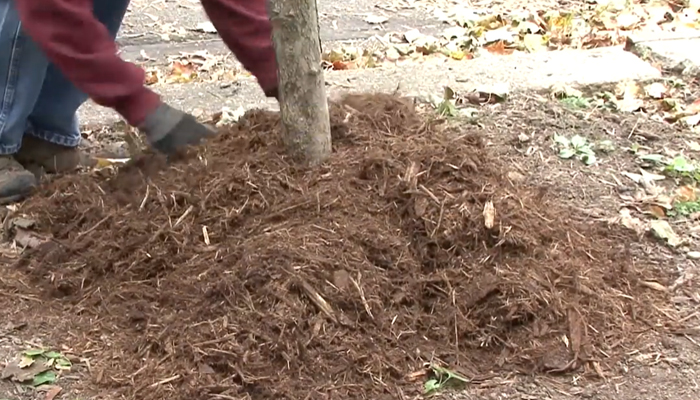
Wood chippers break down branches, twigs, leaves, and other yard debris into smaller, manageable pieces. As debris enters the machine, the chipper's blades and shredding drums slice rapidly through natural material like butter, creating fine mulch or chips that can be used as nutrient-rich ground cover or composting material.
Thanks to robust engines and precision cutting mechanisms, gas-powered chippers are perfect for handling larger branches and debris. They provide unmatched power when you need to process thick, woody material, making them an essential tool for those big brush pile cleanup jobs.
 Types of Wood Chippers
There are two primary types of wood chippers available, each designed for different applications. Understanding how they function will help you make an informed decision about which is best suited for your yard work needs.
Chippers
Chippers are built to handle heavy wood debris, making cleanup fast and easy. They offer the following features and design characteristics:
- Dedicated chute: Designed exclusively for wood, chippers can handle primarily sticks and woody debris.
- Cutting mechanism: Uses sharp, durable blades for efficient chipping and composting.
- Power sources: Electric, gas, or power take-off (PTO) engines provide the necessary cutting force.
- Best for: Properties and lots that require regular tree trimming or heavily wooded removal.
Chipper/Shredders
Combination units manage needs for branches, leaves, and garden waste, providing versatile functionality with dual processing capabilities. Chipper/shredders are versatile and designed to handle a wider variety of materials than standard chippers.
- Dual function: A wood chipper and shredder combined, allowing you to process both heavy woody material and softer debris like foliage and leaves.
- Capacity: Ideal for both small and large jobs.
- Portability: Great for outdoor and landscapes who deal with both green and dry debris. Also great for mulching leaves and small branches.
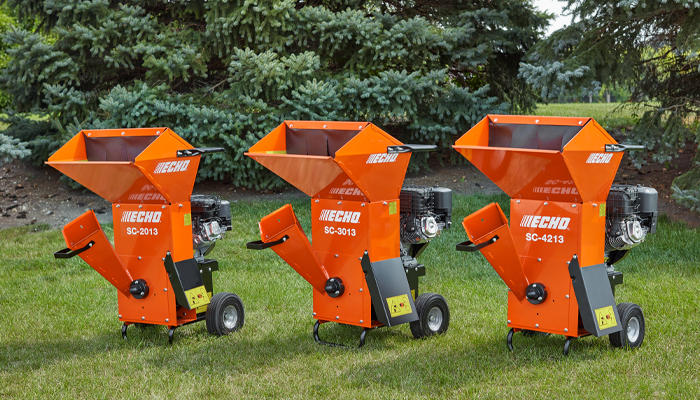
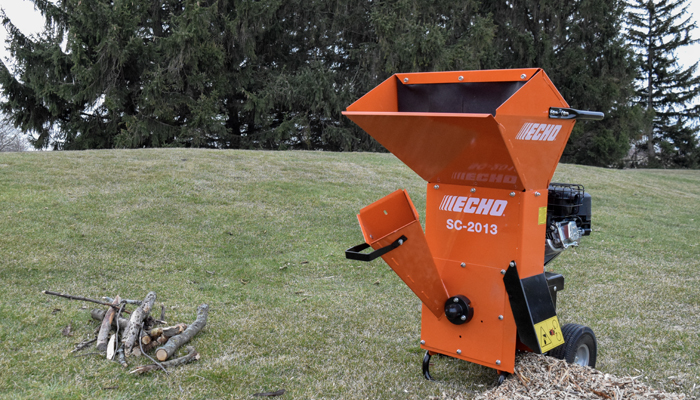
- Extra flexible: ECHO chipper/shredders are lightweight and portable for all your yard cleanup tasks.
 How to Choose a Wood Chipper
Before you invest in a chipper or shredder, take time to assess factors like maneuverability, mechanisms, engine power, and performance capabilities that match your specific needs.
Easy Transportation & Maneuverability
A chipper/shredder's design impacts how easy it is to move around the area you're maintaining. Look for the following features:
- Large, sturdy wheels: Provide easy movement, even on uneven terrain.
- Engines: Single-cylinder engines offer comfortable pushing and pulling, reducing user strain.
- Weight distribution: Properly balanced units are easier to maneuver. Heavy-duty models offer power and durability for commercial landscaping needs.
Note: Gas-powered chipper/shredders are engineered for stability, power, and ease of transport. They offer hassle-free maintenance with easy-to-access components, so you can get the job done efficiently.
Understanding Chipper Blades & Cutting Mechanisms
The quality and design of a chipper/shredder's blades and cutting mechanism directly affects performance and lifespan:
- Chipper blade models: Standard models feature dual chipping and shredding blades, providing versatility for various materials.
- Chipper/shredder hybrids: Hybrid models have both chipping and shredding capabilities, so you can process all yard debris in one unit with efficiency.
- Blade positioning: Reversible blades and shredding models use the force of their blades to pull in material. A hydraulic-tilted offers a smooth, controlled operation for safety and effectiveness.
 Engine Power & Performance
Engine specifications determine how efficiently and powerfully your chipper processes yard debris. Most reliable chipper/shredders come with 208cc, 306cc, or 420cc engines. The higher the displacement, the greater the power output and material handling capacity.
- Occasional users: Lower horsepower is suitable for light-duty tasks and occasional cleanup jobs.
- Moderate use: A 306cc model is ideal for medium-sized properties and more frequent use.
- Heavy-duty jobs: Machines with higher engine power handle larger branches, or are dealing with professional landscaping or forestry work.
Pro Tip: Gas-powered chippers are known for their reliability and strength. They can handle tough materials without stalling, making them a smart choice for demanding yard work.
Recommended Product
Tackle your toughest yard debris with professional-grade power and reliability
BILT HARD 7.5 HP Wood ChipperSafety Tips for Using a Chipper/Shredder
As with any powerful machine, using a chipper or shredder safely requires awareness and following precautions to prevent accidents:
- PPE: Don't operate a chipper/shredder unless you're wearing gloves, safety goggles, ear protection, and sturdy clothing that won't get caught in the machine.
- Keep hands clear: Never push material into the machine with your hands. Always use a stick or debris into the machine.
- Positioning: Never stand directly in front of the hopper. Standing off to the side ensures you can send any potential kickback away from you.
- Slow feeding: Feed one branch at a time. Don't jam the chute with armfuls of twigs or leaves - this can cause jams or clogs.
- Regular maintenance: Sharpen your chipper/shredder's blades regularly and inspect it for wear before every use.
The Right Chipper for Your Yard
Selecting the right chipper/shredder depends on the type and volume of debris you normally deal with, yard size, and how often you perform outdoor maintenance. The most important factors include engine power for your debris type, portability for easy movement, and blade quality for efficient processing.
A gas-powered chipper provides the strength and dependability you need when dealing with twigs, hedge, and smaller garden debris in addition to branches. They're gas-powered engines deliver exceptional performance regardless of conditions.
Before purchasing your next chipper/shredder, think about the job and features we've discussed here: chipper type, engine power, maneuverability, and safety. Taking time to evaluate your specific needs will ensure you select the perfect machine for transforming yard waste into valuable mulch or compost.
Ready to Transform Your Yard Maintenance?
Invest in a reliable wood chipper that will make cleanup faster, easier, and more efficient for years to come.
Shop Wood Chippers Now