
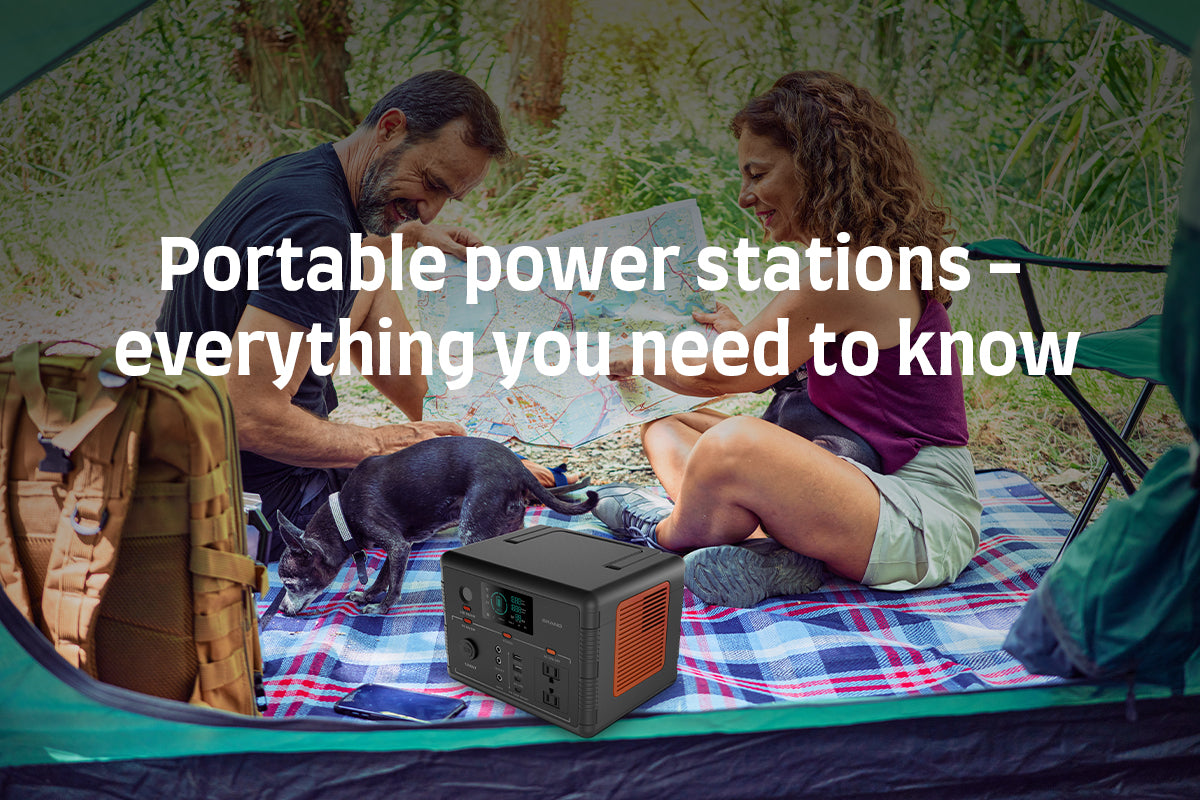
If you've been exploring ways to stay powered up outdoors, during emergencies, or simply off the grid, you've likely come across the term portable power station. These devices have exploded in popularity — and for good reason. Below, we break down exactly what they are, how they function, what sizes are available, and what factors to weigh before making a purchase.
What Is a Portable Power Station?
A portable power station — sometimes referred to as a solar generator — is a compact, self-contained unit that stores electrical energy so you can charge and run your devices wherever you go. Inside, you'll typically find a rechargeable battery, a built-in inverter that converts DC power to AC, and a variety of input and output ports for charging and powering your gear.
These units range dramatically in size — from pocket-friendly models that can charge a phone or tablet, to large-scale units powerful enough to run a refrigerator or heavy-duty tools on a job site. They can be refueled through a wall outlet, a vehicle's cigarette lighter port, or a solar panel.
Portable power stations have become essential gear for camping, backyard activities, emergency readiness, and any scenario where conventional power isn't accessible. They're a greener, quieter, and far more portable alternative to traditional gas-powered generators.
How Does a Portable Power Station Work?
At its core, a portable power station operates by converting stored energy from its internal battery into usable electricity for your electronics and appliances. The battery can be recharged using a standard wall outlet, a car charger, or compatible solar panels, depending on the specific model. Once fully charged, simply unplug it and carry reliable power with you wherever you need it.
Charging Methods
There are several ways to recharge a portable power station, giving you flexibility no matter where you are:
⚡ Wall Charger
Plug directly into a household electrical outlet for convenient, fast recharging at home or at the office.
☀️ Solar Panel
Harness the sun's energy with a compatible solar panel — the most eco-friendly recharging method available.
🚗 Car Charger
Charge on the move by connecting to your vehicle's 12V cigarette lighter port during road trips or commutes.
🔌 USB Port
Certain models support USB charging, making it simple to top up from a laptop or any USB-enabled source.
Discharging — How Power Gets Delivered
A portable power station stores energy and releases it through several key components. Understanding these will help you get the most from your unit:
Output Ports
Most models feature multiple output ports — USB, AC, and DC — allowing you to connect the right cable and draw power for virtually any device.
Built-In Inverter
The inverter converts DC battery power to AC household current, so you can use standard appliances. Many inverters also include built-in safety mechanisms to guard against over-discharge and overload.
Battery Management System (BMS)
A BMS is a dedicated circuit that monitors and regulates charging and discharging, controlling voltage and current to protect both the battery and your connected equipment.
Display Screen
Many power stations come equipped with an LCD or LED screen that displays remaining battery capacity, output voltage and current, and other useful stats — letting you manage your power usage in real time.
What Size Portable Power Station Do You Need?
Power stations are categorized by their output, measured in watts (W). The higher the wattage, the more energy a single charge delivers. When choosing, you'll want to understand two critical metrics: continuous power and peak power.
Continuous Power (Rated Power)
This is the steady amount of power a station can deliver over a sustained period. Here's a breakdown of common rated outputs and what they can handle:
Keep in Mind:
Actual performance varies by model and features. The right capacity depends entirely on your intended use — check the wattage requirements of your appliances and devices to determine your needs before purchasing.

Peak Power
Peak power is the maximum burst of energy a power station can deliver in a brief moment — typically when an appliance is first switched on. Most household devices draw a much higher surge of power at startup than they need to run continuously. A refrigerator, for instance, may require 3 to 7 times its normal wattage just to kick on.
Always ensure the power station's peak wattage rating can accommodate the startup surge of the largest appliance you plan to run.
Key Factors When Choosing a Portable Power Station
Beyond raw wattage, several other specifications should influence your decision. Here's what to evaluate:
Capacity (Wh / Ah)
Capacity — measured in watt-hours (Wh) or amp-hours (Ah) — tells you how much total energy the station can store. The bigger the capacity, the longer you can power devices and the more you can run simultaneously. Think carefully about how much energy you'll consume and for how long.
Output Ports
The number and type of ports determine how many devices you can charge at once. Look for a station that offers both AC and DC outputs — AC for powering larger devices like laptops, and DC for charging smaller items like phones and tablets.

Voltage & Current Ratings
The voltage and current specifications of the AC and DC outputs dictate what kinds of devices you can run and how rapidly you can charge them. Always verify these ratings match the requirements of your equipment.
Battery Type & Recharge Speed
The battery chemistry affects weight, size, and longevity. Lithium-ion (Li-ion) and lithium iron phosphate (LiFePO4) batteries are the most popular thanks to their high energy density and long cycle life. Recharge time also matters — it determines how fast you can get back up and running once depleted.
Environmental Resistance
A quality power station should hold up to temperature extremes, moisture, and physical impact. Also consider its resistance to electrical surges and fluctuations — poor protection in this area can damage connected devices.
Design & Portability
Pay attention to the unit's weight, dimensions, and build quality. Some models pack more ports than others, and a few even offer specialized connectors for certain devices. If you plan to travel with it, durability and ease of carrying are non-negotiable.
Featured Product
Ready to Power Up Your Backyard, Campsite, or Workshop?
Discover the BLUETTI AC200MAX — a 2,200W expandable power station with 2,048Wh of capacity. Built for serious off-grid living, emergency preparedness, and everything in between.
A portable power station is one of the most versatile investments you can make — whether you're outfitting your backyard, heading off-grid, or simply want peace of mind when the lights go out. Take the time to assess your power needs, compare specifications, and choose a unit that matches your lifestyle. With the right station, dependable electricity is always within reach.