
Running a 3000-watt inverter is a powerful way to keep your essential devices and appliances running, whether you're enjoying your backyard setup, powering an off-grid cabin, or preparing for emergency outages. But one of the most common questions people face is: how many batteries do I actually need to power a 3000W inverter properly?
The answer depends on several factors including battery type, voltage, capacity, and how efficiently your inverter operates. In this guide, we'll walk you through everything step by step so you can make a confident, well-informed decision for your energy setup.
Table of Contents
1. Understanding Battery Types for Inverters
2. Key Factors When Sizing Your Battery Bank
3. Calculating Battery Requirements Step by Step
4. Choosing the Right Battery for Your Needs
5. Wiring & Safety Tips
6. Frequently Asked Questions
Understanding Battery Types for Inverters
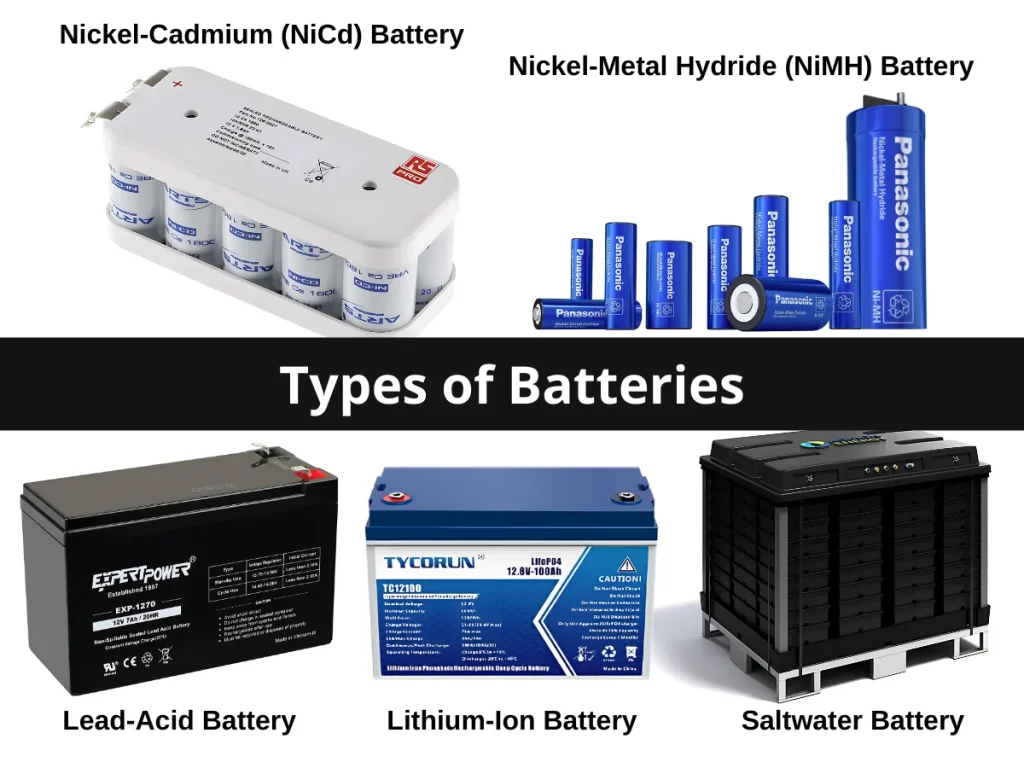
Before calculating exactly how many batteries your 3000W inverter requires, it's important to understand the different battery technologies available. Each type has its own strengths, limitations, and ideal use cases when it comes to energy storage.
Lithium-Ion Battery
Lithium-ion batteries are widely considered the gold standard for inverter setups. They deliver outstanding energy density, meaning they store a large amount of power relative to their compact size and weight. These batteries also boast impressive cycle life — often exceeding 2,000 to 5,000 charge-discharge cycles — and maintain consistent voltage throughout discharge. They're ideal for both off-grid living and backup power scenarios.
Lead-Acid Battery
Lead-acid batteries have been a mainstay in energy storage for decades. Available in flooded and sealed (AGM/Gel) variants, they remain a budget-friendly choice for many inverter systems. However, they are significantly heavier, have shorter cycle life (typically 300–700 cycles), and should only be discharged to about 50% to preserve battery health. They work well for occasional backup use rather than daily cycling.
Nickel-Cadmium (NiCd) Battery
NiCd batteries offer robust performance in extreme temperature conditions, making them suitable for industrial and harsh-environment applications. They handle repeated deep discharges relatively well. However, they suffer from the "memory effect" — reduced capacity when recharged before being fully depleted — and contain toxic cadmium, which raises environmental disposal concerns. They are less commonly used in residential inverter setups.
Nickel-Metal Hydride (NiMH) Battery
NiMH batteries represent a more environmentally conscious alternative to NiCd technology. They provide higher energy capacity and avoid the use of toxic cadmium. While they perform well in moderate conditions, NiMH batteries can experience faster self-discharge rates and are not as widely adopted for large-scale inverter applications. They're more commonly found in smaller consumer electronics.
Saltwater Battery
Saltwater batteries are an emerging option that use a saltwater electrolyte solution instead of heavy metals. They are fully recyclable and environmentally safe, which makes them an attractive choice for eco-conscious homeowners. While currently less energy-dense than lithium-ion alternatives and still relatively new in the market, they're gaining attention for stationary storage applications where weight isn't a primary concern.
Key Factors When Sizing Your Battery Bank
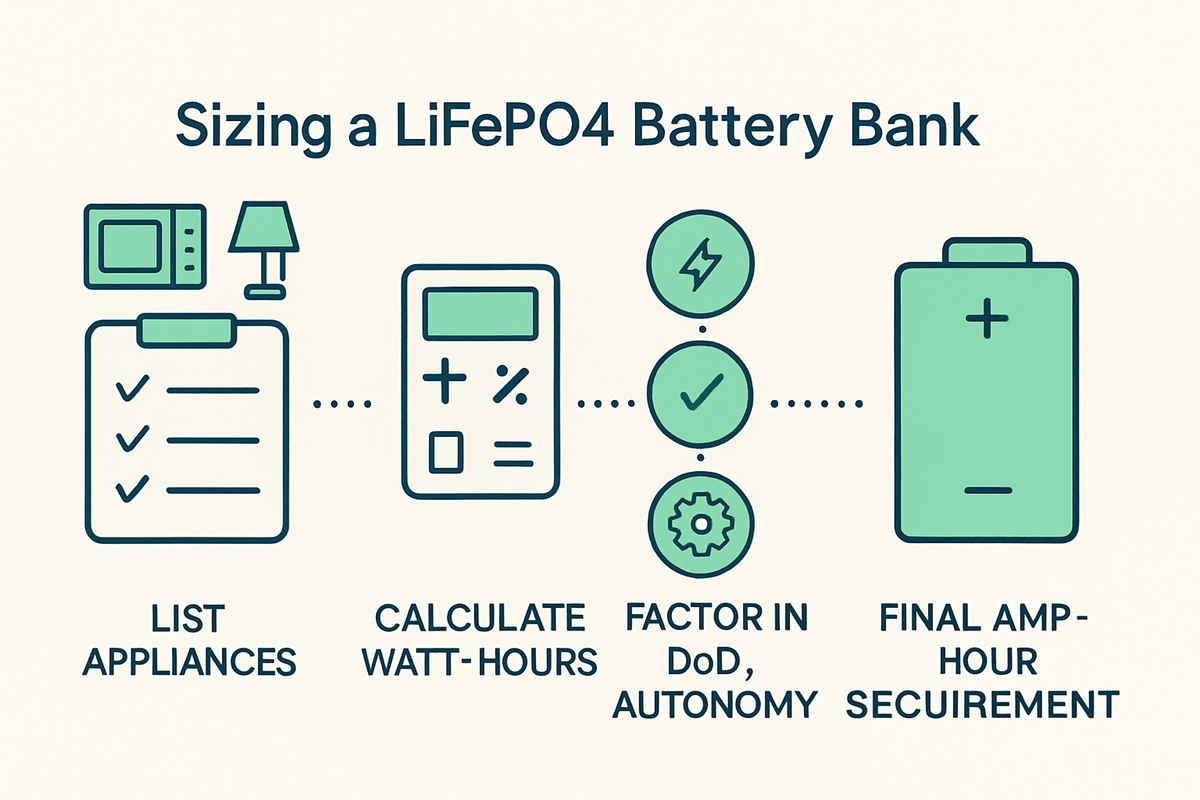
When choosing batteries for your 3000-watt inverter, simply grabbing the first option you find isn't going to cut it. There are several critical considerations that directly affect how well your system performs, how long your batteries last, and how safe the entire setup will be.
Understanding Power Requirements
Knowing precisely how much power your setup demands is the foundation of proper battery sizing. You need to account for continuous wattage draw as well as any surge or startup wattage spikes from appliances like refrigerators or power tools. Key terms to understand include:
Watts (W): The unit of power that indicates how much electricity a device draws at any given moment.
Volts (V): The electrical pressure that pushes current through your system — commonly 12V, 24V, or 48V in battery setups.
Efficiency: The ability of your inverter to convert stored DC battery power into usable AC power. Most inverters operate between 85–95% efficiency, meaning some energy is lost as heat during conversion.
Amp-hours (Ah): A measurement of battery capacity that tells you how much current a battery can deliver over a set time period.
Calculating Battery Requirements
To correctly size your battery bank, you'll need to follow a few straightforward calculations. Let's walk through each step:
Step 1: Determine Current Drawn by the Inverter
Start by figuring out how much current your inverter will pull from the battery bank. Use the basic power formula:
Power (W) = Voltage (V) × Current (A)
For example, if your 3000W inverter operates on a 12V, 24V, or 48V battery system, the current draw would be 250A, 125A, or 62.5A respectively.
Step 2: Account for Inverter Efficiency
Inverters are not 100% efficient — they lose some energy in the conversion process. To get accurate numbers, divide your required power by the inverter's efficiency rating.
Adjusted Power = 3000W ÷ 0.90 = 3333W
Assuming a typical 90% efficiency rate, you'd actually need your batteries to supply around 3333 watts of power to deliver 3000 watts of usable output.
Step 3: Calculate the Number of Batteries
Now determine how many batteries you need based on their capacity. If you're using 24V batteries rated at 200Ah, each battery holds approximately 4,800Wh of energy.
24V × 200Ah = 4,800Wh per battery
3333W ÷ 4,800Wh = 0.69 → Rounded up to 1 battery
In this scenario, a single 24V 200Ah battery could technically handle the load for about one hour. However, for extended runtime or to maintain healthy depth of discharge, it's wise to add more batteries to your bank.
Choosing the Right Battery for Your Needs
Not every battery is created equal, and the right choice depends on your specific situation. Here are the most important things to keep in mind when making your selection:
Match your battery voltage to your inverter. A 24V inverter requires 24V batteries (or batteries wired in series to achieve 24V). Mismatched voltages can damage equipment or create unsafe conditions.
Consider depth of discharge (DoD). Lead-acid batteries should only be discharged to around 50%, while lithium-ion batteries can safely handle 80–90% DoD. This means you'll need roughly twice as many lead-acid batteries to get the same usable capacity as lithium-ion.
Think long-term cost versus upfront price. Lithium-ion batteries cost more initially but last significantly longer and provide more usable energy per cycle. Over the life of your system, they often prove to be the more economical option.
Opt for reputable brands with solid warranties. Your battery bank is the backbone of your power system — invest in quality products from manufacturers with proven track records and strong customer support.
Featured Product
Power Your Setup with Confidence
Looking for a reliable 3000W inverter solution for your backyard or off-grid setup? The BLUETTI AC300 delivers powerful, modular performance you can count on.

Wiring & Safety Considerations
Properly wiring your battery bank and following safety best practices is just as important as choosing the right batteries. A poorly configured system can lead to reduced performance, premature battery failure, or even dangerous situations.
Use appropriately rated cables. The wire gauge must be able to handle the amperage your system will draw. Undersized wiring creates heat buildup and poses a fire risk.
Install proper fuses and breakers. Always include overcurrent protection between your batteries and inverter. This is a critical safety layer that protects both your equipment and your home.
Ensure adequate ventilation. Some battery types — especially flooded lead-acid — can produce gases during charging. Make sure your battery storage area has proper airflow.
Follow manufacturer guidelines. Every battery and inverter has specific installation requirements. Always consult the documentation and follow the recommended configurations.
Final Thoughts
Determining how many batteries you need for a 3000-watt inverter comes down to understanding your power requirements, selecting the appropriate battery technology, and properly sizing your battery bank based on voltage, capacity, and efficiency factors. For most residential and backyard power applications, a quality lithium-ion setup paired with a reliable inverter will deliver the best combination of performance, longevity, and value.
If you're planning a new setup or upgrading your existing system, take the time to calculate your actual energy needs and invest in components that will serve you reliably for years to come. Your backyard power station deserves nothing less.
Frequently Asked Questions
Is a single battery enough for a 3000 watt inverter?
It depends on the battery's specifications. A high-capacity lithium-ion battery (such as a 24V 200Ah unit) can technically handle the load for a limited period. However, for sustained use, a multi-battery bank is recommended to maintain healthy discharge levels and extend runtime.
What type of battery works best with a 3000W inverter?
Lithium-ion (LiFePO4) batteries are widely regarded as the best option for high-wattage inverters. They offer superior energy density, longer lifespan, deeper discharge capability, and lighter weight compared to traditional lead-acid alternatives.
How long will batteries power a 3000W inverter?
Runtime depends on your total battery capacity and actual power draw. For example, a 4,800Wh battery bank running a constant 3000W load (adjusted for efficiency) would provide roughly one hour of operation. Larger battery banks or reduced loads significantly extend this time.
Can I mix different battery types in my inverter setup?
Mixing different battery chemistries or capacities is strongly discouraged. Different battery types have varying charge and discharge characteristics, which can lead to imbalanced performance, reduced lifespan, and potential safety hazards. Always use matched batteries from the same manufacturer and series.
Published by Backyard Provider — Your trusted source for outdoor power solutions and backyard living essentials.