

Data centers are the backbone of modern enterprise. They house core business operations, massive datasets, and the critical application systems that keep organizations running. When the power goes out — even for a split second — it can spell disaster. Lost data, corrupted files, disrupted services, and damaged hardware are just the beginning.
That is exactly why Uninterruptible Power Supply (UPS) systems have become essential infrastructure. A quality UPS acts as your silent guardian, stepping in the moment utility power falters to keep everything running smoothly. In this guide, we will explore what makes UPS systems so vital, break down the different types available, and help you determine exactly what to look for when choosing the best backup UPS for your needs.
Why Is UPS Important for Data Centers?
There are three critical reasons every data center — and even serious home setups — should invest in a reliable UPS system:
1. Ensuring Business Continuity
Unexpected power disruptions can bring operations to a grinding halt. A UPS provides an immediate bridge of power, preventing costly downtime that can lead to reduced economic output, reputational harm, and broken client trust.
2. Protecting Data Security
Sudden shutdowns can corrupt files, damage storage devices, and compromise critical information. A UPS gives your systems the time they need to properly save and shut down — or keep running until full power is restored.
3. Preventing Equipment Damage
Power surges, sags, and spikes wreak havoc on sensitive electronics. Advanced UPS units condition incoming power to deliver stable, clean electricity — extending the lifespan of your equipment and reducing long-term maintenance costs.
In today's competitive landscape, choosing a high-performance UPS is not just a nice-to-have — it is what keeps your systems resilient through any power quality challenge.
Which Types of UPS Are Suitable for Data Centers?
UPS systems generally fall into three categories: standby, line-interactive, and online. Each serves different needs and environments. Understanding these distinctions will help you make a smarter investment.
Standby UPS
The most straightforward option. A standby UPS remains idle until it detects a power failure, at which point the battery kicks in almost instantly. It is well suited for home electronics like computers, routers, and smart TVs — or small office setups with modest power needs and minimal load demands.
Online UPS
When utility power drops, an online UPS feeds power directly through its inverter with virtually zero switching delay. This type delivers the highest levels of power continuity, voltage stability, and power quality — making it the gold standard for data centers, medical facilities, and industrial production environments where even a flicker of downtime is unacceptable.
Line-Interactive UPS
A line-interactive UPS pushes battery power through its inverter with a switching time of roughly 0 to 5 seconds — faster than standby models but slightly slower than a true online system. It strikes an excellent balance between performance and cost, making it ideal for standard office environments where solid power quality matters but absolute zero-delay switching is not strictly required.
How to Choose the Best Online UPS for a Data Center
Power Density
A high-power-density UPS packs serious output into a compact footprint. Thanks to advanced topologies and integrated component designs, some modern models can deliver up to 1MW per cabinet. That means reliable power delivery even when data center floor space is at a premium, freeing up valuable room for additional IT racks.
Power Supply Efficiency
Efficiency is everything when it comes to long-term operating costs. A UPS with full-load efficiency above 96% can dramatically cut energy waste. Look for systems that perform well in the 50–80% load range as well, since that is where most data centers operate on a typical day.
Safety & Reliability
For mission-critical environments, your UPS needs built-in redundancy and fault-tolerant design to maintain continuous power even under unexpected conditions. Always choose systems from reputable manufacturers that have undergone rigorous testing for performance and build quality.
Featured Product
Power Your Setup With Confidence
Whether you are building an off-grid system, a home backup solution, or a portable power station, the BLUETTI AC300 delivers 3,000W of pure inverter power in a modular, expandable package.
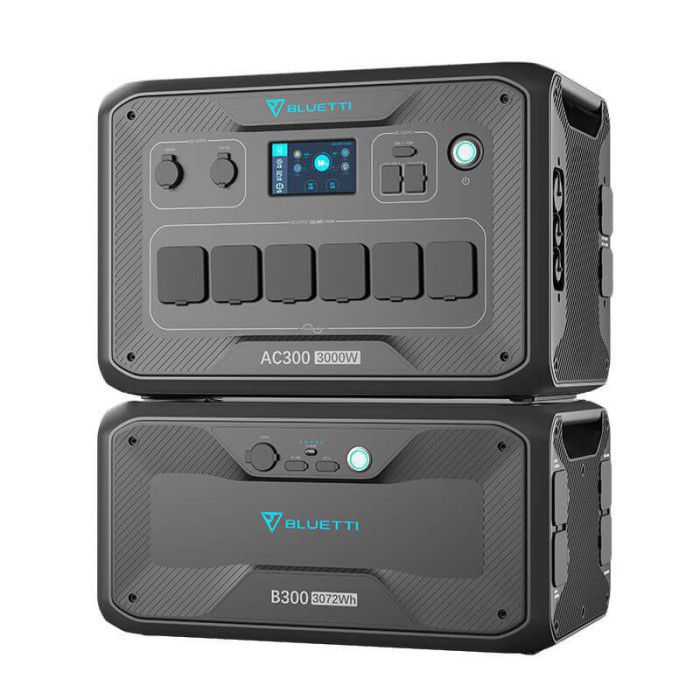 BLUETTI AC300 — 3,000W Inverter Module
Frequently Asked Questions
How long will a UPS last?
The typical lifespan of a UPS unit ranges from 10 to 15 years. However, real-world longevity depends on factors like battery type, ambient temperature, and how frequently the unit cycles through deep discharges. A well-maintained UPS using lithium-ion batteries can reliably serve you for 15 years or more.
How does a UPS keep my device running during a power outage?
When paired with lithium batteries, a UPS can provide around 15 minutes of immediate backup power. The moment your main generator kicks in, the UPS seamlessly transitions back to normal mode — continuously supplying clean power to your equipment throughout the entire event.
How do you calculate the right UPS capacity?
Start by adding up the rated power values of every device you need to protect. For safe and stable operation, it is recommended to size your UPS with a power margin of 20–30% above your total calculated load. This overhead ensures the UPS handles peak demands without strain and extends overall system reliability.
Conclusion
When it comes to selecting the best backup UPS solution, the options have never been stronger. The key is matching the right UPS type to your specific environment — whether that means a straightforward standby unit for basic home protection or a full online system for a high-demand data center.
Focus on the factors that matter most: power density to maximize your space, supply efficiency to minimize long-term energy costs, and rock-solid reliability to keep operations running no matter what. The right UPS is not just a piece of hardware — it is your insurance policy against the unpredictable.
Explore backup power solutions built for real-world reliability at Backyard Provider.
Backyard Provider — Your Trusted Source for Outdoor & Off-Grid Living