

The Ultimate Guide to Choosing the Right Portable Power Station
A portable power station is a self-contained energy solution built to keep your electronics and appliances running wherever life takes you. Whether you're deep in the backcountry on a weekend camping trip, handling a remote work session from your patio, or navigating an unexpected blackout at home, this versatile device delivers dependable power on demand. It can charge everything from smartphones and laptops to mini-fridges and LED lights — making it the go-to backup you'll always be glad you packed.
What truly makes a portable power station stand out is its ability to handle multiple devices simultaneously. Equipped with AC outlets, USB ports, and DC outputs, it lets you charge and power everything at once without the wait. Rapid-charging technology brings it back to full capacity fast, and a built-in display keeps you informed about remaining battery life at a glance.
Why You Need a Portable Power Station
Whether you're heading off the grid for a weekend adventure, powering through a workday in a remote location, or riding out a sudden power outage, a portable power station keeps your essential devices alive and ready. From phones and laptops to compact refrigerators, it makes sure you stay connected, comfortable, and productive no matter what comes your way.
Picture yourself exploring a beautiful off-grid campsite without a single worry about dead batteries. Your camera, GPS, drone, and phone all stay charged and ready to capture the moment. A portable power station turns unpredictable situations into manageable ones — giving you peace of mind everywhere you go.
7 Key Factors for Choosing a Portable Power Station
Not all portable power stations are created equal. To find the perfect match for your lifestyle, keep these seven essential factors in mind:
Battery Capacity & Output
Battery Type & Lifespan
Charging Methods & Speed
Portability & Weight
Output Ports
Safety Features
Extra Features
Battery Capacity and Power Output
Battery capacity is measured in watt-hours (Wh) and tells you how much total energy the unit can store. The power output, rated in watts (W), determines which devices and appliances the station can handle. A higher Wh means longer runtime; a higher W means it can power more demanding equipment.
For eco-minded outdoor enthusiasts and remote workers, many portable power stations support solar panel input — allowing you to harness clean, renewable energy for extended trips and sustainable off-grid living.
To put things in perspective, imagine a weekend camping trip with a dependable 1000Wh power station. Here's a realistic breakdown of how a typical outdoor enthusiast might use it over the course of a day:
| Device | Wattage | Usage | Consumption |
|---|---|---|---|
| Mini Refrigerator | 50W | 12 hours | 600Wh |
| Smartphones (x2) | 5W each | 2 hours each | 20Wh |
| LED Light | 10W | 5 hours | 50Wh |
| Laptop | 30W | 2 hours | 60Wh |
| Coffee Maker | 1000W | 10 minutes | 167Wh |
| Total Daily Consumption | 897Wh | ||
At 897Wh of total daily draw, a 1000Wh power station covers all your essentials with a comfortable margin to spare. It's a practical solution for campers who refuse to sacrifice comfort in the outdoors.
Refrigerator
Smartphone
LED Light
Laptop
Coffee Maker
Battery Type and Lifespan
Most portable power stations rely on one of two battery chemistries: Lithium-ion (Li-ion) or Lithium Iron Phosphate (LiFePO4, also called LFP). The type of battery inside your unit has a major impact on how long it lasts, how safe it is, and how much value you get over time.
Lithium-Ion (Li-ion)
Cycle Life: 500–1,000 charges
Typical Lifespan: 2–3 years
Safety: More susceptible to overheating and thermal runaway
Efficiency: Compact, but performance drops at deeper discharge levels
LiFePO4 (LFP)
Cycle Life: 2,500–3,500 charges
Typical Lifespan: 5–10 years
Safety: Highly stable, resistant to overheating with minimal fire risk
Efficiency: Supports deep discharges (80–90%) without battery degradation
Why Most Modern Power Stations Choose LFP
The majority of today's power stations have shifted to LFP batteries due to clear advantages across the board. They last significantly longer than traditional lithium-ion cells — up to 3,500 charge cycles — which translates to real cost savings over time. LFP chemistry is inherently more stable, dramatically reducing the risk of overheating, fire, or explosion. These batteries also deliver more usable energy per charge since they handle deep discharges without damage. On top of all that, LFP is more environmentally friendly, containing fewer toxic materials. These combined benefits make LiFePO4 the gold standard for modern portable power.
Long Lifespan
Superior Safety
Cost Efficiency
Charging Methods and Speed
Understanding how your power station charges — and how quickly — is essential for getting the most out of it. Most quality units offer multiple charging options to suit different scenarios and environments.
AC Wall Charging
Plug into any standard household outlet and reach a full charge in roughly 1–2 hours. This is the fastest option and ideal for quick turnarounds before heading out the door.
Solar Panel Charging
Pair your station with compatible solar panels for clean, renewable energy. Under optimal sunlight, many units reach full capacity in about 1.5–2 hours. Perfect for eco-friendly off-grid adventures.
Car (12V) Charging
Many units support 12V car outlet charging, giving you the flexibility to top up on the road. Great for road trips and situations where wall power or sunlight aren't available.
The right charging method depends on your specific needs. Having multiple options means your power station stays ready to go regardless of your environment — whether that's your garage, a sunny ridgeline, or the front seat of your truck.
Portability and Weight
All portable power stations are designed to be moved, but some are far easier to carry than others. The size and weight you choose should match how and where you plan to use it.
Small Units
Lightweight and easy to carry, these are ideal for short camping trips, day hikes, and personal electronics. They handle a few devices at a time with ease.
Medium Units
Built for extended trips, RV living, and off-grid setups. They provide ample capacity to run multiple medium-draw devices and can serve as reliable home backup.
Large Units
Designed for home emergency backup or job site use. They can handle high-demand appliances, support multiple ports for simultaneous charging, and deliver serious long-term power.
Output Ports
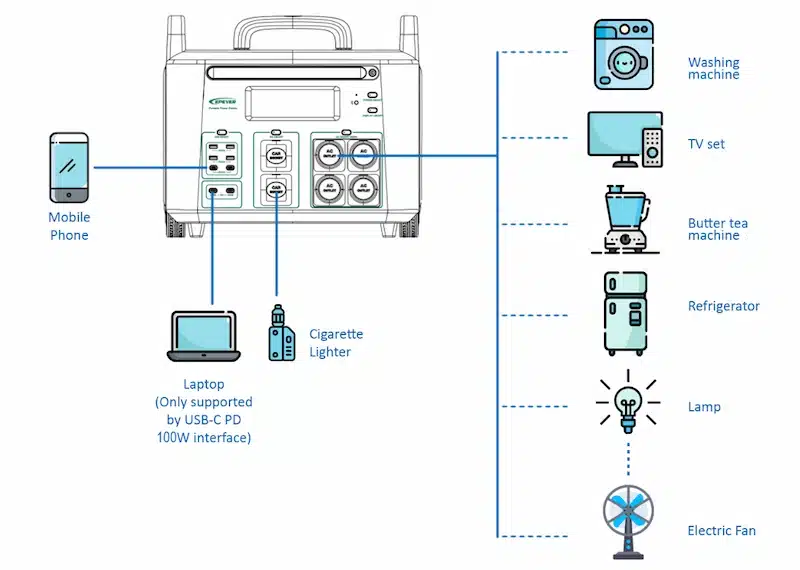
When evaluating a portable power station, make sure it has enough variety and quantity of output ports to cover all of your devices. The three main types you'll want to look for include:
AC Outlets — Essential for running standard household appliances like TVs, microwaves, coffee makers, and power tools. Multiple AC outlets let you run several devices simultaneously, which is invaluable during camping trips or power outages.
USB Ports (USB-A & USB-C) — Critical for charging smartphones, tablets, cameras, drones, and other personal electronics. USB-C PD (Power Delivery) ports can even handle fast-charging laptops directly.
DC Outputs — Useful for powering car accessories, specialized camping gear, and 12V devices like coolers. A dedicated DC output significantly expands the station's versatility for outdoor enthusiasts.

In short, the more diverse the port selection, the more flexible and convenient the power station becomes. Always check that the station supports the specific connections your devices need before buying.
Safety Features
Safety should always be a top consideration. Look for a power station with robust built-in protections that keep both you and your devices safe under any conditions.
Overcharge & Over-Discharge
Maintains optimal charge levels to prevent damage and extend battery lifespan significantly.
Short-Circuit Protection
Instantly cuts power during a short circuit event to protect both your electronics and the unit itself.
Overheat Protection
Active temperature regulation prevents overheating during heavy use or extended charging sessions.
Surge Protection & BMS
Guards sensitive electronics from voltage spikes. An advanced Battery Management System monitors health and performance in real time.
A power station equipped with these safety layers gives you device protection and true peace of mind — whether you're deep in the wilderness or keeping essential appliances running during an emergency at home.
Extra Features Worth Looking For
Beyond the core specs, some power stations come with added features that elevate the overall experience. Look for solar panel compatibility for sustainable, renewable charging. Fast-charging technology is a huge plus, cutting down recharge time dramatically. App connectivity via Bluetooth or Wi-Fi lets you monitor and control your power usage remotely. And a clear LCD display or LED indicators make it easy to track battery status, output levels, and remaining runtime at a glance.
Our Top Pick: BLUETTI AC200MAX
The BLUETTI AC200MAX delivers an outstanding balance of power, convenience, and expandability. With a massive 2,048Wh capacity and a robust 2,200W pure sine wave output, it's built to handle everything from high-demand power tools and kitchen appliances to delicate electronics with ease. Whether you're powering a campsite, keeping your home running during an outage, or setting up a reliable off-grid workstation, the AC200MAX has you covered.
It supports multiple charging methods including AC wall, solar, and car charging — so you're never stranded without power. The unit features an array of output ports (AC, USB-A, USB-C, and DC) for maximum device compatibility. Its LiFePO4 battery ensures exceptional longevity and safety, and the expandable design allows you to add extra battery modules for even more capacity when you need it.
With built-in Bluetooth connectivity and a clear LCD display, monitoring and controlling your energy usage is effortless. Comprehensive safety protections — including overcharge, short-circuit, overheat, and surge safeguards — ensure worry-free operation in any environment.
Frequently Asked Questions
Can I use a portable power station indoors?
Absolutely. Unlike gas-powered generators, portable power stations produce zero fumes, emissions, or noise. They're completely safe for indoor use in your home, office, garage, or anywhere else you need reliable power.
Can I use my power station while it's charging?
Yes, most modern power stations support pass-through charging, meaning you can power devices while the unit recharges. Keep in mind that charging may be slower during heavy use. Always consult your station's manual for specific guidance on simultaneous charging and output.
How long does it take to recharge a portable power station?
Recharge time varies by capacity and charging method:
AC Charging: A 500Wh unit may fully charge in 1–1.5 hours, while a larger 2000Wh station can take 3–4 hours with a high-power adapter.
Solar Charging: Depends on panel output and sunlight conditions. A 500Wh unit may take 6–8 hours with a 100W panel; a 2000Wh unit could need 10–12 hours under optimal sun.
Car Charging: Typically slower at 100–150W output. A 500Wh station may take about 5–6 hours, while a 2000Wh model could require 15–20 hours or more.
What can you use a portable power station for?
Portable power stations are incredibly versatile:
Camping & Outdoors — Run phones, lights, mini-fridges, and cooking gear in nature.
Emergency Backup — Power medical equipment, communications, and security systems during blackouts.
Remote Work — Keep laptops, routers, and monitors running from any off-grid location.
Home & Daily Use — Reduce grid dependence or serve as backup during power interruptions.
Travel & Road Trips — Charge cameras, drones, portable fans, and other travel gear on the move.
Final Thoughts
Selecting the right portable power station comes down to understanding your needs and matching them to the key factors that matter most: battery capacity, battery type, charging speed, portability, output ports, safety protections, and added features. For those who prioritize sustainability and durability, a LiFePO4-based unit with solar charging capability is the strongest long-term investment.
A portable power station is much more than an emergency backup — it's a dependable companion for modern, on-the-go living. Whether you're heading into the backcountry, working remotely from your backyard, or preparing for the unexpected, the right power station keeps you connected, comfortable, and in control no matter where life takes you.