
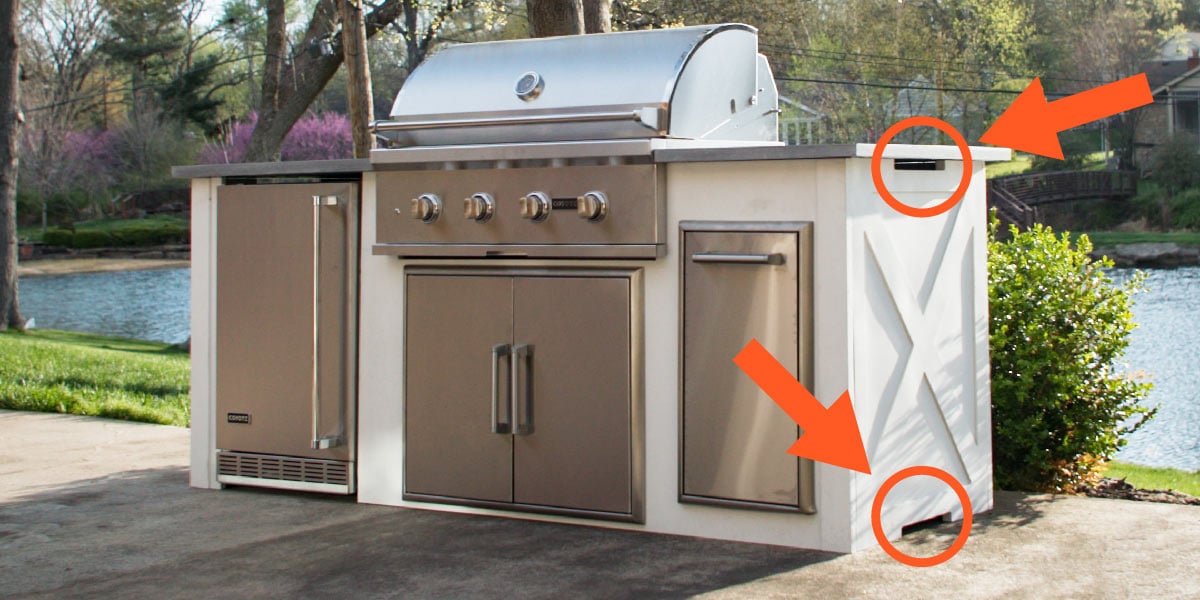
Building your dream outdoor kitchen is one of the most rewarding upgrades you can make to your backyard. But there's one element that too many homeowners overlook completely — and ignoring it can put your entire property at risk.
Proper ventilation. It might not be the most glamorous topic, but it is arguably the most important one when it comes to outdoor cooking spaces. Grease, smoke, heat, and combustible gases don't disappear on their own. Without a thoughtfully designed ventilation system, your beautiful outdoor kitchen can quickly become a serious hazard.
In this guide, we'll walk you through exactly why outdoor kitchen vents matter, what the real dangers are when they're absent or poorly installed, and how to choose the right solution to protect your investment and your loved ones.
Why Outdoor Kitchen Vents Are Non-Negotiable
Many people assume that because an outdoor kitchen is — well, outdoors — ventilation takes care of itself. Fresh air, open skies, a breeze through the patio. What could go wrong? The answer may surprise you.
Outdoor kitchens are increasingly designed within covered pergolas, attached patios, enclosed lanais, and island structures. The moment you add a roof, walls, or cabinetry around your cooking zone, you create a semi-enclosed environment where heat, smoke, and flammable vapors can accumulate rapidly.
Grills and outdoor cooktops generate intense heat. That heat — combined with grease vapor and combustion gases — needs a direct escape path. When that path is blocked or nonexistent, temperatures rise inside cabinet cavities and under overhead structures, creating ideal conditions for a fire to ignite.

The Real Dangers of Poor Ventilation
Let's be direct. Poor or absent ventilation in an outdoor kitchen creates multiple layers of risk that can escalate from an inconvenience to a catastrophe.
- Grease buildup igniting inside cabinets
- Structural damage from heat accumulation
- Carbon monoxide buildup under enclosed roofs
- Warped or melted cabinet materials
- Smoke damage to surrounding structures
- Voided appliance warranties
- Heat and smoke escape safely and quickly
- Extended lifespan of appliances and cabinetry
- Comfortable, breathable cooking environment
- Lower fire risk — protecting your home
- Compliant with local building codes
- Peace of mind every time you cook
Gas-powered grills and burners emit carbon monoxide as a combustion byproduct. In open areas this dissipates harmlessly. But in semi-enclosed outdoor kitchens — especially those fitted beneath pergolas with overhead panels or tight-fitting covers — CO can accumulate to dangerous levels without anyone realizing it. Ventilation is your first line of defense

Understanding Your Ventilation Options
Not all ventilation solutions are created equal. Your ideal setup will depend on the size of your outdoor kitchen, the type of appliances you're using, and the degree of enclosure around your cooking space.
- Access Door Vents — Built into your island cabinetry, vented access doors allow trapped heat to escape from within the structure itself. They protect your grill's internal components and prevent the fire risk of superheated enclosed spaces. Ideal for any island-style outdoor kitchen.
- Range Hoods & Overhead Exhausts — Positioned above your cooking surface, these pull smoke and grease vapor upward and out. Essential for covered kitchens or pergola setups where overhead ventilation is restricted.
- Passive Ventilation Panels — Louvered or perforated panels installed in walls or cabinet sides that allow natural airflow to circulate. A low-cost complement to more active ventilation systems.
For most homeowners, a combination approach works best. Vented access doors handle heat within the island structure, while an overhead hood or exhaust manages smoke and grease vapor at the cooking surface level. Together, they provide layered protection.
Bull Grills 30" Dual Lined Vented Stainless Steel Double Access Doors

Engineered specifically for outdoor island installations, these premium access doors deliver both functional ventilation and a polished stainless finish that complements any kitchen aesthetic.
- Dual-wall lined construction for heat insulation
- Built-in ventilation for trapped heat escape
- Durable 304 stainless steel build
- Double door design — 30-inch opening
- Weather-resistant for year-round outdoor use
- Easy installation into standard island cutouts
How to Plan Your Ventilation From the Start
The best time to think about ventilation is before a single stone is laid or a single cabinet is installed. Retrofitting ventilation into a finished outdoor kitchen is costly, difficult, and sometimes structurally impossible. Here's how to approach it the right way.
- Map Your Enclosure Level How covered is your cooking area? Fully open patios need less active ventilation than pergola-covered or attached-roof setups. Identify every surface that restricts natural airflow.
- List Your Heat-Generating Appliances Every burner, grill, pizza oven, and side burner contributes BTUs that must escape. Sum your total BTU output — this determines the ventilation capacity you need.
- Choose Island Venting First Spec vented access doors into every island cabinet section that sits beneath a grill or high-heat appliance. This is non-negotiable and the single most impactful ventilation decision you'll make.
- Add Overhead Exhaust for Covered Spaces If cooking under any kind of roof structure, add a range hood or exhaust fan rated for outdoor use. Ensure it vents to the exterior — not back into the covered space.
- Review Local Building Codes Many municipalities require specific ventilation standards for outdoor kitchens, especially those attached to structures. Check with your local building department before finalizing your design.
Choosing the Right Access Doors for Your Island
Vented access doors are one of the most practical ventilation investments you can make — and they do double duty. Beyond heat management, they give you convenient access to your LP tanks, plumbing connections, electrical runs, and storage inside the island.
When shopping for vented access doors, there are several key specifications to evaluate. Material is paramount — 304 or 316 stainless steel offers the best combination of durability, heat resistance, and weather resistance. Avoid powder-coated alternatives in high-heat zones as coatings can degrade and off-gas over time.
Dual-wall or lined construction matters too. A single-skin door transmits heat directly to its outer surface, creating a burn hazard. Lined doors keep outer surfaces cool to the touch even during extended cook sessions.
- 304 stainless steel construction as a minimum
- Dual-wall or insulated door panel design
- Integrated ventilation slots or perforations
- Stainless or marine-grade hinges and latches
- Size compatibility with your island framing dimensions
- Flush-mount finishing for a clean, built-in aesthetic
Keeping Your Ventilation System in Top Shape
Installing ventilation is only half the equation. Maintaining it ensures it continues to perform when you need it most. Grease and debris are persistent adversaries — they clog vent openings, reduce airflow, and can become fuel sources themselves.
- Inspect vent openings for grease buildup
- Wipe down door exteriors with degreaser
- Check hinges and latches for corrosion
- Remove access doors and clean vent channels
- Inspect interior island space for debris
- Test overhead exhaust fan performance
A well-maintained ventilation system can last the lifetime of your outdoor kitchen without needing replacement. Stainless steel components — like quality access doors — resist corrosion and hold up against years of heat cycling and outdoor exposure with minimal care.
The Bottom Line
Ventilation isn't an optional upgrade. It's a fundamental component of any responsibly designed outdoor kitchen.
Whether you're building from scratch or improving an existing setup, now is the time to address it. The good news is that high-quality solutions — like vented stainless access doors — are readily available, easy to integrate, and built to last.
Protect your investment. Protect your family. Build your outdoor kitchen the right way from the start — with ventilation baked in from day one.
Bull Grills 30" Dual Lined Vented Stainless Steel Double Access Doors (44570)
Add professional-grade ventilation to your outdoor kitchen island with this Bull Grills double access door — the smart, stylish, and safe choice for serious backyard chefs.
- Model: 44570
- Material: Dual-lined 304 stainless steel
- Opening: 30 inches
- Configuration: Double door
- Feature: Integrated vent slots
Build Smarter. Cook Safer.
Live Better Outdoors.
Explore our full collection of outdoor kitchen ventilation, access doors, and island components — everything you need to build the backyard of your dreams.
Shop Outdoor Kitchen