
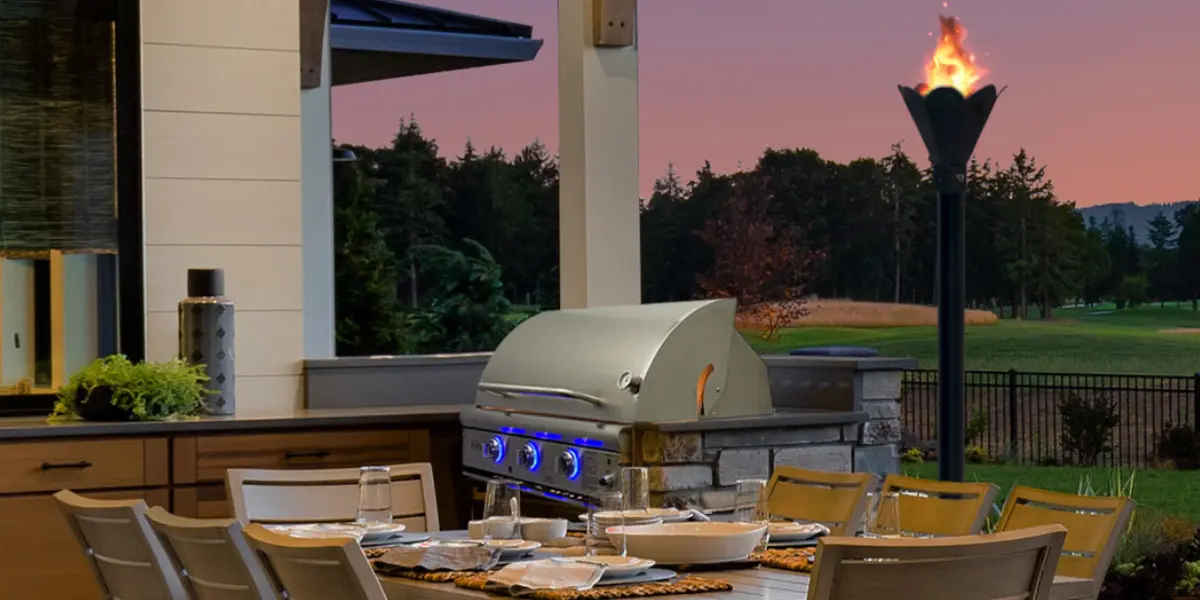
Planning an Outdoor Kitchen?
Building the ultimate backyard entertainment space means balancing beauty, functionality, and safety in equal measure. One area that demands serious attention is gas management — natural gas and propane can accumulate inside an enclosed island or cabinet and, if left unchecked, become a serious hazard. Proper ventilation is the straightforward solution that lets you cook with confidence and entertain without worry.
The Pillars of a Safe Outdoor Kitchen
Ventilation Design
Work with a qualified contractor to design a ventilation system that balances precise airflow calculations with the aesthetics of your build — safety and style working together.
Vent Panel Placement
Strategically placed vent panels act as the lungs of your outdoor kitchen, continuously drawing in fresh air and expelling cooking smoke and gas without disrupting the overall look.
Correct System Sizing
Your ventilation must be sized to handle the full thermal load and gas output of your appliances, creating a reliably safe environment at every cooking session.
Gas & CO Detectors
Adding carbon monoxide and gas detectors gives you an early warning system, providing an essential extra layer of security and genuine peace of mind.
Code Compliance
Local building codes exist for good reason. Familiarize yourself with the regulations in your area to ensure your outdoor kitchen meets every safety and legal requirement.
Routine Maintenance
Regular cleaning and inspection of your grill and ventilation system prevents grease buildup and catches wear or corrosion early — before small issues become costly problems.
Installing the Right Vents for Your Fuel Type
If your outdoor island will house a propane or natural gas grill, vent panels are not optional — they are required. Because propane and natural gas behave very differently, each fuel type has its own specific placement guidelines for maximum effectiveness.
Propane (LP) Vents
Heavier Than AirPlace vents as low as possible — propane is denser than air and will sink to the floor of the enclosure when it leaks.

Natural Gas (NG) Vents
Lighter Than AirPlace vents as high as possible — natural gas is lighter than air and rises to the top of the enclosure when it escapes.

How Many Vent Panels Do You Need?
The correct number and spacing of vent panels varies depending on your specific grill model and enclosure size.
Always consult your grill's manual and your local building code to determine the exact venting requirements for your setup.With the right ventilation plan in place, you are not just constructing an outdoor kitchen — you are building a safe, beautiful, and welcoming space where memories are made and great food is shared. Fire up the grill and cook with confidence, knowing every precaution has been taken.