
Unlike conventional doors, access doors serve a very specific purpose: they give you or a technician quick, clean entry to the mechanical systems tucked behind your walls, ceilings, and floors. Electricians, plumbers, and HVAC contractors rely on them daily — and you'll often hear them simply called "access panels."

What Exactly Is an Access Door?
An access door is a panel designed to provide entry to concealed spaces — think ductwork, pipes, electrical junctions, valves, and storage cavities. They're not decorative, but a well-chosen one blends seamlessly into your wall or ceiling while keeping vital infrastructure reachable at a moment's notice.
Because these panels must hold up to repeated use, they're built with robust frames and latching mechanisms. Quality access doors also offer a degree of fire or moisture resistance depending on where they're installed — making them a smart investment for any home or commercial project.
💡 Access doors are available in a wide range of sizes and materials. Matching the right panel to the right application is the key to a long-lasting, functional installation.
Choosing the Right Access Door for Your Space
The best access door for your home depends on where it will live and what it needs to protect. A panel in a damp utility room has entirely different demands than one installed in a finished living space. Before purchasing, run through these key considerations: the installation environment, the required level of security, the fire rating requirements, and the finish that will match your existing surfaces.
Materials
Which Material Is Right?
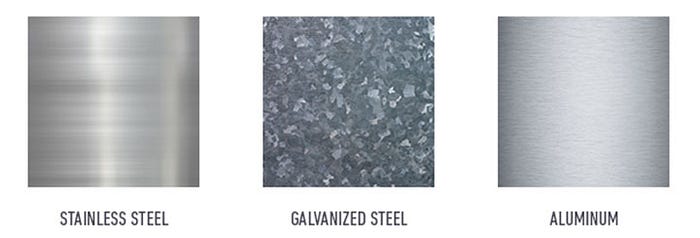
Access doors come in three primary materials. Each has a distinct performance profile suited to different conditions:
Stainless Steel
Best for high-humidity, outdoor, or food-service environments. Corrosion-resistant with high durability and a clean, professional appearance.
Galvanized Steel
An economical workhorse for indoor applications. Zinc coating resists rust over time. Ideal for utility rooms, basements, and commercial builds.
Aluminum
Lightweight and corrosion-resistant. Excellent for exterior installs or areas requiring a slim, low-profile panel that's easy to handle.
Getting the Size Right
Access doors range widely — from compact 6"×6" panels to large 24"×24" hatches. For most home utility and HVAC needs, a mid-range panel in the 12"×12" to 16"×16" range provides comfortable access without requiring major structural modifications. Always measure the rough opening first, then select a door sized to fit with a secure overlap on all sides.
FunctionCommon Access Door Applications
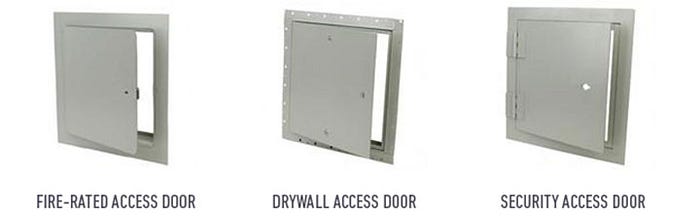
Access doors can be built directly into walls or ceilings during construction, or retrofitted into finished surfaces. Some panels are designed specifically for ventilation-critical applications, while others prioritize fire containment or acoustic isolation. The most common types include:
- Fire-rated access doors — engineered to contain flames and smoke for a specified duration, a code requirement in many residential and commercial builds.
- Drywall access doors — designed to sit flush with the wall surface and accept a coat of mud and paint for an invisible finish.
- Security access doors — reinforced construction with locking mechanisms for sensitive utility areas or high-traffic commercial spaces.
How to Install an Access Door
A professional-grade installation isn't complicated — it just takes a bit of patience and the right prep work. Follow these steps and you'll have a clean, secure panel that looks like it's always been there.
Tools & Materials You'll Need
Step-by-Step Installation
- Review all safety requirements for your specific installation surface and environment before beginning any work.
- If mounting in a wall, locate the studs using a stud finder and ensure the panel will be secured to solid framing on each side.
- Mark the rough opening with a pencil, using a level to confirm the layout is perfectly plumb and square.
- Cut the opening carefully with a drywall saw. Work slowly to avoid nicking any wiring or pipes behind the surface.
- Insert the access door frame into the opening and secure it according to the manufacturer's specifications — typically with screws into framing or the drywall edge.
- Apply joint compound around the perimeter if a flush finish is required, feathering it smooth so the frame disappears into the wall.
- Once dry, sand, prime, and paint to match the surrounding surface. Attach any protective trim or gaskets as needed.
Fire-Rated & Security Access Doors
When building code or your insurer requires a fire-rated panel, you'll need a door that meets the specific temperature and burn-time thresholds for your application. These ratings tell you how long the door will hold back flames and smoke — critical information when the panel sits adjacent to a furnace, boiler room, or main electrical panel.
Proper insulation is equally important in fire-rated installations. Fill surrounding gaps with appropriate fire-stop material before closing up the wall — small voids can dramatically undermine a door's fire rating.
⚠️ Tips & Common Challenges
- Always verify compliance with local fire codes before purchasing a fire-rated door — ratings vary by jurisdiction.
- If the panel will be installed outdoors or in a wet environment, choose a stainless steel model with proper sealing to prevent rust and water infiltration.
- Optional features like key locks and piano hinges are worth the upgrade for panels that require more frequent access or security.
- Don't rush the finishing stage — a well-blended, painted frame makes the difference between a DIY look and a professional result.
Ready to Install? Start with the Right Door.
The Bull Grills Double Access Door delivers commercial-grade stainless steel construction, ventilation, and a dual-door design built to last in demanding outdoor environments.
Bull Grills Double Access Door