
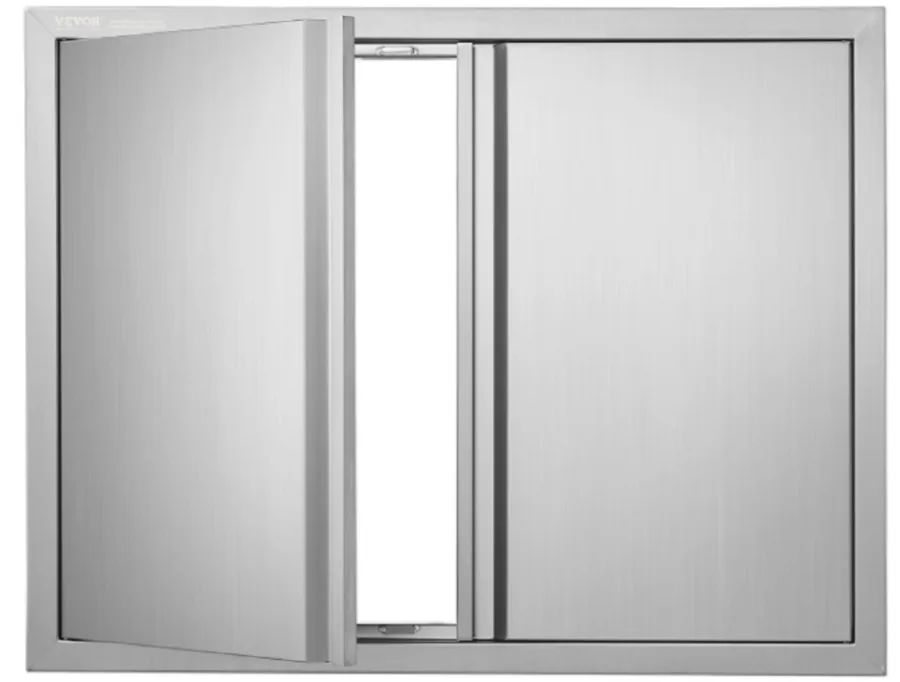
Outdoor kitchens are one of the fastest-growing trends in backyard living — and for good reason. But behind every great outdoor setup is a crucial decision: what materials hold up outside? When it comes to access doors and cabinetry, stainless steel isn't just a popular choice — it's the smart one.
This guide breaks down everything you need to know about stainless steel doors for outdoor kitchens — why they're worth every penny, what to look for when buying, how to keep them in top shape, and how to install them the right way.
Table of Contents
Benefits of Stainless Steel Doors in Outdoor Kitchens
Still on the fence? These aren't just pretty doors — they offer tangible, real-world advantages that other materials simply can't match when exposed to the great outdoors.
Built to Last
Stainless steel shrugs off rust, corrosion, and harsh weather. Once installed, it stays installed — no warping, no rotting.
Look Good, Feel Good
Clean lines and a brushed finish give your outdoor space a polished, high-end aesthetic that never goes out of style.
Low Maintenance
A quick wipe-down is all it takes. Stainless resists fingerprints and stains, so your kitchen stays looking fresh with minimal effort.
Super Functional
Designed with secure storage and weather protection built in — everything you need is within reach and well-protected.
An outdoor kitchen is an investment. Stainless steel doors protect that investment by standing up to rain, heat, salt air, and the daily demands of cooking outside. It's the material serious outdoor entertainers choose.
Key Features to Look For in Stainless Steel Outdoor Kitchen Doors
Not all stainless steel doors are created equal. When shopping, knowing what differentiates a quality door from a cheap imitation can save you a lot of regret down the road.
Material Quality — Grade Matters
Stainless steel is graded, and the grade directly affects how well a door performs outdoors. The two most relevant grades are:
18% chromium, 8% nickel. Highly corrosion-resistant and the most common choice for outdoor kitchen doors.
Contains added molybdenum for superior corrosion resistance. Ideal for coastal or high-humidity environments.
Thickness
Thickness is directly tied to durability. Most outdoor kitchen doors fall between 16 and 18 gauge — with 16 gauge being the thicker, more robust option. Thicker steel resists denting and warping over years of heavy use.
Style and Design Options
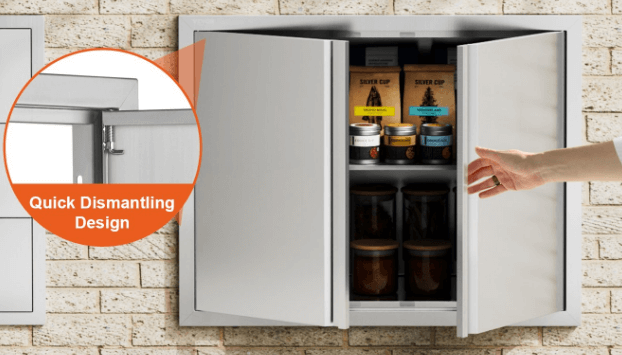
Outdoor kitchen doors come in several configurations to fit different builds and personal preferences:
- Single-door access panels for compact setups
- Double-door configurations for larger storage bays
- Drawer units for tools, utensils, and condiments
- Combo units that combine doors and drawers in one frame
If your outdoor kitchen is short on space, a drawer-style unit may be the most practical route. For larger builds, double-door access panels offer maximum storage capacity.
Hinges and Handles
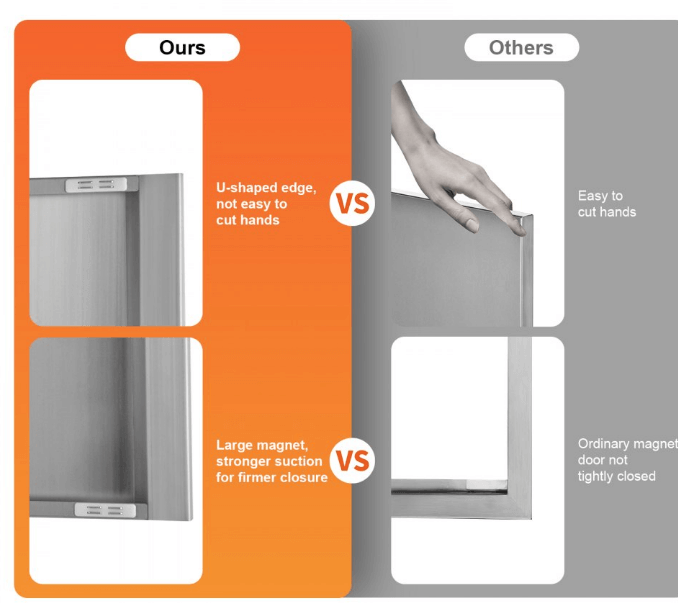
Heavy-duty hinges prevent sagging over time, and ergonomic handles make daily use effortless. These aren't just nice-to-haves — they determine how long your doors function properly and how comfortable they are to use year after year.
Weatherproof Design
Since these doors are exposed to the elements year-round, look for rubber gaskets or seals along the edges. A tight seal keeps water out and prevents rust from forming on the interior components. This detail alone can double the functional life of your doors.
Recommended for Your Outdoor Kitchen
Dual-lined, vented, and built to last — a professional-grade access door that fits seamlessly into any outdoor kitchen build.
Bull Grills 30" Double Access DoorsComparing Stainless Steel with Other Materials
Wondering how stainless stacks up against wood, aluminum, or powder-coated steel? Here's the honest breakdown:
- Wood: Beautiful indoors, but outdoor exposure causes warping, cracking, and rot — even with treatment. Requires constant upkeep.
- Aluminum: Lightweight and rust-resistant, but softer and more prone to denting. Lacks the premium feel of stainless.
- Powder-Coated Steel: Affordable option, but the coating can chip and peel over time, exposing the steel underneath to rust.
- Stainless Steel: The clear winner for outdoor use — corrosion-resistant by nature, low maintenance, and built to last decades with minimal care.
When cost-per-year is factored in — accounting for replacements, refinishing, and maintenance — stainless steel almost always comes out as the most economical long-term choice.
How to Install Your Stainless Steel Doors the Right Way
Proper installation ensures your doors perform as designed and last as long as possible. Follow these steps for a clean, secure install:
- Measure your opening precisely. Always measure twice. Account for any framing, tile, or stone that may reduce the actual rough opening size.
- Check for level and plumb. An unlevel opening causes doors to swing open or won't close properly. Shim if needed before securing the frame.
- Secure the frame into the cabinet structure. Use appropriate fasteners for your cabinet material — concrete anchors for masonry builds, screws for steel-stud framing.
- Attach hinges and test the swing. Verify the door opens fully without obstruction and closes flush with no gaps along the seal.
- Apply a bead of weatherproof sealant. Run sealant along the outer edge of the frame where it meets the cabinet wall to prevent water infiltration.
Easy Maintenance Tips to Keep Your Doors Looking Great
One of the biggest appeals of stainless steel is how little work it demands. Here's how to keep your doors in showroom condition with minimal effort:
- Wipe down weekly with a damp microfiber cloth to remove grease and debris
- Always wipe in the direction of the grain — circular motions can leave visible scratches
- Use a mild stainless steel cleaner for tougher grime; avoid bleach-based products
- Apply a stainless steel polish once a season to restore shine and add a light protective coating
- Inspect the door seals once a year and replace them if they show signs of cracking or compression
- Lubricate hinges annually with a silicone-based lubricant to keep the action smooth
Avoid steel wool or abrasive pads at all costs — they leave micro-scratches that trap moisture and accelerate surface corrosion over time.
Why Choose Our Stainless Steel Outdoor Kitchen Doors?
We don't just sell products — we curate outdoor living solutions that are built to perform and built to impress. Our stainless steel access doors are selected for their real-world durability, thoughtful engineering, and clean professional aesthetics.
Premium Construction
Heavy-gauge stainless steel with dual-lined doors and commercial-quality hinges that last.
Weatherproof Design
Vented construction with sealed gaskets prevents moisture buildup and protects stored items.
Easy Integration
Designed for straightforward installation into standard outdoor kitchen frames and masonry builds.
Ready to Upgrade Your Outdoor Kitchen?
The Bull Grills 30" Double Access Door is the professional's choice — dual-lined, vented, and built for years of reliable outdoor use.
Bull Grills 30" Double Access DoorsFrequently Asked Questions
What stainless steel grade is best for outdoor kitchen doors?
Grade 304 is the standard recommendation for most backyard environments. If you live near the coast or in a high-humidity region, Grade 316 — which contains added molybdenum — offers superior resistance to salt and chlorine corrosion.
Will stainless steel doors rust outdoors?
Stainless steel is highly resistant to rust, but not immune. Surface discoloration can occur if the steel is scratched or exposed to harsh chemicals. Regular cleaning and occasional polishing will protect the surface for the long term.
What gauge thickness should I choose?
16 gauge is the stronger, more durable option and is ideal for high-use outdoor kitchens. 18 gauge is acceptable for lighter-use setups but may be more susceptible to denting over time.
Can I install stainless steel doors in a masonry outdoor kitchen?
Absolutely. Most access doors are designed for masonry builds. Use concrete anchors rated for the door's weight, and apply a weatherproof sealant along the frame-to-masonry joint for a proper weather-tight fit.
How do I clean fingerprints off stainless steel doors?
A damp microfiber cloth handles most fingerprints instantly. For stubborn smudges, a small amount of rubbing alcohol on a cloth works well. Always wipe in the direction of the grain to maintain the brushed finish.