
The Essential Guide to Gravel Bike Geometry
Gravel cycling has exploded in popularity, and with good reason. These versatile machines bridge the gap between road bikes and mountain bikes, offering riders the freedom to explore paved roads, gravel paths, and everything in between. But what truly sets a gravel bike apart from its cousins? The answer lies in geometry—the carefully calculated angles and measurements that determine how a bike handles, fits, and performs across varied terrain.
Whether you're shopping for your first gravel bike or looking to understand why your current ride feels the way it does, grasping the fundamentals of frame geometry will transform you from a casual buyer into an informed cyclist. Let's break down the numbers that matter most.
Design Constraints: The Foundation of Frame Geometry
Every gravel bike frame represents a series of compromises and intentional decisions made by engineers. Unlike road bikes optimized purely for speed or mountain bikes built exclusively for technical terrain, gravel bikes must excel across multiple disciplines. This creates unique design constraints that shape every measurement.
Frame designers must balance stability at high speeds with nimble handling on twisting gravel roads. They need to accommodate wider tires for comfort and traction while maintaining efficient power transfer. The frame must be comfortable enough for all-day adventures yet responsive enough for spirited riding. These competing demands drive the geometry choices that define modern gravel bikes.
The result is a fascinating blend of characteristics borrowed from multiple cycling disciplines, refined through years of real-world testing and rider feedback. Understanding these constraints helps explain why gravel bike geometry charts look the way they do—and why different brands make different choices.
Front End Geometry: Fork, Rake, and Trail
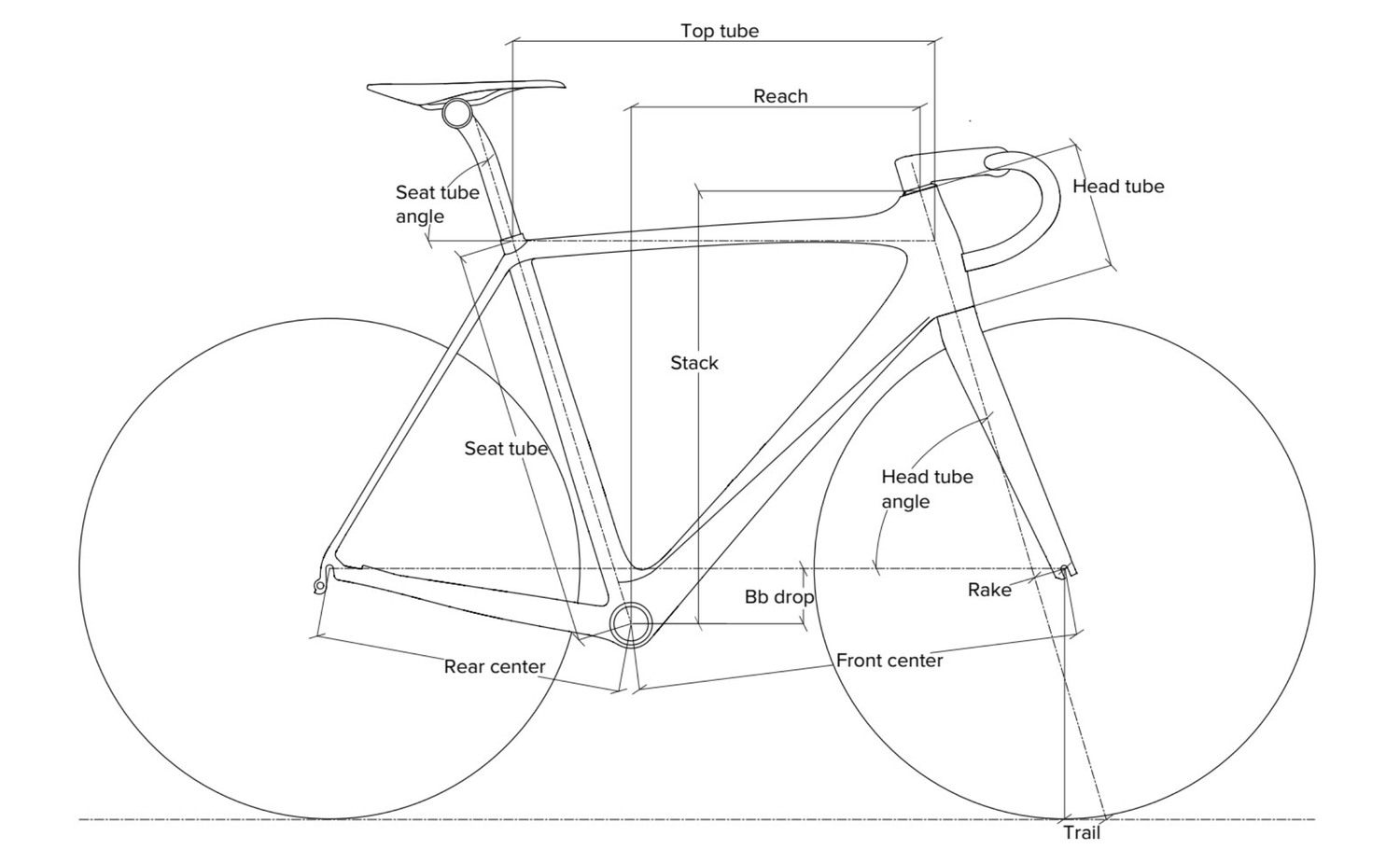
The front end of your gravel bike is where steering magic happens. Three interconnected measurements—head tube angle, fork rake (also called offset), and trail—work together to determine how your bike responds to steering input. Get these relationships right, and the bike feels intuitive and confidence-inspiring. Get them wrong, and every ride becomes a wrestling match.
Head Tube Angle
The head tube angle measures the angle of the steering tube relative to the ground. Steeper angles (closer to vertical, typically 71-73 degrees on gravel bikes) create quicker, more responsive steering. Slacker angles (69-71 degrees) increase stability and help the bike track straighter over rough terrain. Most modern gravel bikes fall somewhere in between, balancing responsiveness with composed handling.
Fork Rake and Offset
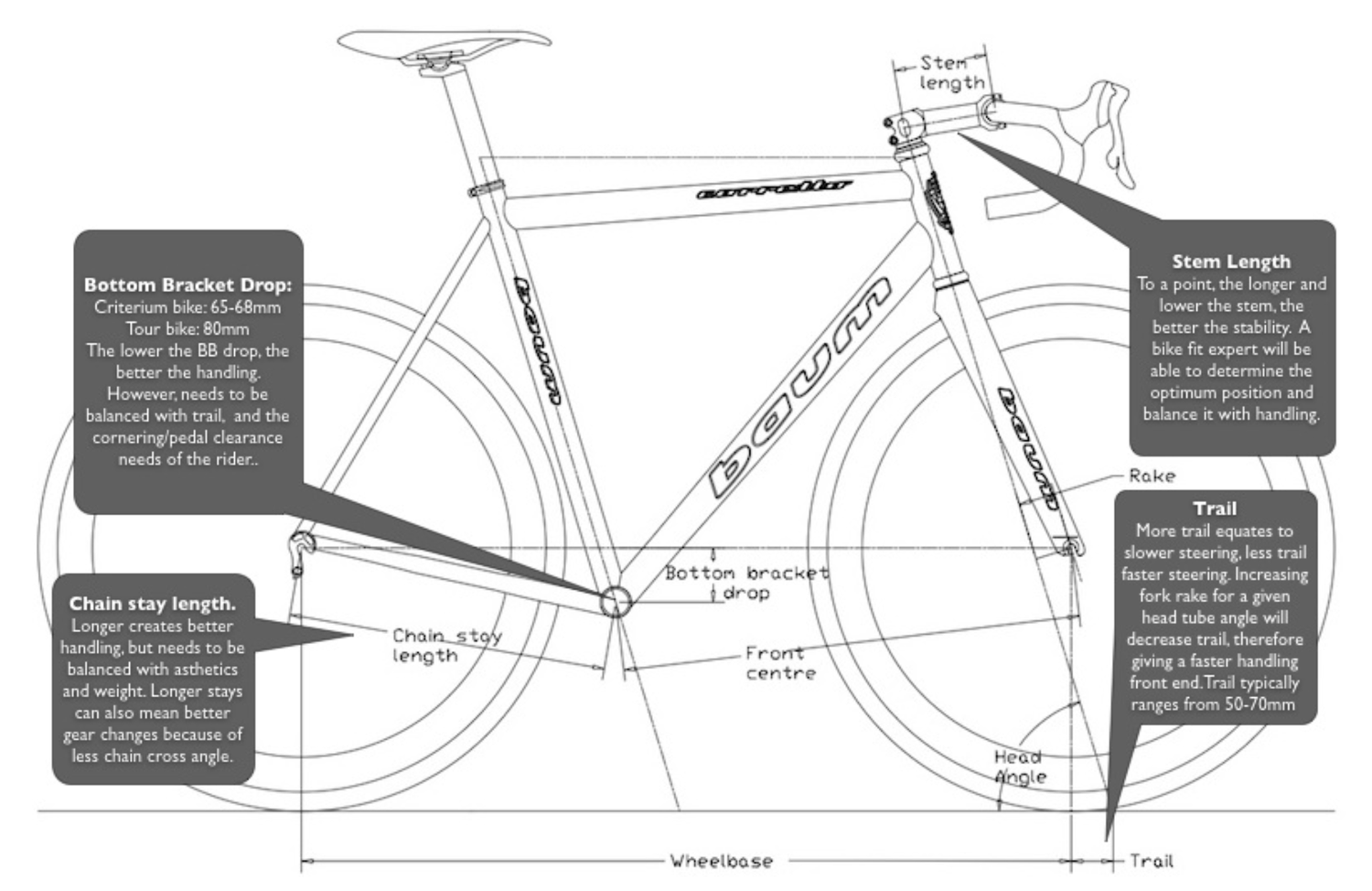
Fork rake (or offset) is the horizontal distance between the steering axis and the center of the front wheel axle. Greater rake reduces trail and quickens steering response. Less rake increases trail and stability. Gravel bikes typically use fork rakes between 45-55mm, with many manufacturers fine-tuning this measurement to complement their chosen head tube angle.
Trail: The Hidden Hero
Trail is calculated from the head angle and fork rake—it's the horizontal distance between where the steering axis meets the ground and the tire's contact patch. More trail means more stability and self-centering behavior; less trail means lighter, quicker steering. For gravel bikes, trail values typically range from 55-70mm, striking a balance between the twitchy feel of a cyclocross racer and the planted feel of a touring bike.
Wheelbase: The Long and Short of Stability
Wheelbase—the distance between the front and rear axles—has a profound impact on how a bike feels. Longer wheelbases create a more stable platform that tracks straight and absorbs rough terrain with composure. Shorter wheelbases respond more quickly to rider input, making the bike feel livelier and more maneuverable in tight situations.
Gravel bikes generally feature wheelbases longer than road bikes but shorter than dedicated touring machines. This middle ground provides the stability needed for loose surfaces and long days in the saddle while retaining enough agility for technical sections and fast descents. Typical gravel bike wheelbases range from approximately 1000mm to 1050mm, though this varies by frame size.
The wheelbase is determined by the combination of the front center (front axle to bottom bracket) and chainstay length. Manufacturers can adjust either dimension to achieve their target wheelbase while optimizing other handling characteristics.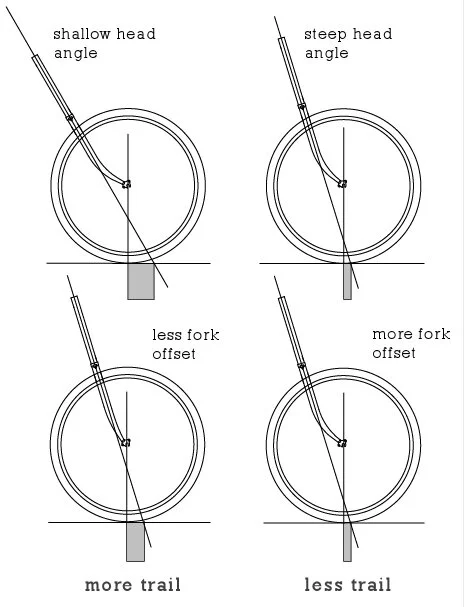
Stack and Reach: Finding Your Fit
Stack and reach are the most important measurements for determining how a bike will fit your body. Stack is the vertical distance from the bottom bracket center to the top of the head tube. Reach is the horizontal distance between these same points. Together, they define the basic relationship between where you sit and where your hands rest on the handlebars.
Higher stack values position the handlebars higher relative to the saddle, creating a more upright, comfortable riding position well-suited to long adventures. Lower stack enables a more aerodynamic position for faster riding. Gravel bikes typically offer moderate to high stack values compared to road bikes, prioritizing comfort over outright speed.
Reach affects how stretched out or compact you feel on the bike. Longer reach creates a more stretched position that can improve handling but may feel cramped for some riders. Shorter reach feels more compact and accessible. The ideal combination depends on your body proportions, flexibility, and riding style.
Sample Gravel Bike Geometry Chart
| Frame Size | Stack (mm) | Reach (mm) | Head Angle | Seat Angle | Wheelbase (mm) | Trail (mm) |
|---|---|---|---|---|---|---|
| 48 (XS) | 524 | 365 | 71.0° | 73.5° | 995 | 63 |
| 51 (S) | 545 | 375 | 71.5° | 73.5° | 1005 | 62 |
| 54 (M) | 568 | 385 | 72.0° | 73.0° | 1015 | 60 |
| 56 (L) | 590 | 395 | 72.5° | 73.0° | 1025 | 58 |
| 58 (XL) | 612 | 405 | 72.5° | 72.5° | 1040 | 58 |

Tire Clearance: Room to Roam
One of the defining characteristics of gravel bikes is their generous tire clearance. While road bikes are typically limited to 28mm or 32mm tires, most gravel frames accommodate tires ranging from 40mm to 50mm or even wider. This extra clearance is integral to frame geometry, affecting chainstay length, fork design, and overall frame proportions.
Wider tires provide multiple benefits: they cushion rough surfaces, improve traction on loose terrain, and allow riders to run lower pressures for enhanced comfort. The ability to swap between narrower tires for road-focused rides and wider rubber for off-road adventures makes gravel bikes remarkably versatile.
When evaluating tire clearance, consider both the maximum tire width and the clearance with mud and debris. A frame that technically fits a 45mm tire may become clogged with mud if clearances are too tight. Quality gravel frames provide ample clearance even in challenging conditions.
Bottom Bracket Drop and Height
Bottom bracket drop refers to how far the bottom bracket sits below the line connecting the front and rear axles. Bottom bracket height is the actual distance from the ground to the center of the bottom bracket. Both measurements affect your center of gravity and pedal clearance over obstacles.
A lower bottom bracket lowers your center of gravity, improving stability and cornering confidence. However, it also increases the risk of pedal strikes on rocky terrain. Gravel bikes typically feature slightly higher bottom brackets than road bikes to provide adequate clearance while maintaining a stable, planted feel.
The relationship between bottom bracket height and tire size is also important. Larger tires effectively raise the bottom bracket, which is one reason why geometry charts often specify measurements with a particular tire size in mind.
Key Takeaways for Choosing Your Gravel Bike
When comparing gravel bikes, look beyond frame size labels and examine the actual geometry numbers. Pay particular attention to stack and reach for fit, head tube angle and trail for handling characteristics, and wheelbase for overall stability. Remember that geometry is interconnected—a change in one measurement often affects others.
Test rides remain the best way to evaluate how geometry translates to real-world feel. Use geometry charts to narrow your options, then let your body make the final decision.e
Putting It All Together
Understanding gravel bike geometry empowers you to make informed decisions about your next bike purchase or to better understand the machine you already own. While numbers on a chart cannot fully capture the experience of riding a well-designed gravel bike, they provide the foundation for meaningful comparisons.
As you explore the world of gravel cycling, remember that the best geometry is the one that fits your body, matches your riding style, and inspires you to seek out new adventures. Whether you prefer the stability of a longer wheelbase or the agility of a more compact design, there's a gravel bike geometry perfectly suited to your needs.
The gravel cycling community continues to evolve, and bike geometry evolves with it. Stay curious, keep learning, and most importantly—get out there and ride.
Ready to Hit the Gravel?
Explore our selection of premium gravel bikes designed for adventure.
Cervélo Aspero GRX