
Whether you're building the ultimate outdoor entertainment area, setting up a backyard kitchen, or managing a commercial food service operation, proper refrigeration is essential. Reach-in refrigerators and freezers represent the backbone of efficient cold storage, offering accessibility, organization, and reliable temperature control that standard units simply cannot match.
This comprehensive guide walks you through everything from basic operating principles to advanced selection criteria, helping you make an informed decision that serves your needs for years to come.
Why This Guide Matters
Selecting the right reach-in unit involves more than picking a size that fits your space. Temperature consistency, energy efficiency, door configuration, and compressor placement all play crucial roles in long-term performance and operational costs. Understanding these factors upfront prevents costly mistakes and ensures your investment delivers maximum value.
What Exactly Is a Reach-In Refrigerator?
A reach-in refrigerator is a freestanding cold storage unit designed for easy access to stored items without requiring you to physically enter the unit. Unlike walk-in coolers where you step inside, reach-in models feature front-opening doors that allow you to grab what you need quickly and efficiently.
These units maintain internal temperatures between 33°F and 41°F for refrigerators, while reach-in freezers operate at 0°F or below. The design prioritizes accessibility, making them ideal for high-traffic environments where frequent access is necessary.
Standard reach-in units come in one-door, two-door, and three-door configurations, with capacities ranging from approximately 20 cubic feet to over 70 cubic feet depending on the model and manufacturer.
How Reach-Ins Differ from Other Commercial Coolers
While residential refrigerators and walk-in coolers serve their purposes, reach-in units occupy a unique middle ground that offers distinct advantages.
Compared to residential units: Reach-in refrigerators feature more powerful compressors, heavier-duty construction, NSF-certified shelving, and are engineered to handle frequent door openings while maintaining consistent temperatures.
Compared to walk-in coolers: Reach-ins require less space, lower initial investment, and simpler installation while still providing substantial storage capacity and commercial-grade performance.
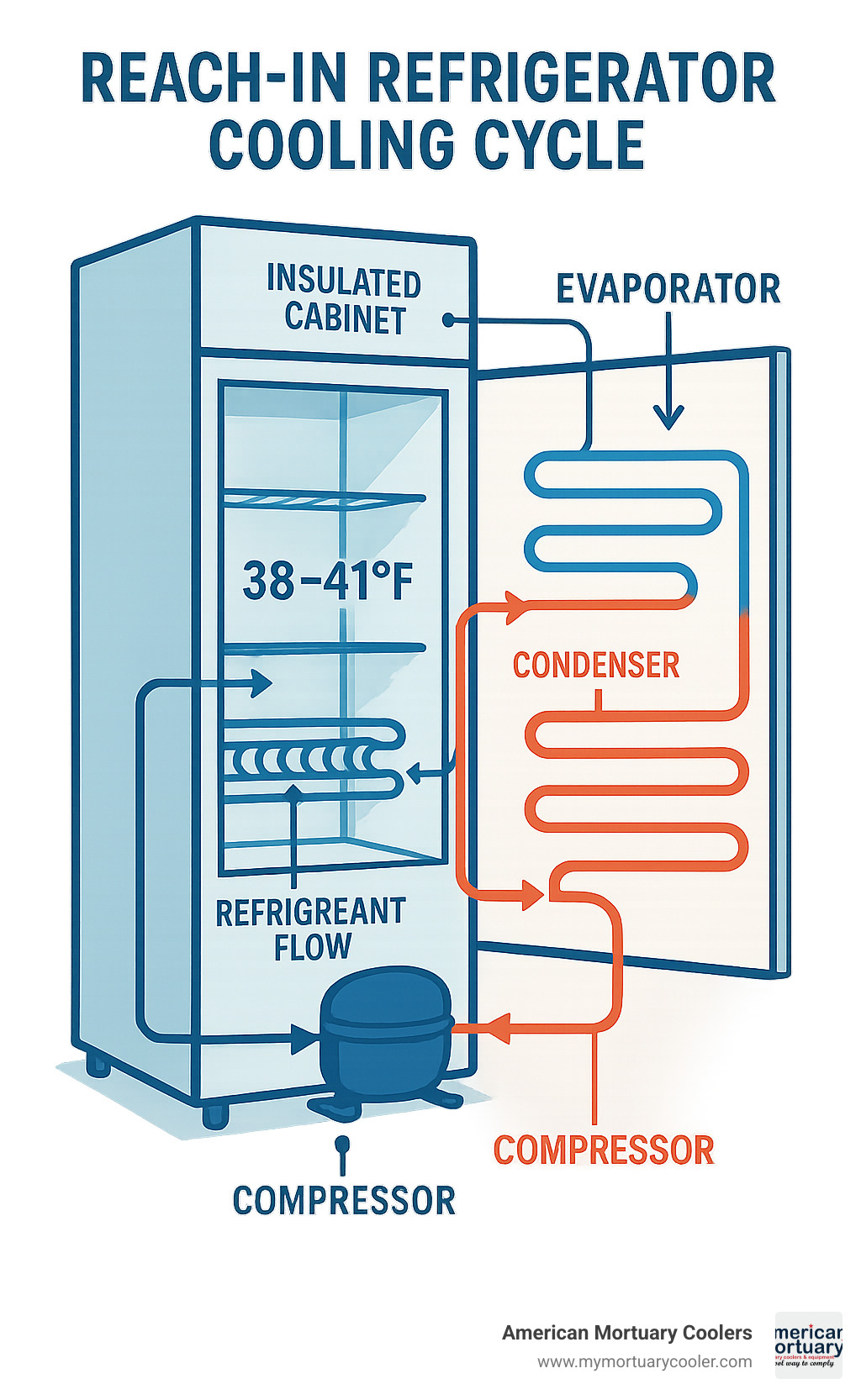
Core Components of a Reach-In Refrigerator
Compressor
The heart of the cooling system, responsible for circulating refrigerant and maintaining target temperatures throughout the cabinet.
Evaporator
Absorbs heat from inside the cabinet, allowing refrigerant to evaporate and cool the interior storage space effectively.
Condenser
Releases absorbed heat to the outside environment, completing the heat transfer cycle essential for continuous cooling.
Thermostat Control
Monitors and regulates internal temperature, cycling the compressor on and off to maintain your desired settings.
Major Types & Configurations
Solid Door Reach-In Refrigerators
Solid door models offer superior insulation and energy efficiency compared to glass door alternatives. The opaque doors minimize cold air loss and protect contents from light exposure, making them ideal for long-term storage of temperature-sensitive items. These units typically cost less to operate and maintain consistent temperatures more effectively during frequent use.
Glass Door Reach-In Refrigerators
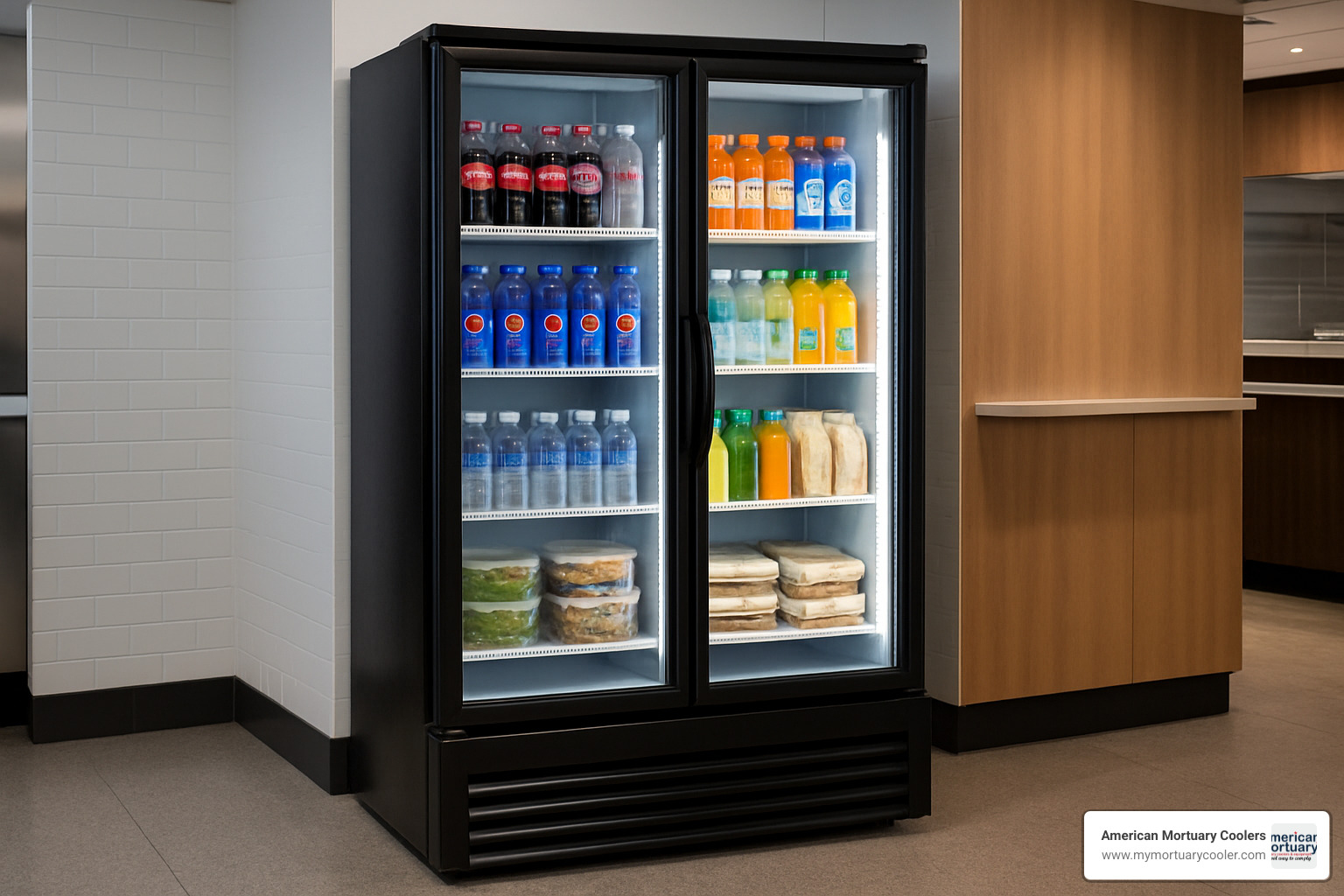
Glass door units provide visibility into stored contents, reducing door-open time as users can locate items before opening. This makes them excellent for retail environments or situations where quick visual inventory checks are valuable. Modern glass doors feature low-E coatings and double or triple-pane construction to improve energy efficiency while maintaining clear visibility.
Compressor Placement & Performance
Top-Mounted Compressors
Positioning the compressor on top keeps it away from dust and debris that accumulates at floor level. This placement typically results in easier maintenance access and better performance in warmer environments. Heat rises naturally away from the storage compartment, improving overall efficiency.
Bottom-Mounted Compressors
Bottom-mounted units place frequently accessed items at a more ergonomic height and may offer easier loading for heavy items. However, they require more frequent cleaning to prevent dust buildup around the compressor and may struggle in environments with floor-level heat sources.
Sizing & Selection Guide
Calculating the Right Size for Your Operation
Proper sizing ensures you have adequate storage without wasting energy cooling empty space. Consider these factors when determining your needs:
Storage Volume: Calculate total cubic feet needed based on your typical inventory levels, accounting for seasonal variations and growth projections.
Access Frequency: High-traffic operations benefit from multi-door configurations that allow multiple users simultaneous access while minimizing cold air loss.
Available Space: Measure your installation area carefully, accounting for door swing clearance, ventilation requirements, and access for maintenance.
Electrical Requirements: Verify your electrical supply matches the unit's requirements, particularly for larger multi-door models that may require dedicated circuits.
Industry-Specific Applications
Outdoor Kitchens
Perfect for backyard entertainment spaces, keeping beverages and ingredients fresh during outdoor gatherings and cookouts.
Restaurants & Cafes
Essential for commercial kitchens requiring reliable cold storage with easy access during busy service periods.
Catering Operations
Mobile and fixed catering setups benefit from the organization and accessibility reach-in units provide.
Event Venues
Banquet halls and event spaces rely on reach-in units for efficient food staging and beverage service.
Key Features, Performance & Compliance
Temperature Management Best Practices
Maintaining proper temperatures is crucial for food safety and quality preservation. Follow these guidelines for optimal performance:
Keep refrigerator units between 33°F and 38°F for optimal food preservation. Freezer units should maintain 0°F or below consistently. Use a secondary thermometer to verify digital display accuracy, and check temperatures at least twice daily during active use.
Avoid overloading shelves, as proper air circulation is essential for even cooling throughout the cabinet. Leave space between items and avoid blocking air vents with stored products.
Allow hot foods to cool to room temperature before placing them in the unit to prevent temperature spikes that stress the compressor and compromise other stored items.
Food Safety & Regulatory Standards
Commercial reach-in refrigerators should meet NSF International certification standards, ensuring they're designed for easy cleaning and sanitation. This certification indicates the unit meets strict standards for food safety equipment construction.
For commercial operations, verify your unit meets local health department requirements and energy efficiency standards. ENERGY STAR certified models offer significant long-term savings while meeting environmental guidelines.
Maintenance, Energy Efficiency & Costs
Regular maintenance extends equipment life and ensures consistent performance. Establish a routine maintenance schedule that includes:
Weekly: Clean interior surfaces, check door gaskets for proper seal, verify temperature readings, and wipe down exterior surfaces.
Monthly: Clean condenser coils to maintain efficient heat transfer, inspect drain lines for clogs, and check fan operation.
Quarterly: Inspect door hinges and hardware, test thermostat calibration, and examine electrical connections.
Annually: Schedule professional inspection of refrigerant levels, compressor performance, and overall system efficiency.
Dirty condenser coils are the leading cause of premature compressor failure. A layer of dust and grease forces the compressor to work harder, increasing energy consumption by up to 25% and dramatically shortening equipment lifespan.
Add-ons & Accessories Breakdown
Enhance your reach-in unit's functionality with these popular accessories:
Additional Shelving
Maximize vertical storage space
Pan Slides
Organize sheet pans efficiently
Door Locks
Secure valuable inventory
Caster Wheels
Easy mobility for cleaning
Temperature Alarms
Alert for temperature issues
LED Lighting
Improved interior visibility
Common Mistakes to Avoid
Ignoring Ventilation Requirements: Placing units too close to walls or in poorly ventilated spaces causes overheating and premature failure.
Overloading the Unit: Cramming too much product blocks airflow and creates inconsistent temperatures throughout the cabinet.
Neglecting Door Gaskets: Worn or dirty gaskets allow cold air to escape, forcing the compressor to work overtime.
Skipping Regular Maintenance: Failing to clean coils and check components leads to expensive repairs and shortened equipment life.
Frequently Asked Questions
What temperature should a commercial reach-in refrigerator maintain?
Commercial reach-in refrigerators should maintain temperatures between 33°F and 38°F (0.5°C to 3.3°C) to ensure food safety while preventing freezing of refrigerated items. Most units allow temperature adjustment within this range based on specific storage needs.
Does top-mount or bottom-mount compressor perform better?
Top-mount compressors generally perform better in commercial environments because they stay cleaner and operate in cooler air. However, bottom-mount units offer ergonomic advantages for loading heavy items. Your specific environment and usage patterns should guide this decision.
How often should I clean the condenser coils?
Clean condenser coils at least monthly, or more frequently in dusty or high-grease environments like commercial kitchens. Regular cleaning maintains efficiency and prevents compressor strain that leads to premature failure.
What size reach-in refrigerator do I need?
Size requirements depend on your storage volume, access frequency, and available space. A general guideline allocates 1-1.5 cubic feet per meal served for restaurants, but outdoor kitchens and smaller operations should calculate based on typical inventory levels and peak usage periods.
Ready to Upgrade Your Cold Storage?
Explore our selection of commercial-grade reach-in freezers designed for reliability and performance.
Chef AAA 72" 6-Door FreezerConclusion
Reach-in refrigerators and freezers represent a smart investment for anyone serious about proper food storage, whether you're outfitting an outdoor kitchen, managing a commercial operation, or expanding your backyard entertainment capabilities. The right unit delivers years of reliable service, keeping your ingredients fresh and your beverages cold whenever you need them.
By understanding the key factors covered in this guide—from compressor placement and door configurations to sizing calculations and maintenance requirements—you're equipped to make an informed decision that matches your specific needs and budget.
Remember that quality refrigeration equipment is a long-term investment. Prioritize units with solid construction, reliable compressors, and good warranty coverage to ensure your purchase delivers value for years to come.