
Why This Guide Matters
Selecting the right commercial refrigeration unit can make or break a food service operation. Whether you manage a busy restaurant kitchen, run a convenience store, or oversee a catering business, the reach-in refrigerator sits at the core of your daily workflow. This guide walks you through every critical factor so you can make a confident, well-informed purchasing decision that keeps your products fresh and your budget intact.
From understanding how these units differ from standard residential fridges to learning which configurations suit specific industries, we cover the essential details that matter most to business owners and kitchen managers.
What Is a Reach-In Refrigerator?
A reach-in refrigerator is a freestanding commercial cooling unit built for heavy-duty food storage in professional environments. Unlike walk-in coolers that require dedicated floor space or under-counter models with limited capacity, reach-in refrigerators strike the ideal balance between storage volume and kitchen footprint. They stand upright, feature one to three full-size doors (or up to six half doors), and deliver consistent cold temperatures throughout the interior cabinet.
These units are designed to endure the demanding pace of commercial kitchens, where doors open and close dozens of times per hour. Heavy-gauge stainless steel construction, powerful compressor systems, and commercial-grade insulation set them apart from anything you would find in a home setting.
How a Reach-In Differs from Other Commercial Units
It is easy to confuse the various types of commercial refrigeration on the market. Reach-in units occupy a unique middle ground. They offer significantly more capacity than under-counter refrigerators while requiring far less space and infrastructure than a full walk-in cooler. Unlike merchandiser fridges designed for customer-facing product displays, reach-in models focus exclusively on back-of-house storage efficiency.
Walk-in coolers demand construction work, dedicated flooring, and substantial electrical requirements. Under-counter models fit beneath prep tables but hold only a fraction of the inventory. The reach-in sits comfortably in the kitchen lineup as the everyday workhorse that handles the bulk of your perishable storage needs.
Core Components of a Reach-In Refrigerator
Understanding what goes into a commercial reach-in helps you evaluate quality and long-term value. Every unit shares a handful of essential components that work together to maintain safe, consistent temperatures.
Compressor System
The engine of the refrigeration cycle. It compresses refrigerant gas, raising its pressure and temperature before sending it to the condenser. Commercial units use robust compressors rated for continuous duty cycles.
Evaporator Coils
Located inside the cabinet, these coils absorb heat from the stored products. As refrigerant passes through them, it evaporates and pulls warmth from the interior, keeping contents cold.
Condenser Coils
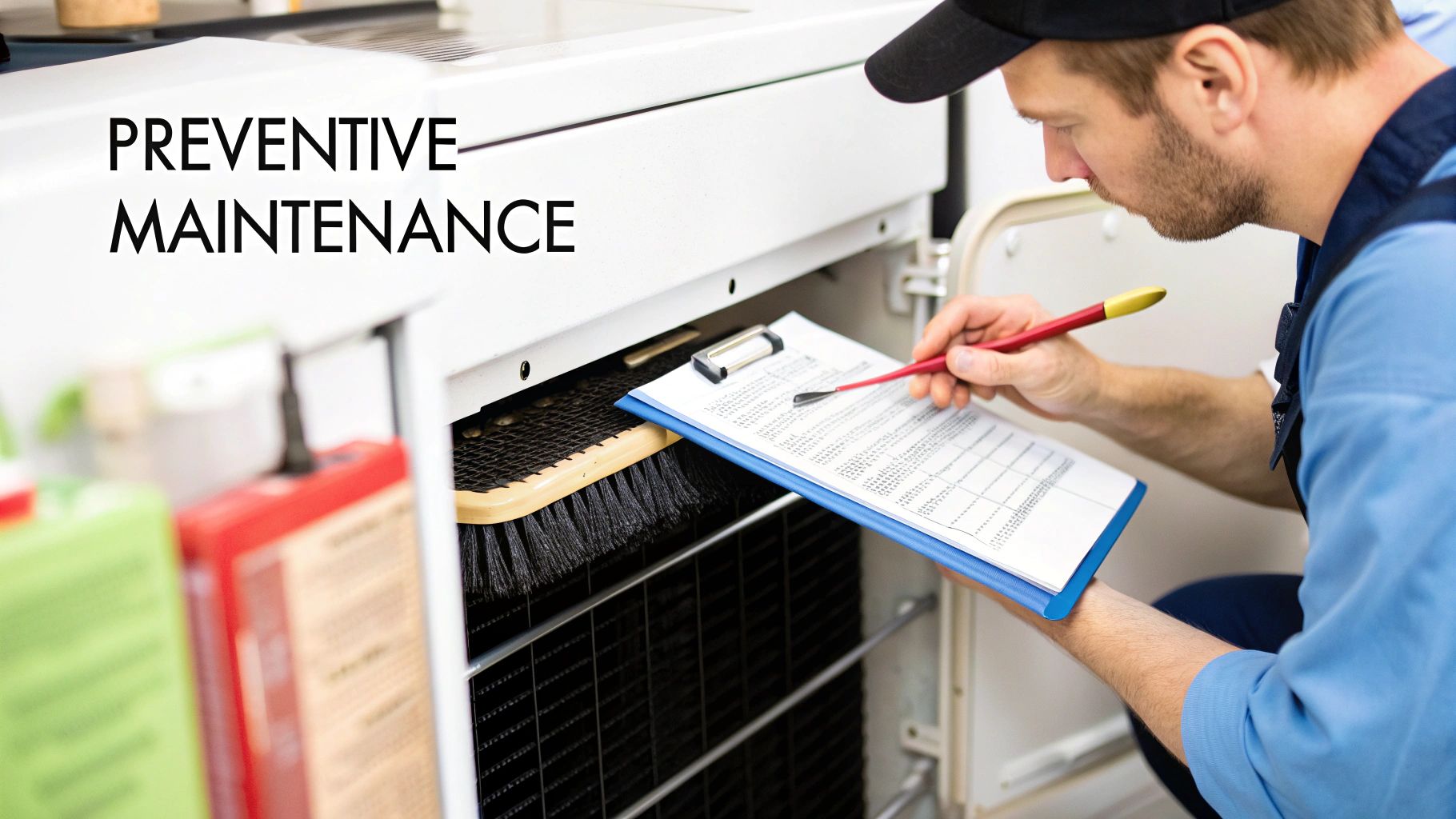
Positioned near the compressor, condenser coils release the absorbed heat into the surrounding environment. Keeping these coils clean is one of the most important maintenance tasks for any commercial refrigerator.
Cabinet Insulation
High-density polyurethane foam lines the walls, doors, and ceiling of the cabinet. Quality insulation minimizes thermal transfer and reduces the workload on the compressor, directly impacting energy costs.
Major Types & Configurations
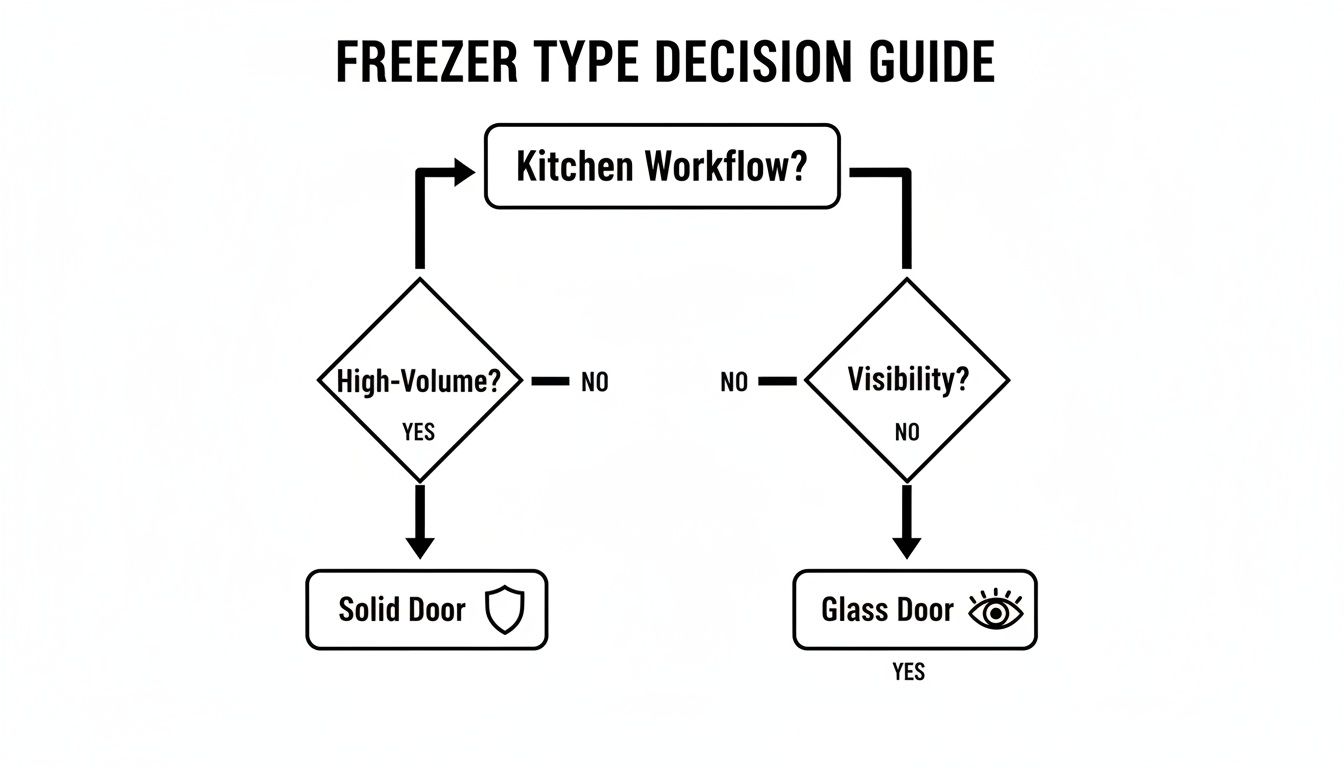
Reach-in refrigerators come in several configurations, each designed to serve different operational needs. The two primary categories are defined by their door style: solid and glass.
Solid-Door Reach-In Refrigerators
Solid-door models are the standard choice for most commercial kitchens. The opaque doors provide superior insulation compared to glass, which translates to better energy efficiency and more stable internal temperatures. These units excel in environments where the door is opened frequently, as the solid panels recover temperature faster after each opening.
If your operation prioritizes raw storage performance over product visibility, solid-door reach-ins offer the best combination of durability, efficiency, and consistent cooling. They are the go-to selection for restaurant prep lines, hotel kitchens, and institutional food service.
Glass-Door Reach-In Refrigerators
Glass-door reach-ins allow staff to see stored inventory without opening the door, which speeds up product retrieval and reduces unnecessary cold air loss. Double or triple-pane tempered glass with low-emissivity coatings keeps insulation performance respectable, though not quite on par with solid panels.
These models shine in environments where quick visual inventory checks save time, such as busy line kitchens, bakeries, and delis. Some operations also position glass-door reach-ins in semi-visible areas where the organized interior presentation adds a professional touch.
Compressor Placement & Performance
Where the compressor sits on a reach-in refrigerator affects performance, maintenance access, and heat management. There are two standard configurations, and each carries distinct advantages.
Top-Mount Compressors
Units with top-mounted compressors benefit from cleaner airflow around the motor since heat rises naturally away from the cabinet. This placement keeps the compressor above floor-level dust, grease, and debris, which can reduce cleaning frequency. However, top-mount models add height to the unit and may pose challenges in kitchens with low ceilings.
Bottom-Mount Compressors
Bottom-mount compressors position the motor at the base of the unit, making the coldest air settle at eye level where most products are stored. They tend to be easier to service since technicians can access the compressor without ladders. The trade-off is that bottom-mount units pull in more floor-level contaminants, requiring more frequent condenser cleaning.
Sizing & Selection Guide
Choosing the correct size reach-in refrigerator is critical. An undersized unit forces your compressor to work overtime, raises energy costs, and puts food safety at risk. An oversized unit wastes floor space and electricity. Getting the fit right requires evaluating your storage volume needs, available kitchen footprint, and daily operational patterns.
| Configuration | Approx. Capacity (cu. ft.) | Best Suited For |
|---|---|---|
| Single Door (1 Section) | 20 – 30 | Small cafes, food trucks, prep stations |
| Two Door (2 Section) | 40 – 54 | Mid-size restaurants, bakeries, delis |
| Three Door (3 Section) | 65 – 82 | High-volume kitchens, hotels, catering |
| Half-Door Models (4–6 Doors) | 40 – 75 | Operations needing organized compartments |
Calculating the Right Size for Your Operation
Start by estimating how many cubic feet of cold storage your daily inventory demands. Factor in peak periods, delivery schedules, and menu complexity. A general rule of thumb is to allow roughly 1 to 1.5 cubic feet of refrigerated space per meal served during your busiest shift. Always leave at least 25 percent of the interior empty to ensure proper air circulation, which is essential for even cooling.
Measure your available floor space carefully, accounting for door swing clearance, ventilation gaps (typically 4 to 6 inches on all sides), and staff traffic flow around the unit. Half-door configurations are an excellent solution when you need organized separation between product categories without dedicating extra floor space.
Industry-Specific Applications
Different industries place different demands on their refrigeration equipment. Here is how reach-in refrigerators serve some of the most common commercial settings.
Restaurants & Cafes
The fast pace of a restaurant kitchen demands rapid access to ingredients. Two-door and three-door reach-ins positioned along the prep line keep everything within arm's length, minimizing steps and keeping service times tight.
Bakeries & Pastry Shops
Doughs, creams, and delicate fillings require stable, precise temperatures. Glass-door models help bakers monitor product states without introducing warm air, preserving texture and consistency.
Convenience Stores
High-traffic convenience stores benefit from reach-ins that combine robust construction with energy-efficient operation. Half-door models let staff access individual sections without exposing the entire cabinet.
Catering & Events
Large-scale catering operations need maximum storage capacity. Three-door reach-ins or multiple two-door units arranged in a bank provide the volume required for event-level food preparation.
Key Features, Performance & Compliance
Beyond raw cooling power, modern reach-in refrigerators pack a range of features designed to improve food safety, reduce operating costs, and simplify daily use. Here are the performance markers that separate a reliable commercial unit from a budget disappointment.
- Digital Temperature Controls: Precise electronic thermostats allow you to set and monitor cabinet temperatures with accuracy, often within one degree of the target.
- Self-Closing Door Mechanisms: Spring-loaded or cam-action hinges pull doors shut automatically, preventing accidental temperature loss during busy service periods.
- LED Interior Lighting: Energy-efficient LED lights illuminate stored products clearly without generating the heat that traditional incandescent bulbs produce.
- Adjustable Epoxy-Coated Shelving: Corrosion-resistant shelves that can be repositioned to accommodate different container heights and product sizes.
- Automatic Defrost Cycles: Programmed defrost cycles prevent ice buildup on evaporator coils, maintaining consistent airflow and cooling performance.
- Door Locks: Keyed locks on solid and glass-door models help control inventory access, reduce shrinkage, and support food safety compliance.
Temperature Management Best Practices
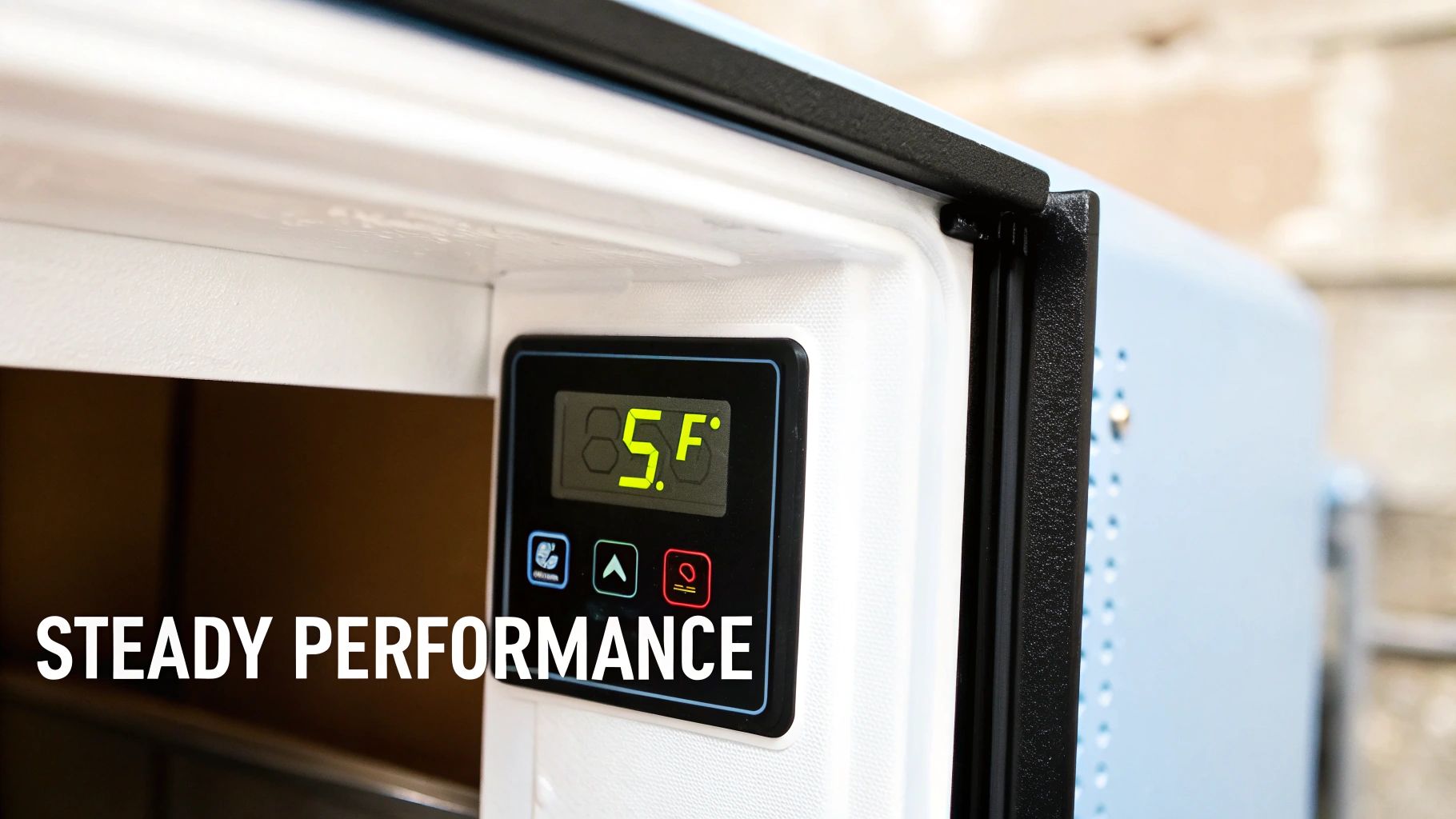
Maintaining safe temperatures inside your reach-in refrigerator is non-negotiable. The FDA recommends that commercial refrigerators hold food at or below 40°F (4°C) at all times. Freezers should maintain 0°F (−18°C) or lower. Here are the best practices for consistent temperature management.
Avoid overloading the cabinet. When products are packed too tightly, cold air cannot circulate freely, which creates warm spots that put food safety at risk. Position items with adequate spacing and keep raw proteins on lower shelves to prevent cross-contamination. Use a calibrated external thermometer as a secondary verification alongside the unit's built-in digital display.
Train your staff to minimize door-open time and to close doors fully after every use. Even a few extra seconds of exposure per opening compounds across hundreds of daily cycles, forcing the compressor to work harder and raising energy costs.
Food Safety & Regulatory Standards
Commercial reach-in refrigerators sold in North America must comply with several regulatory benchmarks. NSF International certification ensures that the unit meets strict sanitation, material safety, and performance standards. UL listing confirms that the electrical components and overall design meet recognized safety requirements. ENERGY STAR certification, while voluntary, signals that the unit exceeds baseline efficiency standards and can qualify your operation for utility rebates.
Health inspectors routinely check refrigerator temperatures, door seals, and internal cleanliness during facility audits. Investing in a certified reach-in refrigerator gives you built-in compliance confidence and reduces the risk of costly violations.
Maintenance, Energy Efficiency & Costs
Proper maintenance directly extends the service life of your reach-in refrigerator and keeps energy costs predictable. A neglected unit will consume significantly more electricity, experience more frequent breakdowns, and ultimately need premature replacement.
Routine Maintenance Checklist
- Clean condenser coils every 30 to 90 days depending on kitchen conditions.
- Inspect door gaskets monthly for tears, warping, or loss of seal.
- Verify thermostat accuracy with a calibrated thermometer quarterly.
- Clear drain lines to prevent water pooling and potential ice blockages.
- Wipe interior surfaces weekly with food-safe sanitizer.
- Check fan motors and evaporator coils for ice buildup or unusual noise.
Solid vs Glass Door Cost Breakdown
Budget considerations extend beyond the initial purchase price. Glass-door models typically carry a higher upfront cost due to the multi-pane tempered glass and low-E coatings, but they may reduce labor time by speeding up inventory identification. Solid-door units cost less initially and deliver better energy efficiency over the long run, which can offset the savings gap over a three- to five-year ownership period.
Factor in the cost of replacement gaskets, potential glass breakage, and energy consumption differences when comparing total cost of ownership. In most kitchen-focused operations, solid-door models deliver better long-term value. For operations where visibility translates to measurable labor savings, glass doors justify the premium.
Common Mistakes to Avoid
Even experienced operators make avoidable errors when purchasing and maintaining reach-in refrigerators. Watch out for these frequent missteps.
- Ignoring ventilation clearances: Placing a reach-in flush against a wall restricts airflow to the condenser, causing overheating and premature compressor failure.
- Overloading the cabinet: Packing every shelf to capacity blocks air circulation and creates unsafe temperature zones inside the unit.
- Skipping condenser cleaning: Dirty coils are the number one cause of preventable commercial refrigerator breakdowns. Establish a cleaning schedule and stick to it.
- Buying based on price alone: A low sticker price means nothing if the unit lacks NSF certification, uses cheap components, or consumes excessive energy over its lifespan.
- Neglecting gasket replacement: Worn door gaskets leak cold air constantly, forcing the compressor into longer run cycles and increasing your utility bill.
Frequently Asked Questions about Reach-In Refrigerators
What temperature should a commercial reach-in hold?
Does top-mount or bottom-mount save more energy?
How often should I clean the condenser coils?
Can I use a reach-in refrigerator as a freezer?
How long does a commercial reach-in refrigerator last?
What is the difference between a reach-in and a merchandiser?
Ready to Equip Your Kitchen?
Explore our commercial-grade reach-in freezers built for demanding food service environments.
Chef AAA SCD-660F 72" Reach-In Freezer© Backyard Provider — Your trusted source for commercial and outdoor equipment.