
A reach-in freezer is the silent powerhouse behind every successful professional kitchen. It's a self-contained, upright unit engineered to safeguard your perishable inventory at reliably frozen temperatures. Unlike household models, these machines are constructed to endure the relentless pace of a commercial environment—with industrial-grade components built for constant door openings, temperature fluctuations, and heavy daily usage so that your ingredients remain perfectly preserved.
Why a Reach-In Freezer Is Your Kitchen's Workhorse
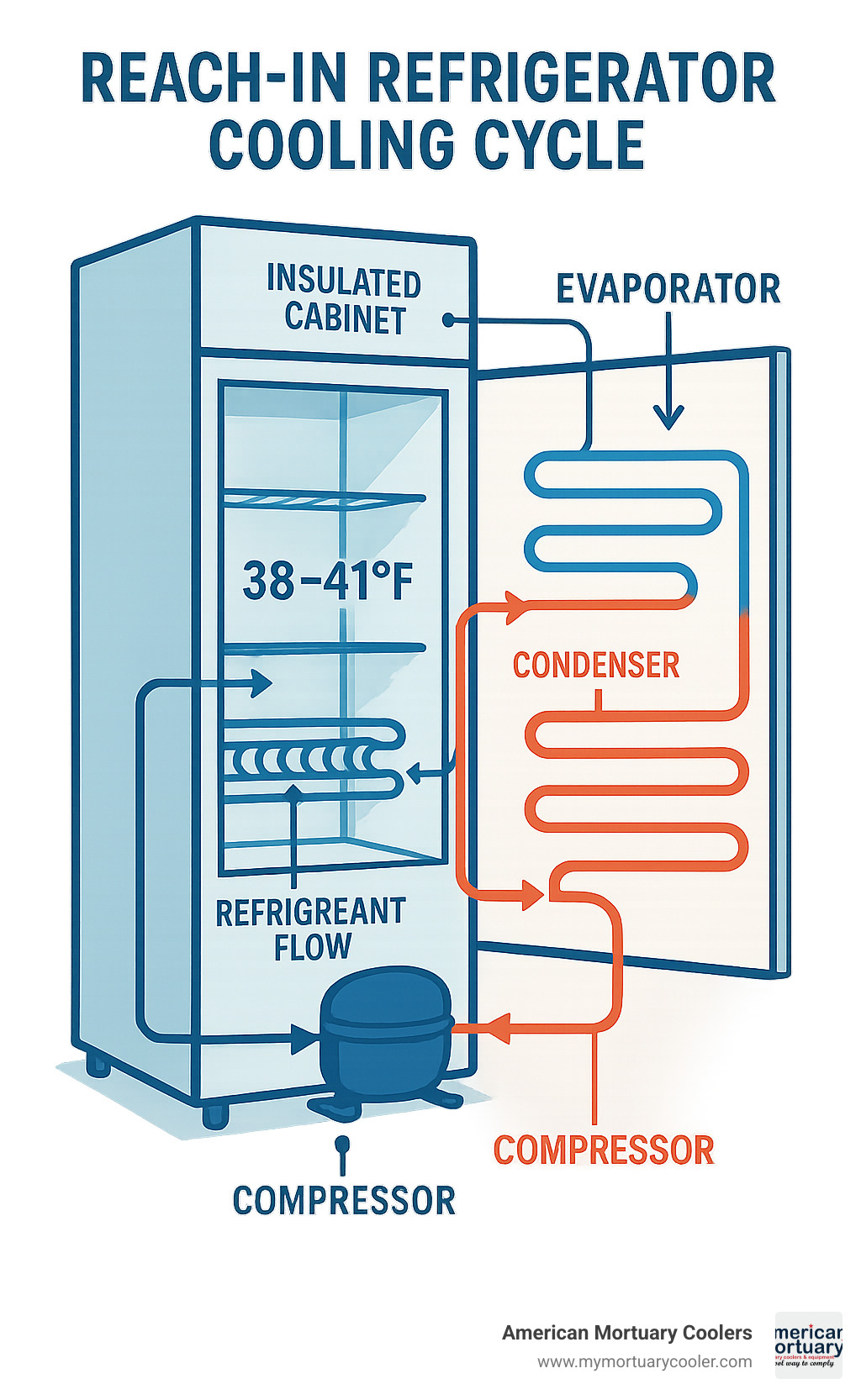
Consider your home freezer a dependable family sedan—great for everyday errands. A commercial reach-in freezer, however, is more like a high-performance race car, purpose-built for power, stamina, and unwavering consistency in the toughest conditions. It's the quiet protector of your valuable stock and, by extension, your profits.
This isn't simply a cold storage box. It's the backbone of operational efficiency and food safety in your establishment. Its primary function is maintaining an intensely frigid environment—usually between 0°F and -10°F—which is essential for halting bacterial growth and eliminating spoilage.
What exactly makes these units so indispensable? Let's explore the core features that set them apart.
| Feature | Why It Matters to Your Operation |
|---|---|
| Heavy-Duty Compressor | The driving force of the unit. A robust compressor ensures rapid temperature recovery after every door opening, keeping food safety uncompromised. |
| Durable Construction | Crafted from materials like stainless steel, these units are engineered to endure the bumps, scratches, and spills of a demanding professional kitchen. |
| Precise Temp Control | Digital thermostats let you dial in and monitor exact temperatures, guaranteeing your ingredients stay in their ideal state for quality and compliance. |
| Efficient Air Circulation | Built-in fans distribute cold air uniformly, preventing warm pockets and ensuring every shelf stays at a consistent frozen temperature. |
| Adjustable Shelving | Heavy-duty shelves that move give you total flexibility to arrange anything from bulk protein boxes to delicate pastry trays, maximizing every cubic inch. |
All of these features combine to deliver a dependable machine you can rely on, shift after shift.
The Engine of Kitchen Efficiency
The true advantage of a commercial reach-in freezer is its incredible recovery speed. In the chaos of a busy service, that freezer door swings open dozens—sometimes hundreds—of times per shift. A household freezer would buckle under the pressure, struggling to bring the temperature back down and leaving your food in danger.
A commercial unit, on the other hand, is designed to snap back to its target temperature almost immediately.
Rapid recovery isn't a luxury feature—it's a food safety essential. It protects your entire inventory, from premium steaks to delicate pastries, keeping textures, flavors, and overall quality locked in.
Protecting Your Bottom Line
A dependable reach-in freezer has a direct and measurable impact on your profitability. Here's how it pays for itself:
Reduces Food Waste
By maintaining pinpoint temperatures without fail, spoilage plummets—meaning less of your expensive inventory ends up in the garbage.
Accelerates Workflow
Strategic placement along the prep line gives your team instant access to frozen ingredients, helping plates reach customers faster.
Ensures Menu Consistency
Properly preserved frozen items guarantee that every dish meets the same high standard your guests expect, day in and day out.
It's no coincidence that demand for these workhorses is climbing. The commercial freezer market is expected to experience its most significant growth from 2025 to 2032, fueled by the rapid expansion of food retail and logistics. This underscores just how vital this equipment has become for any contemporary foodservice operation.
Choosing Your Ideal Freezer Configuration
Selecting a reach-in freezer goes far beyond just picking a size. It's about discovering a configuration that aligns with the unique rhythm and workflow of your kitchen. Make the right call, and you'll supercharge your service. Get it wrong, and you're stuck with a daily operational bottleneck. It's like setting up a toolbox—getting the right compartments in the right spots makes every task quicker.
Your kitchen requires a freezer that mirrors its operational needs. That means carefully weighing everything from door design to compressor placement. These decisions ripple across your energy costs, your staff's productivity, and how swiftly key ingredients get pulled during a packed dinner rush.
Here's a breakdown of the critical configuration choices to ensure your new freezer fits your workspace like a glove.
Solid Doors Versus Glass Doors
Your first major choice is door style, which boils down to a fundamental trade-off between energy efficiency and inventory visibility. There's no universally "right" answer—it depends entirely on how your team actually interacts with the freezer every day.
Solid Doors — The Efficiency Champions
Think of a reach-in with solid doors like a premium insulated thermos. Its greatest asset is trapping cold air inside. Superior insulation means the compressor cycles less often, resulting in significant energy savings over the unit's lifespan. Ideal for back-of-house storage where items need constant temperature but aren't frequently accessed.
Glass Doors — The Visibility Experts
A glass door freezer is all about instant access. Its biggest advantage is that your staff can spot what they need without ever cracking the door. This saves critical seconds during hectic service and reduces door-opening frequency, helping maintain a more stable interior temperature. Perfect for active prep lines or customer-facing areas.
The bottom line: Solid doors deliver peak energy efficiency for long-term storage, while glass doors offer at-a-glance convenience that speeds up workflow in fast-paced zones.
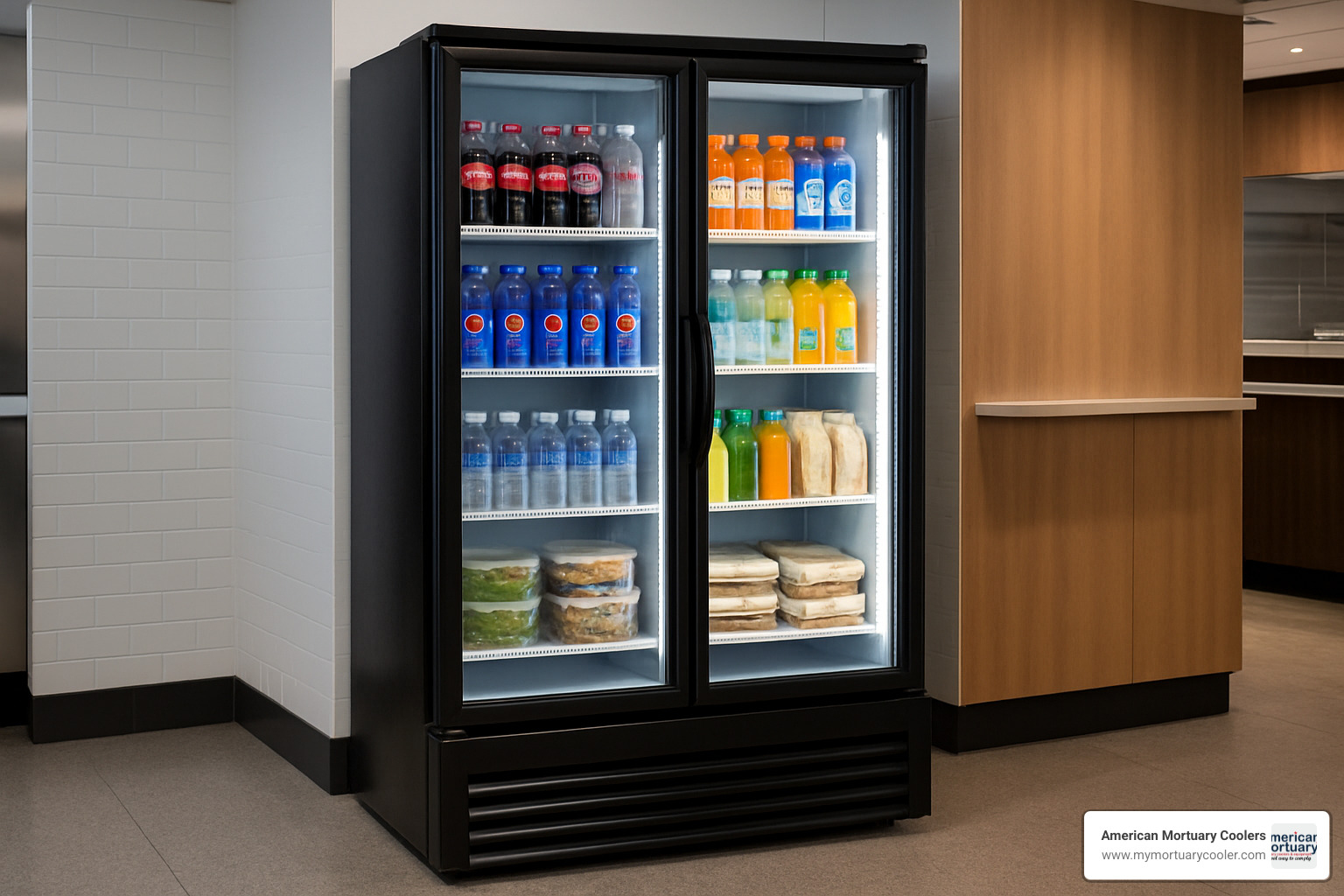
Top Mount Versus Bottom Mount Compressors
The compressor is the heart of your reach-in freezer, and its placement—on top or at the bottom—carries real implications for maintenance, ergonomics, and performance across different kitchen setups.
A top-mount compressor sits above the storage compartment. This setup is a godsend in kitchens with lots of floor-level dust, flour, or grease, as it draws in cleaner air from above. That translates to fewer condenser coil cleanings. The drawback? The heat it produces rises toward the ceiling, potentially adding warmth to an already hot space.
A bottom-mount compressor, on the other hand, sits at the unit's base. This elevates the lowest shelf, making it easier for staff to retrieve items without constantly hunching over—a subtle but meaningful ergonomic benefit. While it may work harder in greasy or dusty settings due to pulling air from floor level, it often operates more efficiently in warm kitchens since it isn't drawing in the hottest air from the ceiling.
| Compressor Placement | Key Advantages |
|---|---|
| Top-Mount | Draws in cleaner air, less frequent coil cleaning required. |
| Bottom-Mount | Better ergonomic access to lower shelves; improved efficiency in hotter kitchens. |
Finding the Right Number of Doors
The last piece of the configuration puzzle is deciding between a one-door, two-door, or three-door reach-in freezer. This choice hinges on your storage volume needs and the physical space you have available.
One-Door
The compact solution for small cafes, food trucks, or as a supplementary station. Small footprint, full commercial power.
Two-Door
The industry workhorse and most popular choice. A perfect balance of capacity and footprint for small to mid-sized restaurants.
Three-Door
Engineered for high-volume operations—busy restaurants, catering companies, and institutions requiring maximum on-site storage.
How to Select the Right Freezer Size and Capacity
Getting the capacity right on your reach-in freezer is one of the most critical equipment decisions you'll face. It's a delicate balance. Go too small, and you're perpetually cramped, unable to stock up on bulk deals. Go too large, and you're wasting money on inflated utility bills while burning through precious kitchen real estate.
It's about far more than cubic feet. The ideal capacity is a moving target that depends on your menu, your delivery schedule, and the sheer volume of traffic your kitchen handles during a peak dinner service.
Calculating Your True Capacity Needs
You need to evaluate freezer capacity through the lens of operational demand, not just physical dimensions. A small coffee shop receiving daily pastry deliveries has wildly different requirements than a high-volume catering firm that needs to store a full week's worth of event ingredients at once. Your goal is to find the capacity sweet spot that keeps your kitchen running smoothly without generating waste.
Here's a practical framework for determining your needs:
Menu Complexity: The greater the variety of frozen components on your menu—proteins, vegetables, pre-made sauces, desserts—the more organized, dedicated storage space you'll require.
Delivery Frequency: If shipments arrive several times a week, you can manage with a smaller unit. If your supplier visits only once per week, you'll need a larger freezer to bridge the gap.
Peak Volume: Always plan for your busiest days. Calculate how much frozen stock you need to power through your most intense holiday weekend without running dry.
Reach-In Freezer Sizing Guide
| Freezer Type | Typical Capacity (Cu. Ft.) | Best For |
|---|---|---|
| 1-Door Reach-In | 12–29 cu. ft. | Small cafes, coffee shops, food trucks |
| 2-Door Reach-In | 30–55 cu. ft. | Mid-volume restaurants, bars, bakeries |
| 3-Door Reach-In | 56–80+ cu. ft. | High-volume restaurants, catering, institutions |
This table provides a starting point, but always factor in your unique menu and daily workflow when making a final decision.
The decision ultimately comes down to this: solid doors are your top pick for high-volume, back-of-house storage where energy savings matter most. Glass doors shine when your team needs to spot inventory at a glance to maintain a fast-moving line.
A common pitfall is purchasing a freezer that only meets today's demands. A reach-in freezer is a long-term investment. Build in a cushion of at least 15–20% more capacity than you currently need to accommodate menu evolution or a sudden surge in business.
Performance and Energy Efficiency: The True Cost of a Freezer
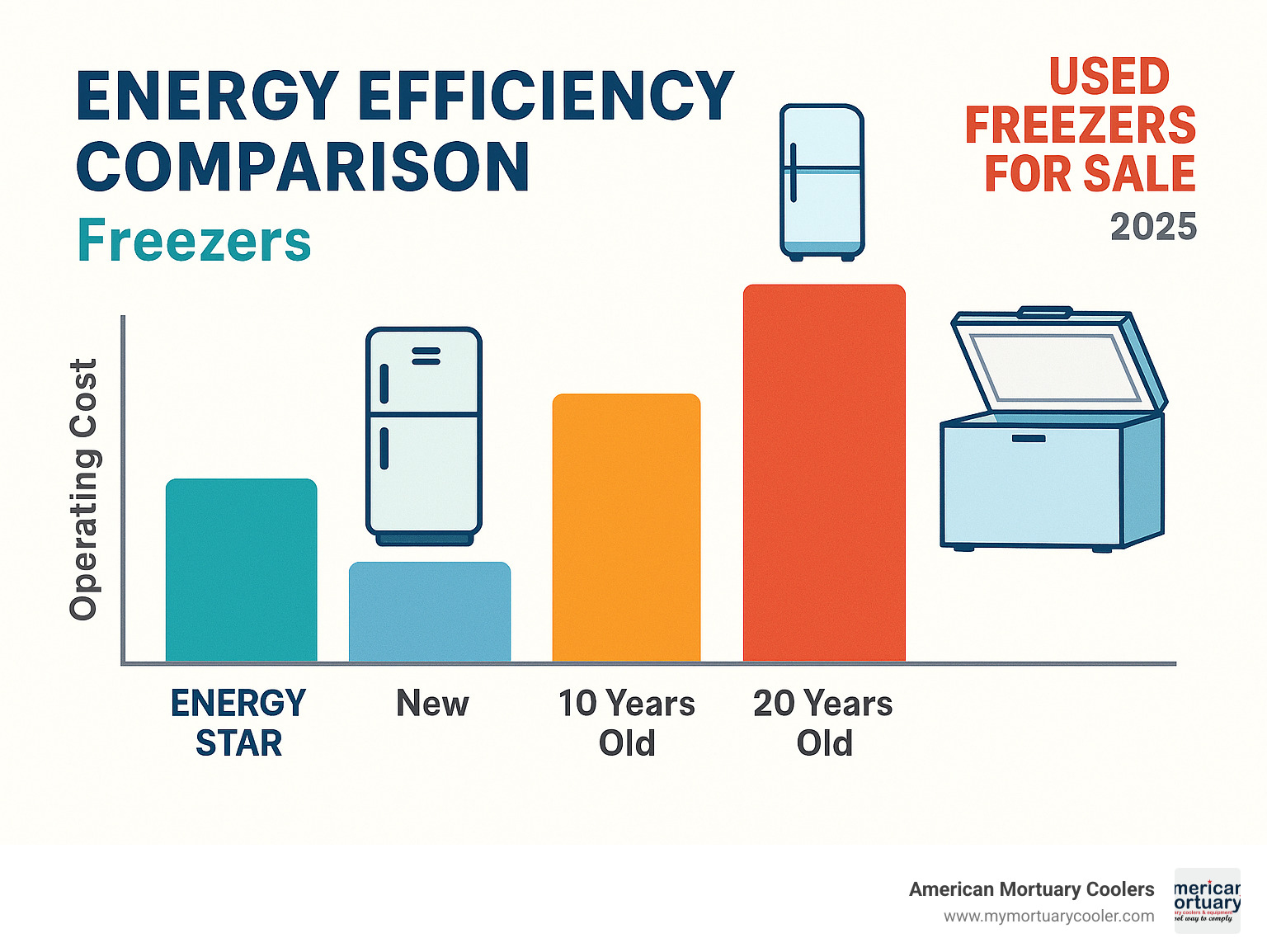
The purchase price of a new reach-in freezer? That's merely the down payment. The genuine, long-term expense shows up on your monthly energy bill and in its daily performance. Choosing a high-efficiency unit isn't just an environmental statement—it's a smart business move that shields your inventory and your bottom line.
A commercial freezer's sole mission is to maintain a brutally cold, stable temperature. For the majority of health departments, the gold standard is a consistent 0°F to -10°F (-18°C to -23°C). This isn't a mere suggestion—it's the range that arrests bacterial growth, locking in flavor, texture, and food quality.
The Make-or-Break Metric: Temperature Recovery
During a frantic dinner rush, your freezer door is constantly swinging. Each time it opens, cold air pours out and warm, humid kitchen air floods in. This is where the pivotal performance metric known as temperature recovery time becomes either your greatest asset or your biggest liability.
This metric gauges how rapidly the freezer can claw its way back to its target temperature once the door shuts. Imagine your home AC on a scorching day with an open window—it has to work overtime to compensate. A premium reach-in has a powerful compressor and intelligent air circulation engineered to crush those temperature spikes instantly, preventing your food from ever approaching the danger zone.
Swift recovery time isn't optional—it's non-negotiable in a commercial kitchen. It's the barrier between you and thousands of dollars in ruined inventory, and it keeps you compliant with food safety regulations even during your most chaotic shifts.
How to Read the Efficiency Labels
Beyond sheer cooling power, energy efficiency is where you'll find the biggest long-term savings. An energy-efficient model may carry a slightly higher upfront price, but it repays you month after month on your utility bill.
The most critical label to look for is the ENERGY STAR certification. On average, an ENERGY STAR-rated freezer is 20% more energy-efficient than a standard model, thanks to a trio of smarter components:
High-Efficiency Compressors: The next-generation engines of the freezer, generating equal cooling power with less electricity.
EC Fan Motors: Rather than running at full blast continuously, these intelligent motors modulate their speed based on real-time demand, sipping energy instead of guzzling it.
Superior Insulation: Denser, higher-quality insulation in the walls and doors means less cold air leaks out, so the compressor cycles less frequently.
Together, these components steadily reduce your operating costs, day after day.
Eco-Friendly Refrigerants and Smart Technology
The refrigerant a freezer uses significantly affects both its efficiency and its environmental footprint. Legacy refrigerants have been phased out, and the industry has pivoted to natural, eco-conscious alternatives.
The current leader is R290 (propane), a hydrocarbon refrigerant boasting an exceptionally low Global Warming Potential (GWP). It's not only gentler on the planet but also a more efficient coolant, which can trim your energy consumption even further.
Modern units also come loaded with other energy-saving smart features. For example, bright LED lighting is now standard in most quality freezers, consuming up to 90% less energy than traditional incandescent bulbs and emitting virtually no heat. Every component in a well-designed unit is engineered to work smarter, not harder.
Installation and Maintenance Best Practices
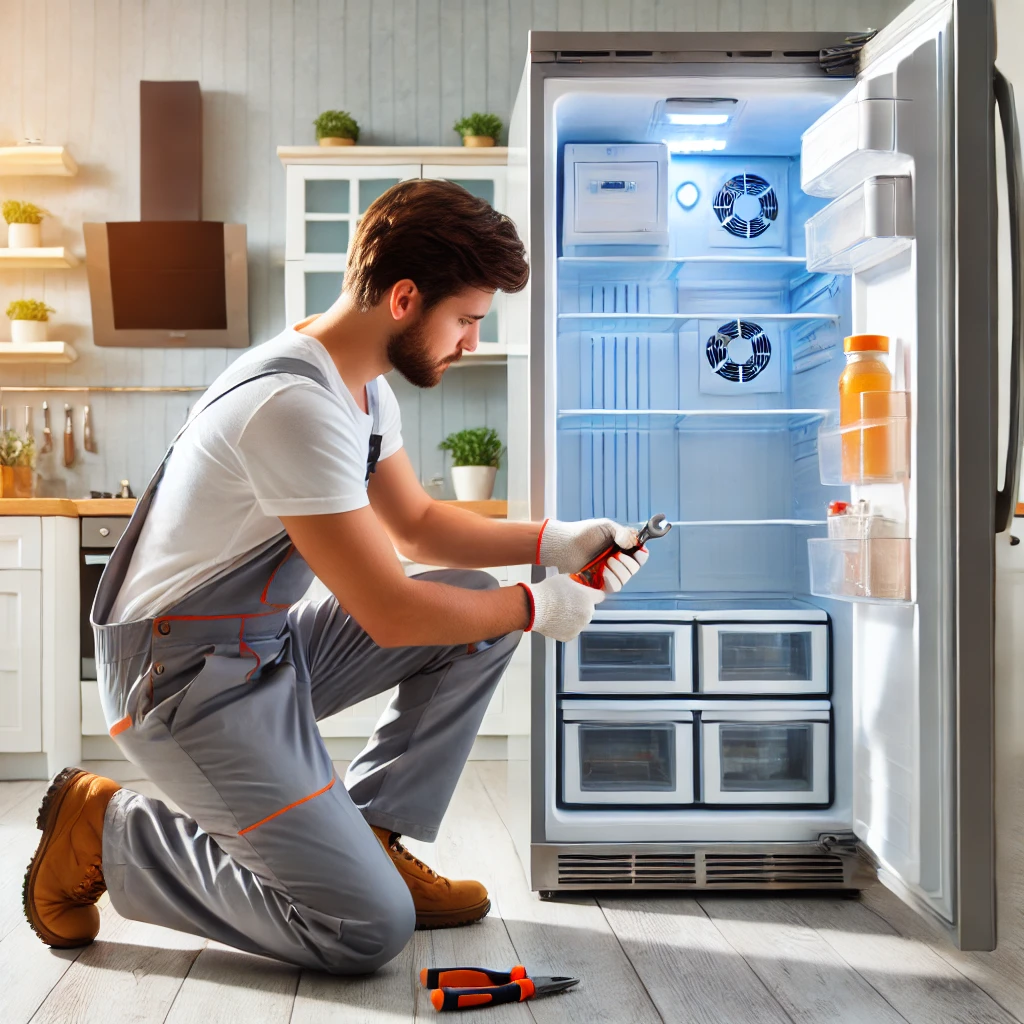
The longevity and performance of your reach-in freezer depend heavily on what happens after it arrives. Diligent setup and ongoing care aren't mere suggestions—they're your best defense against expensive emergency repairs, food safety violations, and spiraling energy bills. Think of it like owning a car: you can either keep up with regular oil changes, or you can ignore maintenance until the engine gives out. One path is obviously smarter.
Nailing the installation from the start sets the stage for years of dependable service. A surprising number of performance issues trace back to a careless initial setup, making this a foundational step you simply cannot afford to botch.
A Solid Foundation: The Keys to Proper Installation
Before you even plug in that new freezer, take time to plan its placement. A handful of simple checks now will prevent major headaches later. The objective is straightforward: create an environment where the unit can operate efficiently without unnecessary strain on its components. Always follow proper installation procedures and consult relevant electrical safety guidelines to ensure your setup meets professional standards from the outset.
1. Give It Room to Breathe: Your freezer's compressor is its engine, and it needs airflow. Without adequate ventilation, it overheats and works overtime. Always maintain at least 3–4 inches of clearance on all sides and on top.
2. Level the Unit: A wobbly freezer puts undue stress on the frame and prevents doors from sealing correctly. Use a level and adjust the feet as needed. A tight door seal is crucial for consistent temperatures and energy savings.
3. Use a Dedicated Circuit: A commercial reach-in is a heavy-duty appliance. It demands its own dedicated electrical circuit, no exceptions. Sharing an overloaded circuit isn't just a performance killer—it's a serious fire hazard.
Your Preventative Maintenance Checklist
Once your freezer is running, a simple, repeatable maintenance routine becomes your strongest defense against those dreaded after-hours breakdowns. These tasks are easy, extend the life of your equipment significantly, and being proactive is infinitely less stressful than scrambling to react.
Treat this checklist as a wellness plan for your freezer. A few minutes of care each month can save you from a catastrophic failure that costs thousands in spoiled inventory and emergency repair bills.
Monthly Tasks:
Inspect Door Gaskets: Examine the rubber seals around every door for rips, cracks, or brittleness. A compromised gasket lets cold air escape, forcing the compressor into overdrive.
Wipe Down the Interior: Clean up any spills or debris inside. This prevents odors, cross-contamination, and keeps things looking professional.
Check Temperature Accuracy: Use an independent thermometer to verify the freezer's digital display is reading correctly.
Quarterly Tasks:
Clean the Condenser Coils: This is the single most impactful maintenance task. Grimy coils choked with dust and grease will slowly strangle your cooling system. Carefully vacuum or brush them clean every 90 days to keep airflow unrestricted.
Clear the Drain Lines: Ensure the defrost drain lines are free of ice or buildup. A blockage can cause water to pool and freeze inside the unit, leading to bigger problems.
Adhering to these best practices will keep your reach-in freezer performing as a reliable kitchen workhorse for many years to come.
Got Questions About Reach-In Freezers? We've Got Answers.
Navigating the world of commercial refrigeration can feel overwhelming, whether you're a first-time buyer or a seasoned kitchen pro. Direct answers are the key to a smart investment, so here are the most common questions we hear about the modern reach-in freezer.
What Is the Difference Between a Reach-In Freezer and a Walk-In Freezer?
Once you picture your kitchen's daily flow, this distinction becomes clear. Think of it as the difference between a small pantry next to your stove and a massive storage closet down the hall.
A reach-in freezer is your everyday player—an upright, self-contained cabinet designed to sit near the prep line. It gives chefs instant access to ingredients mid-service and is built entirely around speed and convenience.
A walk-in freezer is all about bulk, long-term storage. It houses pallets of frozen goods and deep inventory you won't need for days or weeks. Due to its size, it's almost always positioned away from the main kitchen. Most kitchens need a reach-in for their active workflow, while high-volume businesses frequently require both.
How Often Should I Clean My Freezer's Condenser Coils?
If there's one piece of maintenance wisdom to hold onto, it's this: cleaning the condenser coils is the single most important thing you can do to keep your freezer running efficiently and extend its life. For a standard commercial kitchen, a cleaning every 90 days is the absolute minimum.
However, this isn't a rigid rule. In high-grease environments like kitchens with fryers or griddles, airborne grease can quickly coat the coils, requiring monthly attention. The same goes for bakeries and pizzerias, where flour and dust are just as problematic.
Dirty coils act like a thick blanket smothering your freezer's engine. They trap heat, forcing the compressor to work far harder, which spikes energy bills and dramatically shortens the unit's lifespan. A few minutes of cleaning can save you thousands in future repair costs.
Can I Use a Residential Freezer in a Commercial Kitchen?
It's tempting to look at the lower price tag and think you've scored a deal. But placing a residential freezer in a professional kitchen is a costly mistake waiting to happen, impacting everything from food quality to legal liability.
First, residential units simply aren't constructed for the demands of a commercial kitchen. Their compressors, hinges, and seals are engineered for a family opening the door a few times a day—not a kitchen crew swinging it open hundreds of times per shift. They will fail, and they will fail quickly.
Second, they lack the muscle. They don't possess the raw cooling power or the rapid temperature recovery needed to keep food safe in a high-traffic environment. Every door opening floods in warm air, and a residential unit simply can't cool down fast enough, putting your valuable stock at serious risk.
Finally, and perhaps most critically, operating a non-commercial freezer will almost certainly violate local health codes. If an electrical issue or fire occurs, it could also void your business insurance policy. It's a gamble that's simply never worth taking.
What Certifications Should I Look For on a Reach-In Freezer?
Certifications are your guarantee that a freezer meets rigorous national standards for safety and sanitation. When shopping, there are two essential seals of approval you should always verify. Spotting them ensures you'll pass health inspections and operate a safe, compliant kitchen. These marks are typically found on a sticker or metal plate inside the door jamb or on the unit's exterior.
NSF (National Sanitation Foundation): This certification is all about food safety. An NSF mark confirms the freezer is built with materials and a design that are easy to sanitize and resist bacterial growth, with smooth, non-porous surfaces that prevent contamination.
UL (Underwriters Laboratories) or ETL (Intertek): These marks focus on electrical safety. A UL or ETL listing certifies that the unit's wiring, components, and overall design have been rigorously tested to meet strict safety standards, protecting your business from fire and electrical hazards.
Seeing both of these certifications on a reach-in freezer provides the confidence that you're investing in equipment that is safe for your food and safe for your team.
Ready to Upgrade Your Kitchen?
Explore the Chef AAA 72" Commercial Reach-In Freezer — built with 6 solid half doors for maximum storage flexibility and uncompromising performance.