
Warehouse managers dealing with the storage of pipes, lumber, and other elongated materials know all too well that standard pallet racking rarely gets the job done. These oversized, awkwardly shaped items demand specialized handling and unique configurations that conventional shelving simply cannot deliver. That's exactly where cantilever racking steps in as a game-changing solution. A well-designed cantilever setup can completely reshape the way businesses manage bulky, irregularly shaped, and heavy long goods — boosting safety, streamlining productivity, and making far better use of every square foot in the facility.
Understanding Cantilever Racking Systems
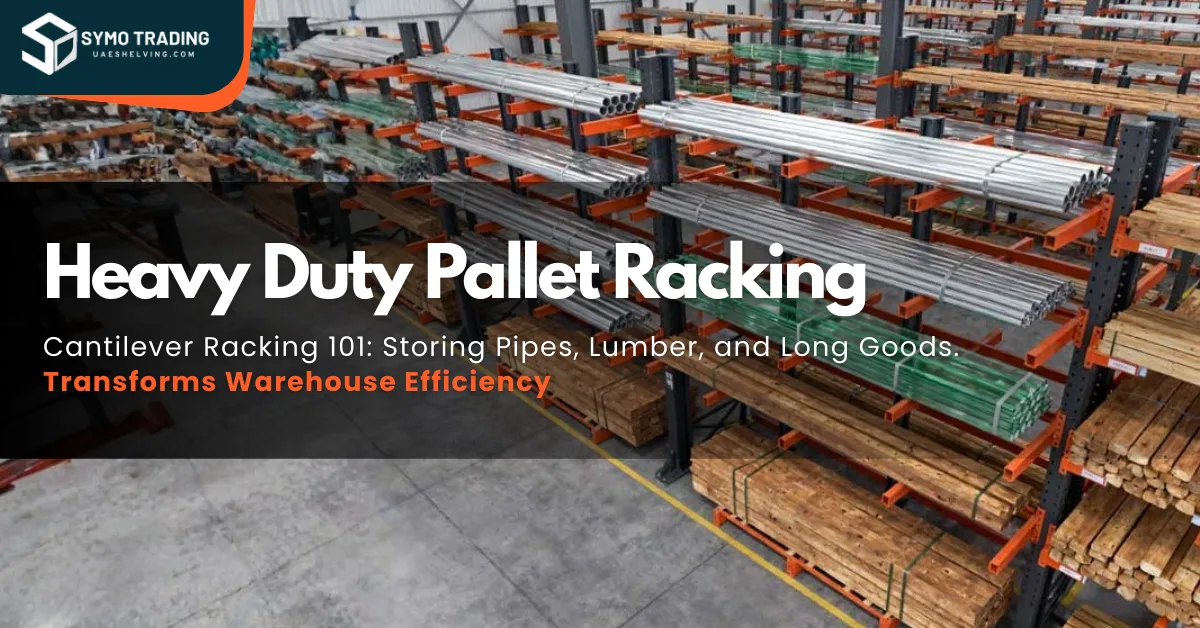
Cantilever racking takes a fundamentally different approach to warehouse storage when compared with traditional pallet racks. Instead of relying on vertical posts connected by horizontal beams to form boxed-in compartments, cantilever systems are built around robust vertical columns fitted with horizontal arms that project outward from one or both sides. Because there are no vertical barriers between the arms, you get a completely open-front design that sets cantilever racking apart from every other storage method available.
The term "cantilever" is borrowed from an engineering concept in which arms extend from vertical columns without any external bracing underneath. This structural approach enables the arms to cradle long materials horizontally, spreading weight effectively throughout the frame. While the core components may seem straightforward — columns, bases, adjustable arms, and bracing — the engineering precision required to safely support loads of several thousand pounds is anything but simple.
These systems are available in two main layouts: single-sided and double-sided. Single-sided units feature arms on only one face of the vertical column, making them perfect for placement along walls where floor space is at a premium. Double-sided models extend arms from both sides, creating accessible aisles on each face and dramatically increasing storage density in facilities that have room for freestanding rows.
Why Cantilever Racking Excels for Pipes and Long Materials
Pipes pose storage challenges that ordinary shelving and racking systems are not built to handle. Their cylindrical shape makes ground-level stacking unsafe, and their considerable length rules out most standard shelving options. Cantilever racking addresses these issues head-on with its thoughtfully engineered design.
Thanks to the open-front layout, pipes rest horizontally across the arms with nothing blocking access. When the arms are configured with a slight incline rather than sitting flat, the system naturally keeps pipes from rolling or sliding during loading and unloading. This anti-roll feature is crucial for keeping both stored materials and warehouse personnel safe at all times.
Heavy steel pipes, PVC conduit, aluminum tubing, and similar products can easily weigh hundreds of pounds per section. Cantilever systems constructed with structural-grade steel can handle anywhere from 2,000 pounds per arm in standard setups to upwards of 20,000 pounds per arm in heavy-duty configurations. That kind of load capacity dwarfs what conventional pallet racking could manage within the same footprint.
Accessibility is another significant benefit. Forklifts and material-handling equipment can approach from the open front without having to navigate around vertical obstructions. This makes loading and unloading operations faster, safer, and far less likely to result in damage to either the materials or the equipment. It's no surprise that many distribution centers and construction supply warehouses have come to rely exclusively on cantilever racking for their entire pipe inventory.
Lumber Storage: A Natural Application
Lumber storage is arguably the most widely recognized use case for cantilever racking. Walk into any major building supply store, and you will find extensive cantilever installations holding dimensional lumber, plywood sheets, moldings, and a wide range of wood products. These retailers adopted cantilever racking not because it was trendy — they did so because it genuinely solved the problems of storing and displaying wood materials both safely and attractively.
Wood has its own particular storage challenges that cantilever systems are uniquely equipped to handle. Lumber warps and bends when stored poorly, especially when heavy loads are stacked on top or when temperature and humidity go unchecked. Cantilever racking lays lumber flat across extended arms, minimizing the kind of stress that causes bowing and twisting. The open design also encourages air circulation around stored materials, supporting moisture control and overall material preservation.
Flexibility is another huge plus for lumber applications. Different lumber sizes call for different arm lengths and spacing, and a standard cantilever setup can be adjusted to hold anything from narrow specialty boards to full-length 2×12 beams. That kind of adaptability means a single cantilever installation can handle a diverse mix of wood products without the need for multiple specialized storage systems.
Damage-free storage directly affects profitability. Lumber that's been damaged through careless storage loses value and may end up unsellable. By preventing warping, crushing, and splitting through proper horizontal support, businesses protect their inventory investment. On top of that, fast and easy retrieval without the risk of collision damage translates to less time wasted on material handling and more time dedicated to filling orders and completing projects.
Long Goods and Industrial Materials
Pipes and lumber are only the beginning. Cantilever racking is equally capable of storing virtually any long, bulky, or oddly shaped material. Steel beams, angle iron, channels, sheet metal, pre-fabricated components, and even automotive parts all benefit from cantilever storage. This versatility comes from the system's modular construction and its ability to be tailored to very specific inventory needs.
A cantilever setup built for storing steel bars will look different from one designed to hold sheet materials — not because the fundamental design is different, but because arm spacing, angle, and bracing have been fine-tuned for the specific load. This adaptability is especially valuable for growing businesses that may need to reconfigure their cantilever racking as their product mix changes over time, rather than replacing the entire system.
Beyond physical storage, the organizational benefits are substantial. Warehouse managers can sort inventory by type, length, or intended use across different arms and levels, building an organized system that cuts search time and boosts picking accuracy. Visibility is outstanding with cantilever racks because materials are stored out in the open — there are no hidden compartments or deep shelves concealing inventory from view.
Maximizing Vertical Space
Today's warehouses are under constant pressure to maximize storage within fixed footprints, and cantilever racking meets that challenge by making excellent use of vertical space. Instead of spreading materials across the ground floor where they eat up valuable aisle room, cantilever systems stack long goods vertically across multiple tiers.
Consider this: a warehouse might store 50 linear feet of lumber on the ground floor, taking up precious aisle space. That same lumber, properly organized on several levels of cantilever racking, could occupy just a quarter of the floor area while actually increasing total storage capacity. This vertical orientation is especially valuable in facilities where ceiling height is abundant but horizontal square footage is tight.
The height advantage gets even better when paired with smart aisle management. Because of the open-front design, forklifts can navigate at higher speeds without collision risk. Some facilities run aisles as narrow as six feet with cantilever systems, pushing storage density even higher. Positioning high-demand items near shipping zones and reserving upper levels for slower-moving inventory further optimizes the entire operation.
💡 Pro Tip: Cantilever racking can reduce floor space usage by up to 75% compared to ground-level material storage — while simultaneously increasing total inventory capacity.
Load Capacity and Safety Considerations
Respecting load capacity is the single most important safety consideration in any cantilever racking operation. Every arm carries a specific weight rating determined by arm length, material thickness, column spacing, overall system height, and configuration. Going beyond these limits risks catastrophic failure — the kind that can injure workers and destroy valuable inventory.
While manufacturers provide load capacity specifications, real-world safe limits often require professional engineering evaluation. Variables like uneven load distribution, deflection thresholds, and structural stress tolerance all play a role. An arm rated for 2,000 pounds, for example, assumes that the weight is evenly spread across the full arm length. Concentrated point loads near the arm tip or unbalanced weight across paired arms can significantly reduce the actual safe capacity.
Correct installation and ongoing maintenance are essential for preserving safety margins. Cantilever racks must be firmly anchored to the concrete floor using appropriate fasteners rated for the slab's strength. The floor itself must have a PSI rating sufficient to support both the racking system and its loads without settling or cracking. Having trained specialists handle the installation ensures all of these requirements are met from day one.
Distributing weight evenly across arms is equally important for maintaining structural integrity over time. Operators need training on proper loading techniques that spread weight along the full arm length rather than concentrating it near the tips. Routine visual inspections for bent arms, loose hardware, or signs of corrosion catch problems early — before they escalate into safety hazards.

Installation, Maintenance, and Compliance
A solid installation sets the stage for long-term performance and safety. The installation surface must be completely level so that weight distributes evenly throughout the system. Any unevenness creates concentrated stress that can lead to premature failure. Professional installation typically covers floor preparation, proper anchor placement, full assembly, and verification that everything is plumb and square.
Maintenance is an investment that pays dividends by extending system life and preventing expensive downtime. Daily visual checks by warehouse staff should catch obvious issues like bent arms or loose bolts. Monthly inspections by trained facility personnel should examine alignment, wear at load-bearing points, and hardware condition. Annual professional audits by certified racking specialists provide thorough evaluations and confirm compliance with industry standards.
Typical maintenance concerns include corrosion in humid environments, structural misalignment from accidental impacts, and general wear on load-bearing components. Fixing minor issues promptly prevents them from growing into major failures. Corroded parts should be treated with rust-resistant coatings, while bent or damaged arms should always be replaced rather than repaired. Misaligned systems need professional realignment to restore full structural integrity.
Employee training on correct racking use goes a long way toward extending system life and improving workplace safety. When workers understand weight limits, proper loading procedures, and inspection requirements, they are far less likely to misuse the system, overload arms, or overlook early warning signs of damage.
Material Selection: Steel and Alternatives
Steel is the go-to material for cantilever racking, prized for its unmatched strength, durability, and long-term reliability. Galvanized steel, which features a protective zinc coating to resist corrosion, is particularly popular for both indoor and outdoor installations. That zinc layer guards against oxidation caused by environmental exposure, significantly extending the useful life of the system.
Structural steel delivers exceptional strength characteristics, making it the material of choice for heavy-duty applications where load capacity is non-negotiable. The manufacturing quality of structural steel is regulated through national and international standards, providing an assurance of reliability and safety when proper specifications are followed.
Aluminum presents an alternative in applications where reduced weight is beneficial, though it generally offers less strength than steel for the same volume. At roughly one-third the weight of steel, aluminum can simplify relocation and reconfiguration. That said, the vast majority of industrial and warehouse environments favor steel because its superior load-bearing capacity offers a wider margin of safety.
Choosing the Right Cantilever System for Your Facility
Picking the right cantilever racking system requires a thoughtful evaluation of multiple factors. Start by fully understanding your inventory requirements. What types of materials will you be storing? What are their dimensions, weights, and physical characteristics? How often do you need to access each item? And how much inventory volume do you need to manage now — and in the future?
Your facility layout plays a key role in deciding between single-sided and double-sided configurations. Buildings with generous horizontal space may benefit from double-sided systems positioned to create central aisles. Facilities where horizontal room is limited may be better served by single-sided units mounted against walls. Available ceiling height for vertical stacking is another critical factor in determining the ideal system setup.
Budget matters, but it should not be the deciding factor. Although traditional pallet racking tends to cost less up front, cantilever systems frequently prove more cost-effective over the long run for facilities handling long goods. The protection against material damage, the gains in space efficiency, the labor savings, and the operational improvements can all justify a higher initial investment when the numbers are properly analyzed.
Load requirements deserve an honest assessment. If your materials cannot be stored safely on standard pallet racks due to their size, weight, or shape, cantilever racking is almost certainly your best bet. Working with facility design experts who understand your specific needs ensures that you select a system that matches your actual requirements — avoiding both oversized systems that waste resources and undersized ones that cannot handle your inventory safely.
Getting Custom Solutions for Your Business
Every warehouse operation is unique, and generic off-the-shelf solutions may not cut it. Custom cantilever racking systems can be precision-engineered to match your facility's exact dimensions, load demands, and operational workflow.
Professional providers can evaluate your current storage obstacles, review your inventory handling processes, and design a cantilever solution tailored specifically to your applications. Whether you need a straightforward single-level system or a complex multi-level installation, whether your inventory is uniform or incredibly diverse, custom engineering ensures that your racking investment is working as hard as possible for your facility.
Ready to Upgrade Your Storage?
Explore our selection of heavy-duty racking and conduit storage solutions built for serious warehouse operations.
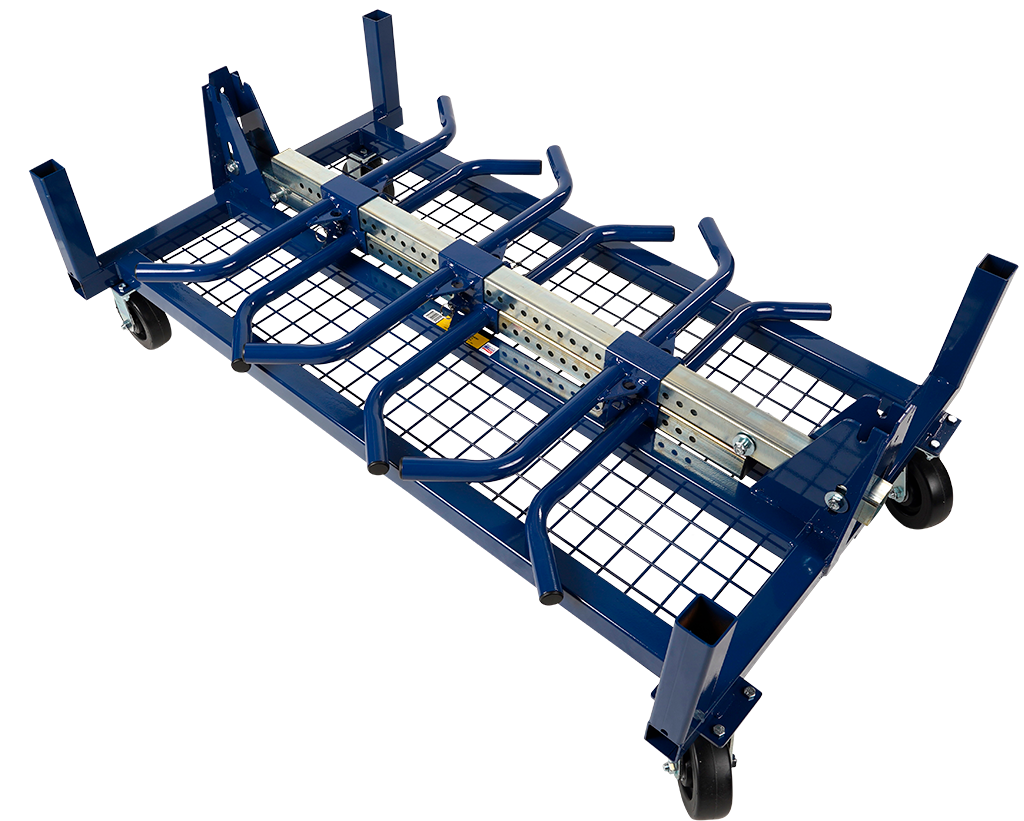
Current Tools 505 Conduit Rack