
In This Guide
What Exactly Are Warehouse Pipe Racks and Their Purpose?
Warehouse pipe racks are specialized storage structures designed to hold pipes, tubes, conduits, bars, and other elongated materials in an organized and accessible manner. These racks serve as an essential component of any well-run warehouse or industrial facility, providing a safe and systematic way to store materials that would otherwise take up valuable floor space or create hazardous conditions.
The primary purpose of a warehouse pipe rack is to keep long, cylindrical items neatly organized so workers can find and retrieve them quickly. Rather than stacking pipes on the ground or leaning them against walls — which invites damage and safety risks — pipe racks cradle materials securely at various heights, maximizing every square foot of your storage area.

In today's fast-paced industrial and commercial environments, proper pipe storage isn't a luxury — it's a necessity. Facilities that handle plumbing supplies, electrical conduit, metal fabrication stock, or construction materials rely on pipe racks to maintain order, reduce waste, and keep operations running smoothly.
Benefits of Using Warehouse Pipe Racks
When it comes to outfitting your warehouse with the right storage solutions, pipe racks deliver a range of practical advantages that directly impact your bottom line. Here are the key benefits worth considering:
1. Improved Safety and Accessibility
Pipe racks eliminate the dangers of loose materials rolling on floors or falling from makeshift storage. By keeping pipes elevated and secured, workers can access inventory without bending, climbing, or risking injury. This leads to fewer workplace accidents and a safer environment for your entire team.
2. Optimized Use of Vertical Space
Most warehouses have an abundance of unused vertical space. Pipe racks take advantage of this by stacking materials upward rather than outward, freeing up floor area for other operations such as staging, assembly, or foot traffic. It's one of the simplest ways to expand your effective storage capacity without expanding your footprint.
3. Enhanced Inventory Management
When every pipe, tube, or conduit has a designated place, tracking inventory becomes far simpler. Workers can see at a glance what's in stock, what's running low, and where specific materials are located. This visibility reduces search time, minimizes ordering errors, and keeps your supply chain running efficiently.
4. Increased Operational Efficiency
Organized storage translates directly into faster picking, packing, and shipping. When employees don't have to hunt through piles of disorganized materials, order fulfillment speeds up and labor costs come down. Pipe racks streamline the flow of goods through your facility from receiving to dispatch.

Types of Warehouse Pipe Racks
There is no one-size-fits-all solution when it comes to pipe storage. The ideal rack depends on the type of material you're storing, how often you need to access it, and how much space you have available. Below are the most common types found in warehouses and industrial facilities:
Cantilever Racks
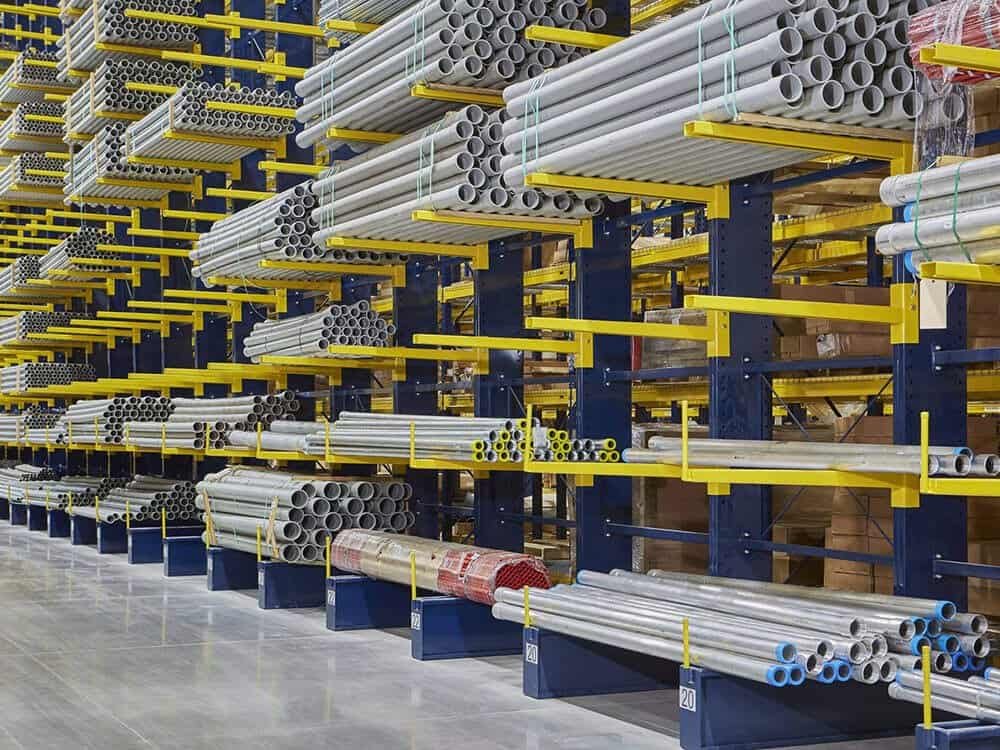
Cantilever racks feature arms that extend outward from a central column, creating open shelving with no front uprights to block access. This design is ideal for loading and unloading long pipes, lumber, and steel bars with a forklift. Their open-front construction makes it easy to store materials of varying lengths on the same rack.
Bar and Pipe Cradle Racks
These racks use U-shaped or V-shaped cradles to hold round and cylindrical materials securely. The cradle design prevents pipes from rolling or shifting, making them a top choice for facilities that handle a large volume of round stock. They're available in both single-sided and double-sided configurations.
Vertical Pipe Racks
Vertical pipe racks store materials upright rather than horizontally. They're especially useful for shorter lengths of pipe and conduit, and they take up very little floor space. If your warehouse is tight on room but you need to store a variety of small-diameter pipes, vertical racks are worth considering.
Mobile Pipe Racks
Built on casters or wheels, mobile pipe racks can be rolled from one area of your warehouse to another as needed. They're perfect for job shops, fabrication areas, or any environment where materials need to travel between workstations. Their portability adds a layer of flexibility that fixed racks simply can't match.
Stackable Pipe Racks
Stackable racks are modular units that can be placed on top of one another to build vertical storage as your inventory grows. When not in use, they can be nested or collapsed to save space. This makes them an excellent option for operations with fluctuating inventory levels or seasonal demand.
Customizable Pipe Racks
For facilities with unique requirements, customizable pipe racks can be built to exact specifications. Whether you need unusual dimensions, specialized weight ratings, or integration with existing shelving systems, a custom solution ensures your rack fits your operation — not the other way around.
Factors to Consider When Choosing Warehouse Pipe Racks
Selecting the right pipe rack isn't just about picking the first option that looks good. A well-informed decision takes into account several important factors that affect performance, longevity, and return on investment:
Weight Capacity
Every pipe rack is rated for a specific load. Before purchasing, calculate the total weight of the materials you plan to store and choose a rack with a capacity that exceeds your maximum requirement. Overloading racks is one of the fastest paths to structural failure and workplace injury.
Installation and Maintenance Requirements
Some racks bolt directly to the floor and require professional installation, while others are freestanding and can be assembled with basic tools. Consider the ongoing maintenance each type demands — regular inspections, hardware tightening, and cleaning schedules all play a role in the rack's useful life.
Durability and Material
Steel is the standard for industrial pipe racks, but not all steel is equal. Look for heavy-gauge construction with powder-coated or galvanized finishes to resist corrosion, especially in humid or outdoor environments. A quality rack should withstand years of heavy use without warping or weakening.
Adjustability and Flexibility
Your storage needs will change over time. Racks with adjustable arm heights, removable dividers, or modular components give you the freedom to reconfigure your setup as your inventory evolves. Flexibility today saves you from having to replace racks tomorrow.
Space Efficiency
Measure your available space carefully and choose racks that maximize storage density without restricting aisle widths or blocking emergency exits. The best pipe rack is one that fits seamlessly into your existing layout while adding the most storage capacity possible.
Safety Features
Look for racks equipped with end stops, safety pins, bolted connections, and anti-tip mechanisms. These features prevent pipes from sliding off the ends of arms and keep the rack itself stable under load. Never compromise on safety to save a few dollars.
Installation and Maintenance of Warehouse Pipe Racks
Proper installation sets the foundation for safe, long-lasting pipe storage. Cutting corners during setup leads to instability, damage, and potential accidents down the road. Here's how to get it right and keep it right:
Installation Process
Plan your layout. Map out the placement of each rack based on workflow patterns, forklift access routes, and proximity to receiving and shipping areas. A smart layout saves time and reduces congestion on the warehouse floor.
Prepare the floor. Ensure the concrete surface is level, clean, and capable of supporting the loaded weight of each rack. Uneven floors lead to rocking, misalignment, and premature wear on rack components.
Assemble according to manufacturer guidelines. Follow the provided instructions precisely. Use all recommended hardware and fasteners — skipping bolts or substituting components weakens the structure and voids most warranties.
Anchor the racks securely. Bolt floor-mounted racks into the concrete using the specified anchors. This step is critical for preventing tip-overs, especially with tall or heavily loaded racks.
Perform a load test. Before placing full inventory on a newly installed rack, test it with a controlled load to confirm stability and proper alignment. Address any issues before going into full service.

Maintenance Practices
Keep Your Racks in Top Condition
Inspect regularly: Schedule monthly visual inspections to check for bent arms, loose bolts, cracked welds, and signs of overloading. Catch small problems before they become dangerous failures.
Clean consistently: Remove dust, debris, and any spilled materials from rack surfaces. Buildup accelerates corrosion and can hide structural damage.
Replace damaged parts immediately: A bent arm or cracked upright is not something to monitor — it's something to replace. Keep spare hardware and components on hand so repairs happen fast.
Train your team: Make sure every warehouse employee understands load limits, proper stacking techniques, and how to report rack damage. Educated workers are your first line of defense against storage-related incidents.
Best Practices for Organizing Warehouse Pipe Racks
A well-organized pipe rack system doesn't just happen — it requires intentional planning and consistent execution. These best practices will help you get the most out of your storage investment:
Grouping Pipes
Sort materials by type, diameter, length, or project assignment. Grouping similar items together reduces picking time and makes it easy for workers to locate exactly what they need without searching through mixed inventory. Establish clear zones on your racks and stick to them.
Proper Placement and Stacking
Place heavier materials on lower tiers and lighter items higher up. This keeps the rack's center of gravity low, improving stability and making the heaviest items the easiest to reach by forklift. Never stack materials beyond the rack's rated capacity, and avoid mixing incompatible materials on the same level.
Labeling
Use clear, durable labels on every rack section and individual storage level. Include material type, size specifications, quantity, and any relevant part numbers. Color-coded labels speed up identification even further, especially in high-volume facilities where seconds count during order fulfillment.
Regular Inspections and Audits
Schedule periodic audits to compare physical inventory against records, verify proper rack loading, and identify materials that may need to be reordered or relocated. Consistent auditing catches errors early and keeps your storage system aligned with actual operational needs.

Common Challenges and Solutions for Warehouse Pipe Racks
Even the best pipe rack system can run into issues. Being aware of common problems — and knowing how to solve them — keeps your storage operation running at peak performance:
Conclusion
Warehouse pipe racks are far more than simple shelving — they're the backbone of efficient material storage in any facility that handles pipes, conduit, tubing, and other long goods. By choosing the right type of rack, installing it correctly, maintaining it consistently, and organizing your inventory with intention, you set your warehouse up for safer operations, faster workflows, and smarter use of every square foot of space.
Whether you're outfitting a new facility or upgrading an existing one, investing in quality pipe rack solutions pays dividends in productivity, safety, and long-term cost savings. Take the time to evaluate your needs, explore your options, and build a storage system that works as hard as your team does.
Stackable Conduit Rack – Current Tools 505