
What exactly is a conduit rack or pipe cart — and why has it become an indispensable tool for electricians working on construction sites? These specialized pieces of equipment are designed to organize, store, and transport conduit safely and efficiently, making them a cornerstone of any well-run jobsite.
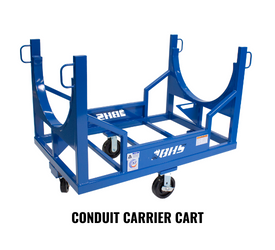
Pipe carts, sometimes called pipe wagons or conduit carrier carts, allow workers to move heavy loads through cramped aisles and confined areas without relying on a forklift. Many models also come equipped with fork pockets, letting crews use a lift truck for longer hauls before switching to manual navigation for the final stretch. Stackable conduit racks, on the other hand, provide an organized storage solution that keeps conduit off the ground, protected, and ready for use.
4 Essential Features to Look for in Construction Pipe Carts
Galvanized steel conduit is manageable for seasoned electricians, but it carries real weight. A hundred feet of 6-inch rigid steel conduit tips the scales at roughly 1,745 pounds with couplings included. The smart approach is to invest in equipment purpose-built for heavy loads — tools that encourage ergonomic movement and reduce strain across long shifts.
Here are the critical factors to weigh when selecting a pipe cart or conduit rack:
Ergonomics
A quality cart promotes ergonomic material handling through well-placed grip points and plenty of heavy-duty casters. You should be able to roll a fully loaded cart without excessive force — pushing or pulling should feel smooth, not strenuous.
Load Capacity
Smaller pipe carts may top out at 1,000 pounds, but certain jobsite conditions demand carts rated for up to 6,000 pounds. Always match the cart's capacity to the size and weight of the conduit runs you handle most frequently.
Build Quality
Prioritize all-steel construction with a powder-coat finish. This combination extends the cart's functional life significantly and shields the frame from rust and impacts, delivering a stronger return on your investment over time.
Physical Footprint
Space is always at a premium on a jobsite. Standard carts work well on open floors, but consider tilting models if you regularly move conduit between levels via elevator or need vertical positioning in tight corridors.
Pro Tip: Among all four factors, ergonomics stands out as the most important for both efficiency and injury prevention. Cart handles should sit at practical heights, the carrier design should prevent load slippage, and the overall form should encourage natural body movements rather than forcing workers to bend or twist awkwardly while in motion.
Stackable Conduit Racks & Heavy-Duty Pipe Carts for the Jobsite
For construction electricians who need reliable conduit management solutions, stackable racks and purpose-built carts make all the difference. Below is a standout product worth considering for your next project:
Stackable Conduit Rack — Reconditioned
Built for serious organization on the jobsite, this reconditioned stackable conduit rack from Current Tools keeps your conduit neatly stored, elevated off the ground, and ready for deployment. Its stackable design lets you make the most of limited floor space — simply layer multiple units vertically when storage area is at a premium.
The steel frame construction and welded joints provide lasting durability even under harsh site conditions. Integrated fork pockets allow for easy relocation with a lift truck, giving your crew flexibility as the project evolves and storage needs shift.
Current Tools 505 Conduit RackThe Case for Tilting Conduit Carts
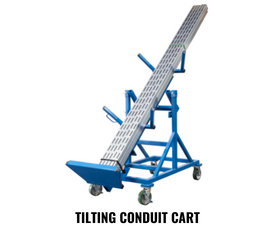
Traditional pipe dollies get the job done on flat surfaces, but tilting conduit carts take material handling to the next level. These units can position conduit vertically — typically in 10-foot lengths — making it far easier to navigate through 36-inch doorways, fit into elevators, and weave through confined corridors.
The bed on a tilting cart adjusts to both raised and lowered positions, which means workers can load and unload at comfortable heights instead of bending down repeatedly. This alone can reduce fatigue and the risk of back injuries during a long day on site.
Look for models built from heavy-duty powder-coated steel with a combination of rigid and swivel casters — typically four total, two of each — for a balance between straight-line stability and tight-turn maneuverability. A tilt-assisted handle is another feature that dramatically improves daily usability.
Upgrade Your Jobsite Material Handling
Whether you're outfitting a new crew or replacing aging equipment, investing in the right conduit racks and pipe carts pays dividends in safety, speed, and overall project efficiency. Browse our catalog for heavy-duty solutions built for real-world construction demands.