

Selecting the ideal chainsaw can make all the difference between a frustrating experience and a job done right. Here is what you should consider before making your purchase.
Chainsaws were once reserved almost exclusively for professional loggers and farmers. Today, however, homeowners rely on them for a wide variety of jobs — from splitting firewood and trimming overgrown branches to felling trees and constructing fences. With the growing popularity of these powerful tools, the sheer number of available models has expanded significantly, making the decision of which chainsaw to buy a genuinely difficult one.
To help cut through the confusion, we have assembled a practical guide covering the most important considerations. Before heading to the store or placing an order online, take a moment to reflect on these key questions:
Deciding on the Right Size
One of the most critical decisions involves the physical size and power output of the chainsaw. Size is generally measured through piston displacement (in cc) and engine power (in horsepower or kilowatts). The following factors should guide your choice:
Skill Level and Experience
If you are relatively new to using a chainsaw, start with a smaller, lighter model. A saw that is too heavy will quickly fatigue your arms and hands, which becomes a serious safety hazard over time.
Wood Type and Tree Size
Larger trees and denser hardwoods demand a more powerful chainsaw. Using a model that is too small for the job places unnecessary strain on the machine and causes premature wear on the chain and engine.
Understanding Guide Bar Length
The proper guide bar length depends largely on the size of the trees you will be working with and partly on your own level of experience. If you are comfortable operating a chainsaw, it is wise to keep at least two different guide bar lengths available. This allows you to swap bars depending on the task at hand.
A shorter guide bar is lighter and significantly easier to control, making it the better choice for limbing and detailed trimming work. Conversely, a longer guide bar provides the reach and capacity needed for felling larger trees and making bigger cuts. Choosing the right length — or having both on hand — can dramatically improve both your efficiency and safety.
Four Main Categories of Chainsaws
Modern chainsaws are engineered to suit different users and working conditions. Understanding the four primary categories will help you narrow down the right tool for your situation:
Gas-Powered vs. Battery-Powered
Another fundamental choice is your power source. Gas-powered chainsaws typically deliver the highest levels of raw cutting force and are the go-to option for heavy-duty tasks. They benefit from decades of technological refinement, including features like anti-vibration dampeners, centrifugal air-cleaning systems, and automatic carburetor tuning.
Battery-powered chainsaws, on the other hand, offer push-button starts, minimal maintenance, quieter operation, and zero direct emissions. Modern lithium-ion batteries now deliver impressive runtimes that make them viable for many homeowner and even some professional applications. The best choice depends on how you plan to use the saw and how much cutting power you truly need.
Ergonomics, Safety, and Maintenance
Comfort and safety are not afterthoughts — they are essential factors in your decision. A chainsaw with low vibration and well-balanced weight distribution will allow you to work longer with less fatigue and reduced strain on your joints. Features like a triple-activation chain brake add an extra layer of protection during operation.
Do not overlook maintenance accessibility either. A chainsaw with an easy-to-reach air filter and spark plug will save you significant time and hassle in the long run. Similarly, models that make it simple to tension and replace the chain will keep you working efficiently and safely throughout the life of the tool.
Featured Product
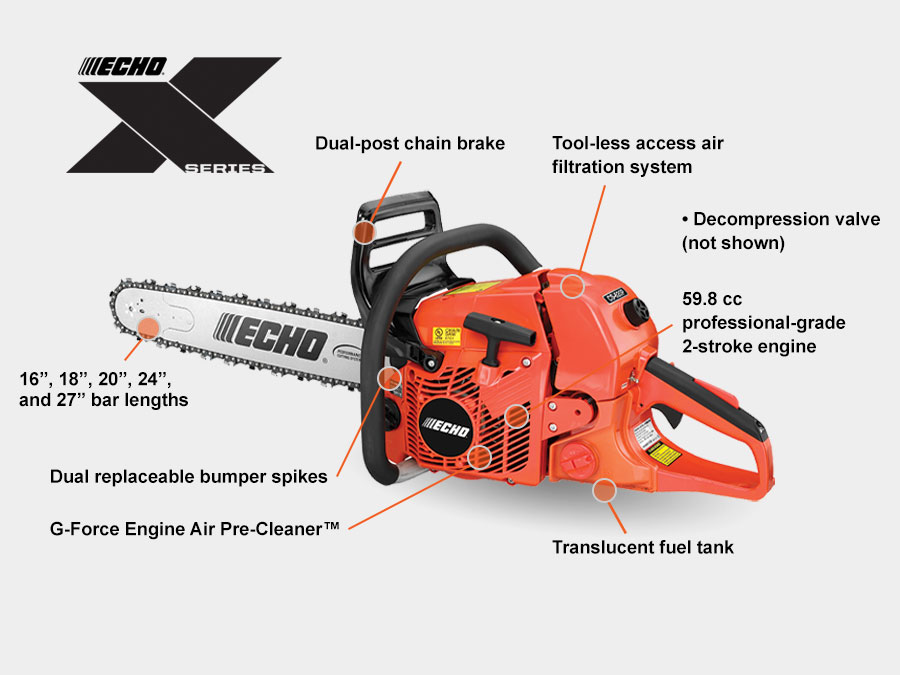
Echo CS-620P Professional Chain Saw
59.0 CC · 4.43 HP · Powerhead Only
Echo CS-620P Chain SawChoosing the right chainsaw comes down to understanding your own needs and matching them with the right combination of power, size, and features. Whether you are a weekend warrior maintaining a residential property or a professional managing acres of timber, investing the time to select the correct tool will pay dividends in performance, safety, and longevity.
Take your time, consider the questions outlined above, and make a choice that fits both your current tasks and your future ambitions. The right chainsaw is out there — you just need to know what to look for.