
What Exactly Are Rooftop Solar Panels?
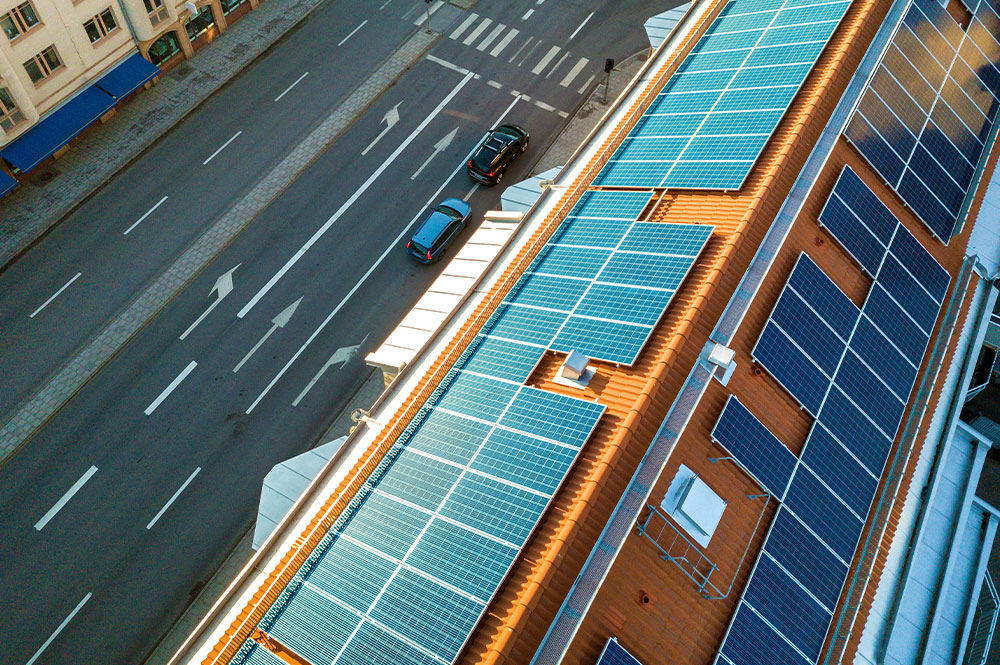
A rooftop solar panel is essentially a collection grid designed to capture the sun’s radiant energy and transform it into usable electricity. This harvested energy is then stored in batteries and drawn upon to power your entire home. The individual solar cells inside each panel are known as photovoltaic (PV) cells, and their primary function is to absorb sunlight. These panels, or modules, are arranged in groups called arrays and mounted on rooftops or large outdoor surfaces. The quantity of PV cells in each array varies by module size—for instance, a 12V module typically contains 36 PV cells, whereas a 24V module houses 72.
The foundation of solar technology is crystalline silicon, a semiconducting material. Residential panels commonly use either monocrystalline or polycrystalline silicon. The purity of the silicon directly impacts panel efficiency—monocrystalline silicon offers greater purity, delivering more power from a smaller footprint. While other module types exist on the market, the vast majority are unsuitable for home installations.
How Do Rooftop Solar Panels Work?
Think of the sun as a colossal natural reactor. It continuously emits minuscule packets of electromagnetic radiation (EMR) energy called photons. Rooftop solar panels capture these photons through their PV cells, transforming the electromagnetic radiation into functional electricity. The solar energy is first converted into direct current (DC), which is then changed into alternating current (AC)—the type of power your home actually uses.
In this guide, we break down the accessible side of solar science—exploring how rooftop solar panels convert sunlight into the electricity that powers your daily life.
PV Cells — Turning Photons Into Electrons
As we touched on, PV cells are responsible for converting solar energy into electrical energy. These cells are built from semiconductor materials, most commonly silicon (Si)—one of the most abundant elements on Earth. Through the photovoltaic process, incoming photons are converted into free-flowing electrons.
A major advantage of this conversion is that it produces zero harmful emissions or waste, keeping the environment clean while generating power efficiently. Photovoltaic cells are semiconductor devices that produce DC electricity the moment light strikes their surface.
Rooftop Solar Panels — Generating Current
We’ve established that PV cells turn photons into direct current. Each individual cell is constructed from crystalline silicon layered between a negative conductive side and a positive conductive side. The positive layer carries available space for electrons, while the negative layer holds an excess supply. Electrons naturally migrate from the negative layer to the positive one, traveling across the junction between both layers—creating a negative charge on one side and a positive charge on the other.
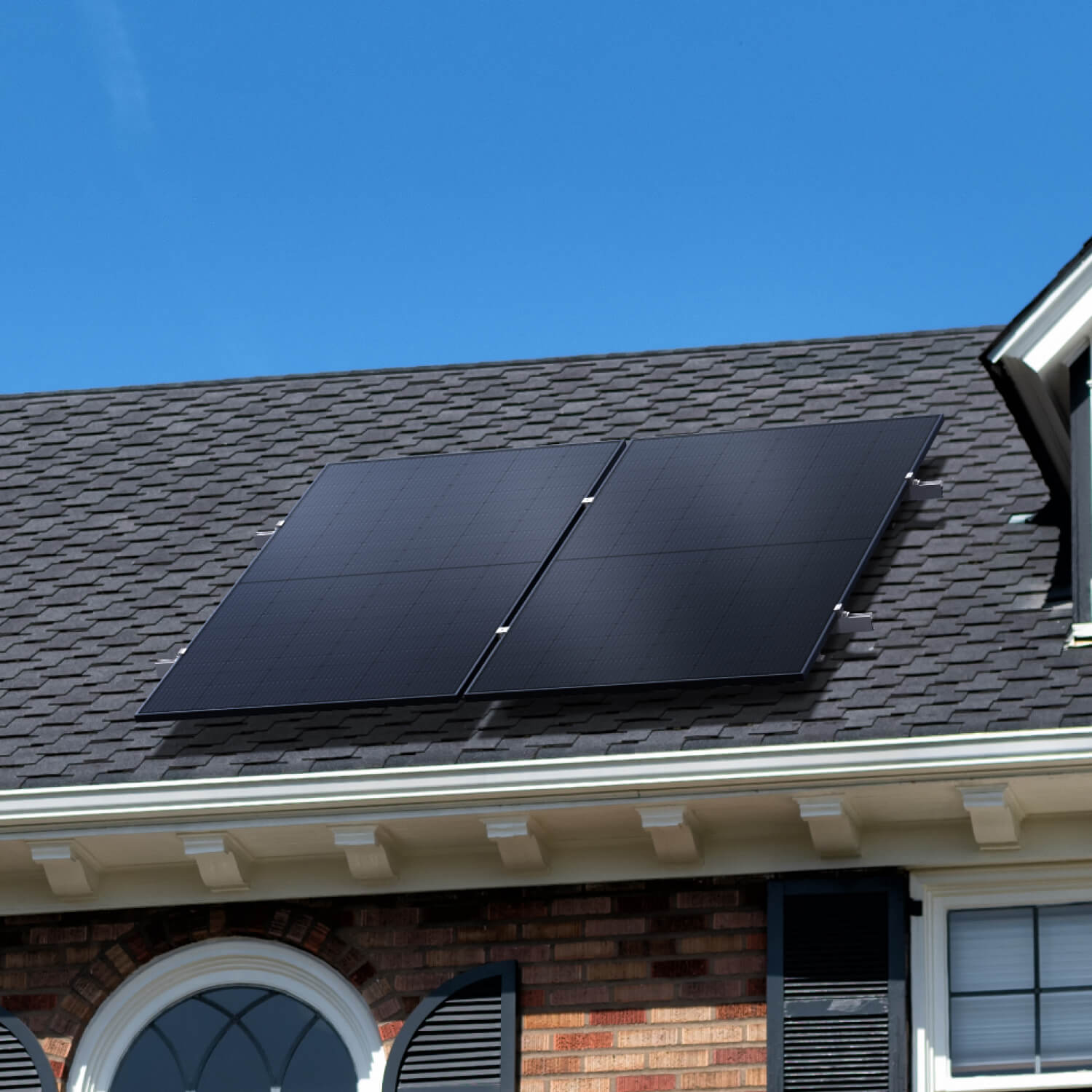
Since each cell only generates approximately 0.5V, multiple PV cells are combined into modules to produce sufficient electricity for residential use. Charging a smartphone requires around 12 PV cells—powering an entire house demands multiple modules working in concert.
If solar panels could harness a wider spectrum of convertible wavelengths, they would generate even more energy. Silicon excels at converting certain light wavelengths into electricity, but the range it can process depends entirely on its electrical properties. When the material absorbs wavelengths carrying energy beyond its convertible range, that extra energy dissipates as heat. Ongoing advancements in solar technology focus on engineering materials capable of capturing a broader wavelength spectrum to boost silicon cell efficiency.
Inverters — Converting DC to AC
On their own, rooftop solar panels cannot directly power your household appliances. They require an inverter to convert their output into usable electricity. The panels produce direct current (DC), but the vast majority of homes in the United States are wired for alternating current (AC). An inverter bridges this gap by transforming the DC output into AC. A negligible amount of energy is lost during this conversion process.

Most residential solar setups use a single central inverter for the whole house. An alternative approach involves connecting microinverters to each individual panel. Regardless of which configuration you choose, the end result is the same—clean, usable AC power flowing through your home.
Electricity Is Now Available
Once converted, AC electricity travels from the inverter into an external circuit and throughout your home. The solar-generated power flows to your appliances, computers, TVs, and lights exactly as it would if supplied by the local utility company. If your rooftop panels produce more energy than your household consumes, the surplus can be stored in dedicated batteries or fed back to the power grid. Depending on your arrangement with the local utility, you may even be able to tap back into grid power temporarily if your batteries run low—though this may result in a standard utility bill. Each power company offers different programs for excess power buy-back and grid return requirements.
Excess Energy — Should You Sell It or Store It?
When your rooftop solar panels generate more energy than your household requires, you face two appealing options: store the surplus in solar batteries for later use, or sell it back to your local utility company through a net metering program. Storing the excess in batteries keeps your system entirely off-grid and guarantees round-the-clock access to power—even on overcast days when your panels produce less efficiently.
If you opt for net metering, the utility company compensates you for the power you contribute. Depending on the local program’s structure, this compensation may come as bill credits, which can offset any electricity you draw from the grid and help reduce your overall costs. Keep in mind that utility companies generally do not pay cash for surplus power fed into the grid—credits are the standard form of compensation.
What Is the Lifespan of Rooftop Solar Panels?
Rooftop solar panels are remarkably durable, with lifespans reaching 25 years or more. They demand virtually zero maintenance since they contain no mechanical or electronic moving parts—meaning nothing wears down over time.
Manufacturers estimate a degradation rate of roughly 0.8% annually. Even after two decades of service, solar energy output should still hover around 84% of the original efficiency benchmark.
Most residential panels ship with performance warranties spanning 10 to 25 years, though your system may well outlast its warranty depending on your location. Some rooftop panels continue delivering strong performance for up to 40 years. These panels are engineered to endure wind speeds of up to 140 miles per hour, and most homeowners’ insurance policies provide coverage against solar panel damage.
What Is the Lifespan of Solar Batteries?
Solar batteries and PV inverters do not last as long as the panels themselves. Solar PV inverters typically have a lifespan of 10 to 15 years, which means you will likely need to replace them at least once during your system’s overall lifetime. A high-quality solar battery generally lasts between 8 and 15 years.
Both inverter and battery performance will gradually decline over time. When comparing different rooftop solar energy systems, be sure to carefully review the warranty terms and performance guarantees associated with each component.
Will Solar Power Save Me Money?
Absolutely. The majority of American homeowners who install solar panels see a noticeable reduction in their electricity bills. To determine whether solar is a smart financial move for you, calculate your breakeven period once you have a system quote in hand:
Step 1: Determine your total annual electricity expenditure.
Step 2: Get the total cost of the solar system.
Step 3: Divide the total system cost by your annual electricity spend.
The resulting figure represents the number of years it will take for the system to pay for itself. After that point, the energy savings are effectively pure profit.
Do Rooftop Solar Panels Work at Night?
Solar cells depend on sunlight to generate electricity, so they do not actively produce power after dark. However, any surplus energy accumulated during the day can be stored in battery systems, ensuring your home stays powered through the night. You can also draw electricity from the grid if your panels and batteries aren’t meeting your nighttime energy demands.
What Kind of Current Do Rooftop Solar Panels Produce?
Rooftop solar panels generate direct current (DC) electricity as photons from sunlight dislodge electrons within the silicon PV cells. Each cell features a positive and a negative layer, which together create a DC electrical field. Because most residential wiring operates on alternating current (AC), an inverter is essential to convert the DC output into AC power your home can use.
Can You Build Your Own Rooftop Solar Panels?
In short, no. The technology and manufacturing processes involved in producing solar panels are far too complex for a DIY project. Building your own rooftop solar panels is simply not feasible for the average homeowner. The best approach is to invest in professionally manufactured panels from a trusted provider.
The Bottom Line
The solar energy industry is advancing rapidly, continuously evolving to meet the surging demand for renewable power. Installing a rooftop solar energy system is a sustainable, forward-thinking way to lower your energy costs while reducing your household’s carbon footprint.
That said, solar energy is not the ideal fit for every home. It’s important to research panel costs thoroughly, weigh the advantages against the drawbacks, and evaluate your specific situation before making a decision.