
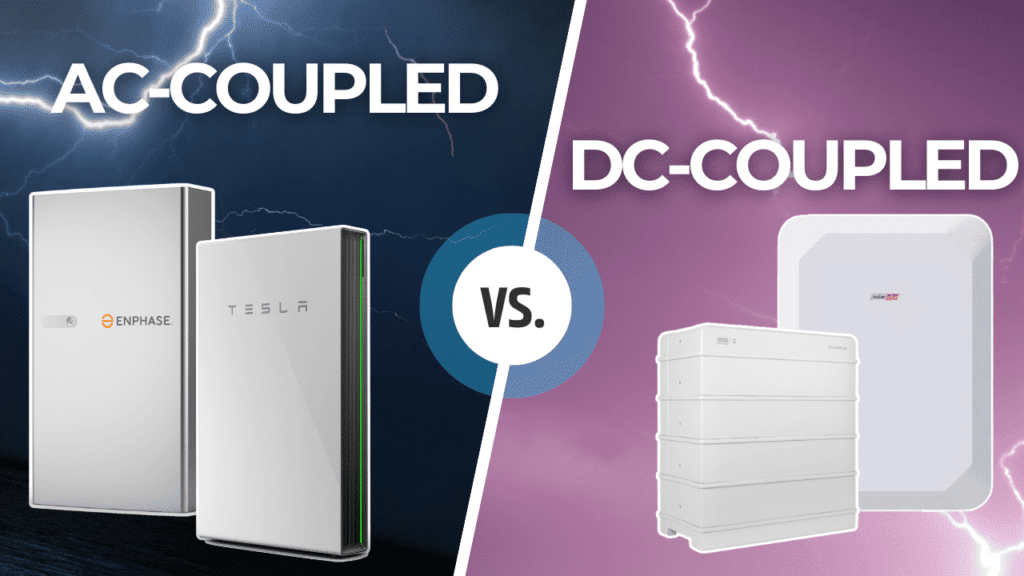
When investing in a solar battery system, one of the most important decisions you'll face is whether to go with an AC-coupled or DC-coupled configuration. Both options have their own set of advantages and limitations, and the right choice depends on your specific energy needs, existing equipment, and long-term goals.
This comprehensive guide breaks down everything you need to know about these two battery coupling methods, helping you make an informed decision for your energy independence journey.
What is an AC-Coupled Solar Battery?
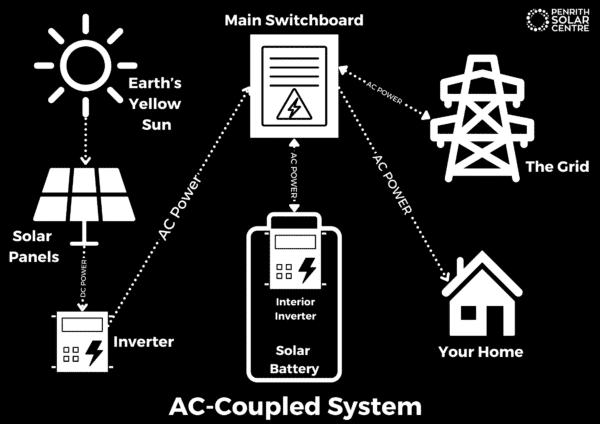
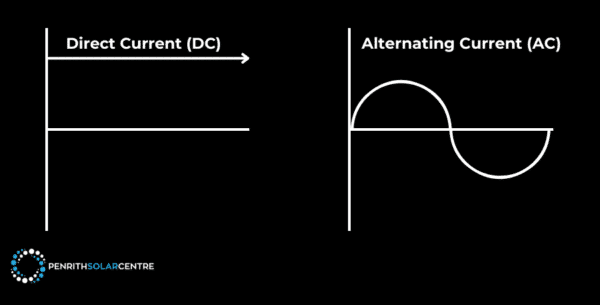
An AC-coupled battery system connects to your home's electrical panel on the alternating current (AC) side. In this setup, the solar panels generate DC electricity, which is converted to AC power by a solar inverter. This AC power then flows to your home, with any excess being converted back to DC for battery storage through a separate battery inverter.
When you need to use stored energy, the battery inverter converts the DC power back to AC for your household appliances. This double conversion process is the defining characteristic of AC-coupled systems.
What is a DC-Coupled Solar Battery?
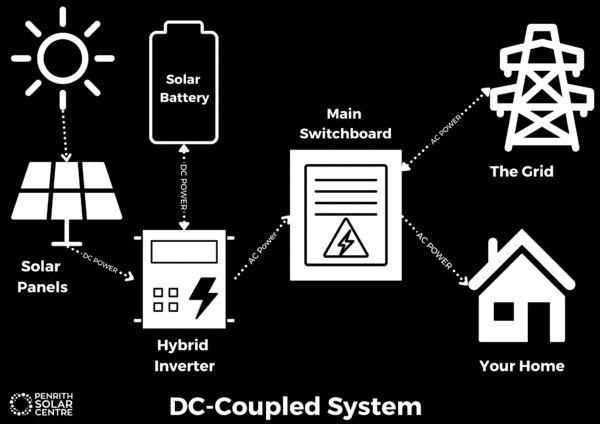
A DC-coupled battery system keeps everything on the direct current (DC) side before conversion. Solar panels produce DC electricity, which travels directly to a charge controller and then to the battery for storage—all without being converted to AC first.
Only when you need to power your home does a hybrid inverter convert the stored DC energy into AC electricity. This streamlined approach means fewer conversion steps and typically higher overall efficiency.
Pros and Cons at a Glance
A side-by-side comparison to help you weigh your options.
Which System is More Efficient?
When it comes to pure efficiency, DC-coupled systems generally come out ahead. Since DC-coupled setups require fewer energy conversions, less electricity is lost as heat during the storage and retrieval process. Typical DC-coupled systems achieve round-trip efficiencies of 90-95%, while AC-coupled systems usually fall in the 85-90% range.
However, efficiency isn't everything. The real-world difference in energy savings may be relatively small depending on your usage patterns, and AC-coupled systems offer advantages in flexibility that can outweigh the efficiency gap for certain homeowners.
Key Takeaway: For maximum energy harvest, especially in new installations, DC-coupled systems are the efficiency champion. For retrofits or systems requiring flexibility, AC-coupled may be the smarter choice despite slightly lower efficiency.
Safety Considerations
Both AC-coupled and DC-coupled systems are safe when properly installed by qualified professionals. Modern battery systems include multiple layers of protection including battery management systems (BMS), thermal monitoring, and automatic shutoffs.
DC-coupled systems operate at higher DC voltages, which requires careful handling during installation. AC-coupled systems, working primarily with standard household AC voltages, may be considered slightly more familiar territory for electricians. Regardless of the system you choose, always work with certified installers and ensure your system meets all local electrical codes.
Making the Right Choice
The decision between AC-coupled and DC-coupled ultimately comes down to your specific situation. If you already have a solar system and want to add battery storage, AC-coupling is often the most practical and cost-effective route. It allows you to keep your existing equipment while gaining the benefits of energy storage.
If you're starting fresh with a new solar-plus-storage installation, DC-coupling typically offers better efficiency and potentially lower total system costs. The streamlined design means less equipment and fewer points of potential failure.
Whatever path you choose, adding battery storage to your energy setup is a significant step toward energy independence and resilience. Both coupling methods have proven track records and can deliver reliable performance for years to come.
Ready to Power Your Independence?
Whether you're building a new solar setup or enhancing your existing system, the right battery solution can transform how you use and store energy.
EcoFlow STREAM UltraHave questions about solar battery systems? Our team is here to help you find the perfect solution for your outdoor energy needs.