
Wondering how much solar capacity you need to power your RV adventures? At minimum, 200 watts of solar will keep your battery bank topped off when your rig isn't in active use. However, if you're actually living in or frequently using your RV, you'll want considerably more power at your disposal.
For toy hauler owners and those who tow recreational equipment, a 700-watt solar package tends to hit the sweet spot. This setup works exceptionally well for RVers who rely on smaller inverters and want reliable power without overdoing it.
Understanding Solar Irradiance: Location Matters
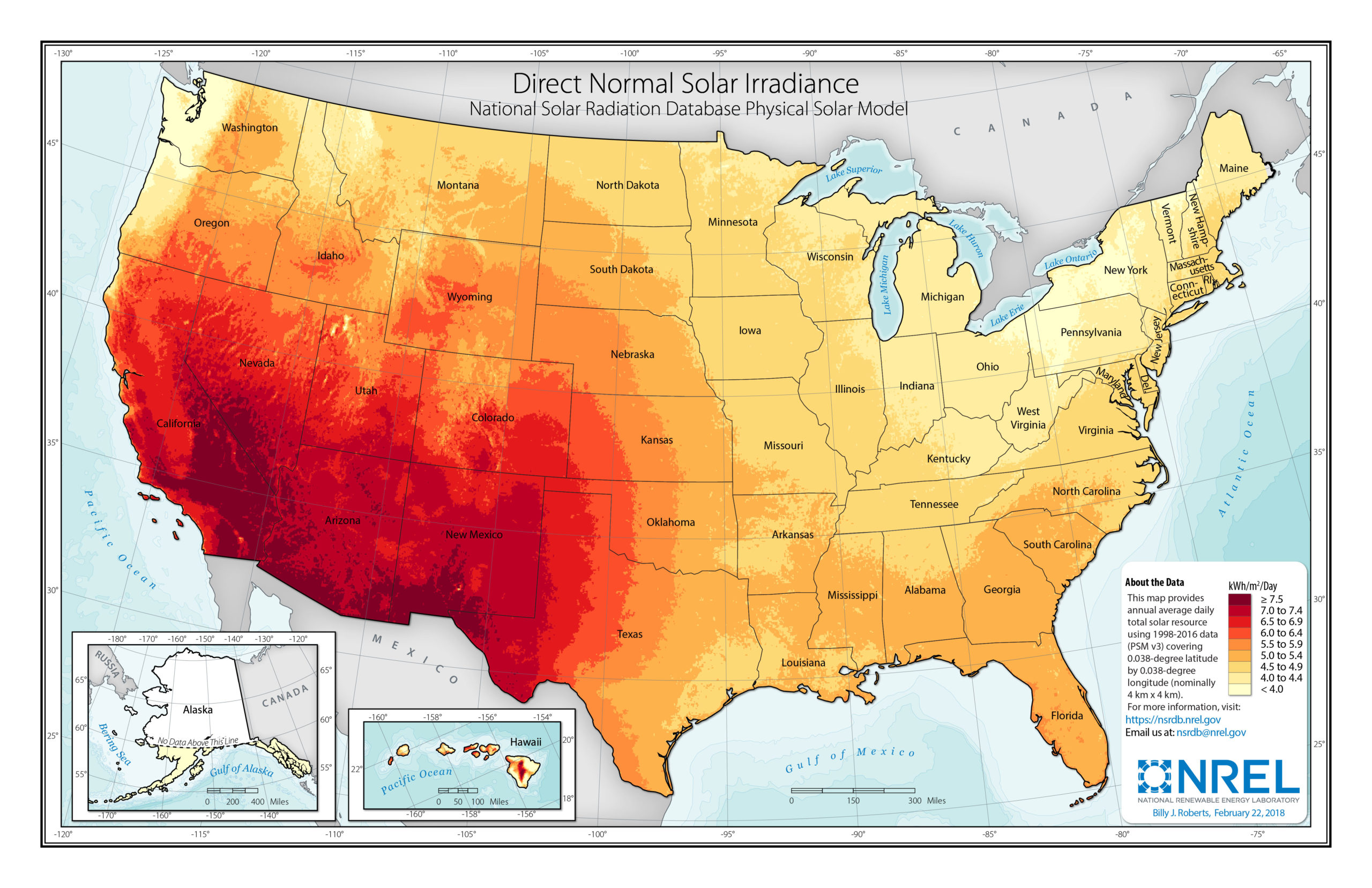
Solar irradiance—the amount of solar energy hitting your panels—varies dramatically across different regions. Higher irradiance means better energy production from the same panel setup.
The Math Behind Solar Yield
A 100-watt solar panel lying flat on your roof will generate roughly 30 amp-hours of 12-volt battery charge under optimal conditions—translating to approximately 360 watt-hours daily. To put this in perspective: your TV drawing 36 watts can run for about 10 hours on that power. A standard residential refrigerator pulling 6 amps at 120 volts consumes around 720 watts when running. If it cycles for a quarter of the day, you're looking at 4,320 watt-hours needed—requiring nearly 1,000 watts of solar capacity.
Important Disclaimer: These calculations represent simplified math without accounting for system inefficiencies and energy losses. Real-world solar days range from 5 to 9+ hours depending on your location and time of year. Plugging in appliances requires an inverter (typically 80-90% efficient), and idle inverters still draw roughly 25 watts hourly—that's 600 watt-hours daily just sitting there. Modern RV light switches with LED indicators consume 48-57 amp-hours daily just to keep those tiny lights glowing!
Roof-Mounted Solar Panels
Roof panels offer the ultimate convenience—they're constantly working to charge your batteries whenever sunlight hits them, whether you're driving, parked, or miles away from your rig. Installation can be as simple as using high-quality VHB tape (no drilling required, though some installers prefer mechanical fasteners for absolute security).
Once mounted, roof panels essentially maintain themselves—just give them an occasional inspection and wash. Tiltable mounting systems are available if you want to optimize sun angles. The amount of solar real estate on your roof determines your maximum capacity. As a bonus, those panels actually help shade your roof, potentially keeping your interior cooler than an unshaded rig.
Tilt vs. Flat Mounting
Tilting your panels toward the sun can dramatically improve output, especially during shorter winter days when the sun sits lower in the sky.
Roof vs. Portable
Permanent roof installations offer convenience, while portable panels provide flexibility to chase the sun and park your RV in the shade.
Real-World Testing Results
Extensive field testing comparing different solar mounting methods yielded fascinating results. The tests ran for three consecutive days in mid-January, approximately 60 miles east of Yuma, Arizona—conducted around the winter solstice (the shortest daylight period of the year). Weather varied from overcast on days one and two to brilliant sunshine on day three.
The setup included two identical 360-watt panel systems connected to Victron charge controllers feeding the same lithium battery bank. Manual tracking was performed 3-4 times daily on the tilted array.
Key Findings:
On the 1.38-kilowatt test day with afternoon output adjustments, the tilted panel consistently retained significantly more battery charge by nightfall. The tilted/tracked configuration nearly doubled the flat panel's output during short winter days with limited direct sunlight. This data strongly supports the investment in tilt-capable mounting systems and potentially eliminates the need for backup generators.
Generator Charging: A Smart Backup Strategy
Generators excel at bulk charging batteries—most converter-chargers can push 1,000 watts for the initial 1-3 hour charging phase. However, during the absorption phase (roughly 4.4 hours), a 220-amp-hour battery only accepts around 150 watts, making the generator increasingly inefficient.
Savvy boondockers run their generator for morning bulk charging, then let solar panels handle the absorption stage. Meanwhile, they can run water heaters or other high-draw appliances during generator operation. A 5,500-watt generator typically delivers half a gallon per hour under moderate load. Planning to start the Onan for breakfast? You might as well run the electric water heater simultaneously.
Full-Time Boondocking Requirements
Serious off-grid enthusiasts should plan for a minimum of 200 watts of solar capacity. The typical range falls between 400-700 watts, though power-hungry setups may require 800+ watts of panels.
When starting your solar journey, begin with ground-mounted portable panels in the same orientation as your RV. Track the sun manually throughout the day to understand real-world output before committing to a permanent roof installation. This hands-on research provides invaluable data about what your specific situation actually requires.
Featured Product
High-Performance Rigid Solar Panel
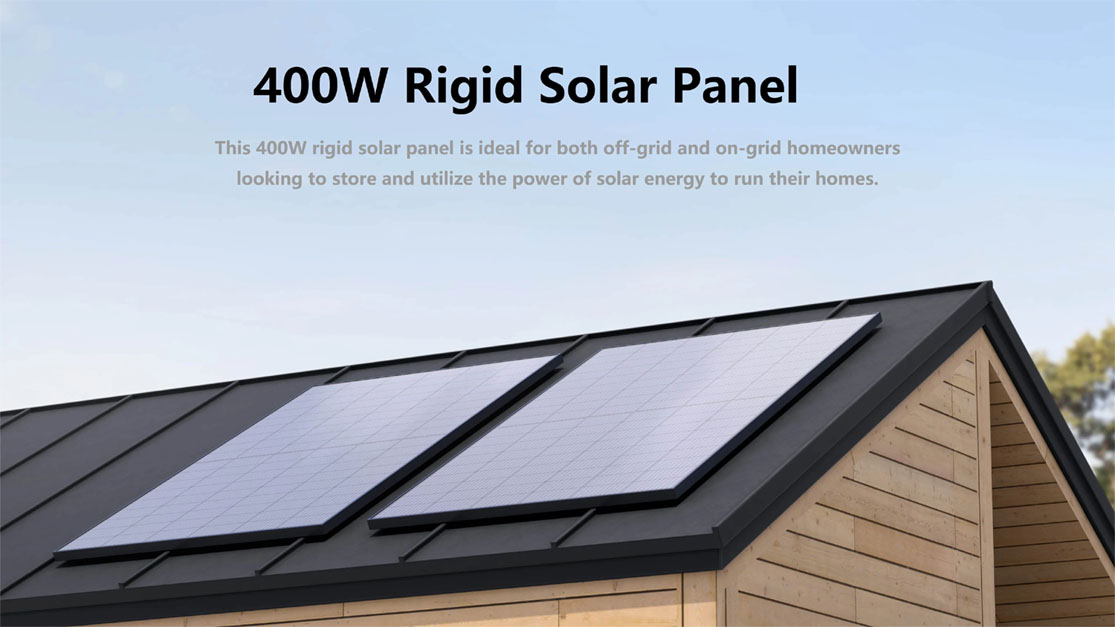
Maximize your off-grid potential with a professional-grade 400W rigid solar panel. Built for durability, optimized for efficiency, and designed to withstand the demands of RV life.
EcoFlow 400W Rigid Solar PanelReady to unplug and explore? The right solar setup transforms your RV into a self-sufficient basecamp, giving you the freedom to camp anywhere the road takes you.