

Making the switch to solar energy represents one of the smartest decisions for both your home and the environment. When you invest in quality solar panels, you're securing decades of clean, renewable power that reduces your carbon footprint while dramatically lowering your monthly utility expenses. The initial investment pays dividends through substantial energy bill reductions over the system's 25+ year lifespan.
This comprehensive resource walks you through every critical aspect of solar panel selection, from understanding different cell technologies to evaluating manufacturer warranties. By the end, you'll possess the knowledge needed to make a confident, informed purchasing decision that aligns with your energy goals and budget requirements.
Essential Factors When Selecting Solar Panels
Choosing the right solar panels requires careful consideration of multiple interconnected factors. Your geographic location plays a crucial role, as average sunlight hours directly impact system sizing requirements. Similarly, your roof's orientation, pitch angle, and available square footage determine how many panels you can install and their optimal positioning.
Beyond physical constraints, you'll need to evaluate your household's energy consumption patterns. Reviewing past utility bills provides baseline data for calculating the system capacity needed to offset your electricity usage. Factor in potential future changes like electric vehicle charging or home additions that might increase demand.
Budget considerations extend beyond upfront costs to include available tax incentives, rebates, and financing options. Many regions offer substantial incentives that can reduce your net investment by 30% or more, making solar increasingly accessible for homeowners at various income levels.
Understanding Solar Panel Technologies
The solar industry primarily offers two distinct photovoltaic cell technologies, each with unique characteristics suited to different applications and budgets. Understanding their differences helps you match the right technology to your specific requirements.
Monocrystalline Panels: Premium Performance
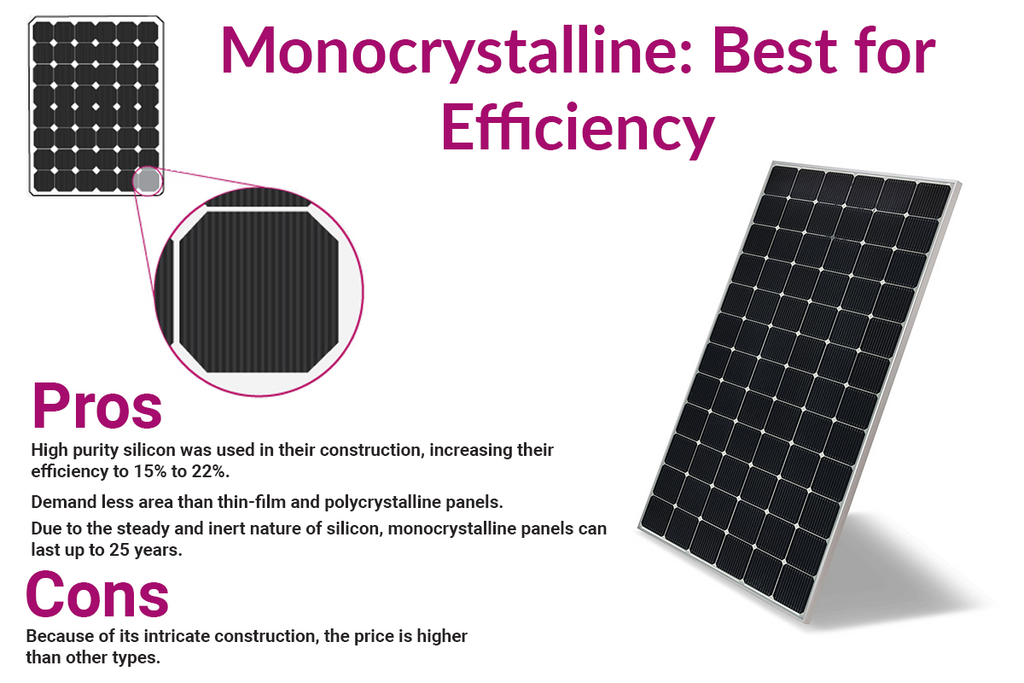
Monocrystalline solar panels represent the pinnacle of photovoltaic technology, manufactured from single-crystal silicon structures. This uniform crystalline composition enables electrons to flow more efficiently, translating to superior energy conversion rates typically ranging between 17% and 22%. Their distinctive black appearance results from the way light interacts with pure silicon crystals.

Advantages
• Highest efficiency ratings available in consumer panels
• Excellent performance in limited roof space scenarios
• Superior longevity with 25-30 year performance warranties
• Better heat tolerance and low-light performance
Considerations
• Higher initial investment per watt
• Manufacturing process produces more silicon waste
• Premium pricing may exceed some budgets
Polycrystalline Panels: Value-Focused Solution
Polycrystalline solar panels offer an economical alternative constructed from multiple silicon crystal fragments melted together. This manufacturing approach requires less energy and produces minimal waste, resulting in more affordable pricing. The characteristic blue-speckled appearance comes from light reflecting off numerous crystal boundaries within each cell.

Advantages
• Lower cost per watt makes solar more accessible
• Environmentally friendlier manufacturing process
• Excellent option for large installation areas
• Proven reliability with solid warranty coverage
Considerations
• Slightly lower efficiency (15-17% typical)
• Requires more roof space for equivalent output
• Reduced performance in high-temperature conditions
Decoding Efficiency Ratings
Solar panel efficiency measures how effectively a panel converts sunlight into usable electricity. A 20% efficient panel transforms one-fifth of the solar energy striking its surface into electrical power. While higher efficiency generally commands premium pricing, it becomes particularly valuable when installation space is constrained.
Industry-standard efficiency has climbed steadily over the past decade, with current consumer panels ranging from 15% to 22%. Laboratory prototypes have achieved efficiencies exceeding 47%, suggesting continued improvements in commercially available products. When comparing panels, evaluate efficiency alongside wattage output and physical dimensions for a complete performance picture.
Temperature Coefficient Explained
The temperature coefficient indicates how panel performance changes as temperatures rise above the standard testing condition of 25°C (77°F). Expressed as a percentage loss per degree Celsius, lower coefficients indicate better heat tolerance. A panel with a -0.3%/°C coefficient loses 0.3% output for every degree above the baseline.
This specification proves especially critical in warm climates where summer rooftop temperatures can exceed 65°C. Panels with superior temperature coefficients maintain higher real-world output when conditions push beyond laboratory test parameters. Premium monocrystalline panels typically exhibit coefficients between -0.25% and -0.35%, outperforming polycrystalline alternatives.
Leading Solar Panel Manufacturers
LG Solar Products
LG Electronics has established itself as a premier solar panel manufacturer, leveraging decades of electronics expertise to produce exceptionally reliable photovoltaic systems. Their NeON series showcases cutting-edge cell technology that maximizes energy harvest even under challenging conditions. With efficiency ratings approaching 22% and industry-leading 25-year warranties, LG panels represent a sound long-term investment.
The company's commitment to quality extends throughout production, with rigorous testing protocols ensuring each panel meets stringent performance standards. LG panels suit both residential installations seeking maximum output from limited roof space and commercial projects demanding reliable, long-term energy production.
Peimar Solar Solutions
Peimar has carved a respected niche in the solar industry by delivering high-performance panels at competitive price points. Their manufacturing facilities employ advanced automation to maintain consistent quality while controlling costs, passing savings to consumers without sacrificing reliability. The company offers a diverse product range suitable for various application scales.

Peimar's high-efficiency monocrystalline offerings deliver impressive performance metrics while remaining budget-conscious. Their panels undergo comprehensive testing to ensure durability against environmental stresses including humidity, temperature cycling, and mechanical loads. The combination of solid specifications and accessible pricing makes Peimar an attractive option for value-focused solar adopters.
Featured Product Recommendation

EcoFlow 400W Rigid Solar Panel
This premium rigid solar panel delivers exceptional 400W output with industry-leading efficiency. Engineered for durability and maximum energy harvest, it comes complete with four mounting feet for versatile installation options. The EcoFlow ZPTSP300 represents an ideal choice for homeowners seeking reliable, high-performance solar power generation.
Making Your Solar Decision
Selecting the optimal solar panel system requires balancing efficiency requirements, available space, budget constraints, and long-term energy production goals. Whether you prioritize maximum output from monocrystalline technology or seek value through polycrystalline options, today's solar market offers solutions for virtually every situation.
Remember that panel selection represents just one component of a successful solar installation. Quality inverters, proper mounting systems, and professional installation all contribute to system performance and longevity. Take time to research thoroughly, compare specifications, and consult with qualified installers to ensure your solar investment delivers decades of clean, renewable energy.