
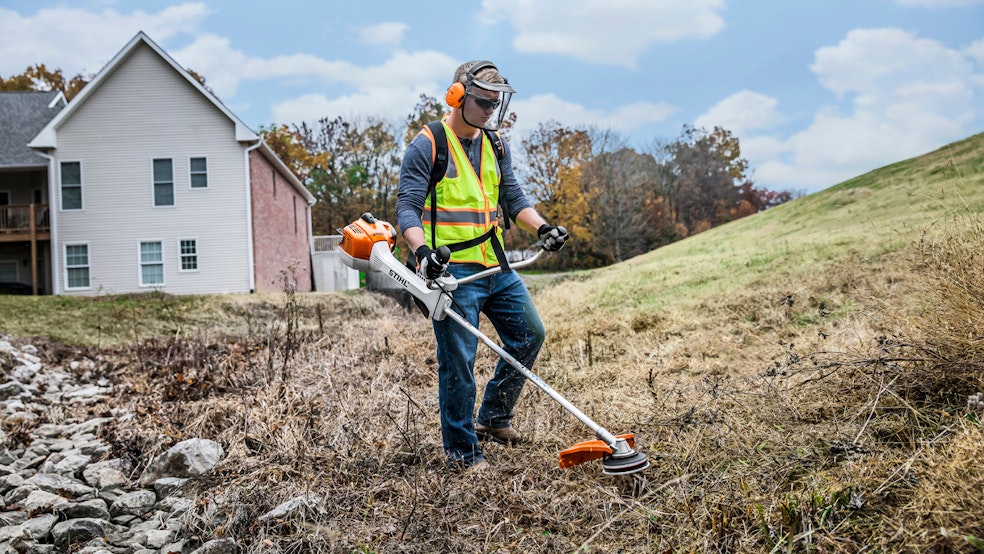
Brushcutters have earned their reputation as indispensable tools for tackling dense weeds, stubborn brush, and areas where traditional mowers simply cannot reach. These versatile machines transform challenging yard maintenance into manageable tasks. With the right attachments and cutting heads, your trimmer becomes a formidable brushcutting powerhouse capable of handling virtually any vegetation challenge you encounter.
Pre-Operation Safety Checklist
Before powering up your brushcutter, it's essential to perform a thorough safety inspection. Taking these precautions ensures both your protection and optimal equipment performance.
Engine Cooling: Completely power down the engine and allow adequate cooling time before adding fuel to the tank.
Site Assessment: Survey your entire work zone thoroughly to identify potential hazards such as rocks, debris, or hidden obstacles.
Clear Zone: Establish and maintain a minimum safety perimeter of 50 feet or more from bystanders, pets, and property.
Attachment Inspection: Verify all cutting attachments are properly installed, tightened, and securely fastened.
Ergonomic Setup: Configure the shoulder harness and handle positions to match your body height for maximum control and reduced fatigue.
Essential Protective Gear
Proper personal protective equipment isn't optional—it's your first line of defense against flying debris, loud noise, and potential injuries. Never operate your brushcutter without the following safety gear.
Face Shield with Hearing Protection
Significantly minimizes the danger of facial and head injuries by combining impact-resistant shielding with integrated ear protection in one convenient piece.
Hearing Conservation
Safeguard your auditory health by wearing quality sound-dampening devices such as foam ear plugs or cushioned ear muffs throughout operation.
Safety Eyewear
Position protective glasses beneath your face shield as the primary barrier against wood fragments, plant material, and airborne particulates.
Work Gloves
Shield your hands with robust heavy-duty gloves constructed from leather or comparable abrasion-resistant materials for superior grip and protection.
Lower Body Protection
Guard your legs by wearing full-length trousers crafted from durable, heavyweight fabric that can withstand contact with brush and debris.
Safety Footwear
Ensure stable footing with rugged boots featuring slip-resistant soles. Steel-toe construction is highly recommended for maximum foot protection.
Brushcutter Ignition Sequence
Follow this step-by-step protocol to safely start your brushcutter and prepare for operation. Proper startup technique extends engine life and ensures reliable performance.
Position yourself in an open space with adequate airflow and ventilation.
Relocate a minimum of 10 feet away from your refueling location.
Depress the primer bulb no fewer than 5 times (on equipped models).
Engage the choke mechanism when starting a cold engine.
Plant your feet firmly on stable ground before proceeding.
Confirm the cutting blade or line head isn't contacting any surface.
Initiate the starting sequence and bring your brushcutter to life.
Ready to Tackle Your Toughest Terrain?
Equip yourself with professional-grade tools designed for maximum efficiency and durability. The Efco DS3000S delivers exceptional cutting power with ergonomic comfort.
Efco DS3000S Loop Handle Trimmer