
Table of Contents
- What Does 750W Actually Mean?
- Typical Speed Range of a 750W E-Bike
- Real-World Top Speed Expectations
- Pavement vs. Trail: A Speed Comparison
- Key Factors That Influence Your Speed
- Is a 750W E-Bike Legal on U.S. Roads?
- 750W Compared to Other Motor Sizes
- Who Benefits Most from a 750W E-Bike?
- Safe Ways to Boost Your E-Bike Speed
- How Speed Affects Battery Range
- Keeping Your E-Bike in Peak Condition
- Final Verdict: Is 750W the Right Choice?
- FAQs
The electric bike market has exploded in recent years, giving riders a cleaner, more flexible way to get around town and explore the outdoors. Within this growing space, the 750W electric bike has carved out a unique position. It packs noticeably more punch than standard 250W–500W commuter models, yet stays just below the power threshold that typically triggers moped-style regulations or mandatory vehicle registration.

That 750-watt sweet spot translates to real, everyday advantages: confident hill climbing, steady cruising speeds for your daily commute, and ample torque for weekend trail rides or hauling cargo. Throughout this guide, we will break down how fast a 750W e-bike actually travels in practice, which variables affect that speed, and how to push your performance further—without compromising safety or legality.
What Does 750W Actually Mean?
When a motor carries a 750W label, it refers to the nominal continuous power output—roughly equivalent to one horsepower. This rating gives your e-bike robust assistance without adding excessive weight or mechanical complexity. Although metrics like peak wattage and torque curves matter for advanced comparison, nominal power remains the most consistent performance benchmark.
Several motor-related variables are worth understanding. Voltage plays a direct role—systems running at 48V or 52V generally deliver more torque and higher top-end speed than 36V setups. Controller efficiency also matters, because well-engineered electronics distribute power more smoothly, resulting in quicker acceleration and more predictable performance. Finally, torque output determines how effectively the motor handles resistance—whether that means climbing a steep grade or hauling a loaded cargo rack.
Typical Speed Range of a 750W E-Bike
Most 750W e-bikes sold in the U.S. are electronically limited to comply with federal and state classification systems:
| E-Bike Class | Assist Type | Speed Cap |
|---|---|---|
| Class 1 | Pedal-assist only | 20 mph |
| Class 2 | Throttle + pedal-assist | 20 mph (32 km/h) |
| Class 3 | Pedal-assist (no throttle) | 28 mph (45 km/h) |
In everyday riding, throttle-only mode typically delivers 15–20 mph, while pedal assist pushes that range to 20–28 mph. This spread is influenced by terrain, rider weight, and the assist level selected. It is also worth noting that higher-voltage configurations paired with geared hub motors can occasionally exceed 30 mph in short bursts—though doing so may fall outside legal limits depending on your area.
Our Pick
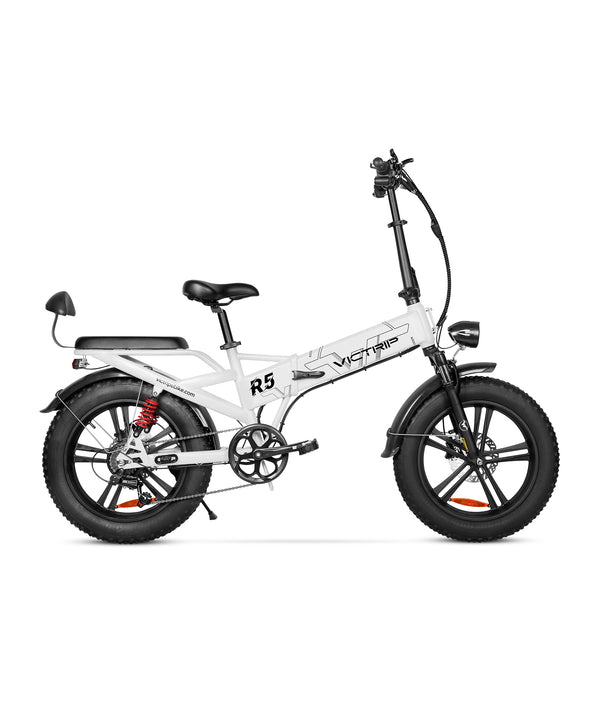
ENGWE L20 48V/13Ah 750W Electric Bike
Motor
750W
Battery
48V 13Ah
Top Speed
28 mph
Type
Folding
Real-World Top Speed Expectations
Some manufacturers advertise top speeds above 30 mph, but real-world results depend heavily on a combination of factors:
Terrain and gradient have the greatest effect—climbing a hill can slash your speed by half, while a downhill stretch naturally boosts it. Battery charge level matters too, because voltage drops as a battery discharges, reducing the motor's ability to sustain peak speed. Combined weight of rider plus cargo is another critical variable—heavier loads demand more energy and result in slower travel. Finally, tire selection and riding posture play a role; smooth tires and a slightly forward lean reduce drag and help you maintain higher speeds.
Here is what to realistically expect:
Flat terrain, fully charged, moderate load: 25–28 mph (pedal-assist)
Throttle-only riding: Typically capped at 20 mph
Unlocked or modified setups (off-road only): Rarely exceeds 30–32 mph
⚠ Important: Removing electronic speed limiters can void your warranty and may violate local traffic laws. Only consider this for private, off-road use with appropriate safety equipment.
Pavement vs. Trail: A Speed Comparison
| Riding Condition | Throttle Only | Pedal-Assist |
|---|---|---|
| Flat Pavement | 18–20 mph | 24–28 mph |
| Rolling Hills | 15–18 mph | 20–24 mph |
| Steep Inclines | 12–16 mph | 18–22 mph |
| Gravel / Forest Paths | 10–14 mph | 14–18 mph |
| Sand or Mud | 8–12 mph | 10–15 mph |
Loose or uneven surfaces dramatically increase rolling resistance, but a 750W motor still maintains above-average trail speeds compared to lower-wattage bikes—especially when you actively pedal along with the motor.

Key Factors That Influence Your Speed
Rider Weight and Terrain
Carrying heavy loads or tackling steep gradients forces the motor to work harder, which directly reduces both speed and range. As a general rule, every 1% increase in road gradient can lower your cruising speed by 1–2 mph. Lighter riders on flat ground will consistently see higher numbers than heavier riders climbing slopes.
Battery Voltage and Motor Efficiency
Systems built around 48V batteries (or higher) deliver noticeably more torque than 36V setups. Additionally, even two batteries with the same capacity rating (measured in watt-hours) can perform quite differently depending on how efficiently their cells deliver power under sustained load.
Environmental Conditions
A headwind of just 10 mph can shave several miles per hour off your top speed. Tire choice matters too—chunky, knobby off-road tires generate noticeably more rolling resistance than slim commuter tires. Elevation is a minor factor; thinner air at altitude slightly reduces motor output, but this is generally negligible below around 8,000 feet.
Is a 750W E-Bike Legal on U.S. Roads?
In most cases, yes—but it pays to verify the specific rules in your state and municipality. The majority of 750W e-bikes fall under one of two classifications: Class 2, which allows throttle use up to a 20 mph cap, or Class 3, which permits pedal-assist speeds up to 28 mph without a throttle.
State regulations vary considerably. Some jurisdictions restrict maximum wattage, require helmets for certain classes, or mandate equipment like lights and reflectors. Federal standards primarily govern manufacturing and labeling rather than on-road use, so your local and state laws are what actually determine where and how you can ride.
750W Compared to Other Motor Sizes
500W vs. 750W
A 500W motor handles flat terrain and lighter payloads with ease and puts less strain on the drivetrain overall. However, once you start carrying gear, towing a child trailer, or climbing moderate hills, the 750W motor's extra torque and power reserve become immediately noticeable. If your routes include any significant elevation changes, the upgrade is worthwhile.
750W vs. 1000W+
Stepping up to 1000W and above brings substantially more acceleration and higher potential top speeds. The trade-off is that many jurisdictions require registration, insurance, or restrict these higher-powered machines from bike paths entirely. The 750W motor avoids these complications in most areas, keeping things simpler while still providing plenty of capability for the vast majority of riding scenarios.
Who Benefits Most from a 750W E-Bike?
The 750W power tier is exceptionally versatile. Riders who cover longer daily commutes (10+ miles) at higher-than-average speeds appreciate the sustained output. Those navigating hilly or mountainous terrain—where a 500W motor would struggle—find 750W provides confident, consistent torque on climbs.
Cargo haulers and parents pulling child trailers benefit from the additional power reserve, as do weekend adventurers riding fat-tire models on gravel, forest paths, or sandy terrain. If your riding involves any combination of distance, elevation, and load, 750W is a remarkably practical fit.

Safe Ways to Boost Your E-Bike Speed
Upgrade your battery voltage (48V to 52V) if the motor and controller support it—this is one of the most effective speed improvements available. Choose the right tires for your riding surface; smooth or semi-slick tires significantly reduce rolling resistance on pavement. Reduce weight wherever possible—swap heavy racks for lighter alternatives, carry only essential cargo, and consider lightweight seat options.
Maintain your drivetrain religiously; a clean, lubricated chain ensures that motor power reaches the wheel instead of being wasted on friction. Adjust controller settings within legal speed limits to optimize acceleration curves. And finally, mind your aerodynamics—a slightly forward lean and tucked elbows reduce wind drag more than most riders realize.
Always balance performance modifications with safety and local regulations.
How Speed Affects Battery Range
| Average Speed | Estimated Range |
|---|---|
| 15 mph | 45–65 miles |
| 20 mph | 30–45 miles |
| 25 mph | 20–30 miles |
| 28 mph (max) | 15–25 miles |
*Estimates based on a 48V 15Ah battery (~720 Wh), ~170 lb rider, moderate terrain. Higher speeds dramatically increase power consumption due to exponential aerodynamic drag.
Keeping Your E-Bike in Peak Condition
Charge smart—try not to let the battery dip below 20%, and avoid leaving it at 100% for extended periods. Clean the drivetrain and motor housing at least once a month; built-up dirt and debris quietly reduce efficiency over time. Check tire pressure weekly and keep it within the manufacturer's recommended range; underinflated tires increase rolling resistance and sap speed.
Lubricate the chain every 100–150 miles to minimize wear and preserve smooth pedaling. When storing the bike for more than a few weeks, keep the battery at 40–60% charge in a temperature-controlled space. Finally, schedule an annual motor and controller inspection to catch loose connectors, overheating signs, or available firmware updates before they become problems.
Final Verdict: Is 750W the Right Choice?
A 750W electric bike delivers an outstanding combination of speed, climbing ability, and everyday practicality. It cruises faster than most commuter-class models, handles hills with genuine confidence, and provides enough torque for cargo hauling—all while sitting comfortably within the regulatory limits of most U.S. states.
If you are looking for reliable, spirited performance without the hassle of vehicle registration or restricted path access, a properly configured 750W e-bike is an excellent long-term investment. With attentive maintenance and the right accessories, it is more than enough power to transform your daily commute and your weekend adventures alike.
Frequently Asked Questions
Can I ride a 750W e-bike without pedaling at all?
Yes. Class 2 e-bikes include a throttle that lets you ride without pedaling. In throttle-only mode, expect speeds near the 20 mph electronic cap.
Do I need a license to ride a 750W e-bike?
In most areas, no—provided the bike stays within Class 2 or Class 3 speed limits. However, some jurisdictions have age or equipment requirements, so it is always best to check your state and local regulations.
How much weight can a 750W e-bike support?
Most cargo-capable 750W models are rated for 275–300 lbs of combined rider and cargo weight. Check individual manufacturer specs for exact limits.
Can a 750W motor handle steep hills?
Absolutely. Combined with proper gear selection and pedal-assist, a 750W motor delivers steady, reliable torque on steep climbs that would leave lower-wattage bikes struggling.
Is a 750W e-bike suitable for off-road riding?
Yes—particularly models equipped with fat tires and suspension. Gravel paths, forest trails, and moderately rough terrain are all well within its capabilities. Just keep in mind that off-road surfaces will reduce both speed and battery range.
How long does a 750W motor typically last?
With consistent maintenance—regular chain lubrication, tire pressure checks, and periodic controller inspections—most 750W motors remain reliable through 3,000–10,000 miles of riding, which works out to roughly 3–5 years for the average commuter.