
Fat tire e-bikes have earned a well-deserved reputation for their rock-solid stability, plush ride comfort, and unmatched ability to tackle virtually any terrain thrown their way. But beyond the grip and versatility, a burning question remains for countless riders: just how fast can these machines actually go?
If you've ever found yourself wondering which fat tire e-bike holds the title for the fastest on the market, you're far from alone. Speed matters — whether you're a daily commuter shaving minutes off your route, a weekend adventurer pushing limits, or a thrill-seeker chasing adrenaline on two wheels.
Key Takeaways:
▸ No single fat tire e-bike can claim the absolute fastest title — top speeds fluctuate based on motor output, battery capacity, rider weight, and regional speed regulations.
▸ The quickest models also feature robust batteries, capable suspension systems, and durable frames engineered to withstand long rides over punishing trails.
▸ The oversized tires on fat tire e-bikes deliver exceptional traction on loose surfaces, making them a perfect companion for off-road exploration.
In this 2025 guide, we'll dive deep into the factors that influence speed, explore the legal classifications that govern how fast you can ride, and spotlight the top contenders vying for the title of fastest fat tire e-bike available today.
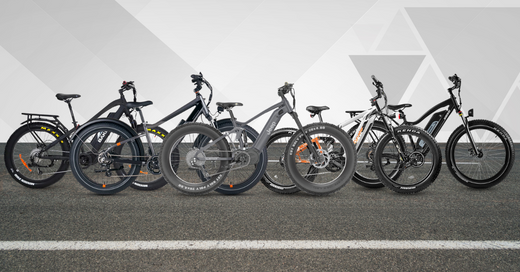
What Makes a Fat Tire E‑Bike Fast?
A fat tire e-bike's speed is determined by a combination of factors, including motor wattage, battery voltage, and the e-bike's legal class — all of which dictate how much power is at your disposal and what the law permits on public roads.
So how fast can a fat tire e-bike really go? On average, you can expect speeds between 20 and 28 mph (32–45 km/h) on flat ground, depending on motor power and classification. Climbing hills will naturally slow things down to around 5–10 mph, while downhill stretches with gravity on your side can push you into the 30–40 mph range.
Here's a look at the specific elements that contribute to a fat tire e-bike's speed:

⚡
Motor Power
High-powered motors (750W and above) deliver the acceleration and top-end speed riders crave.
🔋
Battery Capacity
Higher voltage and ampere-hour ratings keep you riding longer and stronger on every charge.
🛞
Fat Tires
Wide, thick tires (4 inches or more) deliver enhanced traction across a wide variety of terrain.
🏔️
Suspension
Full or front suspension systems smooth out rough surfaces and keep you in control at speed.
E‑Bike Classification
What's the fastest an e-bike can legally travel? Under U.S. federal standards, a Class 3 e-bike tops out at 28 mph with pedal assist. Each class is capped at a different speed limit, with Class 3 offering the highest pedal-assisted performance tier.
Class 1
Pedal-assist only
20 mph
Class 2
Throttle-enabled
20 mph
Class 3
Pedal-assist only
28 mph
Motor Power
If speed is what you're after, motor power is the foundation of everything. A high-wattage motor translates directly into faster acceleration, greater hill-climbing torque, and a higher ceiling on your top speed. It also translates to a smoother, more responsive riding experience — and an efficient motor can actually extend your battery life further than you'd expect. When shopping for a high-speed fat tire e-bike, prioritize serious wattage so you can power through challenging terrain and enjoy every moment of the ride.
Battery Capacity
Battery capacity isn't just about distance — it's about confidence. A larger battery means fewer stops to recharge, less anxiety about running out of power mid-ride, and more time simply enjoying the trail. Today's e-bikes often feature higher-capacity cells that charge faster and hold their charge longer, giving you the freedom to push further and harder without second-guessing your remaining power reserves.
Tires and Suspension
Fat tires are far more than a visual statement — they provide superior grip and cushioning on rough, slippery, or unpredictable surfaces like snow, sand, and loose gravel. Pair those oversized tires with a quality suspension system, and you get a machine capable of absorbing bumps, drops, and uneven ground without rattling your body. Together, premium tires and suspension create a riding experience that stays smooth, stable, and genuinely enjoyable, no matter where you take it.
Top 5 Fastest Fat Tire E‑Bikes of 2025
If you're on the hunt for the fastest fat tire e-bikes this year, here are the top contenders worth your attention:




Ready to experience thrilling speed and unmatched versatility?
Explore our selection of high-performance electric bikes and find the perfect ride for your next adventure.
ENGWE L20 Electric Bike →Comparative Analysis of the Fastest E‑Bikes
| Model | Motor (W) | Battery | Max Speed | Suspension |
|---|---|---|---|---|
| Delfast Top 3.0 | 3000W | 72V, 48Ah | Up to 50 mph | Full |
| HPC Revolution X9 | 5000W | 86V, Varies | 60+ mph | Full |
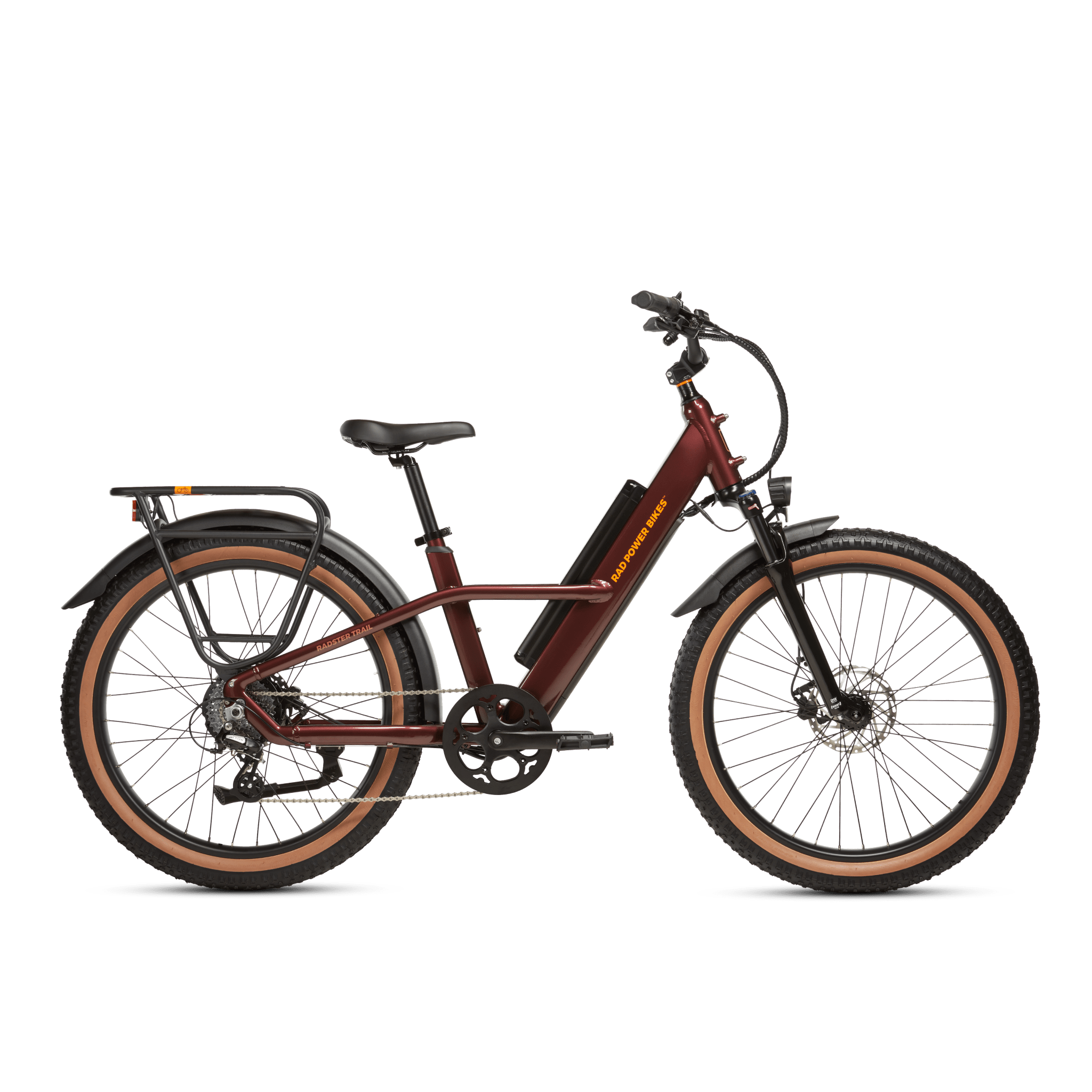
| Radster Trail | 750W | 48V, Varies | 28 mph | Full |
| Aventon Aventure 3 | 750W | 36V, 20Ah | Up to 28 mph | Front |
| Bakcou Mule | 750–1500W | 52V, 25Ah | 35+ mph | Full |
Fat Tire vs. Other E‑Bike Types: Speed and Efficiency
Fat tire e-bikes are purpose-built for stability, traction, and all-terrain versatility — but they weren't necessarily designed to win outright speed contests. Their wide, knobby tires generate more rolling resistance than the slim tires found on commuter, gravel, or road-style e-bikes. As a result, while fat tire models generally max out around 20–28 mph, lightweight commuter or hybrid e-bikes can reach 28–32 mph more efficiently on smooth pavement.
However, when the terrain gets tough, fat tire e-bikes come into their own where other bikes struggle. Their oversized tires deliver superior grip and shock absorption on sand, snow, mud, and rocky trails. Commuter and gravel e-bikes may win the efficiency battle on flat roads, but fat tire e-bikes dominate in off-road adventure, hunting, and all-weather riding scenarios.
How to Make a Fat Tire E‑Bike Faster
Boosting the speed of a fat tire e-bike usually comes down to optimizing key components and your riding setup — while staying firmly within legal and safety boundaries. One of the most impactful upgrades is switching to a higher-voltage battery (for example, going from 48V to 52V), which enables the motor to draw more power and achieve higher top speeds. Upgrading the controller to one with a higher amp output can also unlock extra performance, as long as your motor and battery support the change.
Tire selection makes a difference too — smoother, road-friendly fat tires reduce rolling resistance compared to aggressive off-road treads. Riders chasing more speed can also cut overall weight by carrying less gear or upgrading to lightweight accessories. Another straightforward adjustment is maximizing your pedal-assist settings, which gives the motor additional support at higher speeds.
Safety Considerations When Riding at High Speeds
Riding a fat tire e-bike at elevated speeds can be exhilarating, but it demands extra awareness and preparation. Here's what every rider should keep in mind:
🪖 Protective Gear
Always wear a helmet rated for e-bike or motorcycle use. At higher speeds, add gloves, reflective clothing, and knee/elbow pads.
🛑 Braking System
Make sure your bike has hydraulic disc brakes or high-quality mechanical brakes. Stopping distances increase significantly at speed.
💡 Visibility
Use front and rear lights, reflective tape, and bright clothing to stay visible to motorists and pedestrians, especially in low light.
⚖️ Handling & Stability
Fat tires offer great traction, but higher speeds make sharp turns riskier. Ease off the throttle when cornering or traversing uneven ground.
🚗 Traffic Awareness
At 25–28 mph, you're approaching urban car speeds. Ride predictably, signal your turns, and always ride defensively.
🔧 Regular Maintenance
High-speed riding stresses components more than casual cruising. Regularly inspect brakes, tires, and drivetrain to prevent mechanical failures.
Limitless Speed: 2025's Fastest Fat Tire E‑Bikes
Fat tire e-bikes have evolved dramatically — transforming from heavy, stability-first machines into versatile rides capable of truly impressive speeds. How fast they go ultimately comes down to motor power, battery voltage, and legal classification, but riders also have the option to fine-tune and upgrade their bikes for even better performance.
As of 2025, the market is packed with models that prove fat tires aren't just about traction and comfort — they can deliver genuine speed and excitement too. Whether you're searching for a dependable daily commuter, a high-performance trail bike, or a top-speed thrill machine, there's a fat tire e-bike out there perfectly matched to your riding goals.

Frequently Asked Questions
What is considered a fast speed for a fat tire e-bike in 2025?
A fast fat tire e-bike in 2025 typically reaches between 25 and 28 mph, particularly if it's a Class 3 model or features a high-output mid-drive motor. Some off-road or unrestricted models can push past 30 mph, though these generally aren't street-legal without proper registration.
Are fat tire e-bikes safe at higher speeds?
Yes, fat tire e-bikes can be safe at elevated speeds when ridden responsibly and in the right conditions. Their wide tires provide enhanced stability and grip, especially on uneven terrain. That said, their heavier weight and longer stopping distances mean riders should exercise caution, always wear a helmet, and avoid pushing aggressive speeds on congested streets or technical trails.
Can I upgrade my fat tire e-bike to go faster legally?
You can boost your e-bike's speed through controller tuning, motor swaps, or firmware adjustments — but legality hinges on your local laws. In most U.S. states, modifying an e-bike to exceed 28 mph without proper registration reclassifies it as a moped or motor vehicle. Always verify your regional regulations before making any performance modifications.
What's the difference between torque and speed in e-bike motors?
Torque is the motor's raw pulling power, while speed measures how fast the bike travels on level terrain. Fat tire e-bikes often prioritize torque for better traction and control on rugged surfaces, while commuter-oriented models lean toward top-end speed for smoother roads.
How does terrain affect speed on fat tire e-bikes?
Terrain has a significant impact. Fat tire e-bikes perform at their best on sand, snow, dirt, and rocky trails, where their traction helps maintain forward momentum. However, these same surfaces reduce top speed compared to smooth pavement. On flat roads, fat tires create additional rolling resistance, which can slightly lower average speeds compared to their narrow-tire counterparts.