
In This Guide
✦ The All-Terrain Conqueror
✦ Unmatched Terrain Versatility
✦ Core Rider Benefits
✦ The Power Component
✦ Choosing Your Bike
✦ Best Fat Tire E-Bikes 2025
✦ Fat Bike vs. Others
✦ Potential Drawbacks
✦ Who Needs One?
✦ FAQ
The All-Terrain Conqueror
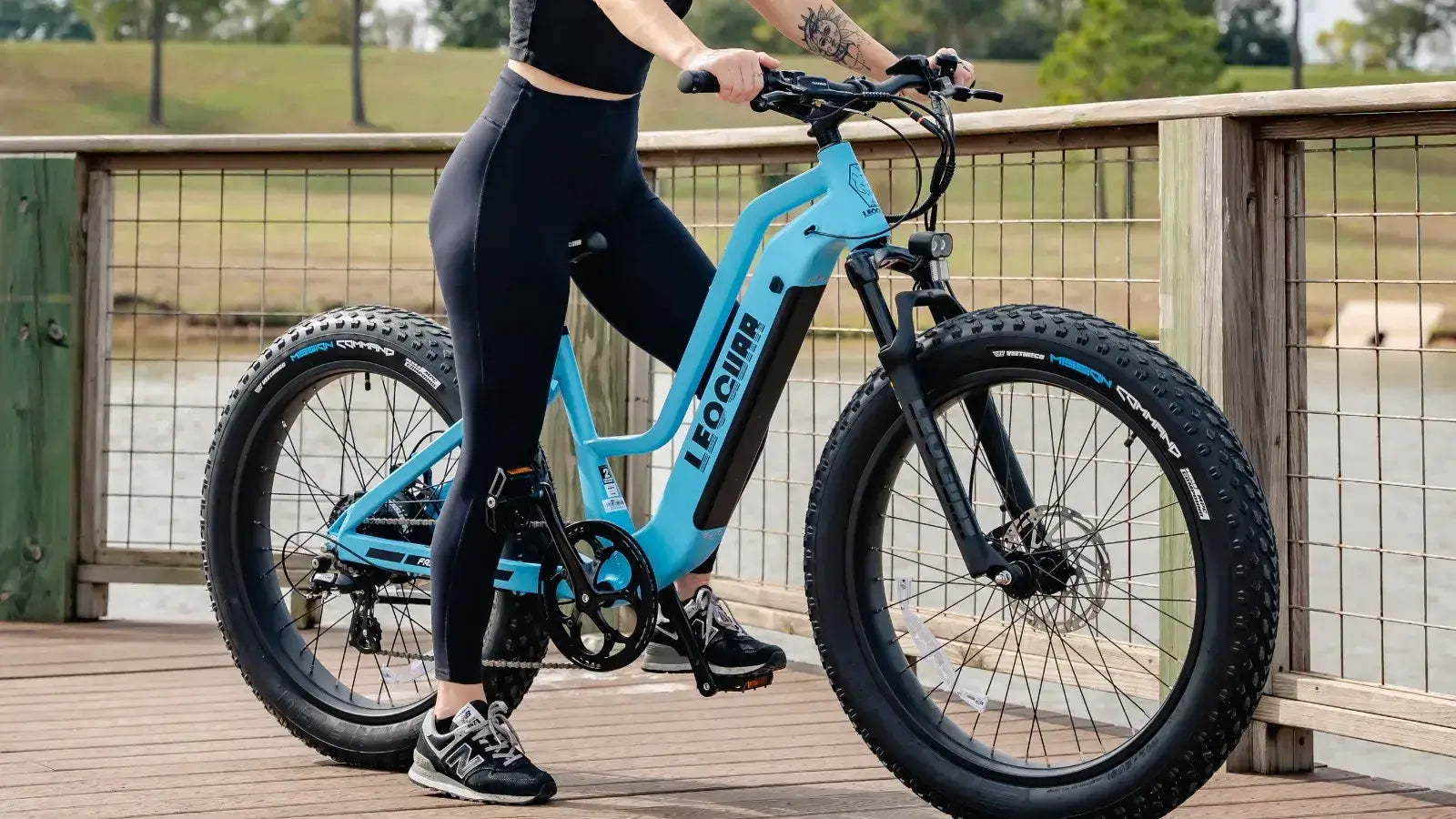
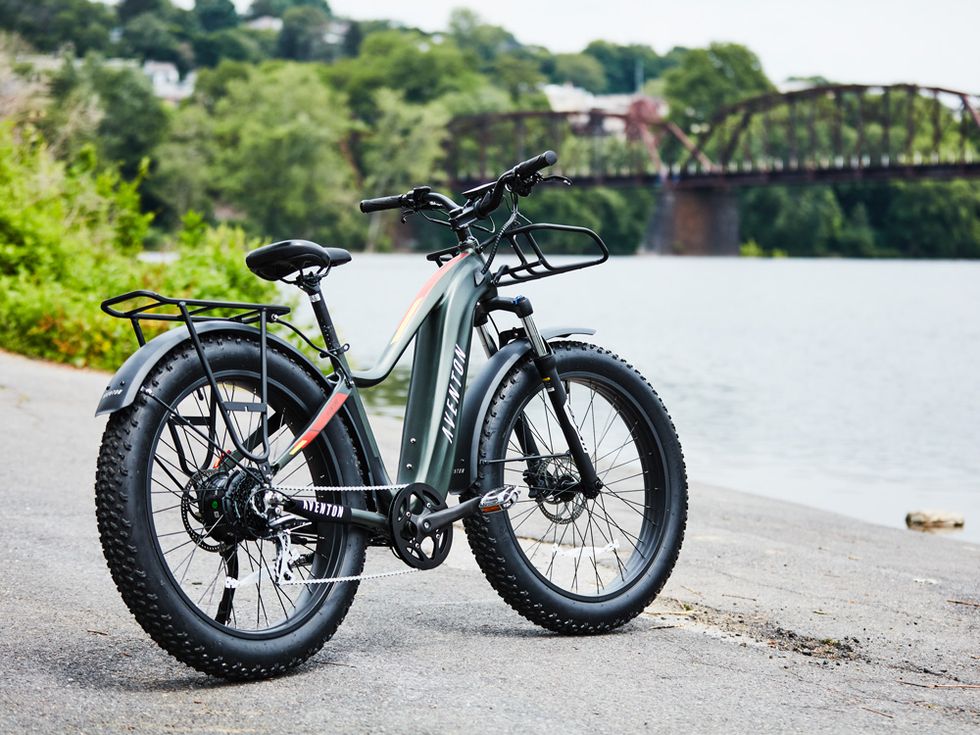
Fat tire electric bikes have rapidly grown into one of the most sought-after categories of e-bikes on the market today. With their oversized tires — typically measuring between 3.8 and 5 inches in width — these machines are engineered to handle surfaces that would leave standard bicycles struggling. From packed sand and deep snow to loose gravel and muddy forest trails, fat tire e-bikes push through with a level of confidence and grip that narrower tires simply cannot replicate.
The concept behind fat tire bikes is rooted in utility. Originally designed for riding across soft, unstable ground in extreme conditions, these bikes were quickly adopted by adventurers, commuters, and recreational riders alike. When you combine that rugged tire profile with an electric motor and battery system, the result is a machine that can take on practically any surface while reducing physical strain on the rider. Whether you are climbing a steep incline or coasting across a flat beach, the electric assist makes the journey smoother and far more enjoyable.
For anyone who has felt limited by terrain or physical ability, the fat tire e-bike opens up a whole new range of possibilities. These bikes invite you to explore places that were once unreachable on two wheels — and they do it with style and power to spare.
Unmatched Terrain Versatility
The defining trait of a fat tire electric bike is its ability to go virtually anywhere. The wide, voluminous tires create a significantly larger contact patch with the ground, distributing the rider's weight more evenly across the surface. This means the bike floats over soft terrain rather than sinking into it, providing traction where standard tires would spin and slide.
Snow-covered roads that would bring a regular bike to a halt become manageable riding surfaces on fat tires. Sandy coastal paths transform from difficult, energy-draining slogs into smooth cruises. Muddy trails and rocky backroads are no longer obstacles — they become part of the adventure. The lower tire pressure used in fat tires, often ranging from 5 to 20 PSI, gives them a cushioning effect that absorbs bumps and vibrations naturally.
Beyond off-road performance, fat tire e-bikes also handle paved roads and urban commuting with surprising ease. While they might not feel as nimble as a sleek road bike on smooth asphalt, the stability and comfort they offer more than compensate. For riders who want a single bike that can transition seamlessly between city streets and weekend trail rides, a fat tire e-bike delivers exactly that kind of all-purpose flexibility.
Core Rider Benefits
The electric motor takes a good deal of the grunt work out of riding, particularly on demanding surfaces. Hills that would leave you breathless on a regular bike become far more approachable with pedal-assist or full throttle capability. This broader accessibility makes fat tire e-bikes ideal for older riders, those recovering from injuries, or anyone who wants to enjoy longer rides without exhausting themselves halfway through.
Stability is another major advantage. The wider tire profile naturally lowers the center of gravity and increases ground contact, which translates to a more planted and confident ride feel. Whether you are navigating a gravel path or riding through light rain on a paved road, fat tires grip more effectively and make the bike feel secure beneath you. This is especially reassuring for newer riders who might feel uneasy on thinner, less forgiving tires.
The ride comfort provided by fat tires is also worth highlighting. Because the tires absorb so much of the road surface imperfections, you experience fewer vibrations and jolts through the handlebars and seat. Even on extended rides, this cushioning effect reduces fatigue considerably, allowing you to ride longer with less discomfort. Paired with a quality saddle and suspension fork, a fat tire e-bike can feel remarkably smooth across even the roughest terrain.
The Power Component
The electric system in a fat tire e-bike is what truly separates it from a traditional fat bike. Most models feature hub-mounted motors ranging from 500W to 1000W, with 750W being the most common configuration for consumer-grade models. These motors deliver enough torque to propel the bike and rider up steep gradients, through thick sand, or across wet and muddy terrain without demanding excessive effort from the rider.
Battery technology has improved significantly in recent years. Modern fat tire e-bikes typically run on 48V lithium-ion battery packs, with capacities ranging from around 10Ah to 20Ah or more. A standard 48V/13Ah setup can deliver a real-world range of roughly 25 to 45 miles on a single charge, depending on terrain, rider weight, and how much motor assist is used. Higher capacity batteries naturally push that range further, making all-day rides a realistic option.
Most e-bikes in this category offer multiple levels of pedal assist — commonly between three and five settings — allowing riders to fine-tune the balance between physical effort and motor output. Many also include a throttle mode, which lets you ride without pedaling at all when needed. This dual-mode capability makes fat tire e-bikes incredibly versatile, whether you want a genuine workout or simply want to cruise without breaking a sweat.
| Specification | Typical Range |
|---|---|
| Motor Power | 500W – 1000W |
| Battery Voltage | 48V |
| Battery Capacity | 10Ah – 20Ah+ |
| Top Speed | 20 – 28 mph |
| Estimated Range | 25 – 60+ miles |
| Tire Width | 3.8" – 5.0" |

Choosing Your Bike
Selecting the right fat tire electric bike comes down to understanding how you plan to use it and what features matter most to your riding style. The first consideration should be motor power. A 750W motor is the standard for most riders and offers a strong balance of speed, torque, and legal compliance in most regions. If you primarily ride on flat terrain or paved roads, a 500W motor might suffice. However, if you regularly tackle steep hills or deep off-road surfaces, a 1000W motor provides the extra push you may need.
Battery capacity is equally important. Think of it as the fuel tank of your e-bike. If your typical ride covers 15 to 20 miles, a 48V/13Ah battery should serve you well. For longer adventures or daily commuting where charging opportunities are limited, opting for a higher capacity pack — such as 48V/17.5Ah or beyond — ensures you will not be left stranded with a dead battery halfway through your trip.
Frame design is another key factor. Step-through frames are excellent for riders who want easy mounting and dismounting, particularly if mobility is a concern. Traditional diamond frames tend to offer greater rigidity and are favored by riders who prioritize performance on rough trails. Folding models exist as well, which are perfect for commuters or anyone with limited storage space.
Finally, pay attention to the component package: hydraulic disc brakes provide far superior stopping power compared to mechanical ones, especially in wet conditions. A suspension fork on the front adds another layer of comfort on rough roads. Integrated lights, fenders, and cargo racks might seem like minor details, but they add real everyday utility and are worth considering when comparing models side by side.
Best Fat Tire Electric Bikes 2025 — What to Look For
The fat tire e-bike market in 2025 is more competitive and refined than ever before. Leading manufacturers have listened to rider feedback and are delivering bikes that balance power, practicality, and aesthetics. When evaluating the best options, look for models that pair a strong 750W motor with a reliable 48V battery system, ideally from a brand with solid warranty support and accessible customer service.
Build quality is where good bikes separate themselves from the rest. A sturdy aluminum alloy frame, high-quality welds, and components from recognized suppliers like Shimano indicate a bike that is built to last. Look for models that include hydraulic disc brakes, a responsive LCD display panel, and a battery that is either integrated into the frame or easily removable for convenient indoor charging.
Consider also the riding modes and user interface. The best fat tire e-bikes in 2025 offer intuitive control panels, USB charging ports, integrated lighting systems, and smooth shifting through at least a seven-speed drivetrain. These features collectively enhance the riding experience and make the bike feel like a well-rounded, premium product rather than a bare-bones machine.
Featured Product
ENGWE L20 48V/13Ah 750W Electric Bike

A powerful fat tire e-bike built for versatility — conquer trails, commute through the city, and everything in between.
Shop ENGWE L20 E-Bike →
Fat Bike vs. Others
To understand where fat tire e-bikes truly shine, it helps to compare them to other popular e-bike styles across a few key dimensions.
| Feature | Fat Tire E-Bike | Mountain E-Bike | Commuter E-Bike |
|---|---|---|---|
| Tire Width | 3.8" – 5.0" | 2.1" – 2.6" | 1.5" – 2.0" |
| Best Terrain | All surfaces | Trails & dirt | Paved roads |
| Ride Comfort | ★★★★★ | ★★★★ | ★★★ |
| Weight | 60 – 80 lbs | 45 – 60 lbs | 35 – 55 lbs |
| Stability | ★★★★★ | ★★★★ | ★★★ |
| Speed on Road | Moderate | Moderate | Fast |
This comparison shows that fat tire e-bikes occupy a unique middle ground — offering the best all-around capability across diverse conditions. While they are heavier and not the fastest on flat pavement, their unmatched versatility and comfort make them the top choice for riders who refuse to be limited by terrain.
Potential Drawbacks Considered
No bike is perfect for every scenario, and fat tire e-bikes do come with a few trade-offs worth understanding. The most noticeable is weight. Due to the larger tires, reinforced frames, motor, and battery, these bikes typically weigh between 60 and 80 pounds. This makes them heavier to carry upstairs, load onto a vehicle rack, or maneuver through tight spaces. For riders who need to lift their bike regularly, this extra heft can be a real consideration.
Rolling resistance is another factor. Those wide, grippy tires that perform so well off-road create more friction on smooth pavement. This means the motor has to work a bit harder, and if you are riding without assist, you will feel the extra drag compared to a narrower-tired bike. Battery consumption can also be slightly higher as a result, particularly at higher speeds or on long, flat stretches.
Tire replacement costs tend to be higher than standard bicycle tires, and fewer local bike shops stock fat tire sizes. While online options are plentiful, it is worth factoring in the availability and cost of replacement parts when budgeting for your purchase. Despite these drawbacks, for most riders the advantages far outweigh the inconveniences — especially when the bike is used as intended across varied terrain.
Who Needs One?
The unique mixture of performance traits that fat tire e-bikes offer makes them perfectly suited for several distinct types of riders. Outdoor adventure seekers who regularly explore unpaved trails, beaches, or snowy landscapes will find these bikes to be an ideal companion. The ability to maintain traction and stability across wildly different surfaces means fewer limits on where you can go and what you can experience.
Daily commuters who face mixed road conditions — think gravel shoulders, potholed streets, or seasonal weather changes — also benefit enormously. Rather than worrying about whether the road surface will cooperate, a fat tire e-bike handles all of it without complaint. Add in the electric assist for hills and headwinds, and your commute transforms from a chore into something you actually look forward to.
For older riders or those with physical limitations, the electric motor and stable tire platform offer a way back into cycling that might otherwise feel out of reach. The combination of low-impact exercise, adjustable assist levels, and a comfortable, confidence-inspiring ride creates an experience that keeps people active and engaged — regardless of fitness level or joint concerns.
The Bottom Line on Fat Tire Electric Bikes
The fat tire electric bike is more than just another variation on the e-bike concept — it is a genuine evolution in how people ride. By combining the unmatched ground coverage of oversized tires with the effortless propulsion of an electric motor, these bikes break down the barriers between you and virtually any terrain you want to tackle.
If comfort, stability, and the freedom to ride anywhere are priorities for you, a fat tire e-bike delivers all three in abundance. It is the kind of bike that invites you to take the long way home, explore the path you have been curious about, and rediscover the simple joy of riding — on your terms, at your pace, across any surface the world puts in front of you.
Frequently Asked Questions
Q: Can I ride a fat tire e-bike on a regular road?
A: Absolutely. While fat tires are built for off-road dominance, they perform perfectly well on paved roads and city streets. The ride will feel heavier and slightly slower than a dedicated road bike, but the comfort and stability trade-off is well worth it for most riders.
Q: How far can a fat tire electric bike travel on one charge?
A: Most models offer a range of 25 to 60 miles per charge, depending on battery size, terrain, rider weight, and assist level used. Riding on flat pavement with lower assist settings will maximize your distance, while heavy off-road use and full throttle riding will reduce it.
Q: Are fat tire e-bikes good for winter riding?
A: They are among the best options for cold-weather cycling. The wide tires provide excellent grip on snow and ice, and the electric assist helps you power through heavy, slushy conditions that would stop most other bikes in their tracks.
Q: Can fat tire e-bikes be used for daily commuting?
A: Yes, and many riders use them for exactly that purpose. The combination of comfort, all-weather capability, and electric assist makes fat tire e-bikes a practical and reliable commuting solution — particularly in areas where road conditions are inconsistent or unpredictable.
Q: Are fat tire e-bikes safe for older or less experienced riders?
A: Very much so. The wide tires offer outstanding stability, and the electric motor means riders do not need to exert heavy physical effort to keep moving. Step-through frame designs further improve accessibility by making it easy to get on and off the bike. Many older riders find fat tire e-bikes to be the most comfortable and confidence-inspiring option available.
© Backyard Provider — Your Outdoor Living Experts