
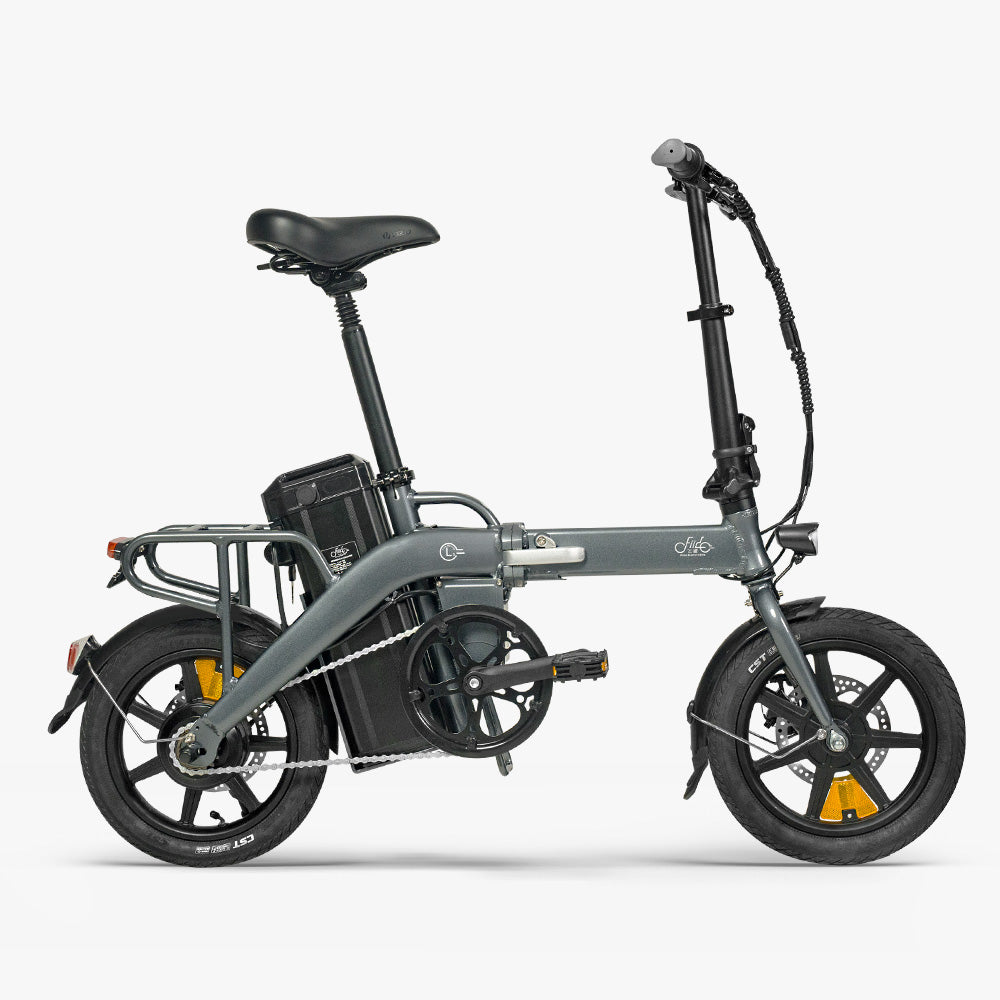
Have you ever wished your daily commute could be simpler, greener, and a whole lot more enjoyable? A foldable electric bicycle might just be the answer. These clever machines combine battery-powered assistance with a frame that collapses in seconds, making them one of the most practical personal vehicles on the market today. Whether you ride through crowded cities, along suburban trails, or simply need a way to get around that doesn't involve sitting in traffic, a folding e-bike offers a solution that is as versatile as it is exciting.
What Exactly Is It?
A foldable electric bicycle is, at its core, a standard pedal bicycle that has been equipped with an integrated electric motor and a battery—along with a specially engineered frame that can fold down into a compact form. The motor provides pedal assistance or full throttle power depending on the model, while the folding mechanism lets you shrink the bike down for storage in tight spaces like car trunks, under office desks, or inside apartment closets.
Think of it as a traditional bike that got a serious upgrade: the motor takes the strain out of hills and headwinds, and the folding frame eliminates the biggest headache of bicycle ownership—where to put it when you are not riding.
How Does a Folding E-Bike Actually Work?
The operation is straightforward. A rechargeable lithium-ion battery supplies energy to a hub motor mounted in one of the wheels (or occasionally a mid-drive motor near the pedals). When you pedal, a sensor detects your effort and activates the motor to give you a boost. Many models also feature a twist or thumb throttle that lets you cruise without pedaling at all.
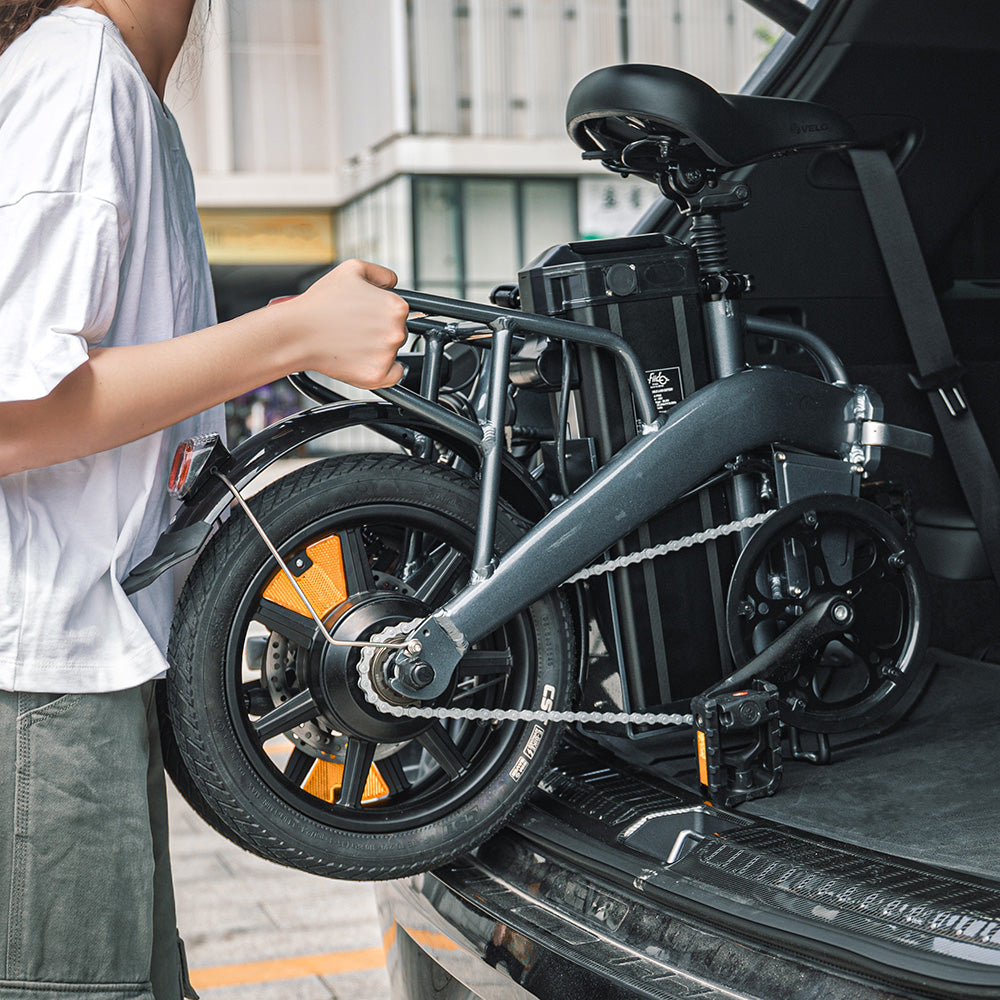
The folding mechanism typically involves one or two quick-release latches on the main frame tube and a folding handlebar stem. Within roughly 10 to 20 seconds, most riders can collapse the entire bike into a bundle small enough to carry onto public transit or stow in a compact living space.
Advantages & Areas of Application
Folding e-bikes are popular for very good reasons. They address some of the most common challenges that keep people from choosing bicycles as their primary means of getting around.
Multi-Modal Commuting
Ride to the station, fold, board the train, then ride to the office from the last stop.
Small-Space Living
No garage or bike rack needed. Tuck it inside a closet or slide it under a desk.
Road Trips & RV Life
Fits easily in a car trunk or RV storage bay for quick rides at every destination.
Eco-Friendly Travel
Zero emissions, minimal energy use, and a smaller footprint than any motorized vehicle.
Fitness With Flexibility
Pedal as hard or as lightly as you like—the motor fills in the gaps.
Theft Deterrent
If the bike is always with you, it is never locked up outside where it can be stolen.
What Types of Folding E-Bikes Are There?
Not every folding electric bicycle is built for the same purpose. The market offers several distinct categories, each designed with specific riders and riding conditions in mind.
Compact Urban Folders
Designed for city dwellers with small wheels (14"–16"), ultra-light frames, and quick fold times. Perfect for subway-to-office commuters.
Full-Size Folding E-Bikes
Standard 20" or even 26" wheels combined with a fold mechanism. They ride like a regular bike but still collapse for storage.
Fat-Tire Folding E-Bikes
Wide, rugged tires on a folding frame let you tackle sand, snow, and rough trails while still packing down after the adventure.
Lightweight Performance Folders
Premium materials keep weight under 30 lbs. Built for riders who carry the bike up stairs or onto transit daily.
Key Considerations Before Buying
Purchasing a folding e-bike is an investment in your daily routine, so it pays to think carefully about a few key factors before choosing a model.
Folded Dimensions & Weight
If you plan to carry the bike onto buses or up flights of stairs, every pound matters. Check the folded measurements against the space where you intend to store it, and lift the bike before you buy it if possible.
Battery Range & Charging Time
Most folding e-bikes offer between 20 and 50 miles of range on a single charge, though real-world results depend on terrain, rider weight, and how much throttle you use. Charging times typically fall between three and six hours.
Motor Power & Speed
Motors generally range from 250W to 500W. A 250W motor suits flat urban commutes, while a 350W or 500W motor handles hills and heavier loads more comfortably. Top assisted speeds usually cap at 20 mph for Class 2 models.
Build Quality & Durability
Pay attention to the folding hinge—it is the most stressed component on the frame. Look for reinforced latches, aluminum or steel alloy frames, and brand reputations backed by warranties.
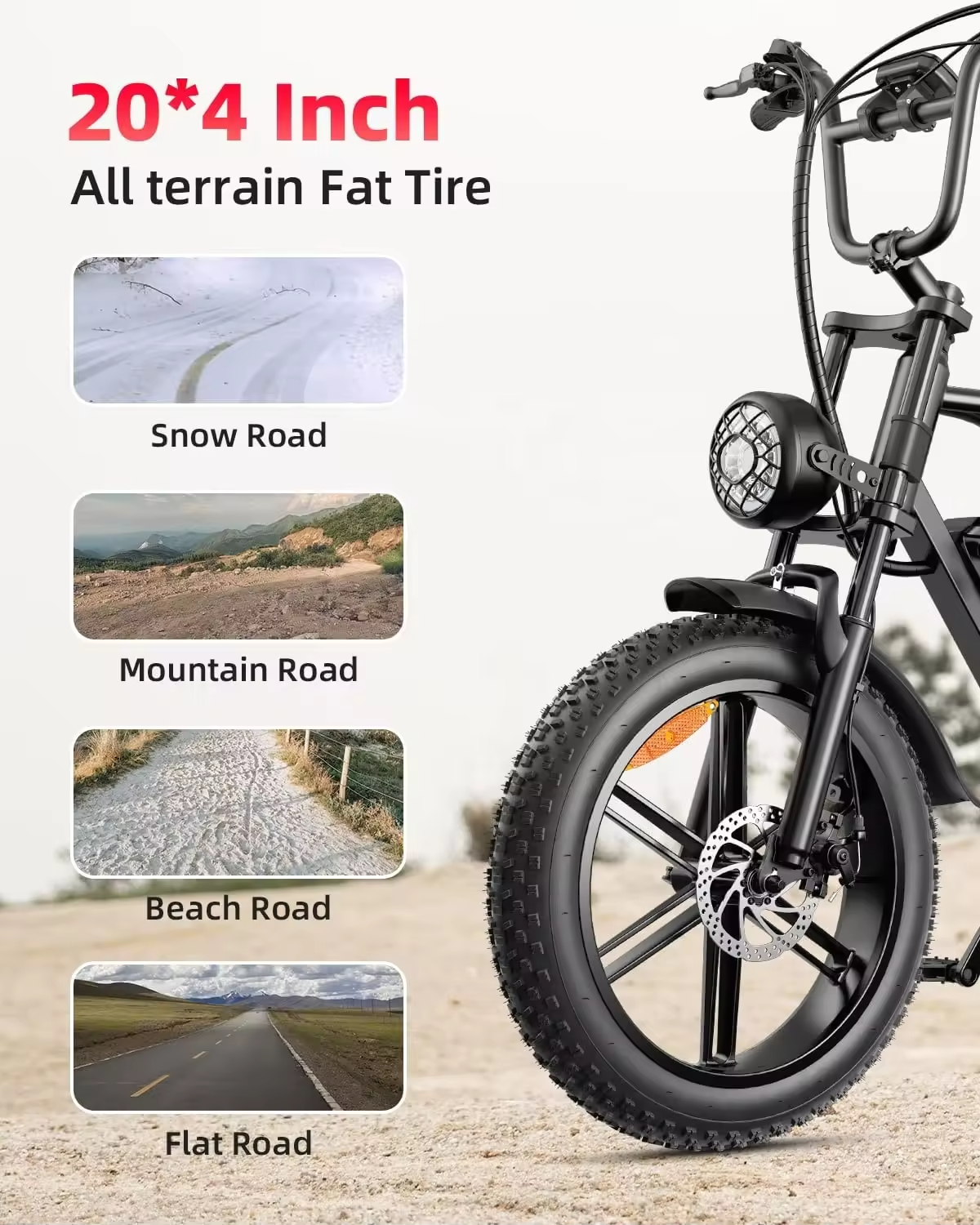
Featured: ENGWE T14 Electric Mini Bike
Packing a 48V/10Ah battery and a punchy 350W motor into a sleek, foldable frame, the ENGWE T14 is built for riders who want performance without sacrificing portability. Compact enough for the trunk, powerful enough for the commute.
ENGWE T14 Mini BikeExample Specifications of a Folding E-Bike
To give you a concrete idea of what a typical mid-range folding electric bicycle looks like on paper, here is a sample specification sheet.
| Frame Material | 6061 Aluminum Alloy |
| Wheel Size | 14 – 20 inches |
| Motor | 350W Brushless Hub Motor |
| Battery | 48V / 10Ah Lithium-Ion |
| Top Speed | Up to 20 mph (Class 2) |
| Range | 25 – 45 miles per charge |
| Charge Time | 4 – 6 hours |
| Weight | 35 – 50 lbs |
| Fold Time | ~15 seconds |
| Max Rider Weight | 220 – 265 lbs |
How Long Does It Take to Fold?
Most quality folding e-bikes can be collapsed in under 20 seconds once you have practiced the motion a few times. The process usually involves releasing one main frame latch, folding the handlebar stem downward, and optionally lowering the seat post. Some ultra-compact models accomplish this in as little as 10 seconds.
How Far Can a Folding E-Bike Travel?
Range depends on battery capacity, motor efficiency, rider weight, terrain, and riding mode. On pedal-assist alone, expect roughly 30 to 50 miles from a standard 48V/10Ah pack. Full-throttle riding cuts that range significantly—often to 15–25 miles. Planning your trips around the lower estimate is always a smart move.
Frequently Asked Questions
In most cases, yes—and often faster. The motor assistance means you can maintain higher average speeds with less effort, especially on inclines. Most folding e-bikes reach assisted speeds of 20 mph.
Typical models weigh between 35 and 55 pounds. Compact urban folders tend to be lighter (around 30–40 lbs), while fat-tire and full-size models sit at the heavier end of the range due to larger batteries and sturdier frames.
You can swap out heavier components for lighter alternatives—carbon fiber seat posts, lighter tires, or a smaller battery if your commute allows it. Every small change adds up when you are carrying the bike regularly.
Quality folding bikes from reputable manufacturers are engineered to be just as sturdy. The hinges and latches are reinforced to handle thousands of fold cycles. That said, extremely cheap models may cut corners on these critical joints, so it pays to invest in a trusted brand.
It depends on your priorities. Smaller wheels fold down more compactly and weigh less, making them ideal for transit commuters. Larger wheels ride more smoothly and handle road imperfections better, which suits longer commutes and mixed-terrain riding.
Some full-size folding e-bikes support rear-mounted child seats, but compact models generally do not have the frame structure or weight capacity to safely accommodate one. Always check the manufacturer's specifications and weight limits before adding a child seat.