
In this guide, we break down everything you need to know about chop saws versus mitre saws — covering the different types, real-world applications, and the pros and cons of each. Tools discussed include abrasive chop saws, tungsten carbide tipped (TCT) chop saws, compound mitre saws, and sliding compound mitre saws.
The construction world is packed with colloquial terms. If you've spent any time in the trades, you know how easy it is to encounter multiple names for the very same tool. Two power tools that frequently cause this kind of confusion are chop saws and mitre saws. They might look similar at first glance, but their intended purposes are quite different.
This article focuses specifically on abrasive and TCT chop saws. We'll save the discussion about slower revolutions per minute (RPM) and high-speed steel (HSS) cold saws for another day. Everything covered here applies to both corded and cordless machines.
Chop Saw vs Mitre Saw — It All Comes Down to Material
The most fundamental difference between a chop saw and a mitre saw is surprisingly simple: it's all about what they're built to cut.
A chop saw is engineered for metal — primarily steel. A mitre saw, on the other hand, is designed for wood, though it can also handle plastics and certain non-ferrous metals with the right blade.
What Is an Abrasive Chop Saw?
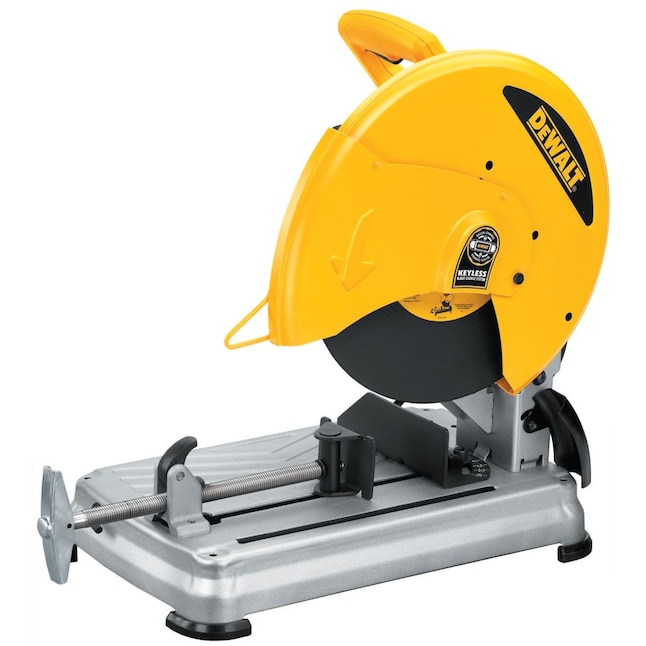
Sometimes called a "bacon slicer" on job sites, an abrasive chop saw relies on a large abrasive cutting disc to power through metal. The disc is composed of grit, resins, and reinforcing fibers that grind their way through the workpiece. It's a proven and effective design, but it does come with some trade-offs.
The most notable downside is speed — or rather, the lack of it. Abrasive discs will eventually get through nearly any material, but compared to a TCT blade, they work much more slowly. The grinding process also generates significant heat, leaving the base material hot to the touch and potentially creating razor-sharp burrs. Additionally, heat can discolor or damage surface finishes, making abrasive chop saws a poor choice for painted or coated metal.
As the disc wears down with use, the blade diameter shrinks, which gradually reduces the machine's maximum cutting capacity. Because abrasive chop saws throw sparks, a hot works permit may be required on certain job sites. Even though the blade drop-down locks at 90°, you can make angle cuts of up to 45° by adjusting the base clamp.
✔ Advantages of Abrasive Chop Saws
- Low purchase price
- Handles very thick material and thin-walled sections without snagging
- Abrasive discs work on a wide range of materials
- Perfect for repetitive cuts in industrial environments
- Simple, no-fuss design with minimal setup
- Fewer moving parts than other saw types
✘ Disadvantages of Abrasive Chop Saws
- Slower cutting speed
- Cutting capacity shrinks as the disc wears
- Generates sparks, dust, and burrs
- Louder than most other saws
- May struggle with large cross-sections compared to band saws
What Is a TCT Chop Saw?

Not long ago, seeing a TCT (tungsten carbide tipped) blade heading toward a piece of steel would have made contract managers and workshop supervisors break out in a cold sweat. The only circular saw blades made for cutting steel were HSS (high-speed steel) blades, used exclusively on low RPM, flood-cooled cold saws.
Everything changed when manufacturers developed machines capable of higher RPMs fitted with TCT blades. Thanks to the heat-resistant carbide teeth, no lubrication was needed — giving rise to the term "dry cut." The result? Quick, clean cuts with no burrs and virtually no sparks. These machines quickly became standard equipment in metal fabrication workshops, racking companies, and shopfitting operations.
Most TCT chop saws ship with a blade designed for mild steel. Stainless steel cutting blades are also available, though blade life is somewhat reduced given the harder material. A well-maintained blade produces virtually spark-free cuts, though some sparks can occasionally occur — meaning a hot work permit may still be needed. Like abrasive models, TCT chop saws primarily make 90° cuts, but the base clamp allows for angle cuts up to 45°.
✔ Advantages of TCT Chop Saws
- Much faster cutting than abrasive discs
- Consistent cut depth throughout blade life
- Blades can be re-sharpened multiple times
- Nearly burr-free, dust-free, and spark-free
- Ideal where accuracy and surface finish matter
- Minimal sparks and dust improve safety and cleanliness
✘ Disadvantages of TCT Chop Saws
- Reduced blade life when cutting harder materials
- Can snag or tear very thin-walled material
- Demands careful handling and proper blade selection
Chop Saw Accessories
A dedicated mobile cutting station can make a big difference — it helps contain noise, sparks, dust, and cutting chips, creating a safer and more organized workspace.
What Is a Mitre Saw?

While chop saws are rugged, straightforward tools built for brute-force cutting, mitre saws are precision instruments designed to make accurate angled cuts. They're most commonly used by joiners, kitchen fitters, and cabinet makers working primarily with wood, though they can handle non-ferrous metals with the correct blade.
"The vast majority of mitre saw blade sales are for wood and wood-based materials."
— Industry insight from seasoned tool professionals
What Is a Compound Mitre Saw?

A compound mitre saw combines a mitre cut with a bevel cut in one operation. The mitre is achieved by rotating the machine's base, typically between the 8 o'clock and 4 o'clock positions. While 45° is the standard mitre angle, many saws can handle up to 60°. Bevel cuts are made by tilting the blade from its vertical 90° position down to around 45° — and sometimes as far as 48° — covering every angle in between.
This makes compound mitre saws ideal for jobs like cutting crown mouldings or working on loft conversions where wall angles and ceiling pitches come into play. Some models even feature extraordinary preset angles like 31.6° and 33.9° on their gauges for just these types of applications.
What Is a Sliding Compound Mitre Saw?
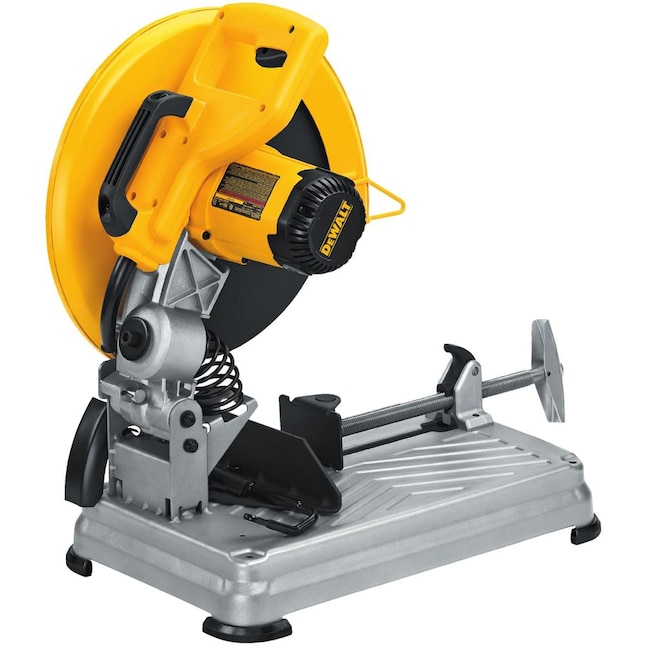
A sliding compound mitre saw offers all the same mitre, bevel, and compound cutting capabilities as a standard compound model — but adds one game-changing feature. The sliding mechanism lets the motor unit and blade travel along telescopic rails, dramatically increasing cutting width capacity while keeping the machine compact and portable.
Mitre saws come in single bevel and double bevel configurations. Single bevel machines tilt the blade in one direction only, while double bevel models tilt both left and right. The double bevel feature eliminates the need to flip the workpiece when making left and right bevel cuts — a meaningful time-saver on the job site.
What Size Mitre Saw Do I Need?

It really depends on the kind of workpieces you regularly cut. Blade diameter is the single most critical factor when it comes to cutting depth — the bigger the blade, the deeper the cut. This is because cutting depth is determined by the distance from the blade edge to the clamping nut at the center. Once the workpiece hits the nut, the blade can go no deeper. A 12" blade, for instance, can typically handle a 4" deep cut, depending on the material dimensions and shape.
Mitre saw blade sizes generally range from 190mm all the way up to 305mm. The right size for you comes down to the work you do most often.
A kitchen fitter, for example, likely has no need for the cutting capacity of a 305mm sliding compound mitre saw — nor the hassle of transporting a heavier, bulkier machine in and out of homes. A compact 260mm compound or even a 190mm sliding compound model may be all that's needed. On the other hand, a site joiner or carpenter who frequently cuts tall skirting boards and joists will probably want a sliding compound mitre saw with at least a 10" blade.
| Trade | Recommended Machine | Useful Accessories |
|---|---|---|
| Kitchen Fitter | 190mm, 216mm, or 260mm Slide Compound Mitre Saw | Fine Cut Blade, Saw Stand |
| Shop Fitter | 254/260mm or 305mm Slide Compound Mitre Saw | Medium Cut Blade, Fine Cut Blade, Aluminum Blade, Lubricating Wax Stick |
| Site Joinery | 254/260mm or 305mm Slide Compound Mitre Saw | Medium Cut Blade, Fine Cut Blade, Saw Stand |
Accessories to Pair with a Mitre Saw

Mitre saws are known for producing a lot of dust. Hooking your saw up to a suitable dust extractor keeps the workspace clean and significantly reduces the risk of inhaling airborne particles. There are also a variety of mitre saw stands on the market — many featuring built-in workpiece supports and integrated transportation options for easy movement around the job site.
Chop Saw vs Mitre Saw — The Verdict
Now that we've laid out the key differences between chop saws and mitre saws, choosing the right type of machine should be a straightforward decision. The real question is which specific model within that category is right for you.
For chop saws, it largely comes down to your budget and the type of material you cut most often. For mitre saws, the decision will be driven by the applications you handle and the dimensions of your typical workpieces.
Need help deciding which saw suits your needs? Explore our selection at Backyard Provider — we're here to point you in the right direction.
Evolution Metal Cutting Chop Saw S380CPS