

Finding the right chop saw can be a challenge when you're staring down a wall of nearly identical-looking machines. Whether you're a seasoned fabricator slicing through steel studs every day or a weekend warrior tackling occasional metalwork in the garage, there's a model that matches your workload and your wallet. We gathered some of the most popular abrasive chop saws on the market—ranging from compact benchtop units to heavy-duty professional models—and ran them through rigorous real-world cutting sessions to help you decide.
In this guide, we break down the features, cutting performance, durability, and overall value of each saw. We also cover the basics of how abrasive chop saws work, what to look for when shopping, and how our testing process works. By the end, you should have all the information you need to pick the best chop saw for your shop.
Abrasive Chop Saw Basics
A chop saw is a straightforward power tool designed for making fast, straight crosscuts in metal stock. It operates by spinning a thin abrasive disc at high speed while you pivot the cutting head down through the workpiece clamped on the base. Unlike miter saws that use toothed blades and can pivot for angled cuts, most abrasive chop saws are fixed at 90 degrees and rely on friction and abrasion to eat through material.
The discs themselves are consumable—they wear down with every cut and eventually need to be replaced. Standard sizes are 14 inches, though some models accept 15-inch blades for added depth of cut. The trade-off with abrasive wheels is that they produce a lot of sparks, heat, and noise, but they are significantly cheaper than cold-cut or carbide-tipped alternatives. For shops that need to burn through rebar, angle iron, conduit, and mild steel quickly and economically, an abrasive chop saw remains the go-to choice.
Buying Advice
Selecting the best chop saw comes down to matching the machine's capabilities with the work you actually do. If you're cutting thin-wall conduit a few times a week, you don't need a commercial-grade beast. On the other hand, if you're running a fabrication shop and making dozens of cuts per shift through thick stock, every feature matters. Here are the key factors worth weighing before you buy:
Motor Power & Amperage: Higher amperage generally translates to faster cuts through thicker material without bogging down. Most 14-inch chop saws range from 13 to 15 amps. If you regularly cut stock thicker than 2 inches, lean toward the higher end.
Blade Size & Arbor: A 14-inch disc is standard, but some saws accommodate 15-inch wheels for deeper cuts. Verify the arbor size—most use a 1-inch arbor—and make sure replacement discs are easy to source.
Vise & Clamping System: A solid vise is critical for safe, accurate cuts. Look for a quick-release mechanism if you're doing repetitive work. Some models have chain-style vises for round stock, while others rely on a traditional screw clamp.
Build Quality & Spark Management: A sturdy base that absorbs vibration and a well-designed spark guard are essentials for comfort and safety over long work sessions. Heavier saws tend to vibrate less but are harder to move between job sites.
Portability: If you need to haul your chop saw to different job sites, weight and carrying handles matter. Compact designs with integrated handles offer a real advantage for contractors on the move.
How We Test
We evaluated each chop saw by putting it through a series of identical cutting tasks using the same material—mild steel angle iron, round bar, and square tubing—to create a level playing field. Every saw received a brand-new abrasive disc at the start of testing.
We timed each cut, measured the accuracy of the resulting edges, and recorded disc wear after a set number of repetitions. We also rated the spark deflection quality, vibration levels, noise, and overall ease of use including the vise operation and blade-change process. Finally, we weighed the price against the performance to determine which saws deliver the best value for different types of users.
DeWalt D28715 Chop Saw
Contractor Favorite
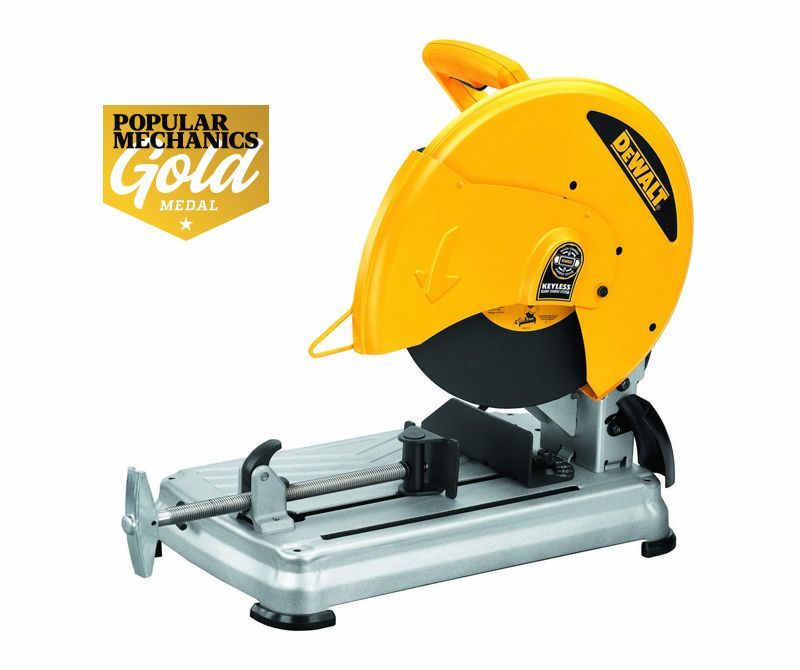
Disc Size
14 in.
Amps
15 A
RPM
3,800
Weight
~40 lbs
There's a reason the DeWalt D28715 has been a mainstay on job sites for years. It delivers strong, consistent cutting power through its 15-amp motor and well-balanced head design. The quick-lock vise holds material securely and adjusts without fuss, which is a genuine time-saver during repetitive cuts. Spark control is above average—the guard directs most debris away from the operator effectively.
What sets the D28715 apart is the overall refinement. The ergonomic D-handle provides comfortable control, the lock-off switch prevents accidental starts, and the base sits flat and stable on the bench. It's not the cheapest option available, but it consistently outperformed in our accuracy and durability evaluations.
Ridgid R41322 Chop Saw
Solid Value Pick
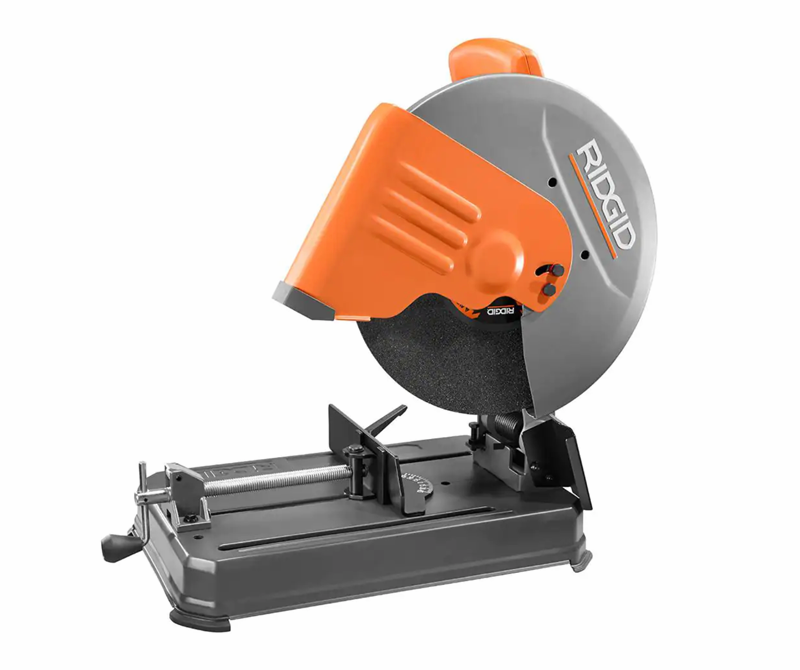
Disc Size
14 in.
Amps
15 A
RPM
3,800
Weight
~39 lbs
Ridgid has built a reputation for dependable tools, and the R41322 is no exception. Its 15-amp motor handles standard mild steel and conduit without hesitation. The steel base provides a rigid platform that keeps the saw steady during aggressive cutting, and the integrated vise clamps down tightly with minimal play.
One standout detail is the generous spark guard, which does a commendable job of channeling debris downward and away. The saw feels well-built overall, and given its competitive price point, it represents a strong value proposition for contractors and hobbyists who want reliable performance without a premium price tag.
Milwaukee 6177-20 Chop Saw
Heavy-Duty Workhorse
Disc Size
14 in.
Amps
15 A
RPM
3,900
Weight
~42 lbs
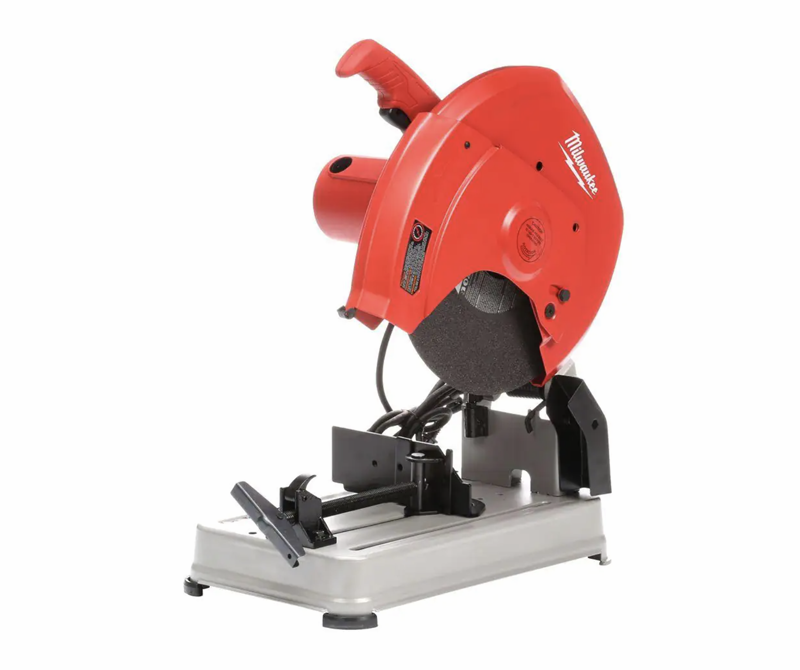
Milwaukee's 6177-20 is built for demanding production environments. The 15-amp motor spins the disc at 3,900 RPM—slightly faster than most competitors—which translates into faster cuts, especially through thicker stock. The cast-aluminum pivot arm gives the cutting head a smooth, controlled descent with very little side play.
On the practical side, Milwaukee fitted this model with a large D-handle grip, a lock-off trigger, and a spindle lock for straightforward disc changes. The footprint is reasonable despite its heavier build, and the oversized spark guard kept sparks well-managed during our testing. For high-volume cutting, this is a top contender.
Metabo HPT CC14SFS Chop Saw
Ease of Use Champion
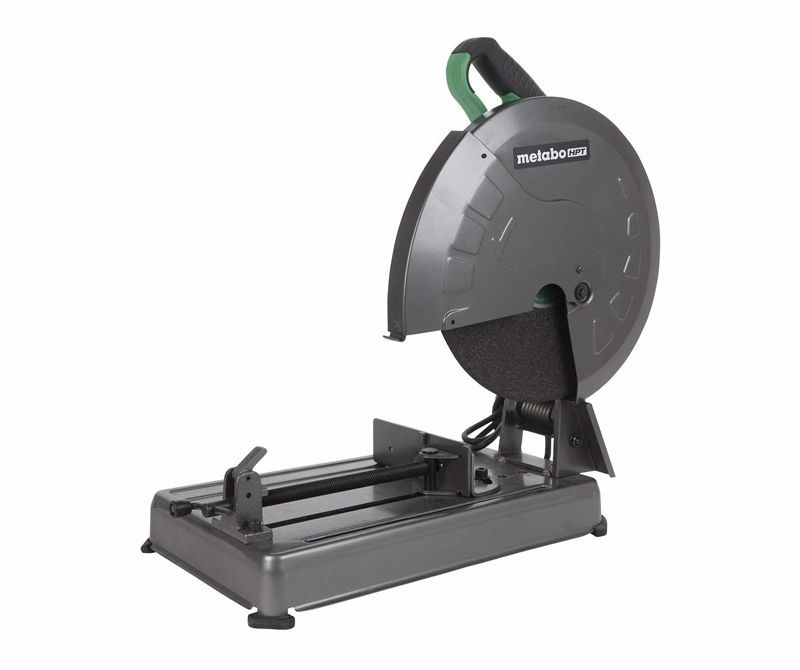
Disc Size
14 in.
Amps
15 A
RPM
3,800
Weight
~37 lbs
Formerly marketed under the Hitachi brand, the Metabo HPT CC14SFS carries forward that lineage with a well-engineered and user-friendly design. The 15-amp motor is more than adequate for everyday cutting tasks, and the quick-release vise makes clamping and unclamping material notably fast—a small detail that adds up over the course of a long workday.
Build quality is solid with good vibration damping, and the spark guard effectively manages debris. At roughly 37 pounds, it's one of the lighter saws in this lineup, making it a practical option for tradespeople who move between job sites frequently. It strikes a nice balance between power, portability, and affordability.
Makita XWL69PT Chop Saw
Premium Performance
Disc Size
14 in.
Amps
15 A
RPM
3,800
Weight
~45 lbs
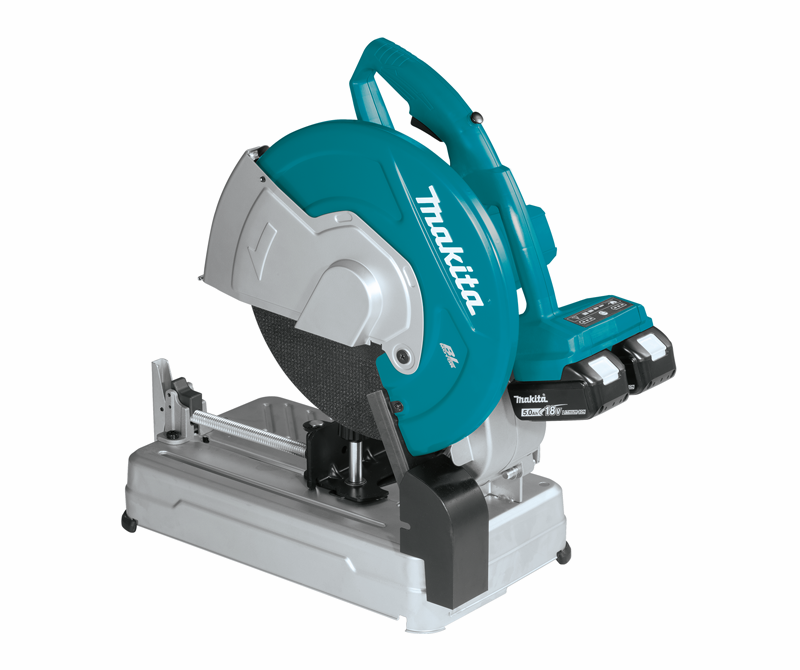
The Makita entry in this comparison delivers the kind of build quality and precision engineering that the brand is known for. The 15-amp motor pushes through steel smoothly, and the pivot mechanism feels rock-solid with no discernible wobble. Cuts were among the cleanest and most square in our testing lineup.
It's heavier than most at around 45 pounds, which limits its portability somewhat, but that extra heft contributes to excellent vibration dampening and a planted, stable feel on the workbench. If cutting accuracy and long-term durability are your top priorities, the Makita is worth the investment. The premium build comes at a higher price point, but for professionals who depend on their tools day after day, it justifies the cost.
Available at Backyard Provider
Evolution S380CPS Metal Cutting Chop Saw
Equipped with a 14-inch mild steel blade and compatible with 15-inch blades, the Evolution S380CPS delivers versatile, powerful metal cutting for your shop or job site.
Evolution S380CPS Chop SawWhich Chop Saw Should You Buy?
Every saw in this lineup is capable of making clean, fast cuts through mild steel. The right choice depends on your specific needs. If you value all-around performance and refinement, the DeWalt D28715 is hard to beat. If budget matters most, the Ridgid R41322 offers excellent bang for your buck. High-volume shops will appreciate the Milwaukee 6177-20's speed, while the Metabo HPT CC14SFS earns marks for portability and user-friendliness. And for those who want the highest build quality and precision available, the Makita stands at the top of the class.
No matter which model you lean toward, pair it with the right abrasive disc for your material, keep the spark guard properly adjusted, and always wear appropriate eye and ear protection. A good chop saw is a tireless workshop companion—once you find the right one, you'll wonder how you ever managed without it.
Backyard Provider — Your Trusted Source for Outdoor & Workshop Equipment