
Walk into any hardware store or job site and you'll hear the terms "chop saw" and "miter saw" used almost interchangeably. But make no mistake — these are two distinct tools built for very different jobs. Understanding the difference can save you time, money, and a lot of frustration on your next project.
Whether you're cutting structural steel on a construction site or trimming baseboards in a finished room, having the right saw changes everything. In this guide, we break down how each tool works, where it excels, and which one you actually need.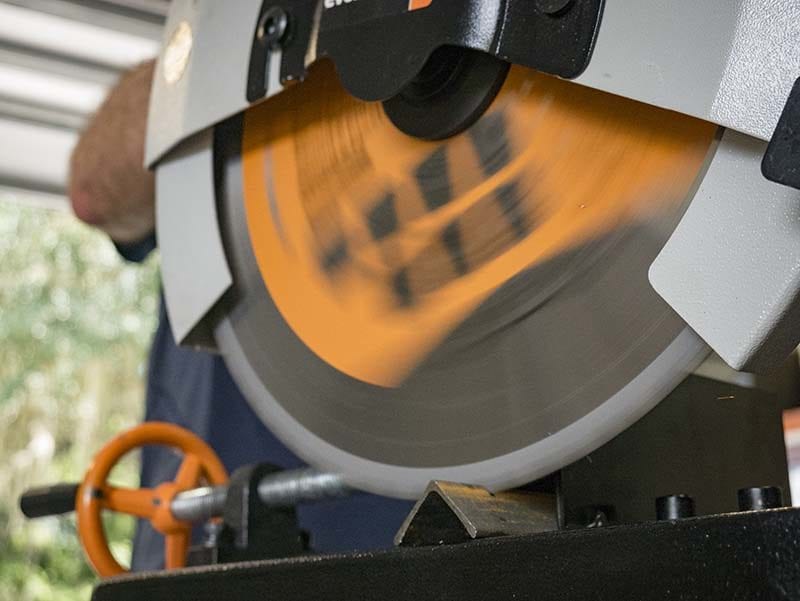
What Is a Chop Saw?
A chop saw — sometimes called a cut-off saw or metal chop saw — is a power tool designed specifically for cutting hard materials like steel, aluminum, iron pipe, and rebar. It operates by driving a rotating abrasive disc or cold-cut carbide blade straight down through the workpiece at a fixed 90-degree angle.
The name says it all: you chop. There's no swinging left or right, no bevel adjustment — just a clean, powerful, repeatable straight cut. This simplicity is precisely what makes the chop saw so effective on job sites where structural metal needs to be cut quickly and consistently.
Cold-cut chop saws use carbide-tipped blades that cut metal without generating dangerous sparks or excessive heat — a major advantage over traditional abrasive disc models in confined or flammable environments.
What Is a Miter Saw?
A miter saw is a precision cutting tool primarily used for woodworking. It sits on a rotating miter table that allows the blade to swing left or right, enabling angled crosscuts — called miter cuts — at various degrees. Compound miter saws add a beveling function, letting the blade tilt as well as rotate for multi-directional cuts used in crown molding, rafters, and decorative trim.
The miter saw is the tool of choice for carpenters, finish crews, and DIY enthusiasts. Its combination of speed, accuracy, and versatility makes quick work of framing lumber, flooring, decking boards, and fine trim work.
Miter Cuts
Swing the table left or right to cut angles across the face of a board — perfect for frames and corners.
Bevel Cuts
Tilt the blade head sideways to cut a sloped angle through the thickness of the material.
Compound Cuts
Combine miter and bevel in a single pass — essential for crown molding and complex joinery.
Chop Saw vs Miter Saw: Side-by-Side
Still on the fence? This table lays out the key differences at a glance so you can make the right call for your project.
| Feature | Chop Saw | Miter Saw |
|---|---|---|
| Primary Material | Metal, steel, rebar, pipe | Wood, trim, molding, composite |
| Blade Type | Abrasive disc or cold-cut carbide | Fine-tooth carbide wood blade |
| Cut Angles | 90° straight cuts only | 0°–50° miter, up to 48° bevel |
| Typical Blade Size | 12"–14" | 7.5"–12" |
| Weight / Portability | Heavy, less portable | Moderate, reasonably portable |
| Best For | Construction, fabrication, trades | Carpentry, trim work, finishing |
| Precision Level | Good for rough cuts | High — finish-quality cuts |
| Dust & Debris | Metal sparks and filings | Wood dust (use with dust bag) |
When to Use a Chop Saw
Reach for a chop saw when your project involves cutting metal stock to length. Steel angle iron, square tubing, EMT conduit, rebar, and solid bar stock are all fair game. The chop saw's fixed 90-degree action means every cut is square and consistent — ideal for repetitive work on structural components where you need dozens of identical pieces cut fast.
Plumbers, electricians, ironworkers, and fabricators rely on chop saws daily. If you're building a metal-frame structure, installing pipe runs, or working with any ferrous or non-ferrous metal, this is the tool that gets the job done reliably.
When to Use a Miter Saw
The miter saw shines wherever wood needs to be cut cleanly at precise angles. Think picture frames, door casings, window trim, baseboards, crown molding, deck boards, and stair stringers. Any time you need to cut a board to a specific length at a specific angle — in clean, finished-quality fashion — a miter saw is the appropriate tool.
Sliding compound miter saws extend this capability further by allowing the blade to travel forward along a rail, letting you crosscut much wider boards than a standard miter saw could handle. This versatility makes them a staple in any serious woodworking shop.
Never use a wood-cutting miter saw to cut metal. The fine-tooth carbide blade is not designed for ferrous materials and can shatter catastrophically. Always match the blade to the material and the saw to the job.
Can One Saw Do Both Jobs?
There are hybrid options on the market — most notably the cold-cut metal chop saw with a mitering base. These tools use a specialized carbide blade capable of cutting metal, yet the mitering table allows angled cuts. This is a genuine two-in-one solution for tradespeople who need angular metal cuts without keeping two large machines on site.
The Evolution S355MCS is a prime example of this hybrid capability: a 14-inch mitering chop saw that cuts cold through steel, aluminum, and other metals at various angles — no abrasive disc required, no excessive heat, no burrs.
Safety Essentials for Both Saws
- Always wear ANSI-rated safety glasses or a full face shield — sparks and wood chips move fast.
- Secure your workpiece firmly with the built-in clamp or a dedicated vise before every cut.
- Keep hands well clear of the blade path and never reach under the blade guard.
- Allow the blade to reach full speed before contacting the material, and let it stop fully before lifting the head.
- Use hearing protection — both tool types operate at high decibel levels over extended use.
- Inspect your blade before every session. Cracked, chipped, or worn blades must be replaced immediately.
- Keep a clean, clutter-free work surface around the saw. Offcuts and debris underfoot are a serious hazard.
The Bottom Line
A chop saw is a purpose-built metal cutter. A miter saw is a precision wood-cutting machine. They are not interchangeable — and knowing which one to reach for is the mark of a confident builder. If your work involves metal fabrication and construction trades, invest in a quality chop saw. If your work lives in wood and finish carpentry, a miter saw is your tool. And if you need the best of both worlds in one machine, a mitering cold-cut chop saw like the Evolution S355MCS is worth every penny.