
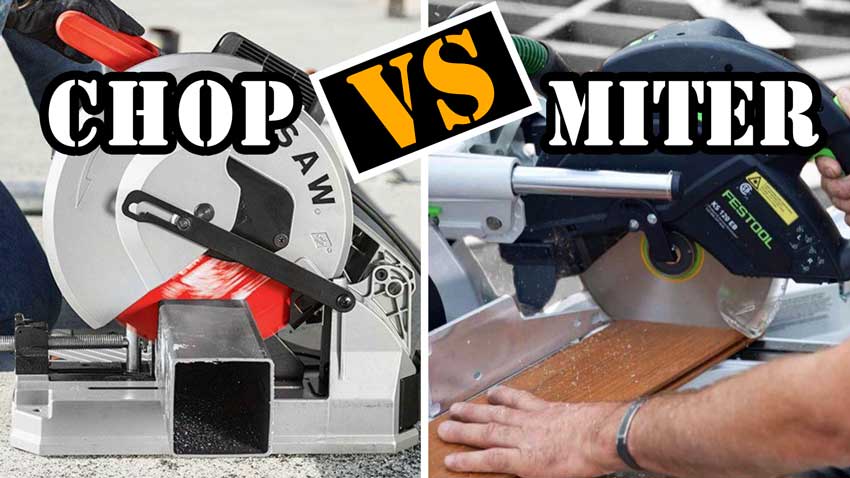
Choosing between a chop saw and a miter saw can be the difference between a clean, efficient cut and a frustrating, costly mistake. Both tools look similar at a glance — a spinning blade mounted to a pivoting arm — yet they are engineered for entirely different jobs. This guide breaks down everything you need to know before investing.
Walk into any workshop or job site and you're likely to see one of these two tools in action. Both are designed to make precise crosscuts, but the similarity ends there. A chop saw is a powerhouse built for cutting hard materials like steel, iron, and other metals. A miter saw, on the other hand, is a woodworker's best friend — fine-tuned for lumber, trim, and moulding. Confuse the two, and you'll either ruin your material or damage your blade entirely.
Key Differences: Chop Saw vs Miter Saw
The most fundamental difference between a chop saw and a miter saw is their intended cutting material. A chop saw is purpose-built for metal — pipes, angle iron, structural steel — and operates at lower RPMs to safely manage the heat and resistance that comes with cutting hard metals. A miter saw runs at higher RPMs and is designed specifically for wood and wood composites, making smooth, accurate angle cuts for finish carpentry and framing.
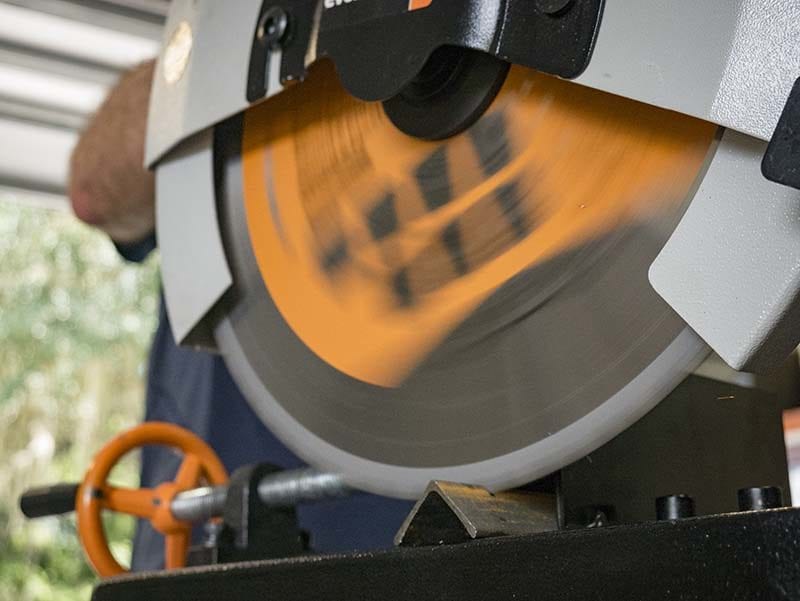
- Lower RPM motor for metal cutting
- Uses abrasive or carbide-tipped blades
- Straight 90° cuts only (no miter)
- Robust, heavy-duty construction
- Ideal for steel, iron, and aluminum
- Produces sparks — requires open area
- Higher RPM for clean wood cuts
- Uses fine-tooth carbide blades
- Adjustable miter and bevel angles
- Lightweight and portable options available
- Ideal for timber, trim, and moulding
- Minimal sparks — workshop-friendly
Chop Saw vs Miter Saw for Metal — Hybrid Metal Miter Saws
Technology has evolved, and the line between chop saws and miter saws has started to blur. Today, a new class of hybrid metal miter saws combines the angled cutting versatility of a miter saw with the metal-cutting capability of a chop saw. These machines are capable of cutting steel at compound angles — a feature that was simply not possible with traditional chop saws.
Many manufacturers now offer cold-cut and carbide-tipped miter saws that slice through metal cleanly without generating the heat, burrs, or sparks associated with abrasive disc chop saws. These hybrid tools are particularly useful for metal fabricators, structural steel workers, and contractors who need both angular precision and material hardness in a single machine.
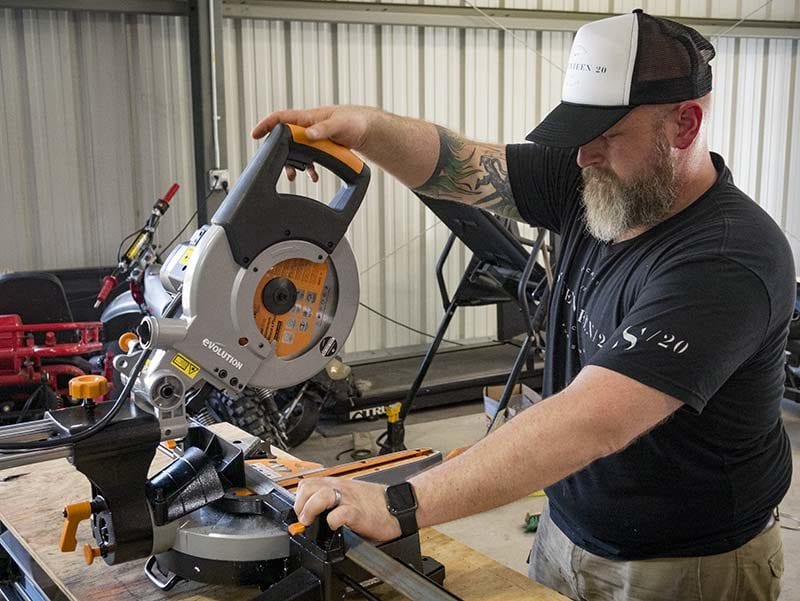
💡 If you regularly cut metal at varied angles, a hybrid metal miter saw may be your best investment — it replaces both a chop saw and a miter saw in one versatile unit.
Chop Saw vs Miter Saw Blades — Abrasive, Diamond & Carbide
Blade selection is where the real distinction between these tools becomes critical. Using the wrong blade not only produces poor cuts — it can be outright dangerous. Understanding the three main blade types will help you choose the right tool and consumable for every application.
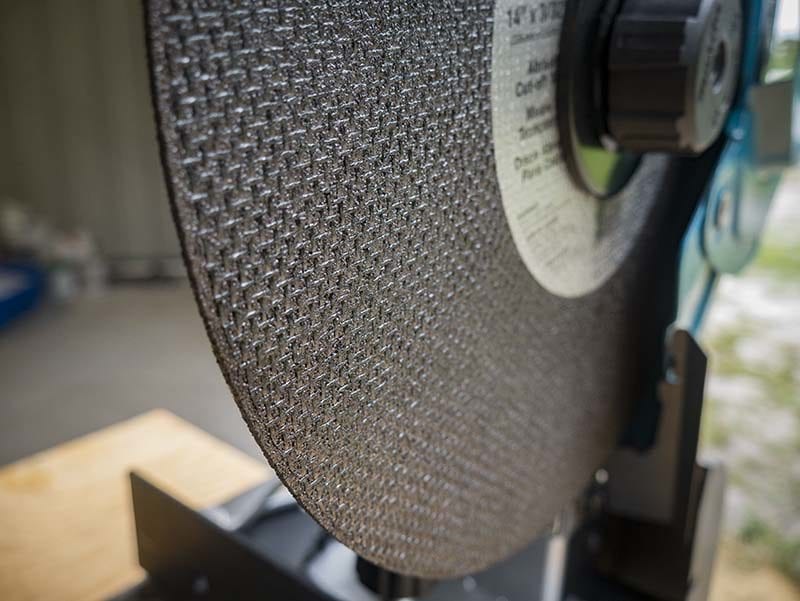
Chop Saw Diamond Cutting Blades
Diamond blades are the premium option for cutting extremely hard materials — masonry, tile, concrete, and hardened steel. They feature diamond-tipped segments bonded to a steel core, enabling the blade to grind through material rather than cut in the traditional sense. Diamond blades last significantly longer than abrasive counterparts but carry a higher upfront cost.
Chop Saw Carbide Tooth Blades
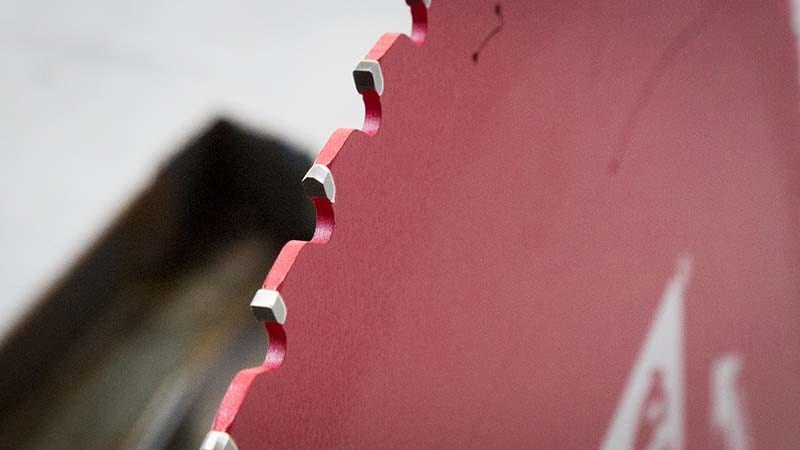
Carbide-tipped blades are the preferred choice for cutting non-ferrous metals such as aluminum, copper, brass, and plastic. They produce cleaner, burr-free cuts compared to abrasive discs and can be resharpened, making them cost-effective over the long run. Many professional fabricators prefer carbide blades for their finish quality and reduced noise output.
Miter Saw Carbide Tooth Blades

Standard miter saw blades feature carbide-tipped teeth and are optimized for crosscutting and mitering wood. Tooth count matters: a lower tooth count (24T) removes material quickly and suits framing work, while high tooth count blades (80T–100T) deliver fine, splinter-free cuts ideal for finish carpentry and trim installation.
| Blade Type | Best For | Cut Quality | Lifespan |
|---|---|---|---|
| Abrasive Disc | Ferrous metals, steel rebar | Rough, burrs present | Short |
| Diamond Blade | Masonry, hardened steel, tile | Clean, precise | Very Long |
| Carbide Chop (Metal) | Aluminum, copper, non-ferrous | Clean, burr-free | Long |
| Carbide Miter (Wood) | Lumber, trim, moulding | Smooth, splinter-free | Long |
Chop Saw vs Sliding Miter Saws
Beyond the standard miter saw, sliding miter saws add a rail system that lets the blade travel forward and backward through the cut — dramatically increasing the maximum cutting width. A standard 10" miter saw may only crosscut boards up to 6" wide, but a 10" sliding miter saw can handle stock over 12" wide. This makes sliding miter saws especially practical for wide crown moulding, large baseboards, and decking material.
For chop saw users working with large-diameter structural steel or wide flat bar stock, an equivalent sliding or mitering chop saw offers the same benefit — extended reach without requiring a larger blade diameter. These machines are heavier and more expensive but pay off on demanding job sites where versatility and capacity are essential.
| Feature | Standard Chop Saw | Sliding Miter Saw | Hybrid Metal Miter |
|---|---|---|---|
| Cutting Material | Metal | Wood | Metal & Wood |
| Miter Angle | No (fixed 90°) | Yes | Yes |
| Bevel Angle | No | Yes (on some) | Yes |
| Cutting Capacity | Moderate | Wide (sliding) | Moderate–Wide |
| Portability | Moderate | Good | Moderate |
| Price Range | Moderate | Moderate–High | High |
Final Thoughts
At the end of the day, the right tool depends entirely on what you're cutting. If metal is your primary material, a dedicated chop saw — or better yet, a mitering metal chop saw — is a must-have. If you work predominantly with wood and need angle versatility, a sliding miter saw will serve you well for years. For professionals who work across both materials, a quality hybrid metal miter saw like the Evolution S355MCS is worth every penny.
Shop Evolution S355MCS