
In this guide, we break down everything you need to know about chop saws versus mitre saws — exploring their different applications, types, and advantages and disadvantages, so you can make the right call for your next project.
What Is a Chop Saw & What Is It Designed to Cut?
A key feature of any cutting machine is the material it's built to handle. Chop saws are engineered to cut a single type of material — and they do it with raw, uncompromising force.
A chop saw is a powerful, fixed-angle cutting machine used primarily for slicing through ferrous metals, structural steel, and tough construction materials. The blade drops straight down in a chopping motion, hence the name. They are not typically used for wood or fine materials — their strength lies in industrial-grade cutting performance.
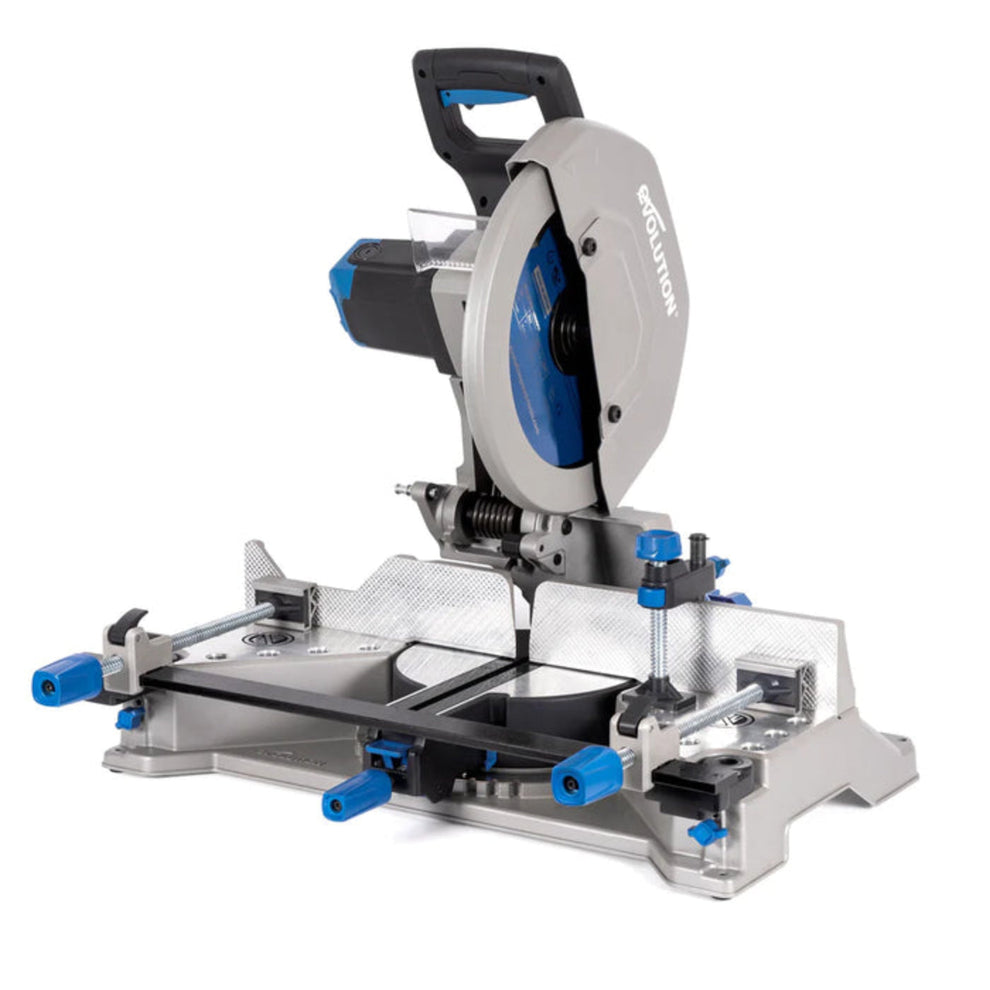
Abrasive Chop Saws
The most widely recognised type, these use a large abrasive disc — similar to a grinding wheel — to cut through metal. They're effective and affordable, but generate significant heat, sparks, and noise. The abrasive disc wears down over time and must be replaced regularly.
- Low purchase price
- Cuts thick material and heavily welded sections without snagging
- Ideal for repetitive industrial cutting tasks
- Minimal setup required
- Cuts capacity reduced compared to other saw types
TCT Chop Saws
Tungsten Carbide Tipped (TCT) blades represent a major advancement in chop saw technology. Instead of grinding through the material, they slice cleanly with far less heat and virtually no sparks. TCT saws can handle a wider range of materials and deliver better cut quality with longer blade life.
- Fast cutting speed
- Greater depth of cut maintained
- Blades last significantly longer
- Ideal where accuracy and appearance matter
- Higher upfront investment
- Limited blade-to-blade compatibility compared to abrasive types
- Requires careful handling and correct blade specifications
What Is a Mitre Saw?
A mitre saw is a precision cutting tool designed primarily for wood, though it can be adapted for other materials with the right blade. Unlike a chop saw, a mitre saw allows you to adjust the cutting angle both horizontally (mitre) and, on some models, vertically (bevel) — making it an incredibly versatile tool for detailed joinery, trim work, and finish carpentry.
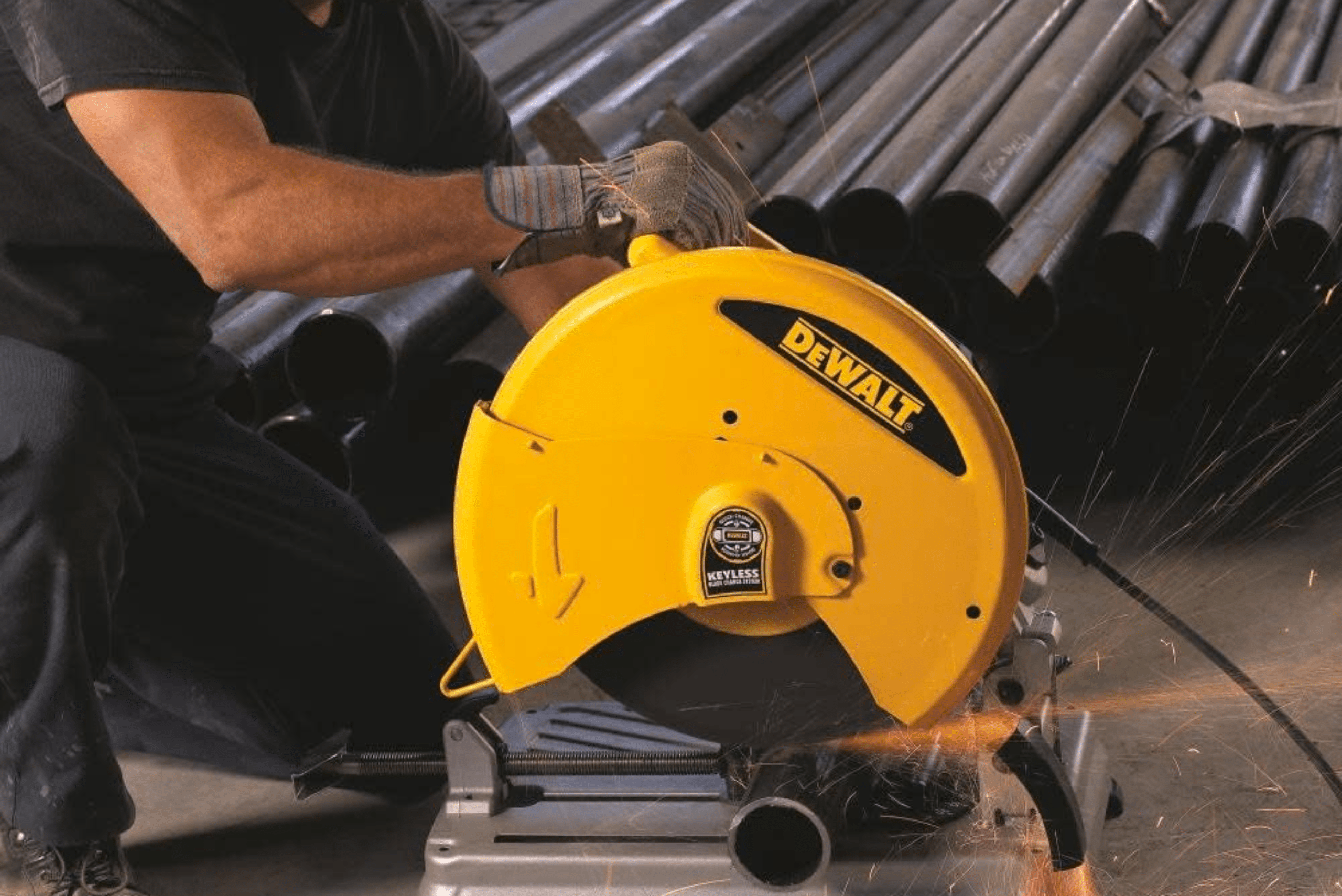
The blade on a mitre saw pivots to the left and right, enabling precise angle cuts without moving the workpiece. This makes it the go-to choice for crown moulding, skirting boards, door frames, and any task where clean, accurate cuts are essential.
Types of Cuts a Mitre Saw Can Make
Cross Cut
A straight 90° cut across the width of the workpiece. The most basic and common cut.
Mitre Cut
The blade swings horizontally left or right to produce an angled cut across the face of the material.
Bevel Cut
The blade tilts vertically to cut at an angle through the depth of the workpiece.
Compound Cut
A simultaneous mitre and bevel cut — ideal for complex joinery like crown moulding.

What Is a Compound Mitre Saw?
A compound mitre saw combines the mitre and bevel functions in a single machine — allowing you to make both angled and bevelled cuts simultaneously. This is where the extraordinary angles required for tasks like fitting crown moulding or installing complex trim become achievable with precision and repeatability.
Single Bevel
The blade tilts in one direction only — typically to the left. It's the more common and budget-friendly option, suited to most standard cutting tasks.
Double Bevel
The blade tilts both left and right, which means you can flip the cut without repositioning the workpiece. A significant time-saver on longer projects and high-volume work.
What Is a Sliding Compound Mitre Saw?
A sliding compound mitre saw adds a sliding rail mechanism that allows the blade to travel forward and backward through the cut. This dramatically increases the width of material you can cut — making it possible to tackle wide boards and sheet material that would be impossible on a fixed-head machine.
Around 90% of mitre saws sold today are designed for wood and wood-based materials. For the finest finish on timber and engineered boards, a sliding compound model is the most capable all-rounder you can own.
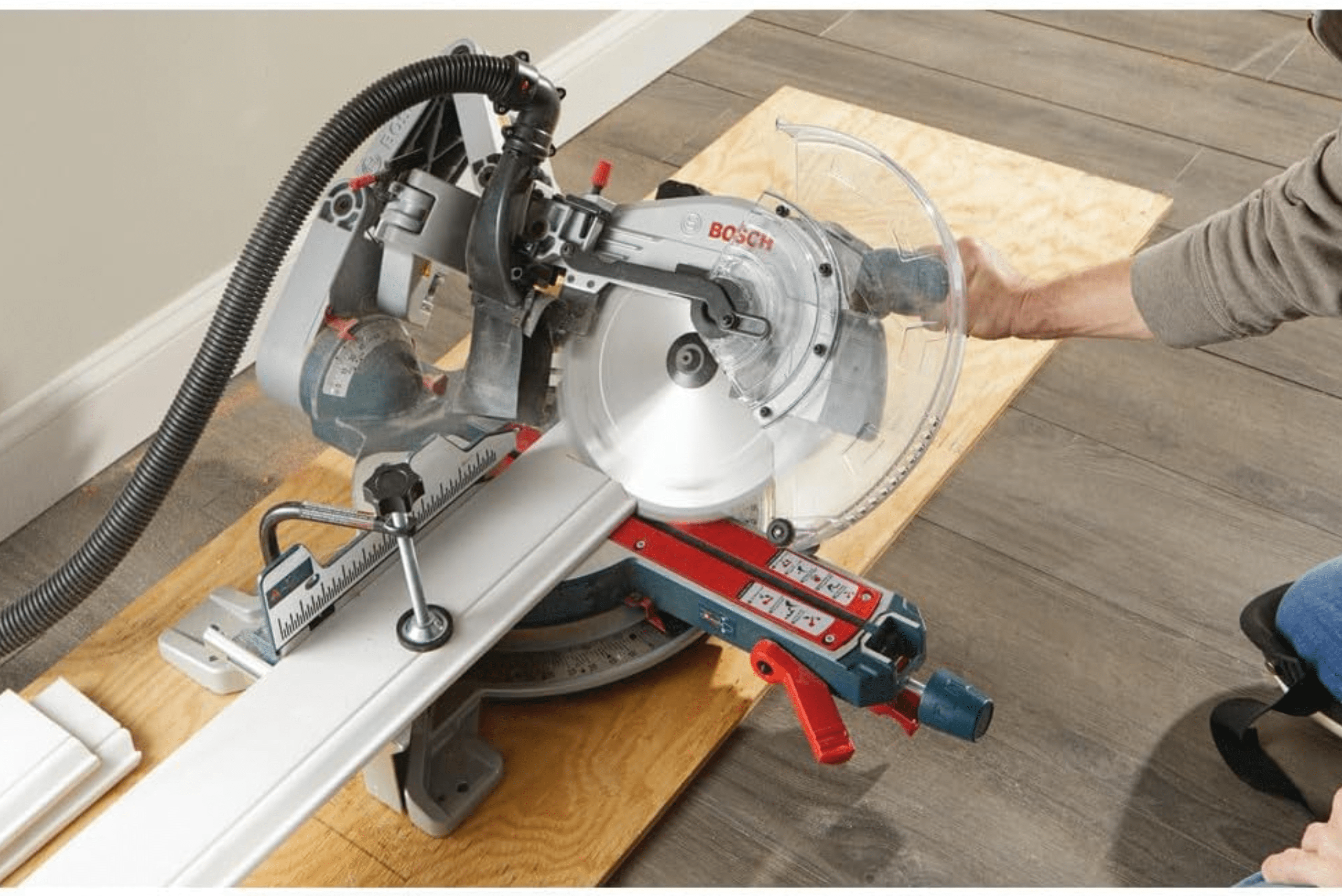
— Practical Joiners' ReferenceMitre saws are available as single or double bevel units. Single bevel machines tilt only to the left; double bevel units tilt in both directions. Brands such as Makita and Milwaukee offer some of the most popular models in this category, available in a range of sizes and power options.
What Size Mitre Saw Do I Need?
The right blade size depends on the materials you're regularly cutting. As a rule: the thicker the blade, the deeper the cut — because there's greater distance from the edge of the blade to the clamping rail. A larger blade allows the clamping nut to sit further from the edge, giving the blade more room to pass through the material cleanly.
Mitre saw blade sizes range from 190mm to a maximum 305mm. The table below outlines typical use cases by blade size:
| User Type | Blade Sizes | Typical Cut Blades | Accessories |
|---|---|---|---|
| Kitchen Fitter | 190mm Slide 254mm Compound 254mm Compound Mitre Saw |
Fine Cut Blade Saw Stand |
Fine Cut Blade Saw Stand |
| Shop Fitter | 254/260mm Slide Compound Mitre Saw 305mm Slide |
Medium Cut Blade Fine Cut Blade Aluminium Blade Lubricating Wax Stick for Aluminium |
Medium Cut Blade Fine Cut Blade |
| Site Joinery | 254/260mm Slide 305mm Slide Compound Mitre Saw |
Medium Cut Blade Extra Cut Blade Saw Stand |
Medium Cut Blade Extra Cut Blade Saw Stand |

VERDICT
Chop Saw vs Mitre Saw — Which Do You Need?
Now that we've laid out the differences, choosing between a chop saw and a mitre saw comes down to one thing: what are you cutting? If your work involves structural steel, iron sections, or hard metal pipe — a chop saw is your tool. It's purpose-built for raw material demolition and industrial cutting where finish is secondary to force.
If your work involves timber, engineered boards, mouldings, or any application requiring angled, precision cuts — a mitre saw is the clear winner. A sliding compound model will cover the vast majority of professional woodworking and joinery tasks you'll ever face. Remember: a mitre saw will not replace a chop saw, and a chop saw will not replace a mitre saw. They are built for entirely different jobs.