

Chop saws and miter saws are fixtures in woodworking shops, fabrication yards, and construction sites alike. At a glance they may look similar — both use a rotating blade on a pivoting arm — but once you understand what each tool is built to do, the differences become immediately clear.
Choosing the right saw for your project isn't just a matter of preference. It's a matter of precision, material compatibility, and getting the cleanest cut possible. This guide breaks down how these two saws compare so you can make the most informed decision for your work.
Purpose & Function
Despite appearances, chop saws and miter saws are engineered for entirely different outcomes. Understanding each tool's core purpose is the first step toward using the right one.
The Chop Saw
A chop saw — sometimes called a cut-off saw or abrasive saw — is a straight-cutting powerhouse. Its blade moves in a fixed, vertical motion, making it the go-to tool for rough construction cuts through metal pipes, rebar, and concrete. It's built for speed and durability, not fine woodworking.
The Miter Saw
A miter saw is designed with precision in mind. Its blade rotates on a pivoting arm that can be adjusted across a range of angles, making it ideal for trim work, framing, furniture making, and any application where clean, angled cuts are essential. It's the craftsman's tool.
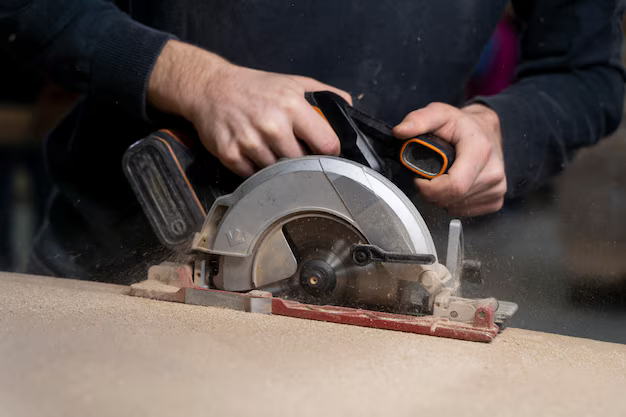
Blade Motion
One of the most telling differences between the two tools is the way the blade moves when you make a cut.
Fixed Vertical Drop
A chop saw blade moves in a single, straight downward arc. It plunges through the material and returns upward — simple, repeatable, and very powerful. This motion suits high-volume cutting of tough materials where angle precision isn't required.
Rotating & Pivoting
A miter saw blade is mounted on an arm that rotates horizontally and, in compound models, tilts on a bevel axis. This two-directional movement is what allows miter saws to produce complex angles — including compound cuts that combine a miter and a bevel in a single pass.
The Key Takeaway on Blade Motion
If your project demands a straight, powerful cut through hard material, the chop saw's fixed blade path gets the job done without fuss. If your work calls for angled cuts with clean edges and repeatable accuracy — crown molding, door casing, rafter tails — the miter saw's adjustable blade motion is indispensable.
Design & Features
The structural design of each saw reflects what it was built to accomplish. These differences go beyond aesthetics — they directly affect how each tool performs on the job.
Physical Structure
Chop saws are typically more compact and robustly built. The fixed head and reinforced body allow them to handle the stress of cutting through hard metals and masonry repeatedly without losing alignment or integrity.
Physical Structure
Miter saws feature a more complex pivot and rotation system, often including a detent plate for commonly used angles, positive stops, and bevel locks. Sliding compound miter saws add a rail system that extends cutting capacity for wider boards.
Blade types also differ significantly. Chop saw blades are typically abrasive discs or carbide-tipped blades rated for cutting through brick, tile, or metal. Miter saw blades are fine-toothed circular blades optimized for clean cuts in wood, composites, and softer materials.

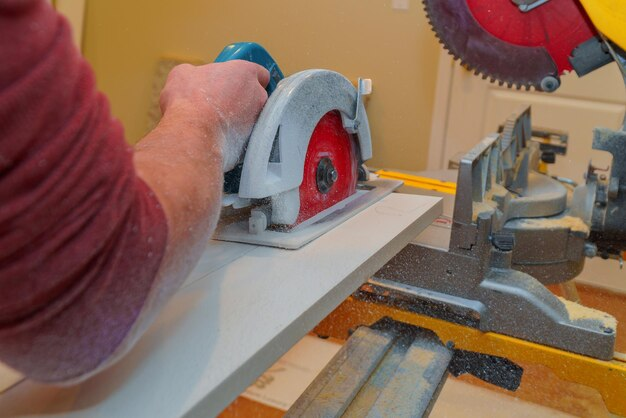
Cutting Capacity
When it comes to what each saw can handle, there's a clear distinction in material type and cut complexity.
- Chop saw strength: Cuts through metal pipes, angle iron, rebar, and thick stock materials with ease. The abrasive disc generates significant heat, making it unsuitable for wood.
- Miter saw precision: Excels at angled cuts up to 45° or more in both the horizontal and vertical planes — perfect for trim, molding, rafters, and framing lumber.
- Depth & width: Miter saws handle boards and panels up to 12–16 inches wide on sliding models. Chop saws, by contrast, are limited in width but can power through material thickness that would stall other saws.
- Material hardness: Chop saws are purpose-built for hard materials. Miter saws handle wood, MDF, and certain plastics — but will struggle or be damaged if used on steel or masonry.
Applications & Materials
Matching the right saw to your project isn't just good practice — it affects the quality of your results, the lifespan of your blades, and your safety on the job.
Chop Saw Uses
Metal fabrication, construction site roughing, pipe cutting, rebar work, demolition projects, and any high-volume application where material toughness is the primary challenge. Widely used in industrial and commercial construction.
Miter Saw Uses
Interior carpentry, crown molding installation, door and window casing, deck framing, furniture making, and picture frame work. The go-to saw for finish carpenters, cabinetmakers, and DIY enthusiasts tackling precision woodwork.
Material Compatibility at a Glance
Never use a chop saw on wood — the abrasive wheel generates excessive heat that can scorch, splinter, or ignite the material. Equally, a miter saw blade is not rated for steel or masonry and can shatter under that kind of load. Using the wrong tool on the wrong material is both a quality issue and a safety risk. Always verify blade and saw compatibility with your material before cutting.
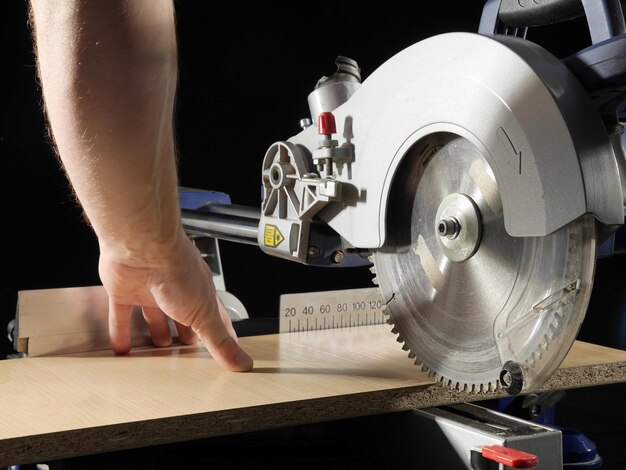
Safety & Precision
Both tools are powerful cutting machines that demand respect. Understanding the safety features built into each one helps you work more confidently and protect yourself from injury.
- Blade guards: Both chop saws and miter saws are equipped with protective blade guards that cover the blade when not in use and retract automatically during the cut. Never remove or bypass these guards.
- Trigger lock: A trigger lock prevents accidental activation when handling, moving, or repositioning the saw. This is a critical safety feature on both tool types.
- Precision aids: Miter saws generally offer more precision features — laser guides, LED shadow lines, and adjustable fences — that help you achieve accurate cuts consistently and safely.
- PPE requirements: Eye protection is mandatory with both saws. Ear protection is strongly recommended, especially with chop saws. When cutting metal, use a face shield and ensure adequate ventilation.
Side-by-Side Comparison
| Feature | Chop Saw | Miter Saw |
|---|---|---|
| Primary Use | Straight cuts on hard materials | Angled cuts on wood & composites |
| Blade Motion | Fixed vertical drop | Rotating pivot arm |
| Angle Capability | 90° straight cuts only | Up to 45°+ miter & bevel |
| Material Compatibility | Metal, rebar, masonry | Wood, MDF, plastics, trim |
| Typical Applications | Construction, fabrication | Carpentry, finish work |
| Precision Level | High power, moderate precision | High precision, fine finish |
Ready to upgrade your cutting setup? This heavy-duty evolution saw handles metal and mitering with unmatched performance.
Evolution S355MCS Mitering Chop Saw