
There's no easier way to slice through metal bars, rebar, angle iron, and heavy-duty steel pipe than with a reliable chop saw. These machines are built for one purpose: fast, repeatable crosscuts on tough materials. While tools like reciprocating saws, bandsaws, and even industrial torches can technically get you through metal, none offer the same combination of speed, precision, and ease of use that a quality chop saw delivers.
Need to cut through rebar, conduit, threaded rod, or structural steel? A chop saw tears through these materials in seconds flat. Whether you're in a fabrication shop, working a construction site, or building out a home workshop, the right chop saw can transform a labor-intensive task into something effortless. Below, we break down the fundamentals — and review some of the top contenders on the market.
Abrasive Chop Saw Basics
A chop saw is a remarkably straightforward piece of equipment — a high-powered motor spins a large abrasive cutting disc at tremendous speed, and you bring it down onto the workpiece with a simple pivot motion. The concept couldn't be simpler, yet the results are incredibly effective.
Most models on the market share a similar footprint and design philosophy. The material sits in a built-in vise at the base of the machine, the motor and blade assembly pivots downward on a hinge, and a spring-loaded arm brings the assembly back up once you release pressure. The entire cutting process takes just seconds for most standard materials.
The abrasive wheels used in these saws are typically reinforced with fiberglass and designed to handle extreme friction and heat. As the disc wears down (and it will — that's by design), it continuously reveals fresh cutting material. These saws are equipped with adjustable spark deflectors that redirect sparks safely away from you during the cut. Just keep in mind that every disc has a rated maximum RPM — always match it to your saw's speed for safety.

Buying Advice
If the saw has sufficient power to handle the job, your purchase decision really comes down to comfort and ergonomics. Every chop saw on the market will make its way through steel — the question is how it feels in your hands while doing it.
Pay close attention to the handle design and trigger placement. If you're an occasional user tackling weekend projects, practically any reputable model will serve you well. But if you're running a production shop and making hundreds of cuts per day, the ergonomics become critical. A comfortable handle, intuitive controls, and smooth operation can make a massive difference over a full shift.
Consider the vise mechanism carefully. Some chop saws feature quick-release vises that speed up workflow dramatically. Others offer swiveling bases for angled cuts. Think about what types of cuts you'll be performing most often and choose accordingly. The build quality of the base and fence is equally important — a wobbly platform leads to inaccurate, unsafe cuts.
Also take note of the spark guard positioning, blade guard design, and overall fit and finish. Models with cast-iron or heavy steel bases tend to absorb vibration better and stay planted during aggressive cuts. And if noise is a concern, some newer saws run quieter than others — it's worth checking specifications before committing.
How We Evaluate These Tools
Our evaluation process is hands-on and practical. We source standard steel round stock and angle iron from a local metal supplier, then put each saw through identical cutting scenarios. First, we time how quickly each machine can slice through a piece of round stock. Then, we push further with a full length of heavy-gauge steel pipe to really stress-test each motor.
Beyond raw cutting speed, we also assess vibration levels, ease of material clamping, spark management, and how well each saw handles continuous use without bogging down or overheating. Every saw tested performed admirably — but we did uncover some notable differences worth highlighting.
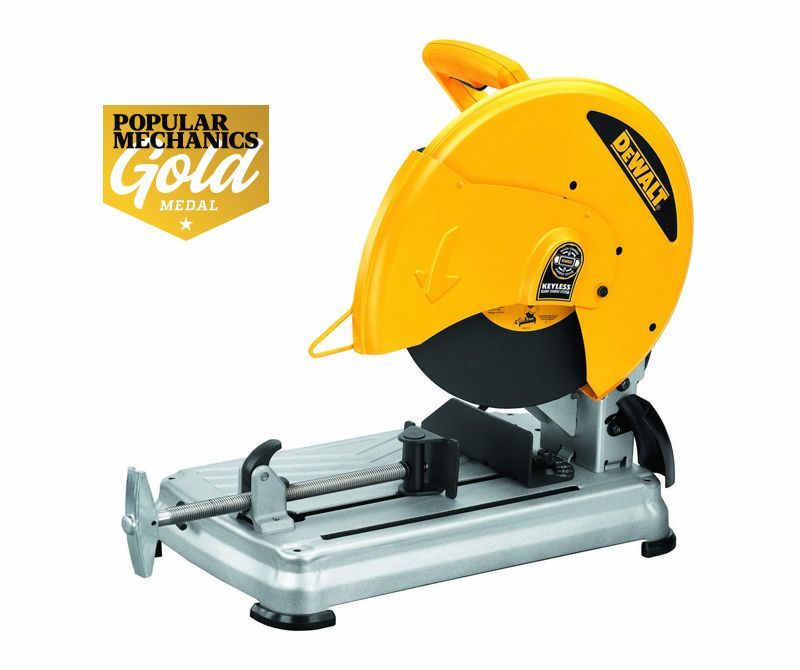
DeWalt D28715 Chop Saw
Key Specs
Max Capacity: 4.5 inches | Disc Size: 14 inches | Weight: 39.5 lbs
The DeWalt D28715 is about as solid as chop saws get. It doesn't have the flashiest features or the most eye-catching design, but what it delivers is pure, dependable cutting performance day after day. The motor powers through steel with authority, and the overall build quality inspires confidence from the moment you pull it out of the box.
Where the DeWalt truly shines is in its quick-lock vise and smooth trigger action. The fence is rock-solid, and the spark deflector does its job well. It's the kind of tool you can hand to a crew member on a jobsite and trust that it'll perform without complaint. A reliable workhorse through and through.
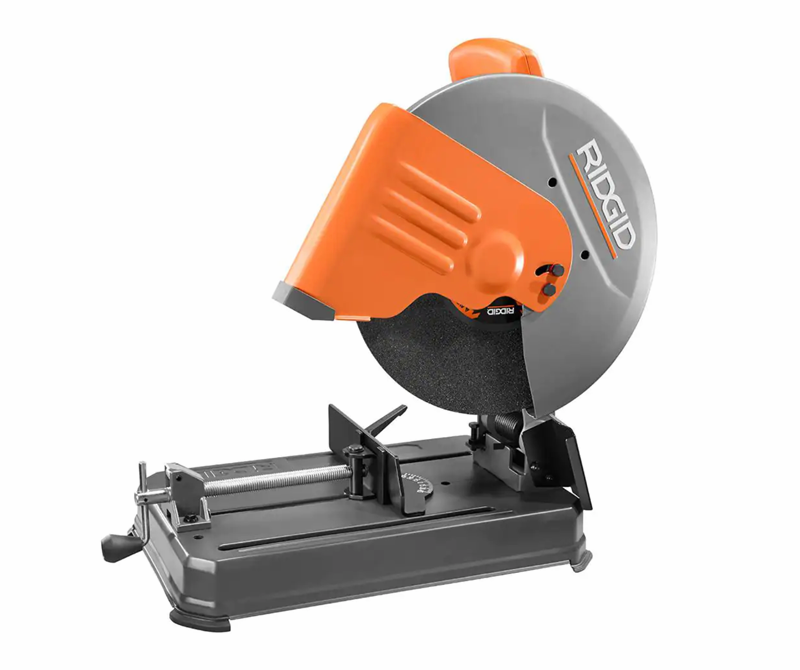
Ridgid R41422 Chop Saw
Key Specs
Max Capacity: 4.5 inches | Disc Size: 14 inches | Weight: 42 lbs
Ridgid has long been a trusted name among tradespeople, and the R41422 upholds that reputation admirably. Right out of the gate, you'll notice the hefty, cast-metal construction — this thing feels like it's built to take serious punishment without flinching. The vise mechanism is particularly well-designed, with a sturdy chain-style clamp that grips round stock and oddly shaped materials securely.
During testing, the Ridgid demonstrated impressive cutting consistency and accuracy. The spark guard deflection is well-positioned, and the overall ergonomics make extended cutting sessions manageable. If you need a saw that can stand up to daily shop use without skipping a beat, this one belongs on your shortlist.
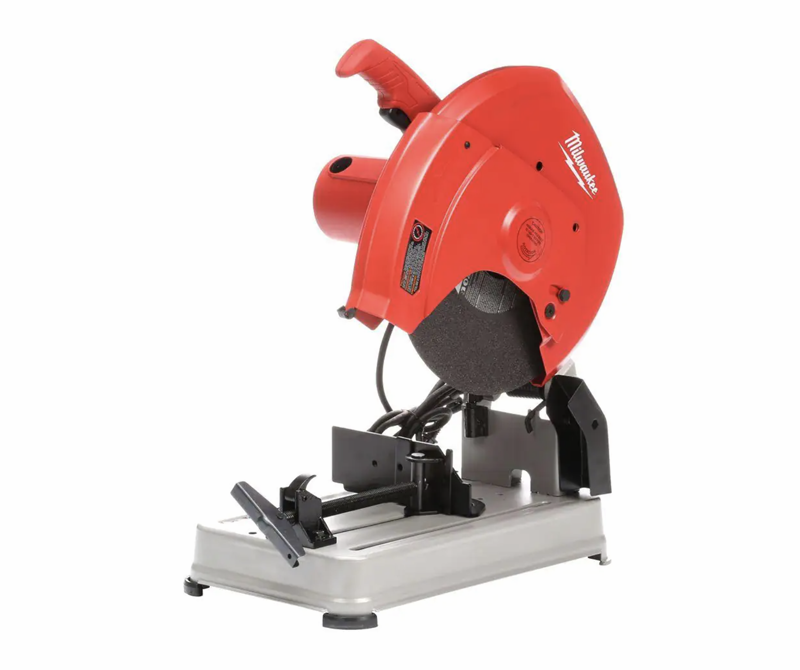
Milwaukee 6177-20 Chop Saw
Key Specs
Max Capacity: 4.5 inches | Disc Size: 14 inches | Weight: 40 lbs
Milwaukee has earned a fierce following among professionals, and it's easy to see why with the 6177-20. This chop saw feels more refined than many of its competitors — the handle ergonomics are excellent, the trigger response is smooth, and the overall cutting action has a controlled, precise quality that experienced users will immediately appreciate.
What sets the Milwaukee apart is its combination of power and composure. Even under heavy load, the motor maintains consistent speed without the dramatic bog-down you sometimes experience with lesser saws. The base is stable, the vise holds firm, and the whole package feels purpose-built for serious metalwork. If you value a premium cutting experience, this one delivers.
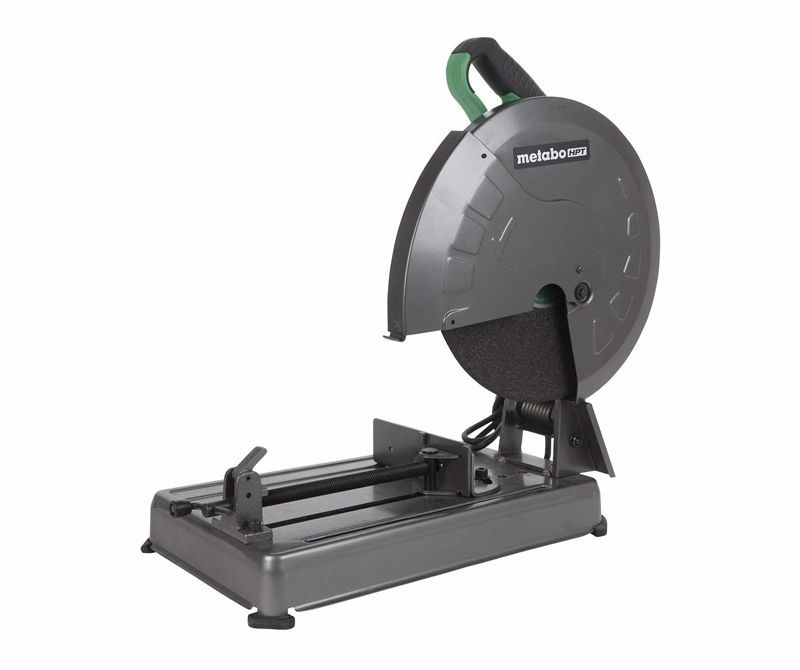
Metabo HPT CC14SFS Chop Saw
Key Specs
Max Capacity: 5 inches | Disc Size: 14 inches | Weight: 37.5 lbs
The Metabo HPT CC14SFS quietly stands out as one of the most capable chop saws in this lineup. With the largest cutting capacity of the group at 5 inches, it handles bigger stock than its competitors without breaking a sweat. The motor is responsive and aggressive, making quick work of everything we threw at it during testing.
What makes this saw particularly appealing is the combination of cutting power and user comfort. The handle design is among the most comfortable we tested, and the overall weight is manageable for a saw of this caliber. The vise offers solid clamping force, and the base keeps the machine stable even during forceful cuts. For those who need maximum cutting capacity in a standard-sized chop saw, the Metabo HPT is hard to beat.
Available at Backyard Provider
Ready to Cut Metal Like a Pro?
Check out the Evolution S380CPS Metal Cutting Chop Saw — engineered with a 14-inch mild steel blade and compatible with 15-inch blades for even greater versatility.
Evolution S380CPS Chop SawThe Bottom Line
Every chop saw in this roundup is capable of getting the job done. They all cut metal quickly, they all handle standard stock sizes, and they all come from manufacturers with strong reputations in the power tool industry. The differences come down to the details — handle comfort, vise quality, motor consistency under load, and the overall feel of the machine during extended use.
For most buyers, you can't go wrong with any of these options. If maximum capacity matters most, look at the Metabo HPT. If you want rock-solid reliability with no surprises, the DeWalt is your pick. For premium ergonomics and a refined cutting experience, the Milwaukee stands out. And for rugged, no-nonsense durability, the Ridgid earns its place.
Whichever direction you go, investing in a quality chop saw pays for itself quickly in time saved and cleaner results. It's one of those tools that, once you have it, you'll wonder how you ever worked without it.