
Rotary saw blades come in more varieties than most people realize, and choosing the wrong one doesn't just slow you down — it can damage your material, ruin your equipment, or create a serious hazard. Whether you're working with metal, masonry, hardwood, or composite materials, your blade choice is every bit as important as the saw itself.
This guide covers the major blade categories, what each one is designed to do, and how to operate them safely and effectively — so your cuts are precise, your blades last longer, and your projects turn out right.
Blade RPM vs. Spindle Speed
Before you mount any blade, you need to understand the relationship between your saw's spindle speed and the blade's maximum rated RPM. These are not the same number, and they must be compatible. Every blade is stamped with a maximum RPM rating — running it faster than that limit can cause the blade to shatter or delaminate, sending fragments at dangerous velocity.
Circular saws and angle grinders typically run at higher RPMs than chop saws or table saws. Always check your tool's no-load speed and match it against your blade's rating with a margin to spare. More RPM does not always mean better cutting — many blades perform best at moderate speeds where they can bite cleanly without overheating.
Blade Arbor Size
The arbor hole — the center hole of the blade — must match your saw's spindle diameter precisely. Common arbor sizes are 5/8", 1", and 20mm, but specialty saws vary. Using an adapter is acceptable only when the adapter is rated for the RPM and load you're applying. A loose fit will cause vibration, accelerate wear on both the blade and the spindle, and can lead to catastrophic loss of control. Never assume a "close enough" fit is safe.
Abrasive Composite Blades
Abrasive blades are the most commonly encountered rotary cutting disc. They're made from bonded abrasive grains — typically aluminum oxide or silicon carbide — compressed and cured into a flat disc. These blades don't have teeth. They cut by grinding through material at high speed rather than slicing it.
Abrasive discs are inexpensive and widely available, making them a go-to option for cutting rebar, pipe, sheet metal, tile, and concrete depending on the grain composition. The downside is that they wear down quickly, especially on hard materials, and they generate significant heat and sparks. They're consumables — expect to go through several on a single job.
Important: Never use a metal-cutting abrasive disc on masonry, or a masonry disc on metal. The grain composition is optimized for specific materials. Cross-use dramatically shortens blade life and compromises cut quality. Always confirm the disc's labeled application before cutting.
Carbide Blades
Carbide-tipped blades are a major step up in durability and cutting precision. Instead of a uniform abrasive disc, these blades feature a steel plate with individual carbide tips brazed onto each tooth. Tungsten carbide is one of the hardest materials used in manufacturing tools, and it retains a sharp edge far longer than standard steel.
These blades are designed for repeated use over extended periods. The teeth are shaped and angled to produce a clean, controlled cut — leaving less burr on metal and a smoother finish on wood. The geometry of the tooth (hook angle, grind style, and tooth count) varies significantly between blades designed for different materials, so always match your carbide blade to the application.

Why100 Blades & Chunk Carbide
Carbide-tipped blades for heavy-duty metal cutting use a thicker, chunkier tooth than those designed for wood. These larger carbide segments are engineered to withstand the aggressive loading and thermal stress of cutting through structural steel, iron pipe, and solid bar stock. The tooth mass acts as a heat sink, slowing down the temperature buildup that would otherwise cause premature failure.
Chunk carbide blades are typically run at lower RPMs than wood-cutting blades. They're built for torque, not speed. Feed rate matters: pushing too hard causes the carbide to chip rather than cut. A steady, controlled feed pressure with proper blade speed produces clean cuts and extends the life of the blade significantly.

Fermet Blades
Fermet-style blades occupy a category between standard carbide-tipped blades and full cermet or cold-saw blades. They are optimized for cutting ferrous metals — steel, iron, and their alloys — with minimal heat generation. The blade design prioritizes a clean kerf and controlled chip formation rather than raw cutting speed.
One key advantage is that fermet blades produce significantly less sparks and heat than abrasive discs, making them a safer and more practical option when working near flammable materials or in enclosed spaces. They also leave a burr-free edge in many applications, which reduces post-cut finishing time on precision work.
Multi-Purpose Diamond Blades
Diamond blades don't contain sharp cutting teeth — instead, they feature industrial diamond particles embedded in a metal bond matrix along the blade's edge. As the blade rotates, these particles grind through hard materials with exceptional efficiency. Diamond blades are primarily used on masonry, tile, concrete, stone, and asphalt, though some multi-purpose variants can handle a wider range of hard materials.
The segment design, bond hardness, and diamond concentration all affect how the blade performs. Harder bonds work better on soft, abrasive materials like green concrete; softer bonds are suited to harder materials where the bond needs to release worn diamonds quickly to expose fresh ones.
Wet Cutting
Water suppresses dust, cools the blade, and significantly extends blade life. Required when cutting silica-containing materials like concrete and stone in prolonged sessions. Always use a blade rated for wet use.
Dry Cutting
Suitable for intermittent cuts where water isn't practical. Allow regular cooling pauses to prevent the segment bond from overheating. Never run a dry-cut blade continuously for extended periods without breaks.
Safe Operation
Regardless of blade type, rotary saw safety follows the same core principles. A blade failure at operating speed is one of the most dangerous events in any workshop or job site environment. Following these practices consistently keeps that risk as low as possible.
- Inspect every blade before installation — check for cracks, missing segments, warping, or corrosion
- Confirm that the blade's maximum RPM meets or exceeds your tool's no-load speed
- Always use the correct arbor size; do not force a blade onto a mismatched spindle
- Ensure all guards are in place and functioning before making any cut
- Wear appropriate PPE: safety glasses, face shield, hearing protection, gloves, and respiratory protection when cutting dusty materials
- Let the blade reach full operating speed before contacting the workpiece
- Never twist or bind a blade in the cut — use proper blade alignment and let the blade do the work
- Allow blades to come to a complete stop before setting down the tool or inspecting the cut
- Discard any blade showing cracks, excessive wear, or damaged segments immediately
Cleaning & Maintenance
Carbide and diamond blades benefit significantly from routine maintenance. After each use, remove built-up pitch, resin, or metal deposits from the blade using a blade-cleaning solvent and a stiff brush. Built-up residue insulates the cutting edge and causes the blade to run hot, which accelerates wear and can compromise the brazing that holds carbide tips in place.
Store blades flat or hung vertically on a dedicated rack — never stacked loosely where they can contact each other. Even small nicks from contact with other tools or blades can initiate cracks that lead to failure under load. Dull carbide blades can be resharpened by a professional blade service; this extends blade life considerably and is cost-effective for high-quality blades. Abrasive and diamond blades are not resharpenable and should be replaced when worn.
Ready to Cut Clean? Start With the Right Saw.
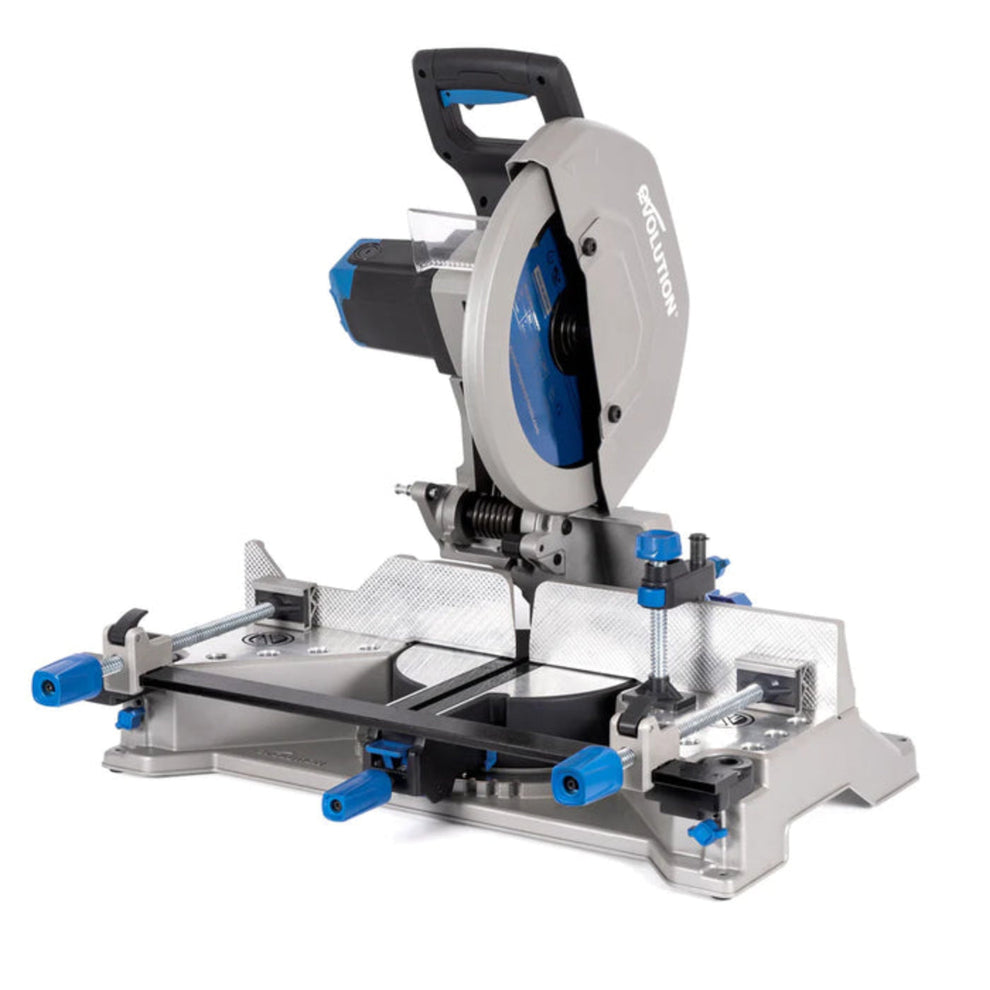
If you're doing serious metal cutting — structural steel, pipe, plate, or bar stock — pairing the right blade with a capable, purpose-built chop saw makes all the difference. The right combination gives you square cuts, controlled sparks, and a machine that holds up session after session.
We carry heavy-duty metal-cutting saws built for professional use. Check out our top pick below.